
The Salton Sea
Imperial Valley, CA
November 9, 2024
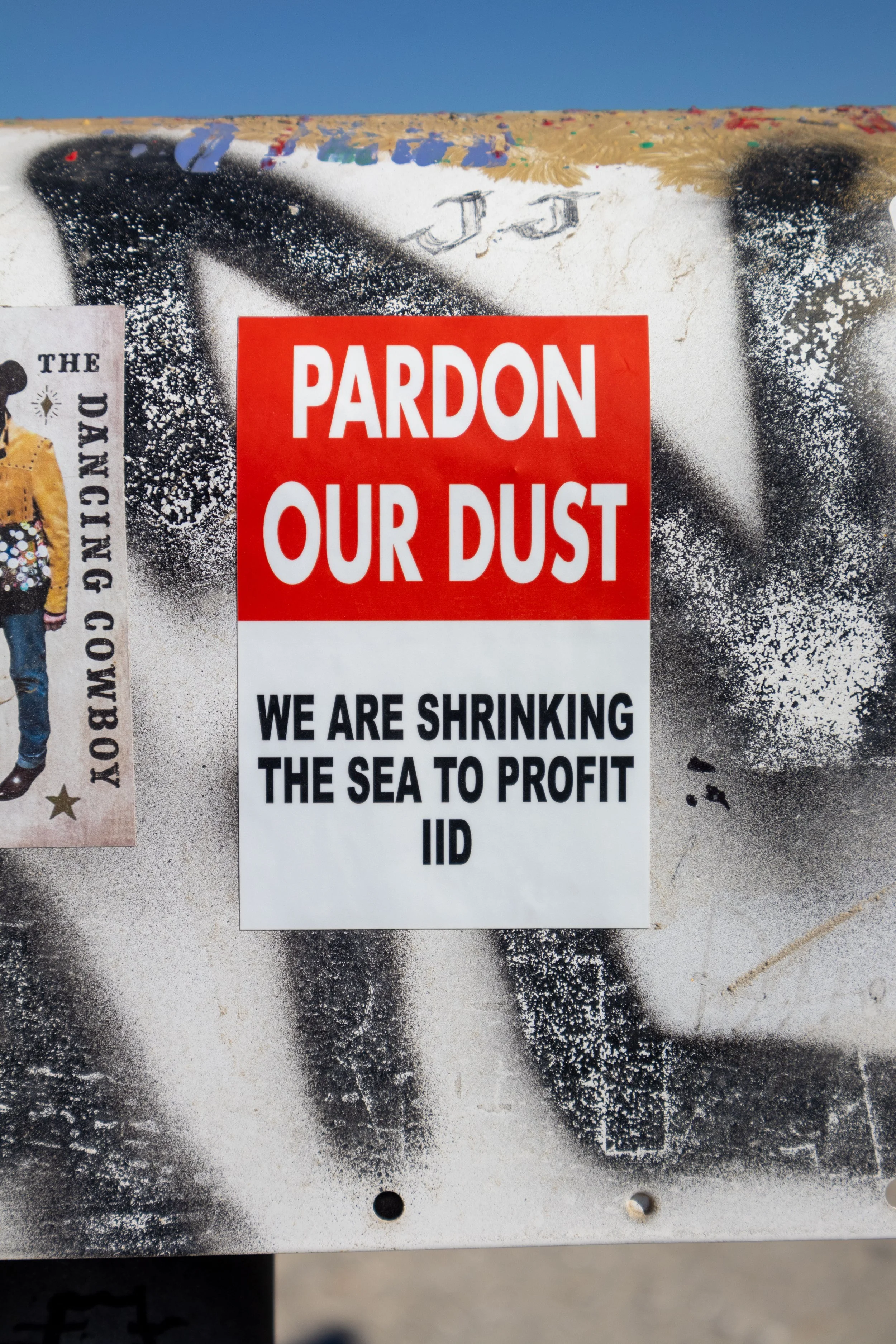
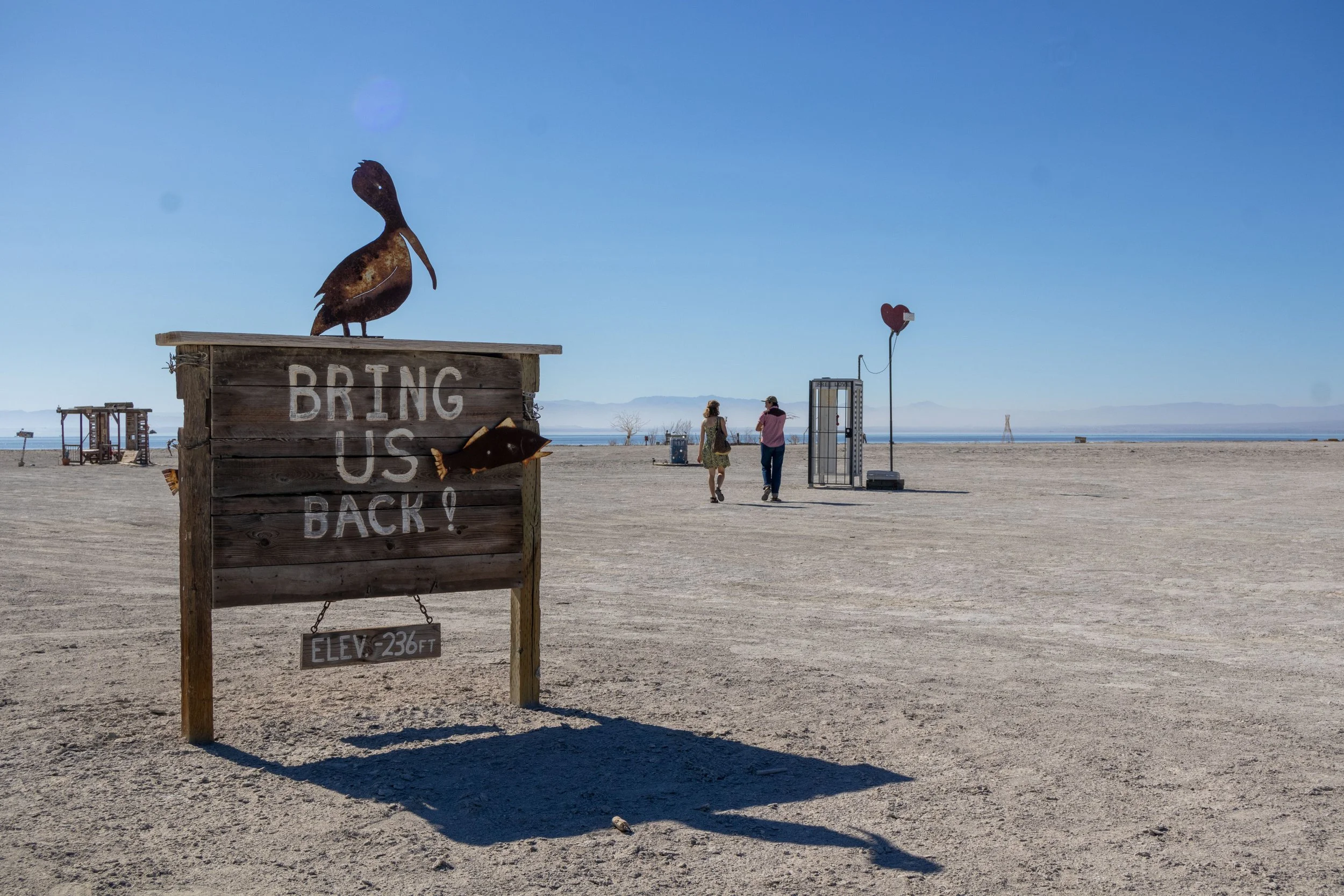
Fish bones crunch as my foot sinks into the slimy mud of the lakeshore. Rusted bolts tack together a collapsed dock, surrounded by the rims of small boats sunk in the sand. The smell of rotten eggs and decay penetrates our nostrils, and the sun beats overhead. A hazy fog conceals the far side of the lake, shimmering like a mirage. On a pole jutting out of the sand, a red sticker reads: PARDON OUR DUST. WE ARE SHRINKING THE SEA TO PROFIT IID. (*Imperial Irrigation District)
Bombay Beach is one of the last communities remaining on the shores of the Salton Sea. Once a bustling, stylish resort town for the Hollywood elite, it now has a population of just over 200, and one of the highest rates of asthma and respiratory health problems in the state. California’s largest inland lake emerged as a result of a 1905 accident, when an overly ambitious engineer attempted to divert water from the Colorado River into irrigation canals in the valley. Heavy floods and a particularly rainy season caused the diversion to burst, flooding the Salton Basin nonstop for over two years. Between the 1920s and 1960s, the man-made lake attracted large populations of fish, migratory birds (along their North-South flyways), and a booming recreation hub for vacationers traveling from the LA area.
But, as all closed lakes do, it got saltier. Droughts, diversions, and an increasing agricultural efficiency caused the lake input (almost entirely agricultural runoff) to dwindle, and the mass die-offs began. Algae blooms created oxygen-starved zones, killing off organic life and blowing noxious hydrogen sulfide clouds across the nearby towns. Tourists turned their noses and began to leave. Pelicans, grebes, and waterbirds died by the tens of thousands. The shores of the Salton Sea retreated faster than ever, and expanses of lakebed cracked, dried, and blew fine dust mixed with selenium, arsenic, pesticides, and heavy metals over the fields of lettuce, broccoli, and alfalfa that cover the Imperial Valley, thirstily sucking water from the Colorado River artery.
We met with managers and engineers from a company called ILiAD Technologies, working on Project ATLIS, a cutting-edge plan to modify geothermal plants in the area to extract lithium, as a byproduct, from groundwater brine. Promising to use minimal land, consume small amounts of water, and expel little carbon dioxide, it’s the key to the future of the global green energy transition…in theory. Carefully aligning itself with the Department of Defense's critical mineral list, it should be an apolitical resource to supply nearly half a million EV lithium batteries to the global market each year. Five years ago it was a $700 million project, and now, it’s valued between $1.3 and 1.7 billion. Invest your stocks wisely, everyone.
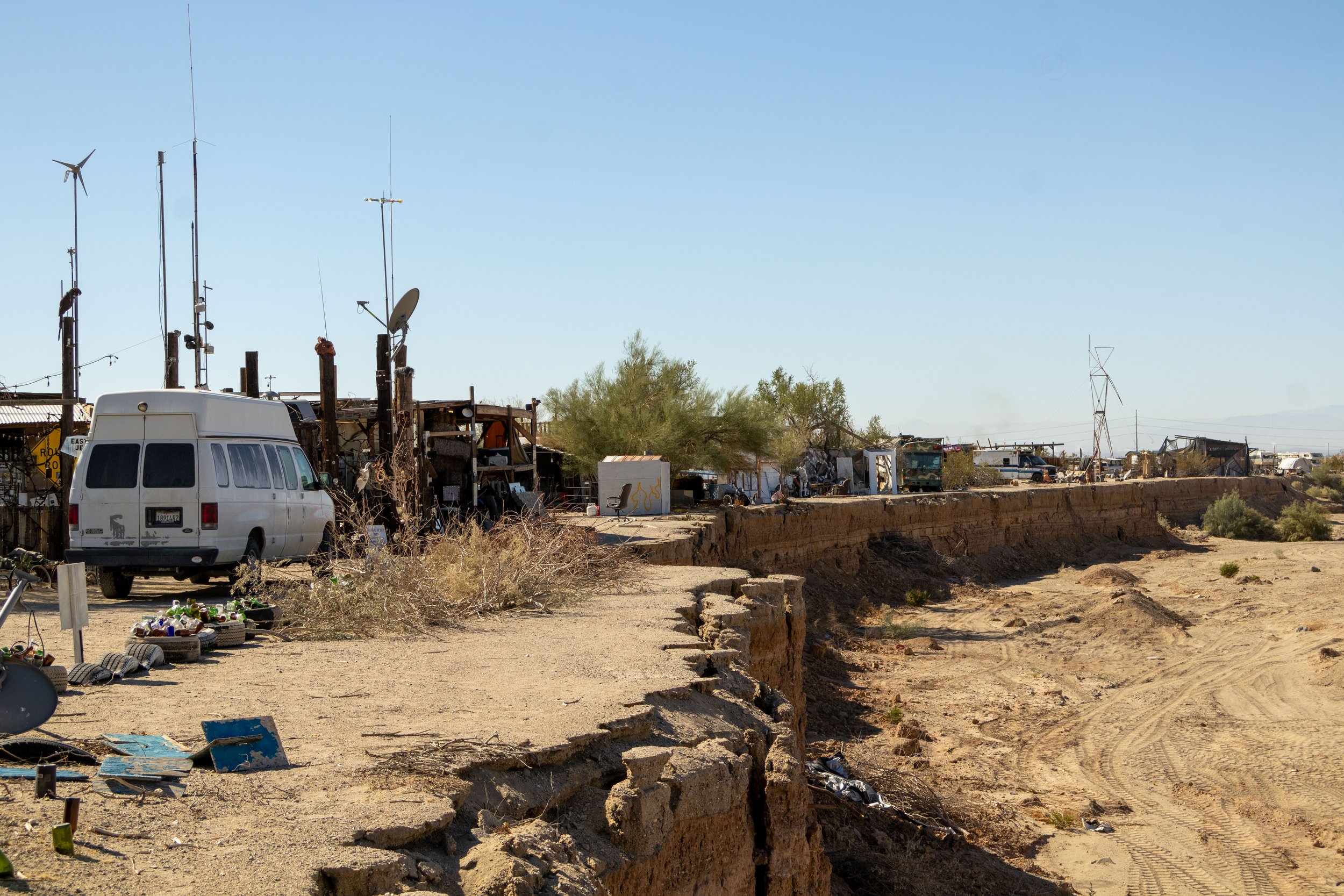
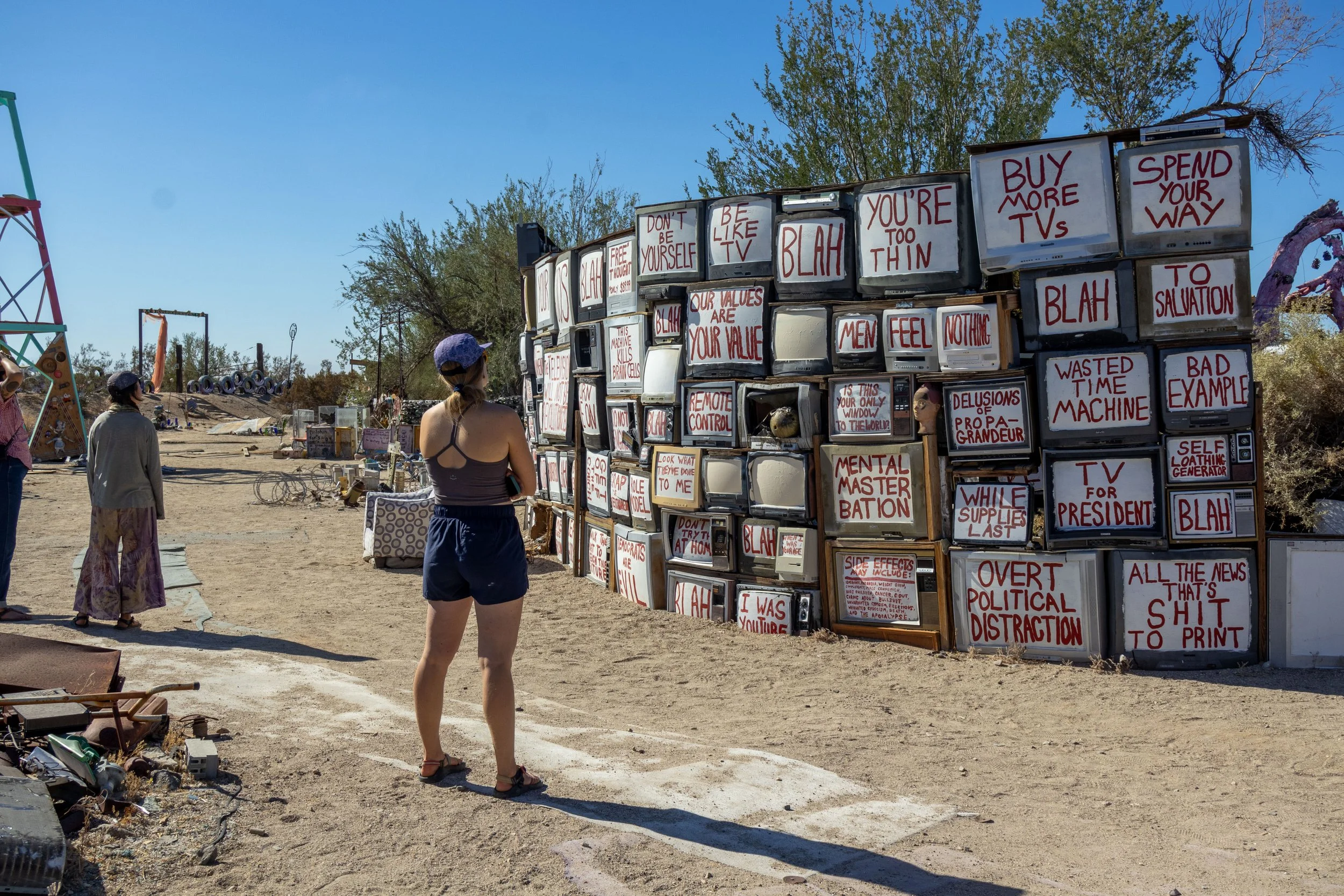
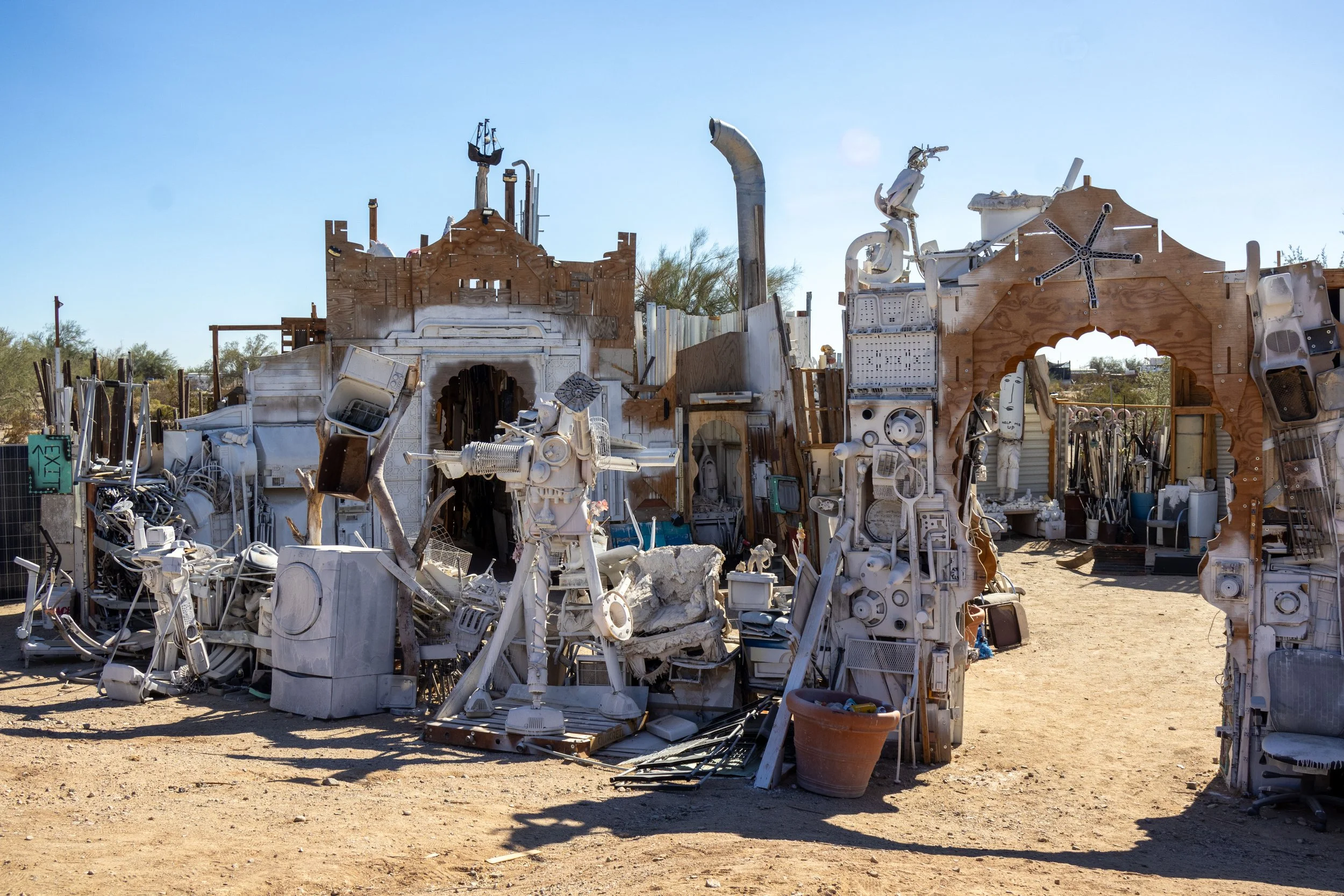
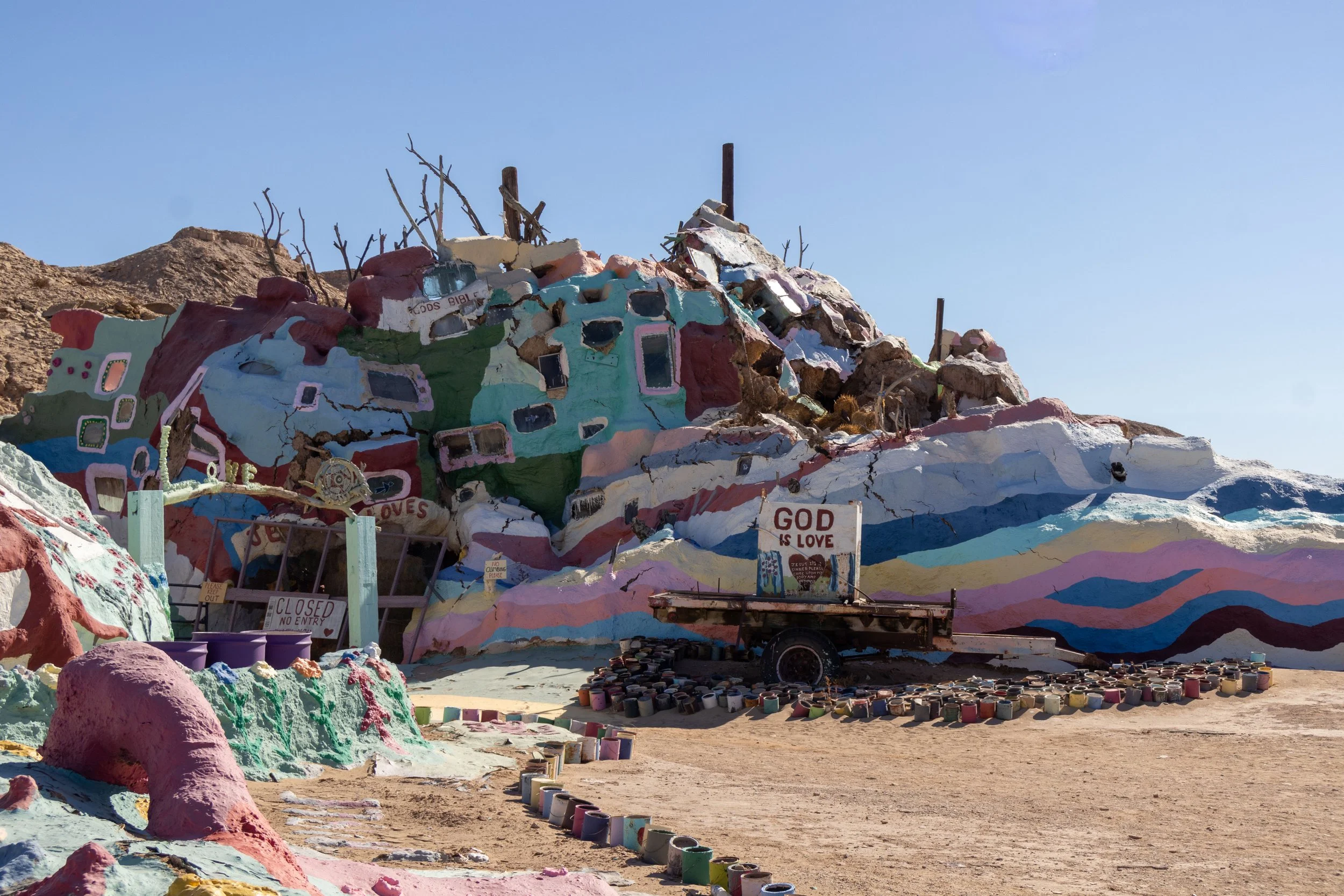
We walk between walls of glass bottles surrounding crumbling RVs layered in woven blankets. Concrete blocks prop up shipping containers, covered in colorfully psychedelic patterns. Rusted-out cars are dressed in fishnets and alien antennae, smiling at our passing vehicles. Bicycle wheels attached to towers of lumber and rebar spin in the wind, clicking as they go. A wall of CRT TVs displays colorful painted statements, like: BOW BEFORE YOUR GODS, MEN FEEL NOTHING, INSECURITY WE TRUST, and my personal favorite, YOU NEED MORE STUFF. On the outskirts of the Imperial Valley, the off-the-grid unincorporated community of Slab City lies strewn across the desert. We wander the art galleries built decades prior, human life rippling and reforming in melting sculptures of discarded waste.
Our campsite is an ancient lakebed. The finely ground silt sinks as we set up our tents and climb over the bulldozed mountains of rubble. The sun sets beautifully, splashing bloody hues of crimson and soft pinks across the tiny clouds above. The geothermal plants rumble nonstop in the distance, pumping steam and illuminating our horizon with bright lights. There is no solution, our professor says, to the issue of the sea. Some say we section it off so that birds might be able to use a fifth of slightly fresher lakewater. Some suggest we let it dry, and then spray the surface with water to suppress the dust. Some want to pump water from the Mississippi over the Rockies to replenish the Colorado River. And most radical of all, some suggest we feed our cows less alfalfa.
There is no young, stylish, “save the lake” committee. The lake will grow saltier, and the dust will continue to blow. We sit under the cooling desert sky, feeling the weight of it all. The silence that fills the spaces between rumbling steam pipes and fading light. This is California’s great, man-made environmental disaster, one we’ve chosen to let die.
by Henry Anderson