Francesca Claverie
Native Plant Program Director, Borderlands Restoration Network
Patagonia, Arizona
November 7th, 2025
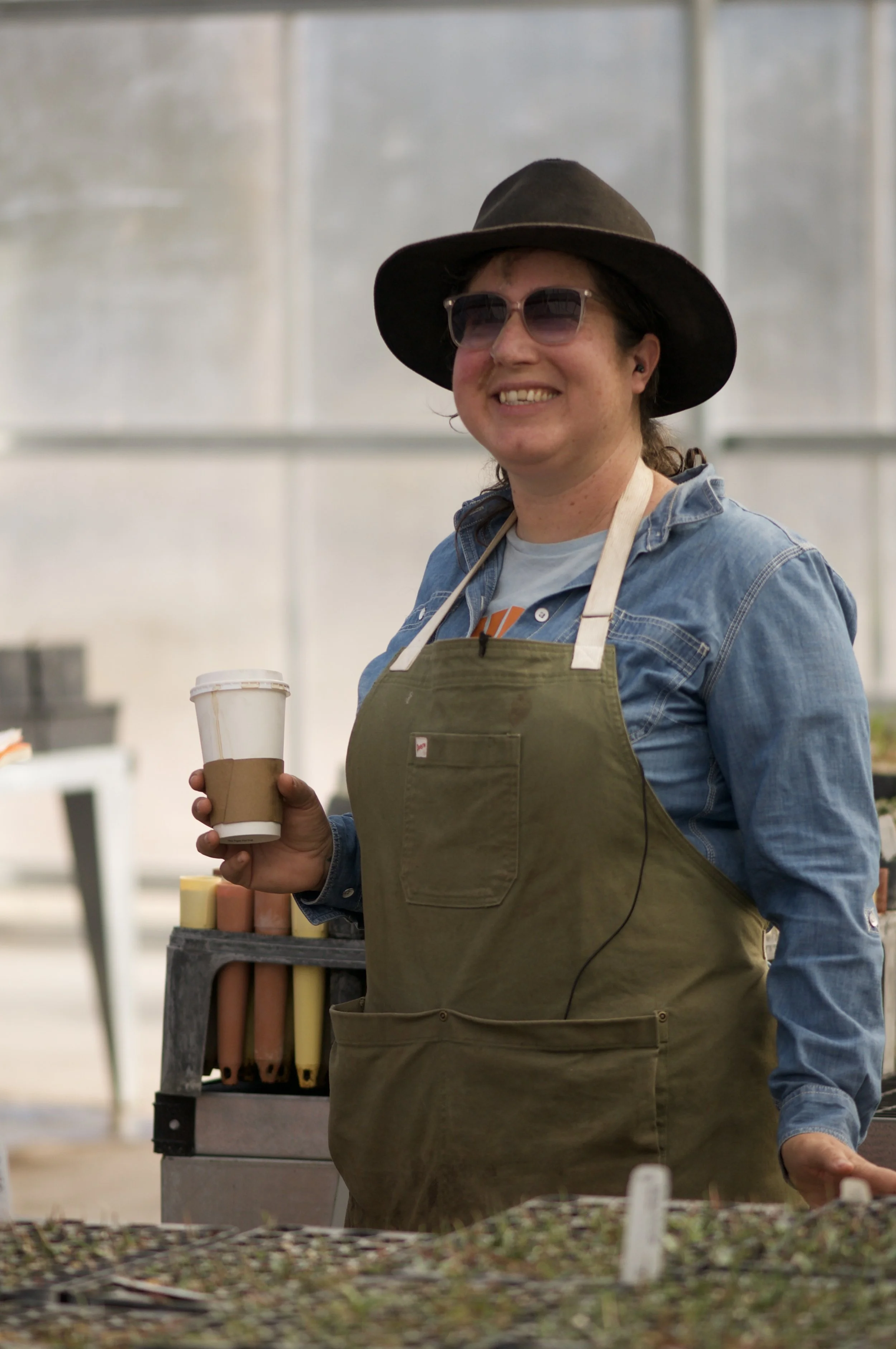
Throughout our exploration of the arid West, the term “native plant” had continued to weave its way through conversations surrounding desert ecology, landscape restoration, and cultural preservation. The phrase presented itself in such abundance that it was almost beginning to lose its meaning– something deep, nuanced, and immensely important to our understanding of the ecosystems of western North America, which was perhaps being stripped of its complexity and consideration to a kind of subconscious, unfounded familiarity. Whereas before, we might have thought of native plants simply as vegetation which grows naturally in a certain landscape, Francesca reveals how they are, in fact, the foundations of their very ecosystems– specifically adapted to the conditions and thus providing critical services and habitat for other plants and wildlife. This falsified comprehension gradually revealed itself through our time spent with Francesca Claverie, the Native Plant Program Director for Borderlands Restoration Network. Francesca grew up in Calexico, California on an alfalfa farm, venturing to the University of California Davis to study International Agricultural Development and Native American Studies. She spent most of her days in the Arboretum, familiarizing herself with the intricacies native plants. Francesca was welcomed back to UC Davis shortly thereafter as manager of the Arboretum, before moving to Patagonia in 2013 where she began the Borderlands Nursery and Seed project.The BRN is dedicated to both people and place. Striving to reconnect borderlands communities with the land throughout southern Arizona and northern Sonora via watershed and habitat restoration, the nonprofit is slowly reinstituting a sense of place within a hugely biodiverse and culturally rich landscape of the Sky Islands Region.
At the nursery, we sit in a greenhouse, nestled between tables which brim with plant pots, while Francesca is teaching us about the native plants in the region. Today, we are surrounded by the foliage of 168 species on site, and nearby over 500 species are cataloged in the nursery’s seed bank. With each word, Francesca demystifies the meaning of “native plant,” emphasizing that every variety is critically important to its natural ecosystem, whether or not humans can fully grasp the depth of their function. She paints this picture largely through the narrative of the agave and the Mexican Long-Nosed bat– an intimate relationship between long-living, blue-green, sedentary and serrated succulents and the nocturnal, nectar-loving little pollinators who are fueled by agave blooms along their migration routes. In detailing the relationships between native plants and their natural ecosystems, such as this, Francesca dismantles the naivety and limitation of an anthropogenic lens in understanding the term “native plant.”
by Marina Roberts