

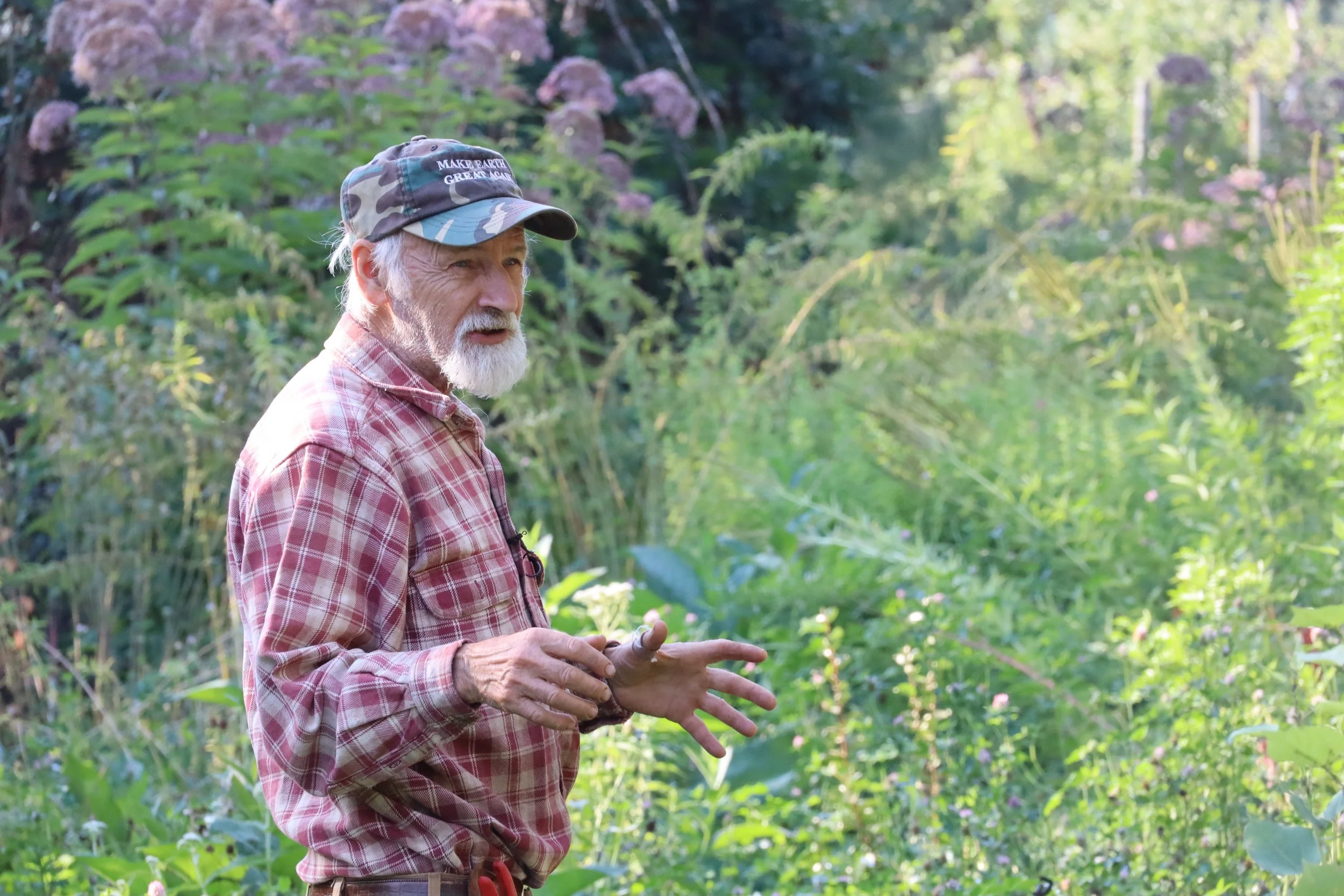
Michael 'Skeeter' Pilarski
Permaculture Specialist, Friends of the Trees Botanicals
Twisp, WA
September 2nd, 2025
We met Michael “Skeeter” Pilarski early on a hot September morning, out on his permaculture agroforest in Twisp, Washington. We spent the morning taking refuge from the heat among cottonwoods, black locusts and surrounded by plants with wonderful healing abilities. Black cohosh, an antispasmodic, oregon grape, a medicinal antibiotic, goldenrod, a powerful anti-inflammatory and hundreds more. Through our time exploring Skeeter’s medically rich wonderland we were treated to a variety of sweet and bitter fruit and berries, and a host of aromatic leaves. Skeeter’s quick wit, extensive plant knowledge and passion for his work had us engaged from the beginning. Skeeter began Friends of the Trees Botanicals, his medicinal herb permaculture project, over 25 years ago, but he has been involved in agriculture in Washington for years. He was an early member and founder in the early 70s of the Tilth Alliance, an organization devoted to helping facilitate access to healthy, nutritious, organic foods. He now helps run seminars on sustainable agriculture, and agroforestry all over the west.
The term agroforestry was coined in the 70s, parallel with movements like the anti-nuclear and environmental movements. It’s a land management principle that emphasizes a balanced and sustainable forest landscape, with diverse under and overstory and wildlife habitat. This practice allows medicinal plants to be harvested while preserving the landscape. Through his beautiful forest and inspired way of life, Skeeter inspired us to think about alternative ways to steward land, and care for our communities. Skeeter started the agroforestry project with out of a sense of bold optimism for the future of our planet and for future generations. His mission is backed by the conviction that "agroforestry is what will save the climate.” He now operates this organization alongside his son, and hopes to see him take over parts of the operation while passing the agroforest on to communal ownership as part of an herbal medicine cooperative.
by Penelope Doulis