
Molly Blakowski, Dan Lautzenheiser, Ian Bell
Greater Basin Unified Air Pollution Control District
Owens Valley, CA
October 7th, 2025
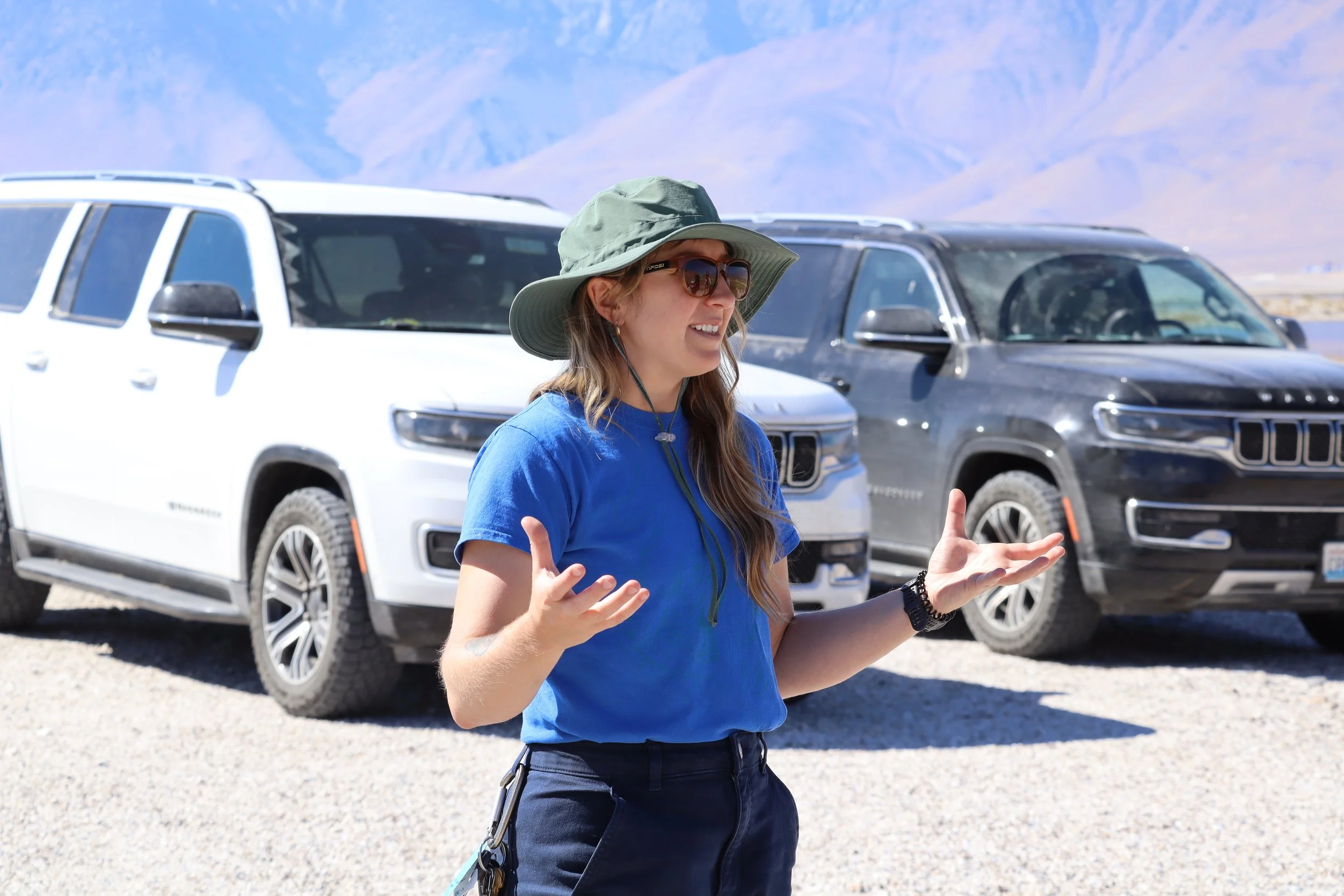
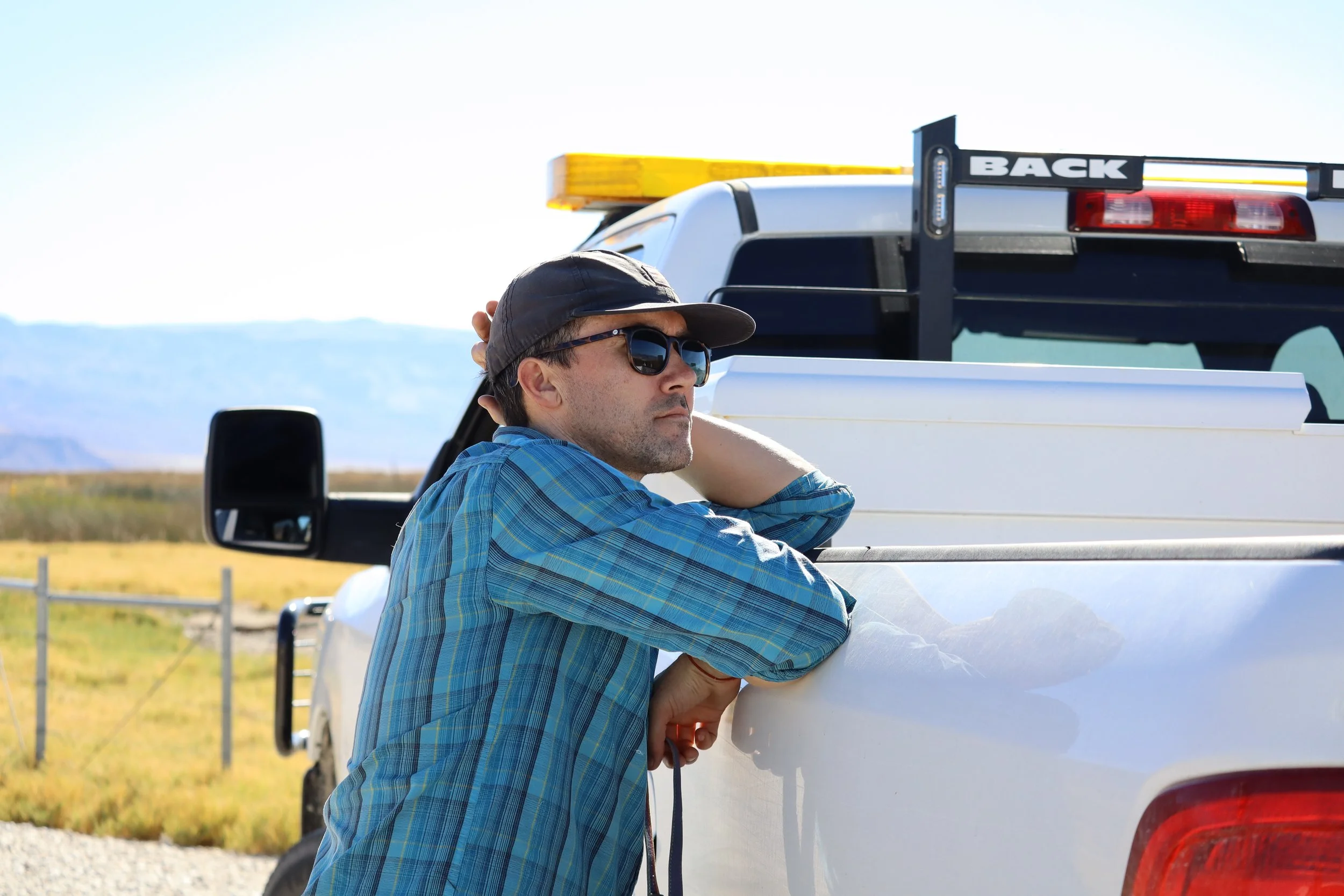
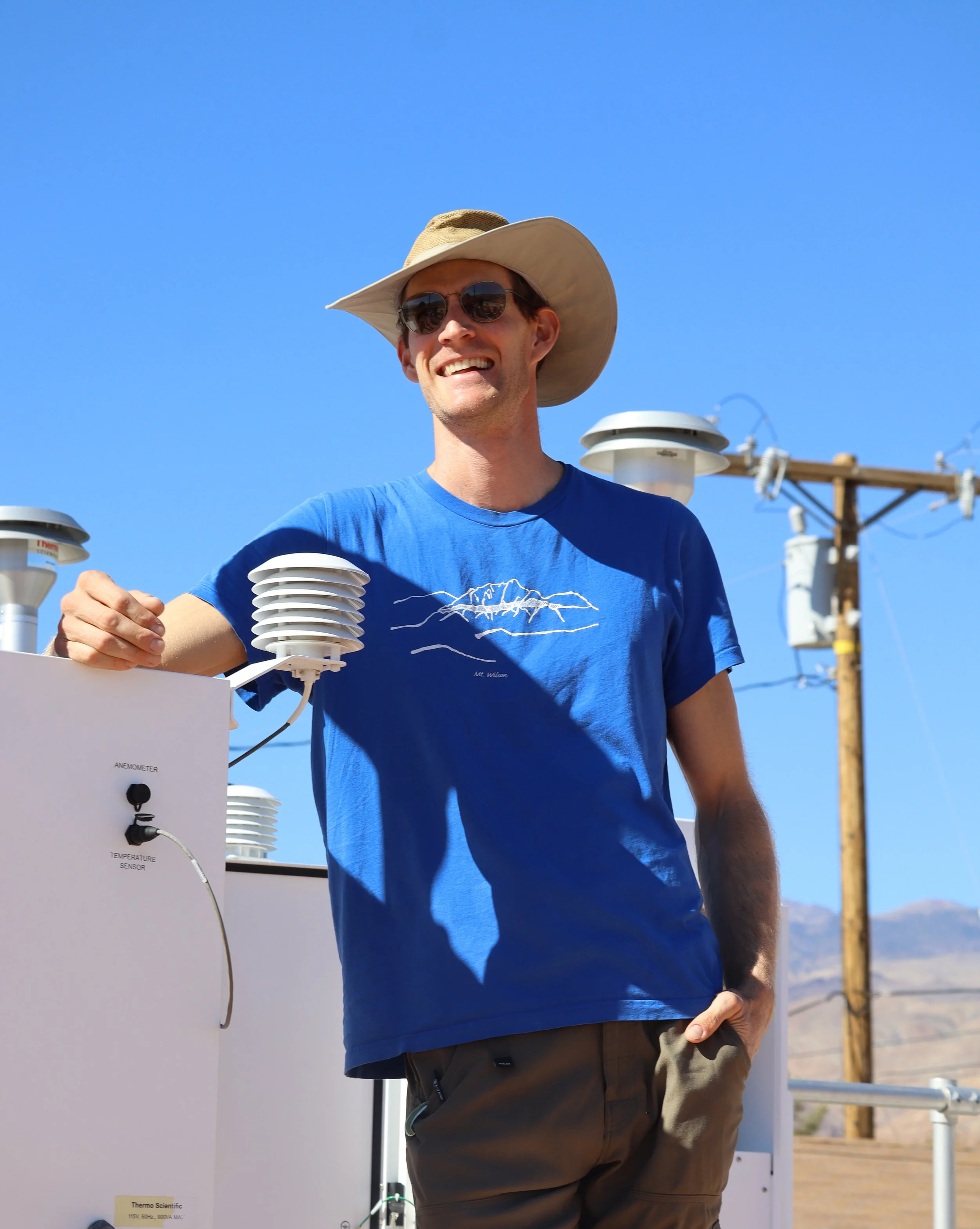
We sit on top of two shipping containers covered in air quality monitoring equipment. Dan Lautzenheiser is explaining the nuances of air quality measurement and equipment upkeep. Dan is tall, he’s well protected from the hot sun, wearing a dapper sun hat and sunglasses. As he shows us the workings of the various white boxes standing in front of us, he is backdropped by Cerro Gordo, the mining town that made LA rich in the late 19th and early 20th centuries. Within the crowd of students stands Molly Blakowski, dressed in a way that would make you think she was a Westie (blundstones and cool sunglasses), and Ian Bell, an actual former Westie, with his dog Oozel. Dan, Molly, and Ian all work for the Great Basin Unified Air Pollution Control District (GBUAPCD). One of 35 air pollution control districts in California. They measure air quality standards according to federal, state, and local levels to protect sensitive members of the community and to keep people informed throughout the counties of Inyo, Mono, and Alpine. GBUAPCD’s position is unique because Owens Lake is situated within their jurisdiction. The remains of a saline lake that has all of its tributaries diverted into the Los Angeles aqueduct. What is left is the largest single source of PM10 (particulate matter less than 10 microns in size) in the United States. Exposure to PM10, which is easily absorbed into your lungs and bloodstream, can result in a variety of lung problems, especially for those with preexisting conditions.
GBUAPCD receives much of their funding from the Los Angeles Department of Water and Power (LADWP), because of Senate Bill 270. This bill faults LADWP for the state of the lake. Before LADWP’s diversions, Owens Lake was a semi-ephermal lake that served as a rest stop for migratory birds, wasn’t an exposed dust plain, and was a food source for native peoples. Now the only thing it can support is hardy grasses that still require constant human upkeep to keep them surviving. And so, LADWP is tasked with dealing with the issue of a dry toxic lakebed. And GBUAPCD helps them with that, measuring air quality, helping with restoration projects, and keeping the public informed about their safety in relation to the lake bed.
by Jeremiah Harder