Meet our Guests: Will Natividad

Will Natividad

Project manager, Resource Environmental Solutions RES,

Klamath River Basin, OR

September 25th, 2025

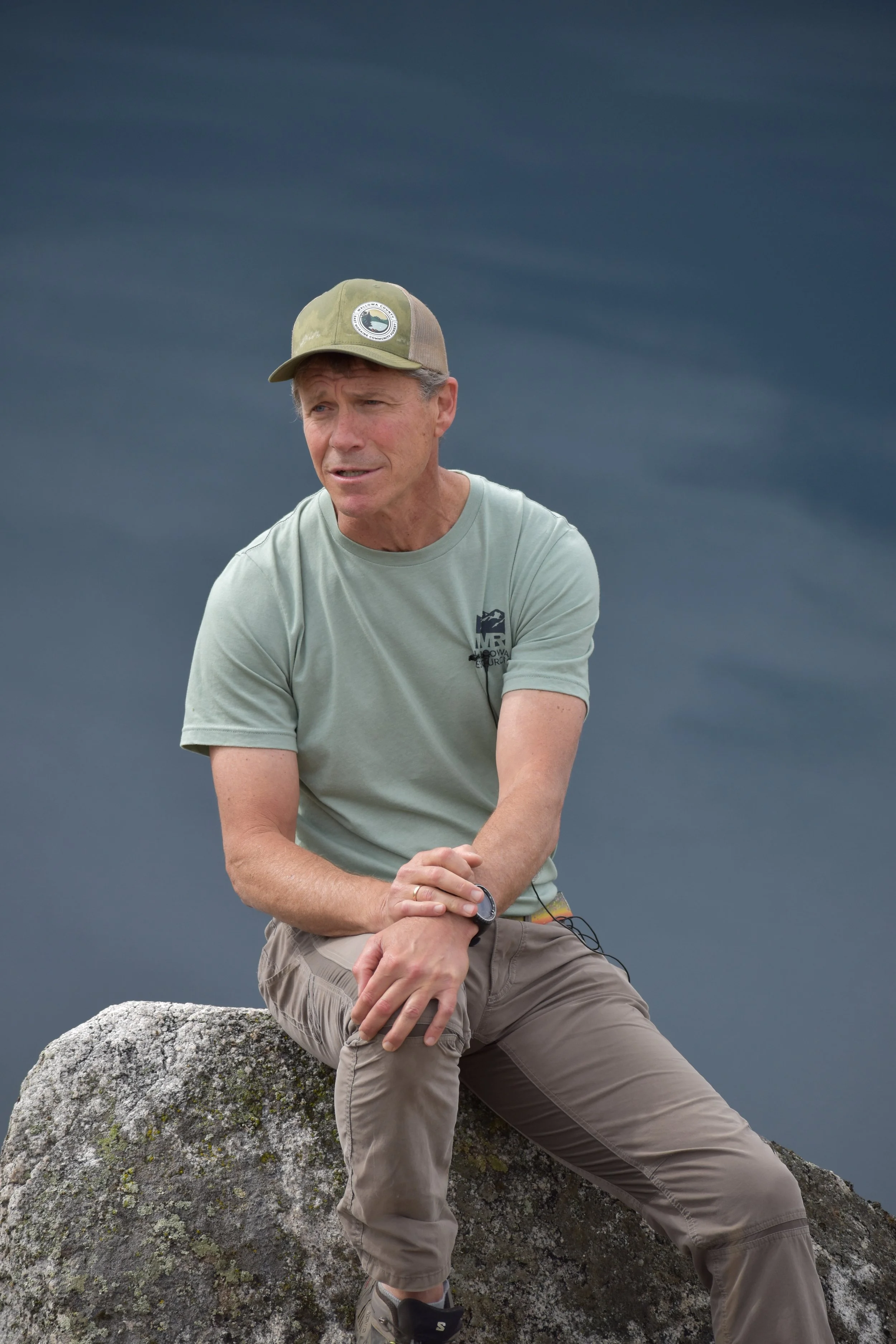
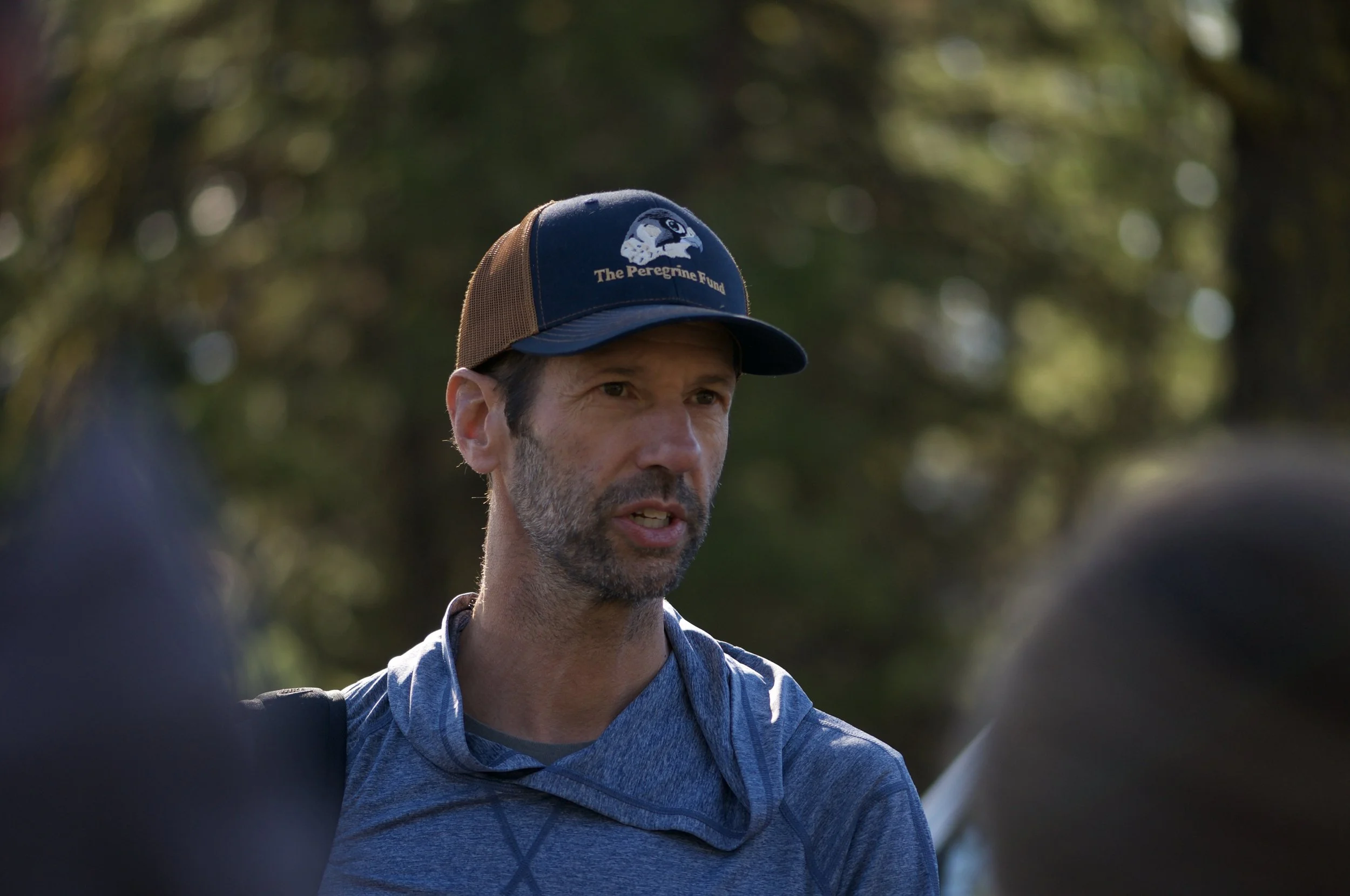
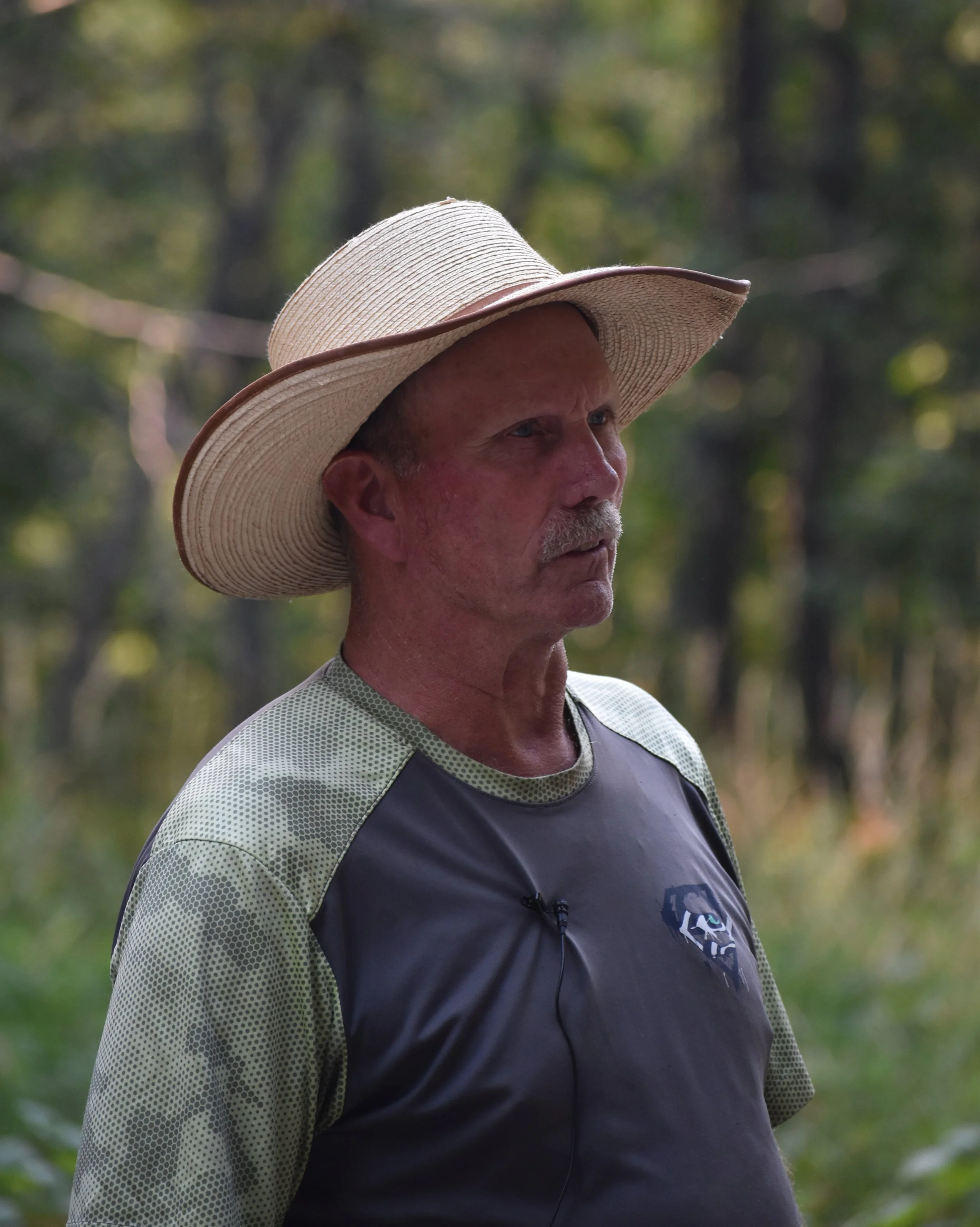
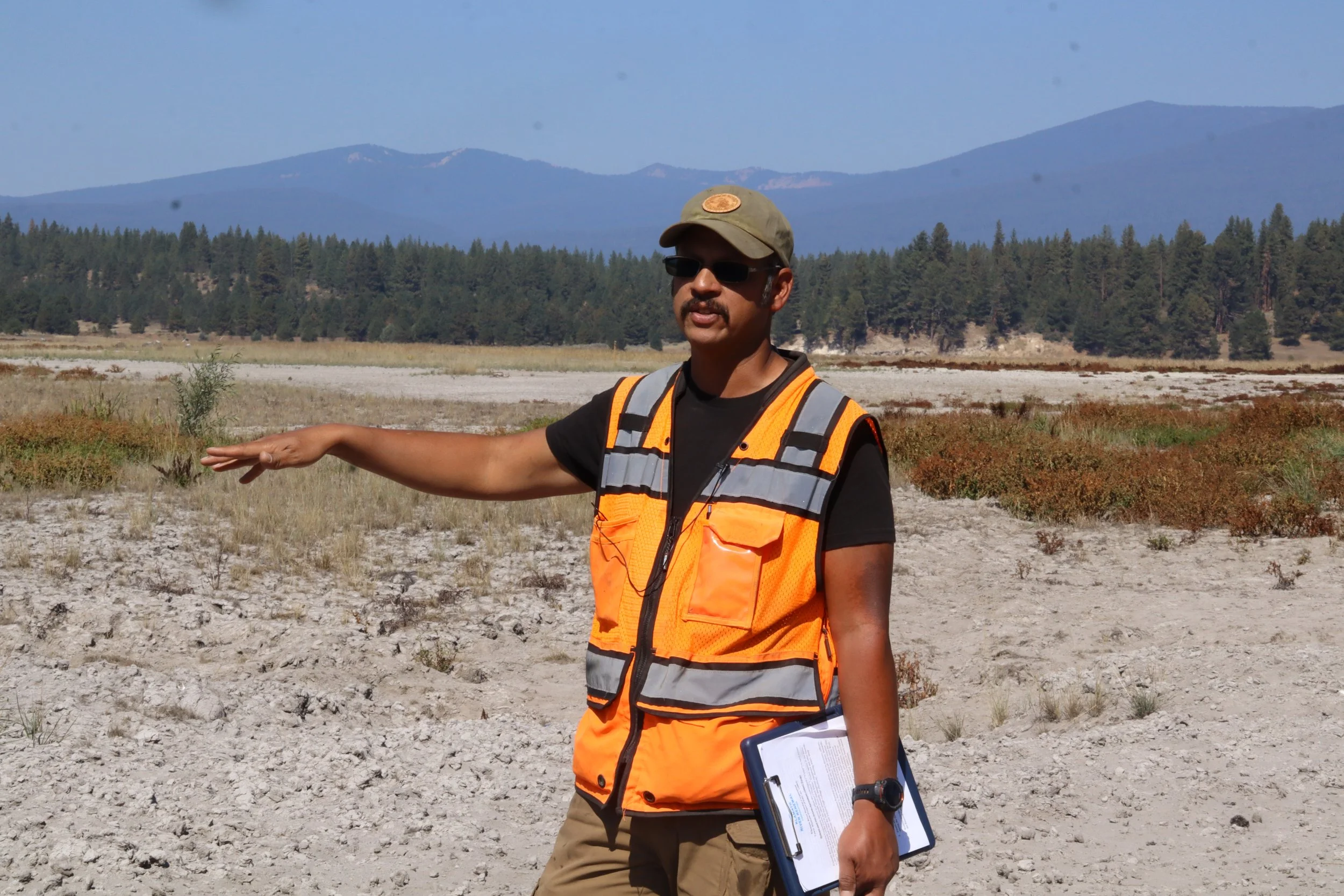
We stand on a hill above the banks of the recently undammed Klamath river, its swift waters rushing by. Looking down we see soil that only a year ago was submerged under the JC Boyle reservoir, we now see plants valiantly growing up through the cracks in the earth. Will Natividad the project manager for Resource Environmental Solutions, the organization dedicated to replanting the area tells us the story of the river and the dam removal.


The Klamath river was dammed beginning in 1918 by PacifiCorp to bring power and irrigation to the American west. These dams however had detrimental environmental and cultural implications. In 2002 the water levels ran so low that tens of thousands of salmon died off. So, after years of advocacy in 2024, four of the six dams came down. It’s here that Will and his organization stepped in to help restore the land. Partnered with tribes of the Klamath river basin Resource Environmental Solutions has been saving seeds all up and down the area to aerially seed along the riparian zone of the river, along with hand planting in specific areas, and their work is starting to show all along the upper basin.


Will, who served in the Navy on a submarine, tells us that following his time in the navy he wanted to dedicate himself to something constructive rather than destructive. Via his work on the Klamath, he asks us, “Is it more noble to destroy or to renew?”


 by Penelope Doulis
Meet our Guests: Tara Thissell and Crimson Presley

 Tara Thissell, Crimson Presley

Communications Lead and Horse Adoption Manager, BLM Wild Horse Corral

Burns, OR

September 23rd, 2025

“We’re in the worst possible situation you could be in.”

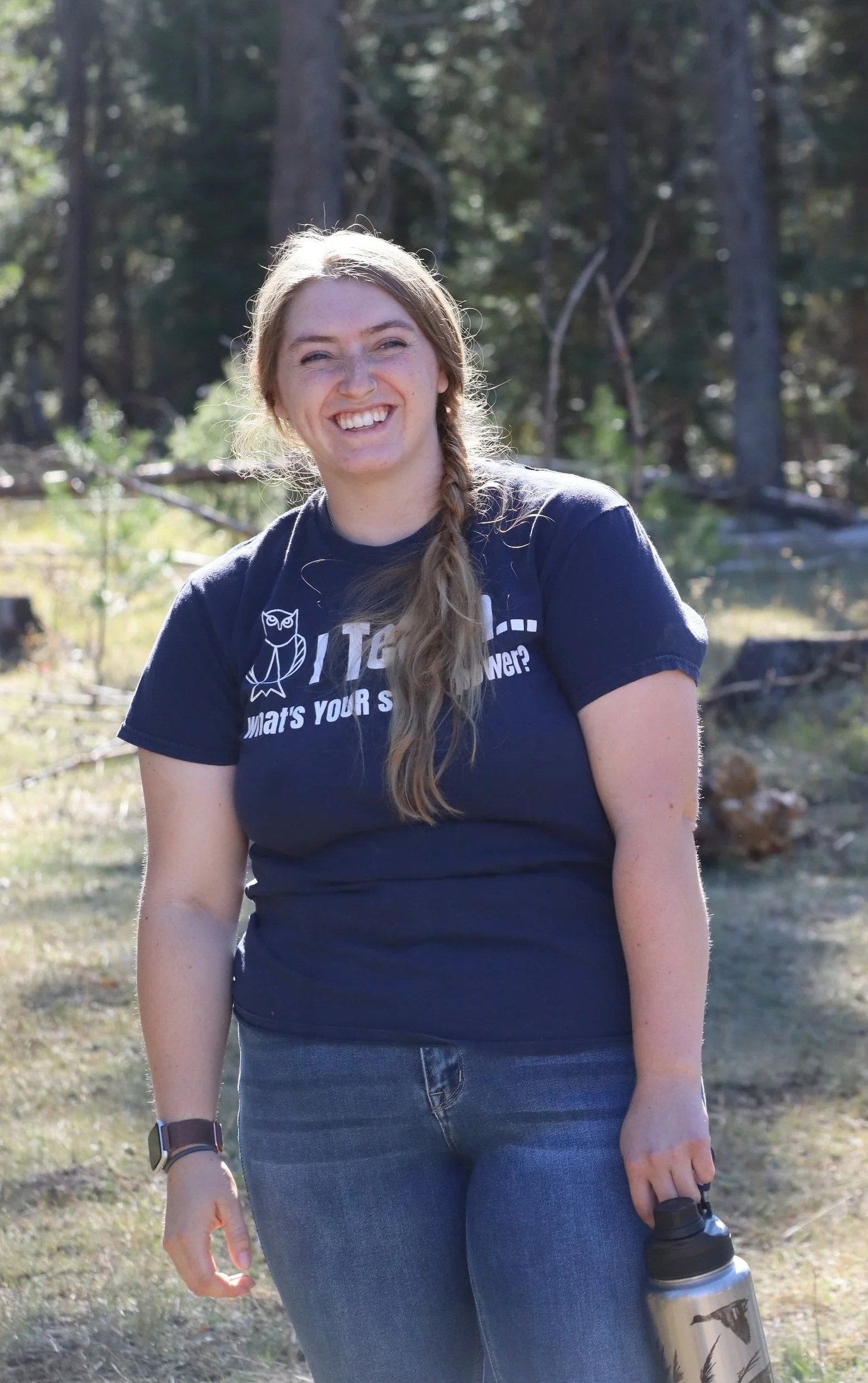
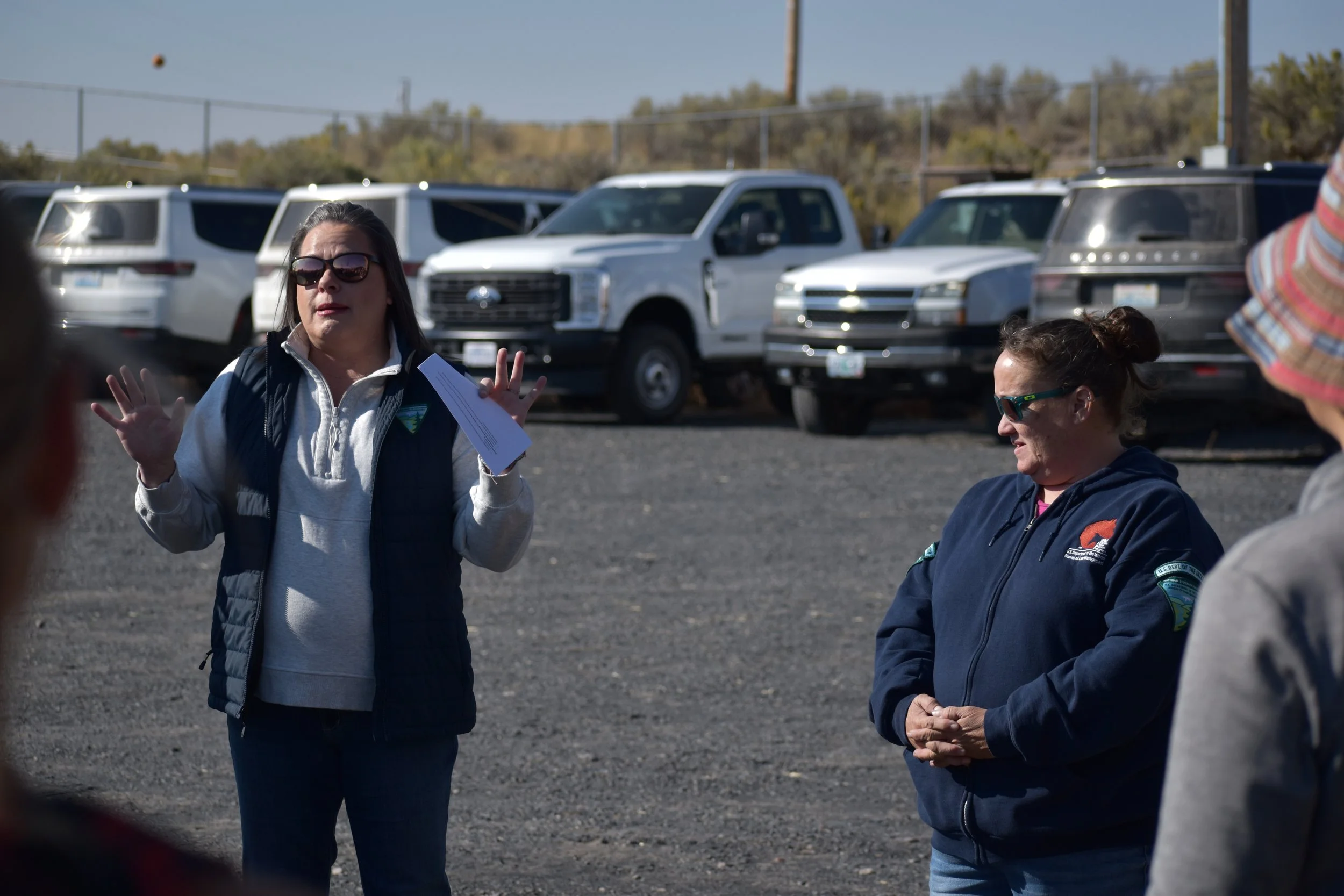
Those are the words of BLM Burns Horse Corral Communications Lead Tara Thissell regarding the wild horse crisis in the Western United States. At the Burns Wild Horse Corrals, we meet with Tara and her coworker, Crimson Presley, who is in charge of adopting out horses captured on public lands. Hundreds of dull metallic clangs ring out as our forty-two feet creep along a metal catwalk overlooking the enclosures in which 500 wild horses reside. A sea of hooves, barrel-chested bodies and long, mottled necks sprawls out before us.

In the observation pavilion in which we later sit, a poster reads “How to Adopt a Living Legend.” Wild horses are one of, if not the most recognizable icons of the idealized American West. Generations grew up seeing Clint Eastwood and John Wayne gallop across the unconquered plains and plateaus atop these symbols of freedom and the frontier. Unfortunately, the reality surrounding horses in the west is far from a fairytale. With no natural predators, wild horse populations have skyrocketed, putting an immense amount of stress upon the ecosystems in which they reside.

Enter the Bureau of Land Management. They are on a mission to humanely relocate a large amount of these horses to reduce the amount of strain on the land. Across 28 horse corrals and various other facilities and pastures over several states, they currently hold approximately 65,000 wild horses in captivity.

by Griffin Arnett

Meet our Guests: Nils Christoffersen

Nils Christoffersen

Executive Director, Wallowa Resources

East Moraine Community Forest, Wallowa County, WA

September 21st, 2025

The westies arrived at the Wallowa Community Forest on a rainy morning already a bit damp from our night. We were greeted by Nils Christoffersen, the executive director of Wallowa Resources, a non-profit with what he describes as the lengthy mission statement of creating strong economies and healthy landscapes through land stewardship, education, and job creation. We start our hike up the east moraine of Wallowa Lake as Nils describes how at one point this land we are walking on was going to become a site for apartment buildings and large homes. Wallowa resources was able to come in and create this idea of a community forest, bringing together many ideas and viewpoints from the community. Currently on the board of the community forests there are ranchers, the US Forest Service, several environmental non-profits, and tribal members from the Nez Pierce tribe. Nils also discussed their focus on boosting the town's economy.  This county used to be more populated when there were active mills and lumber coming from nearby forests, yet as mills closed due to logging regulations changing, people began to move out. He now works to create a stronger, more diverse economy for the town and create a draw for people to move there whilst still making it a viable economy for those who already live there.

by Katharine Graham

Meet our Guests: Mark Tveskov

Mark Tveskov

Professor of archeology and ethnohistory at Southern Oregon University

Maxville, OR

September 19th, 2025

Standing in a dry field surrounded by sparse pines and grasses, we are instructed to look down at the dry soil beneath our feet. As I scan the ground, small bits of glass and metal glint towards me in the sun, I pick them up to read the lettering of an old jar that I’m told is from the early 1900s.

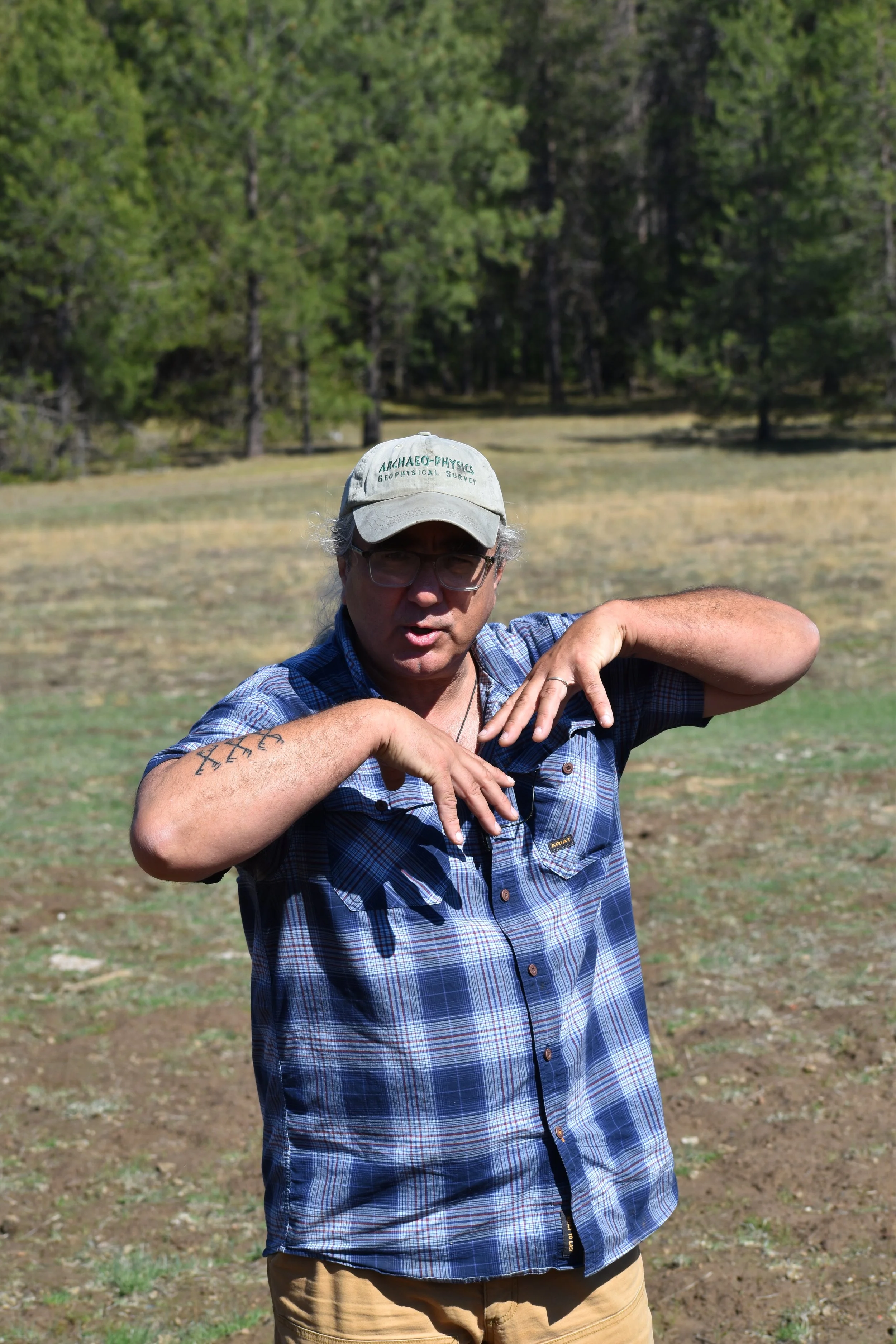
Mark Tveskov, an archaeologist, stands before our group. He is telling us about the history of the site we are standing on. The Maxville Heritage site, located in Wallowa County, was a segregated logging camp 100 years ago. When it was shut down in the 1930s, residents left behind artifacts like bottles, tools, and even cars.

Mark is part of Maxville’s mission to educate people in Wallowa and beyond about a forgotten part of history. He teaches archeology and ethnohistory at Southern Oregon University in Ashland, where his mission is to preserve historical memory. Colonialism, ecology, and conflict archaeology are his concentrated areas of study, which we saw in the nuanced and introspective way he guided us through the site. ​​In explaining the history of this site, he encouraged us to observe our own behaviors interacting with the historic objects. Our time with Mark taught the group how we can work towards preserving history in a respectful and conscientious way.

by Wilson Finlay

Meet our Guests: Howard Teasley

Howard Teasley

Director and Operations Project Lead- Nez Perce Tribal Forestry and Fire Management Division and Board of Directors, Maxville Heritage Interpretive Center

Maxville, OR

September 18th, 2025

In bucolic Bishop Meadow, around 12 miles north of Wallowa, Oregon, sits the historic site of Maxville. A former segregated logging town, Maxville operated from 1923-1933. Now, the Maxville site is owned and managed by the Maxville Heritage Interpretive Center (MHIC) to gather, preserve, and share the rich history of African American, Indigenous, and immigrant loggers in the Pacific Northwest.

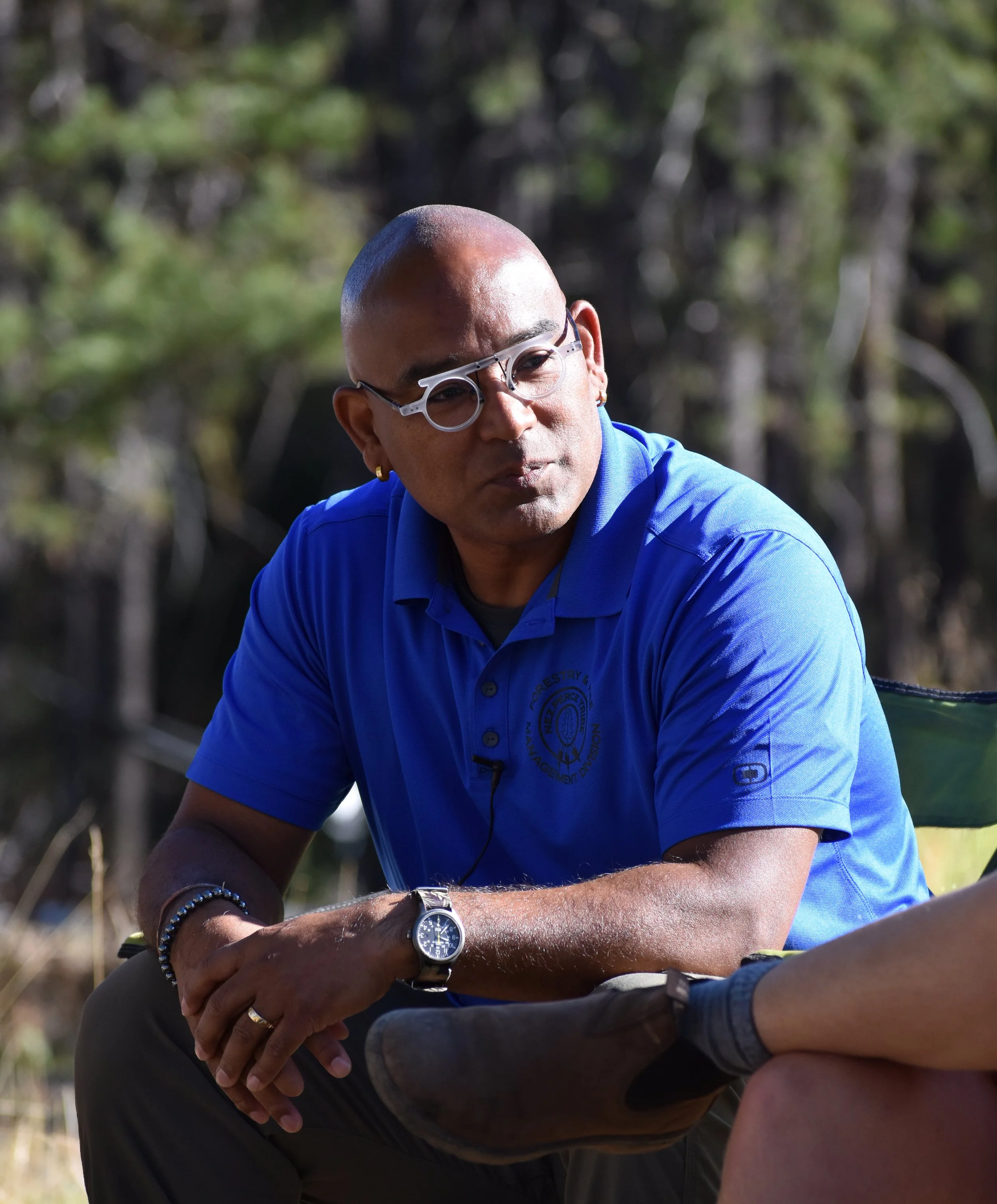
Howard Teasley serves on the board of MHIC, bringing his expertise as Director of Operations and Project Lead of the Nez Perce Tribal Forestry and Fire Management Division. Howard kindly met with us at the Maxville site on September 18th. He began by explaining his unique heritage, which is part Nez Perce and part West African, as well as his upbringing in Seattle, Cheatham County, Tennessee, and Lewiston, Idaho. Additionally, he taught us the unique history of the Nez Perce tribe, whose traditional lands were taken from them during the Nez Perce War of 1877, when they were forcibly expelled from the Wallowa Valley. Howard emphasized the department’s role in overseeing forestry on the Nez Perce Reservation, as well as in the tribe’s ceded territory, where the tribe maintains a “Good Neighbor Agreement” with the US Forest Service to conduct forestry operations on USFS land. On the Maxville Site, owned privately, the Nez Perce were contracted to thin the denser sections of forest. Howard guides the forestry prescription, which includes the eventual goal of restarting cultural burning for first foods, as well as maintaining an easement to allow the tribe to harvest those foods on the property.

We thank Howard for his time spent with us, as well as his wealth of knowledge and continued work to improve forestry practices!

by Trevor Maziek

Meet our Guests: Ashley Derringer

Ashley derringer

Education Programs Manager, Maxville Heritage Interpretive Center

Maxville, OR

September 18th, 2025


As we sit in the last standing building of Maxville, a historical logging-town-now-archeological site, each of us crafts a drawing of the roots of a tree. Some are very literal, with a maze of tree roots reaching down into the ground, while others are metaphorical, and represent the ideas that ground that person, such as a wave to represent their connection to water. Ashley Derringer is guiding us through the Seeding Hope and Healing program, a trauma-based healing program that she teaches at Maxville. Ashley is the Education Programs Manager at Maxville Heritage Interpretive Center. These roots that she has instructed us to draw represent our own roots. Ashley shared with us the roots of Maxville, as well as some of her own roots. She is from Wallowa County, where her family has lived and logged for generations. This root has brought her here to Maxville. We then shared our roots that brought us to this space.

The culmination of the Seeding Hope and Healing program was a list of community agreements. With Ashley’s patience and encouragement, we thoroughly discussed difficult and sometimes sensitive topics to create a list of agreements to better our community. While this process was strenuous, it gave us the space to think about what the Semester in the West community means to each of us, and how we can continue to grow together. Ashley pushed us out of our comfort zones and into an introspective zone. In this zone, we explored more about ourselves, our community, and the communities like the Maxville Heritage Interpretive Center that we are so thankful to have been a part of.


by Lucy Brown

Meet our Guests: Gwen Trice

Gwen Trice

Founder/Executive Director, Maxville Heritage Interpretive Cente

Maxville, OR

September 17th – September 20th, 2025

Jumping out of the cars after a bumpy ride on a dusty gravel road, we were greeted warmly with a big smile by Gwen Trice, the Founder and Executive Director of the Maxville Heritage Interpretive Center, sitting on 240 acres of land in Wallowa County, Oregon. Of the 240 acres, 96 of them housed the original town of Maxville, an old logging town that operated for a decade during the 1920s and 30s until the Depression hit. However, Maxville was no ordinary logging town, as it was segregated between the white residents and the almost 50 African American families that lived and worked there.

Gwen, daughter of Lucky Trice, one of the black loggers recruited to work at Maxville, shared with us her personal story of transformation, from knowing little about her and her family’s past to becoming the keeper of it. In a display of vulnerability, she recounted growing up being the only black student in school. She described feeling a lack of connection to those around her. However, she went on to find connection through salsa dancing and acting and changed that hurt into a drive to heal.  

Gwen’s mission is to build a historical narrative that is inclusive of her voice and the voices of others often erased. She works directly with the Nez Perce tribe in order to practice sustainable forestry and encourage traditional use of the land by the people who were once ejected from it. Gwen also works with local elders and archeologists to tell the complex story of Maxville.

Throughout our time in with Gwen, we were led through several exercises in reflection and community building that helped reshape our own community to be more inclusive of all voices, just as Gwen hopes for the rest of the world. With lots of laughs, tears and hugs, we departed from Maxville with a greater appreciation of how community is built.

by Katherine Finger

Meet our Guests: David Mildrexler

David Mildrexler

Systems Ecologist, Wallowology

Starvation Ridge, OR

September 15th - 16th, 2025


The Westies sit perched on a stone bench, snacks and lunches resting in laps, like a flock of birds all lined up on a branch, enjoying the afternoon’s catch. Pink cheeks and drained Nalgenes are aplenty after a morning hiking the nearby Chico Trail. Behind us, the sprawling beauty of Joseph Canyon is on full, uninhibited display– a mosaic of bunch grass and shrubland intermingled with strings of ponderosa pine and layers of exposed basalt, all decorating a landscape carved deeply by Joseph Creek. In the center of our group, David Mildrexler– Systems Ecologist with Wallowology (the education and outreach branch of Eastern Oregon Legacy Lands, an environmental conservation nonprofit) and contractor for the Nez Perce tribe– wraps up his day with us.

The rugged, natural elegance of the surrounding landscape has become immensely clear to us from our time spent with David over the past two days; however, David tells us, Joseph Canyon has not been deemed an official “Wilderness” by the federal government, but, instead, is protected under the designation of “Roadless Area.” David, who received his M.S. in Forest Science from the University of Montana and his PhD in Forest Ecosystems and Society from Oregon State University, has guided us through a discussion of how the U.S. labels and fragments the natural landscape, emphasizing how these manufactured categories dictate our management and protection efforts. He prompts us to ask ourselves, what is wilderness? Who gets to decide this definition?

Oftentimes, “less flashy” landscapes, as David describes them, like Joseph Canyon, are overlooked in legal conversations surrounding environmental protection, even when they likely hold immense ecological and cultural value. Not only is the canyon incredibly important ecologically, serving as a migration corridor for an array of native species by linking the Hells Canyon and Wenaha-Tucannon Wilderness areas, but it is deeply rooted in Indigenous culture as the sacred homelands of the Chief Joseph band of the Nez Perce tribe. For these reasons, David describes for us the necessity and urgency of protecting Joseph Canyon as a Roadless Area.

by Marina Roberts

Meet our Guests: Paul Tabayoyon

Paul Tabayoyon

Wapato Filipino Community Hall Director

Wapato, WA

September 11th, 2025

 Upon entering the Historic Filipino Community Hall, our noses picked up the fragrant smell of Filipino cuisine cooking in the adjacent room. Paul Tabayoyon, the executive director of the Asian-Pacific Islander Coalition of Yakima, invited us to this hall in Wapato on September 11th to share how the Filipino-American community in Washington has managed to thrive in the face of discrimination. This is a history that took place within the Yakama Indian Reservation, where the town of Wapato became a hub for many different cultures, including a Filipino-American community which built the aforementioned hall in 1952.

Having grown up in and around the Community Hall and with relatives adorning the walls, including community leaders and veterans of six different conflicts, Paul talked to us about how this hall was a result of and key in the Filipino community’s fight against racist laws and institutions. A series of state and federal Alien Land Laws in the early 20th century had massive effects on Asian communities in the Yakima Valley, preventing them from owning or renting property. Despite this, Paul discusses how, with help from Yakama tribal members, the community established thriving companies within the valley and ultimately organized and advocated for the repeal of said laws. 

Paul is engaged in keeping the culture of the Filipino community alive in Wapato. Part of that preservation includes the listing of their hall as a National Historic Landmark, which occurred in 2023, but most of it involves keeping community members engaged through activities such as senior meal programs and youth events. Per Paul’s own words, “We’re just really excited that we do have a lot of youth… I’m glad they can come in here and hang out all day and avoid the crazy.” The Community Hall includes a kitchen which sells Filipino food, and we are very grateful to Paul for paying so all of us could enjoy excellent adobo and some savory lumpia before leaving.


by Everett Calhoun

Meet our Guests: Jonalee Squeochs

Jonalee Squeochs

Yakama Nations Farms Manager

Yakama Nation, WA

September 11th, 2025


Surrounded by the whir of motors, as workers busily package food, we walk through rows of produce and excitedly point to packaging of the grocery stores we are familiar with, each box marked with a destination.  We are led by Jonalee Squeochs, a Yakama Nations tribal member, and manager of the Yakama Nations farms. Throughout our visit Jonalee emphasizes just how important the Yakama Nations farms have been in establishing greater food sovereignty for the tribe, as well as providing a safer, more community driven employment option for people in the area in comparison to the dominant form of agriculture commonly practiced here. Not all farms  provide the equitable and safe working conditions that the Yakama Nation Farms do. After a week of hearing from many community members that had been personally subjected to labor abuses it was a breath of fresh air to hear from someone as dedicated to cultivating food that's good for the earth as well as the people growing it as Jonalee.

by Noah Pody

Meet our Guests: Maria Fernandez

Maria Fernandez

Executive Director of ELLA

Sunnyside, WA

September 10th, 2025

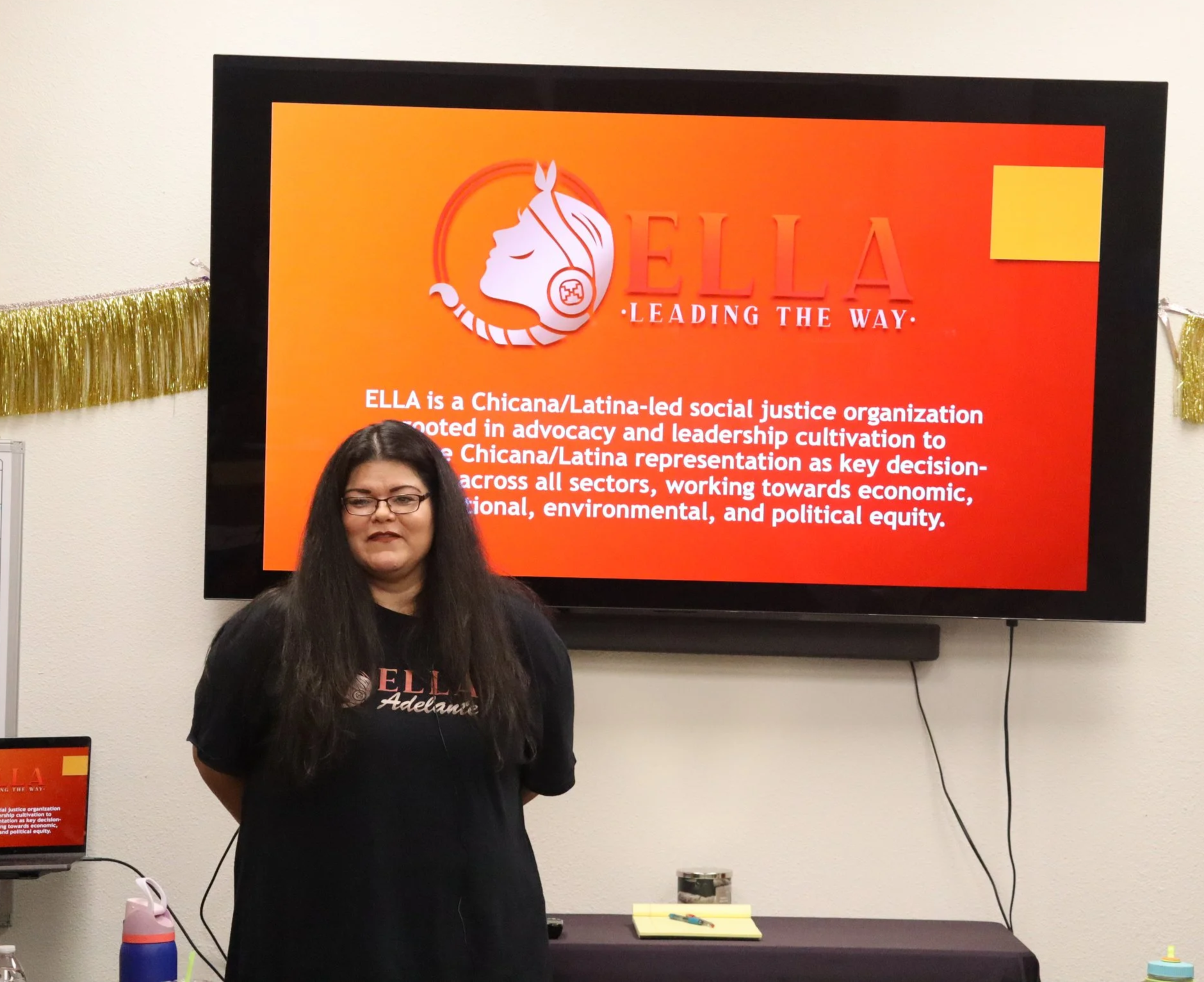
“He would come home drenched in chemicals”, Maria Fernandez tells us, the founder of Emerging Latina Leadership and Advocacy (ELLA). " To this day, we’re still seeing the same thing”, she continues, which is why ELLA is one of the most prominent advocates of environmental justice in the Yakima Valley. We’re in the ELLA headquarters, in the small agricultural town of Sunnyside, Washington, and Maria is sharing how her father used to spray pesticides on crops all day, without his employer giving him personal protective equipment that would have shielded him from the chemicals. Her father died of melanoma cancer when Maria was in college, a disease she attributes to his cumulative years of pesticide exposure.

Maria cites the early loss of her father and the lack of representation of latinos in her history classes as her inspiration for political involvement. She initially founded ELLA to be an advocate for women fleeing domestic violence, and has since expanded the organization to educational and advocacy branches with the purpose of getting more Latina women in positions of power. Maria personally developed these courses and their curriculum to help women gain leadership skills for the home and workplace. This training, called the Latina Leadership Circle, has helped multiple women be voted into office at the municipal level in Sunnyside. This was a major and long-overdue accomplishment, considering that the community is 80% Latino, but the city council was entirely white.

Maria and ELLA are deeply committed to advocating for clean air and drinking water for the families of Sunnyside. They are fighting politicians and major dairy corporations to advocate for these basic rights. Specifically, Sunnyside is located in what is called a “dairy cluster”, where there is an extremely high concentration of dairy farms. There are more than 100,000 cows in the area. The air quality is in the 96th percentile for the worst in the nation. Hundreds of families’ wells are polluted with ammonium-nitrate, a chemical found in fertilizer known for causing cancer and birth defects. In a community that’s primarily Latino, the government’s lack of protection and regulatory action against the dairy industry is environmental racism. Clearly, this work is a steep uphill battle, but through political action, litigation, and community education, ELLA is providing crucial support for people that have been historically marginalized.

In my notes from the end of the presentation, I wrote, “the world needs to be filled with Marias”. My classmates and I left very inspired by her dedication to fighting for her community and deeply appreciated the opportunity to learn from her.

by Liza Lebo

Meet our Guests: Lorena Medina-Dirksen

Lorena Medina-Dirksen

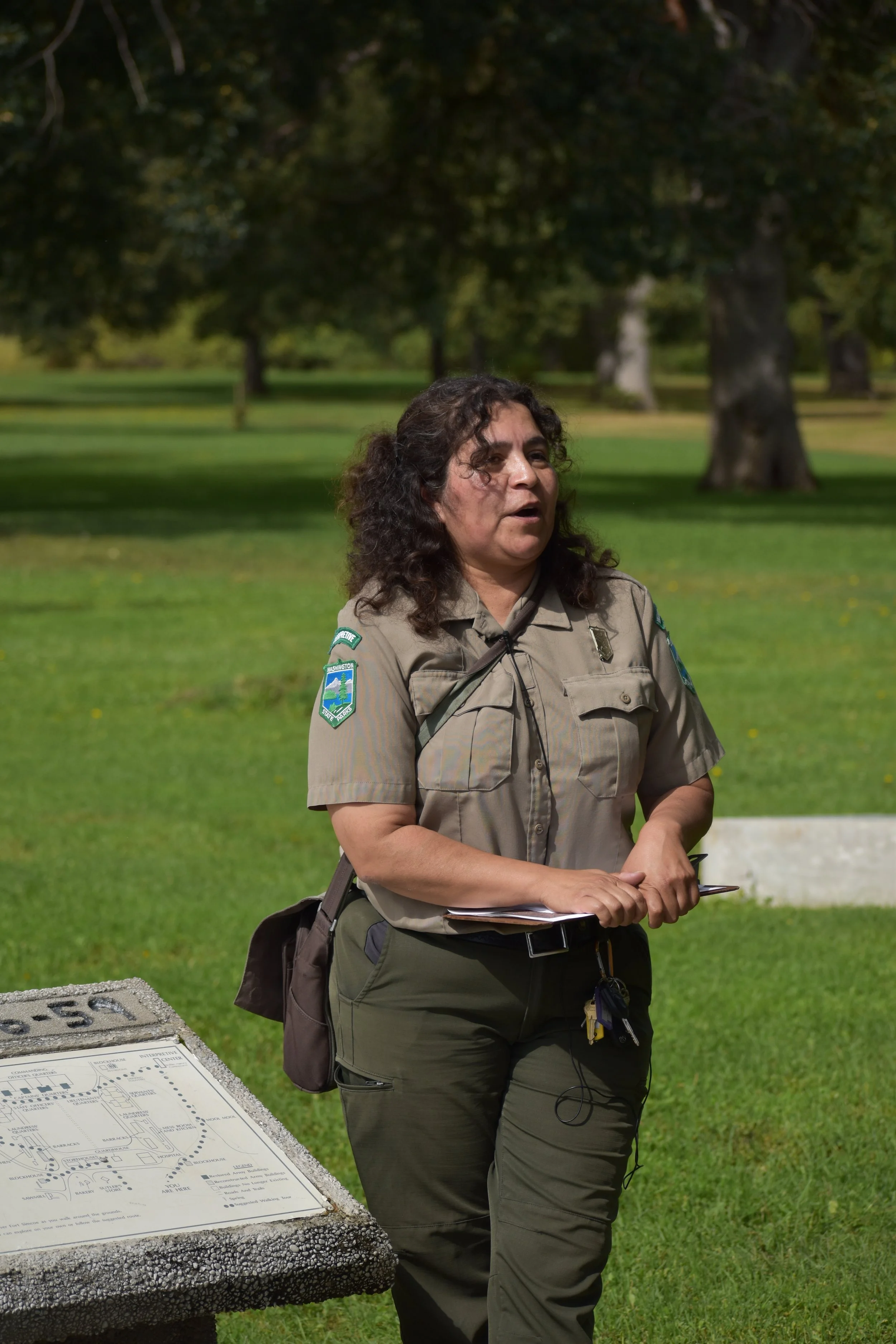
Washington State Park Special Interpreter at Fort Simcoe

 Fort Simcoe, WA

September 9,th 2025

“I love it. I love the challenge of learning new things. I love it. Just talk with people and try to explain to them and try to make them amazed about what we have.”

For the past three years, Lorena has worked as the one and only Specialist Interpreter at the Washington State Park of Fort Simcoe located on the Yakama Nation Reservation. Coming from Mexico City twenty-eight years ago, Lorena’s passion was and remains sixteenth century Central Mexico Spaniards and Aztecs. For the time being, however, Lorena is enjoying the challenge of exploring new history and finding that there are many similarities between her home and Yakama.


As we spent the morning with Lorena touring the land, she relayed various historical facts. Fort Simcoe, originally a garden stewarded by indigenous peoples, was taken over by the US military during the Yakama War. Many of the buildings that once lined the open square are gone today but some remain to convey the past. From the large white Captain’s quarters at the heart of the fort to mundane wooden barracks further down the hill, we began to imagine what it may have been like back in the day of settler occupation. There is much to be felt and processed here, especially when thinking about the Indian boarding school and jail that once operated and remain as physical marks on the landscape. Yet Lorena is still here working to educate those that are willing to listen and learn about the complexity of the past.


by Allee Garver

Meet our Guests: Blythe Delarosa

Blythe Delarosa

Environmental Scientist at Yakama Nation

Yakama Nation, WA

September 8th, 2025

The Westies spent the morning viewing the wild horses of the Yakama Reservation, and were enthralled by their majesty. We then returned to our campsite to meet with Blithe Delarosa. As we sat beneath the blazing Yakima Valley sun, she held our attention with her quizzical perspective on the wild horses and Agriculture in the Yakama Indian Reservation.

Blithe is a Whitman alum and Yakama Descendeant who now works as an Environmental Scientist for the Yakama Nation; she focuses her work with the tribe to maintain soil and water quality. Her job is exceedingly important, as the Yakima Valley produces 80 percent of the United States hopps and around 70 percent of the apples—for which the quality of the soil and water is essential. 

 Blithe also discussed the challenges the tribe faces with the wild horses. She explains that they are called ‘Shitters’ and due to their extreme overpopulation have mutilated the landscape and with it, the Yakima Nation’s access to their first foods, including deer, roots, elk, salmon, and huckleberries. Our conversation with Blithe challenged our earlier perceptions of the horses as wild and symbiotic with landscape perspective and allowed us to see a more multifacited view of the issues that exist for the Yakima Nation and the Valley at large. 

by Jackson Garrison

Meet our Educators: Yesenia Hunter

Yesenia Hunter

Professor at Heritage University

Yakama Nation, Toppenish, WA

September 7th - September 11th, 2025

Washington. She grew up on the Yakama Reservation, which is what sparked her passion for creating a community in that area. Over the years, Yesenia has built an incredible community of people interested in finding what it means to create a sense of place in the Yakima Valley. An example of this is her collaboration on the quinceañera exhibit at the Yakima Valley Museum. The specific inspiration behind this idea came from Yesenia’s interest in how different Latino generations foster a sense of place while engaging in different traditions like a quinceañera. Additionally, she has been researching the historical resistance and resilience of Yakama Nation women. While with our group, Yesenia acted as both our host and professor for the week. She shared with us the ways in which she has changed her relationship with the land over the years. She also shared her own personal experiences with the agriculture industry in the valley, demonstrating the complicated history behind it. Lastly, Yesenia connected us to her students at Heritage University so that we could all learn together about places such as Fort Simcoe.


As our week in the Yakima Valley came to a close, we were gifted with a night of music from Yesenia and her family. Throughout the week, Yesenia mentioned the importance of art and music in her life, explaining that she felt like she had truly found her voice when she sang. This was made clear to all of us when her powerful voice rang through the valley and her foot tapped to the beat of the music in a synchronized rhythm.

by Ashley Hagen

Meet our Guests: David Lemus

David Lemus

Permaculturist and Diesel Technician

Yakama Valley Indian Reservation, WA

September 7th - September 12th, 2025


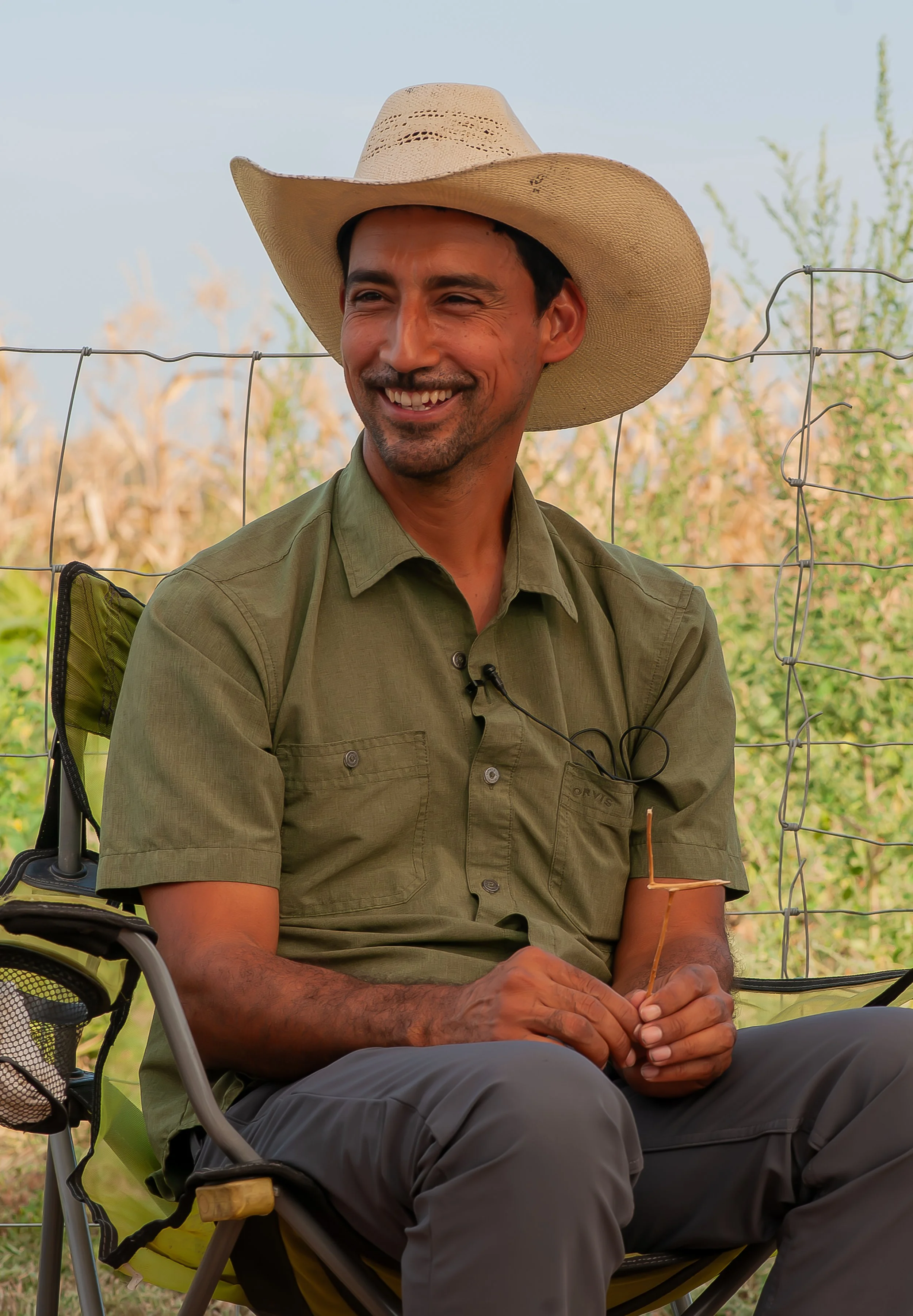
As we sit in our circle of chairs underneath the canopy he built with his wife, David Lemus, our host, tells us the story of his land. We are flanked by a small garden full of produce, backdropped by the mountains of the Yakima Valley. He’s wearing a blue button down shirt, nondescript gray pants, and a cowboy hat. He is soft spoken, in a way that draws you in and calms you down. David purchased this property 20 years ago with his father, around the time us students sitting in the circle were born. He is an exceptional host and his intelligence is clear. While he works as a diesel technician, he spends a large portion of his time working with permaculture on his farm. He tells us how his wife Jill, and their two kids, have really helped him reconnect with farming in his own way, after he grew up hating it as a laborer. From horses to land retention experiments, to an organic co-op, they’ve done a lot. David is certified in permaculture design, and tells us how he sees it as part of the solution to climate change, as a way to heal the land.

He tells us about the wild parts of the valley. He talks about how in the spring, wildflowers brought by the sheep that used to graze there, bloom across the foothills. The next morning, we are fortunate to be taken up to the foothills, where we see herds of wild horses galloping across the brush. This beauty contrasts with the sparseness of other life that we see in the area. David tells us how the horses are so numerous, that they’ve become a real problem for the valley’s ecological system. The question of how to fix that problem, is something that looms in the background for the duration of our stay on his property in the Yakama Indian Reservation.

by Jeremiah Harder

Meet our Guests: Queer Nature

So and Pinar Sinopoilos-lloyd and Nic Caddel

Co-founders of Queer Nature, Naturalists and Trackers

Twisp, WA

September 5th - September 6th, 2025

“It's a scratch and sniff world,” says So, a radical wildlife field ecologist and biologist. Based in the Methow Valley of central Washington, So a heir partner, Pinar, together established Queer Nature, a now 10-year-old organization aimed at creating spaces for members of the LGBTQ+ community to learn and practice place-based skills. They described their interests in human and environmental relationships, practicing practical, participatory, and self-network stewardship. Through a framework of ecology as the study of home, So and Pinar shared their deep-rooted knowledge and abilities of tuning into the animate world to study it with us. 

The next day, we met with So, Pinar, and Nic, a Queer Nature collaborator and Semester in the West alum, in Twisp to orient ourselves towards observing wildlife. We gathered at a recently logged and cleared mountain path, the smoky air obstructing the forested landscape around us.

First, they instructed us to observe the environment and its “baseline.” Tuning into the space, we observed the sounds of birds, squirrels, and cows grazing nearby. 

So trained our eyes to catch tracks, a practice they described as an act of investigation, exploring the impact and effect of different forces, and reclaiming information as you observe a space. We investigated ourselves, tracking our footsteps on the different terrain. Then we observed coyote, bear, and wolf tracks along the mountainside. We practiced “seeing before ID’ing,” observing the shape, size, sediment, and age of the track before interpreting. Seeing proof of animal movement and life through the lens of wildlife tracking helped us understand the complexity of ecosystems, influenced by forces we may not always consider. 


by Rio Burk

Meet our Guests: Deed Fink

Deed Fink

Cattle Rancher

Twisp, WA

September 4th, 2025

The Methow Valley was thick with smoke on Thursday September 4th, and we all sat on the floor waiting for Deed Fink to walk in. His truck pulled up, and into the room he came wearing green and brown cowboy boots covered by the bell of his jeans, an old Seahawks T-Shirt, and a grin on his face. 

Deed grew up in Twisp, WA with a cattle ranching family and has since continued. Cattle ranching is an income, a livelihood and who Deed is. Herding and grazing cattle, with its many challenges, is also a great way for Deed to connect with fellow ranchers, making it an opportunity for social outreach and strong community.

During our meeting, Deed spoke to the current issues that he and other ranchers experience. Deed speaks about Grey Wolves in the Methow providing some benefits to the ecosystem, but the wolves have impacted Deed and his peers in the valley. He reports an increased cattle death toll and stress on his livestock as well. With this issue he shed light onto the lack of government attention and support, and also graciously shared some of these harder and more emotional aspects of ranching that can often be overlooked.

Deed Fink was a pleasure to meet with and brought a fascinating first–hand account of a valued type of land stewarding and management. He was a joy to be around with a great sense of humor. Thank you Deed!

by Rose Peterson

Meet our Guests: Paul Myrick and Sarah Brooks

paul myrick and sarah brooks

Methow Descendant and Executive Director of the Methow Conservancy

Hummingbird Ranch, Methow Valley, WA

September 4th, 2025

Sun and smoke settling on our skin, the Westies stand in a circle on the x̌ʷnámx̌ʷnam/Hummingbird Property in the Methow Valley, Washington—the ancestral land of the mətx̌ʷu/Methow Peoples that sprawls along the Chewuch River. In the late 1800s, the Methow People were forcibly displaced by white settlers to the Colville Reservation. After purchasing the former Wagner Ranch in 2021, the Methow Conservancy returned the land to the Methow People.

Sarah Brookes, the Executive Director of the Methow Conservancy, explained their reclamation work in the Valley and the complexities of partnering with a sovereign Nation like the Confederated Tribes of the Colville Reservation (CTCR)—work that requires patience, respect, receptivity, and often stepping back. Sarah works closely with the CTCR in the management of the Hummingbird land, frequently collaborating with Paul Myrick, a Methow descendant dedicated to preserving and teaching the history and ancestral practices of the Methow Peoples and the CTCR.

In his stories of cooking moss, salmon bakes, family and loss, Paul offered students insight into the significance of land—not solely as a resource of survival, but a site of traditional knowledge, cultural identity, and communal belonging. Paul spoke about bridging generational knowledge gaps, noting that while younger Native Americans risk losing their heritage without the guidance of elders, many elders struggle to share their knowledge due to profound trauma and violence inflicted by the U.S. government. Paul feels a responsibility to share cultural knowledge, finding hope in younger generations and in a community open and willing to listen and learn. Paul’s perspective is valuable in helping SITW students understand the impact of colonial systems in cultural erasure, environmental exclusion, and reclamation work.

by Maea Fleming

Meet our Guests: Michael 'Skeeter' Pilarski

Michael 'Skeeter' Pilarski

Permaculture Specialist, Friends of the Trees Botanicals

Twisp, WA

September 2nd, 2025

We met Michael “Skeeter” Pilarski early on a hot September morning, out on his permaculture agroforest in Twisp, Washington. We spent the morning taking refuge from the heat among cottonwoods, black locusts and surrounded by plants with wonderful healing abilities. Black cohosh, an antispasmodic, oregon grape, a medicinal antibiotic, goldenrod, a powerful anti-inflammatory and hundreds more. Through our time exploring Skeeter’s medically rich wonderland we were treated to a variety of sweet and bitter fruit and berries, and a host of aromatic leaves. Skeeter’s quick wit, extensive plant knowledge and passion for his work had us engaged from the beginning. Skeeter began Friends of the Trees Botanicals, his medicinal herb permaculture project, over 25 years ago, but he has been involved in agriculture in Washington for years. He was an early member and founder in the early 70s of the Tilth Alliance, an organization devoted to helping facilitate access to healthy, nutritious, organic foods. He now helps run seminars on sustainable agriculture, and agroforestry all over the west.


The term agroforestry was coined in the 70s, parallel with movements like the anti-nuclear and environmental movements. It’s a land management principle that emphasizes a balanced and sustainable forest landscape, with diverse under and overstory and wildlife habitat. This practice allows medicinal plants to be harvested while preserving the landscape. Through his beautiful forest and inspired way of life, Skeeter inspired us to think about alternative ways to steward land, and care for our communities. Skeeter started the agroforestry project with out of a sense of bold optimism for the future of our planet and for future generations. His mission is backed by the conviction that "agroforestry is what will save the climate.” He now operates this organization alongside his son, and hopes to see him take over parts of the operation while passing the agroforest on to communal ownership as part of an herbal medicine cooperative. 

by Penelope Doulis

Meet our Guests: Sarah Gilman

Sarah gilman

Independent Writer, Editor, Artist

Methow Valley, WA

August 30th, 2025

On Semester in the West, an indoor lesson is something rare. The escape from the hot, dry sun in the Methow Valley was something the group appreciated as we sat down to speak with Sarah Gilman in the Winthrop Public Library.


Sarah took in our tired and sunburnt faces as she greeted us. As a Whitman alum and member of the first Semester in the West program, she must have understood the nature of our weariness. Sarah graduated from Whitman in 2006 with a degree in Art and Biology. In her work, which combines journalism, science, and art, she combines her two interests to create unique journalistic and artistic pieces. Presently, she works as a freelance journalist and editor, but in the past she worked for High County News. Her work has been featured in many publications, including The Atlantic, Hakai Magazine, National Geographic News, The Guardian, and The Washington Post.


Sarah’s work examines climate resilience, stories within ecosystems, and relationships to people and land from her time living in the rural west and traveling through places like Gates of the Arctic National Park. Her writing style, paired with illustrating the subjects and places she visits creates very intentional and intimate works. After showing us some of her art, Sarah took us to see her recent project, a mural in Twisp, Washington, that she had been working on for the past couple of months commissioned by the Okanogan Highlands Alliance. The mural’s purpose is to illustrate the basic natural history of the highlands and celebrate the mountain bluebirds, who were the focus of the illustration. Like all of her other work, the mural was scientifically accurate in its portrayal of the birds and the landscape, while still maintaining her distinct style. Our experience with Sarah was formative in developing the knowledge and intentionality behind illustration and journalism. We will take her lessons with us as we travel through the Methow and onto Yakima.

by Wilson Finlay