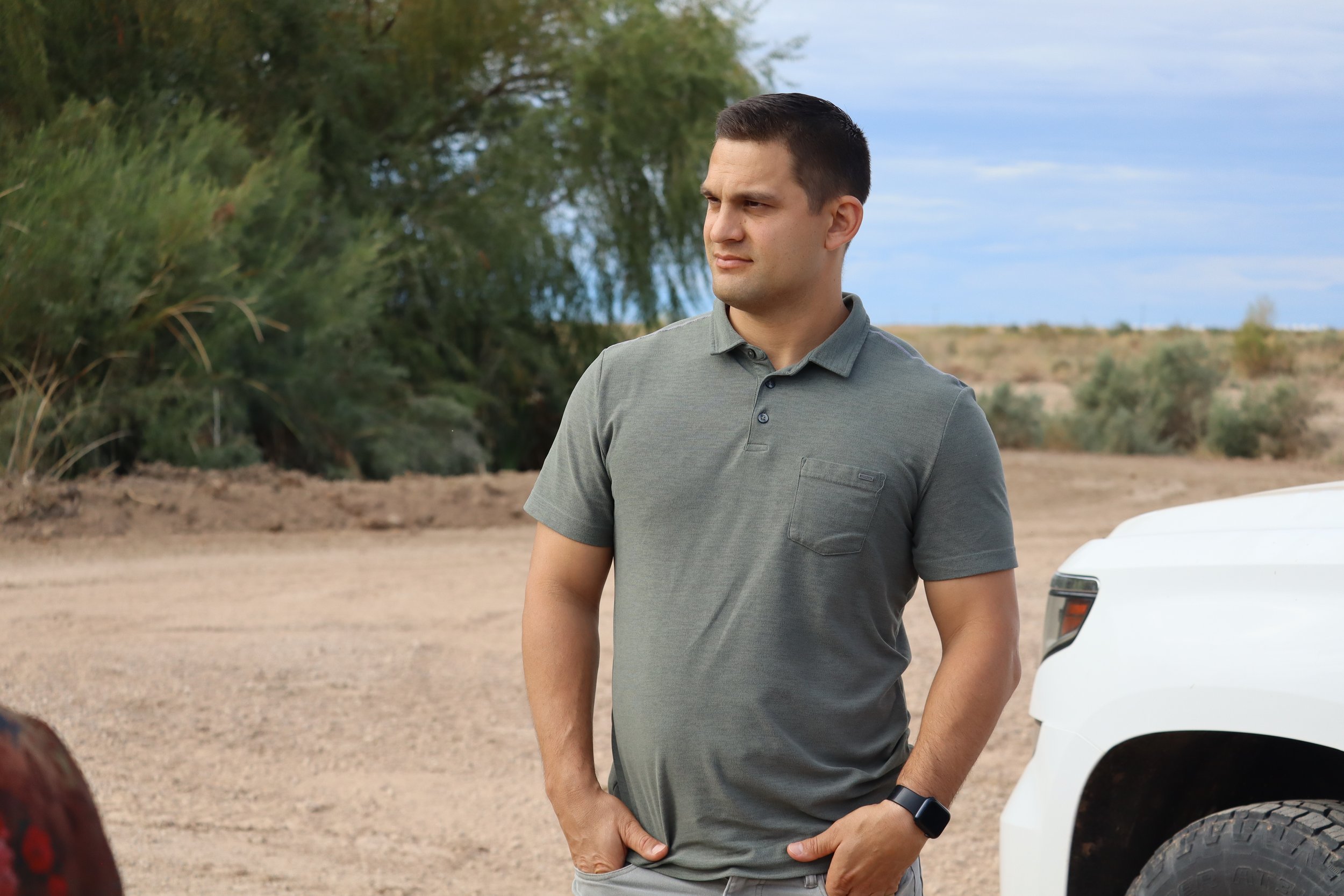
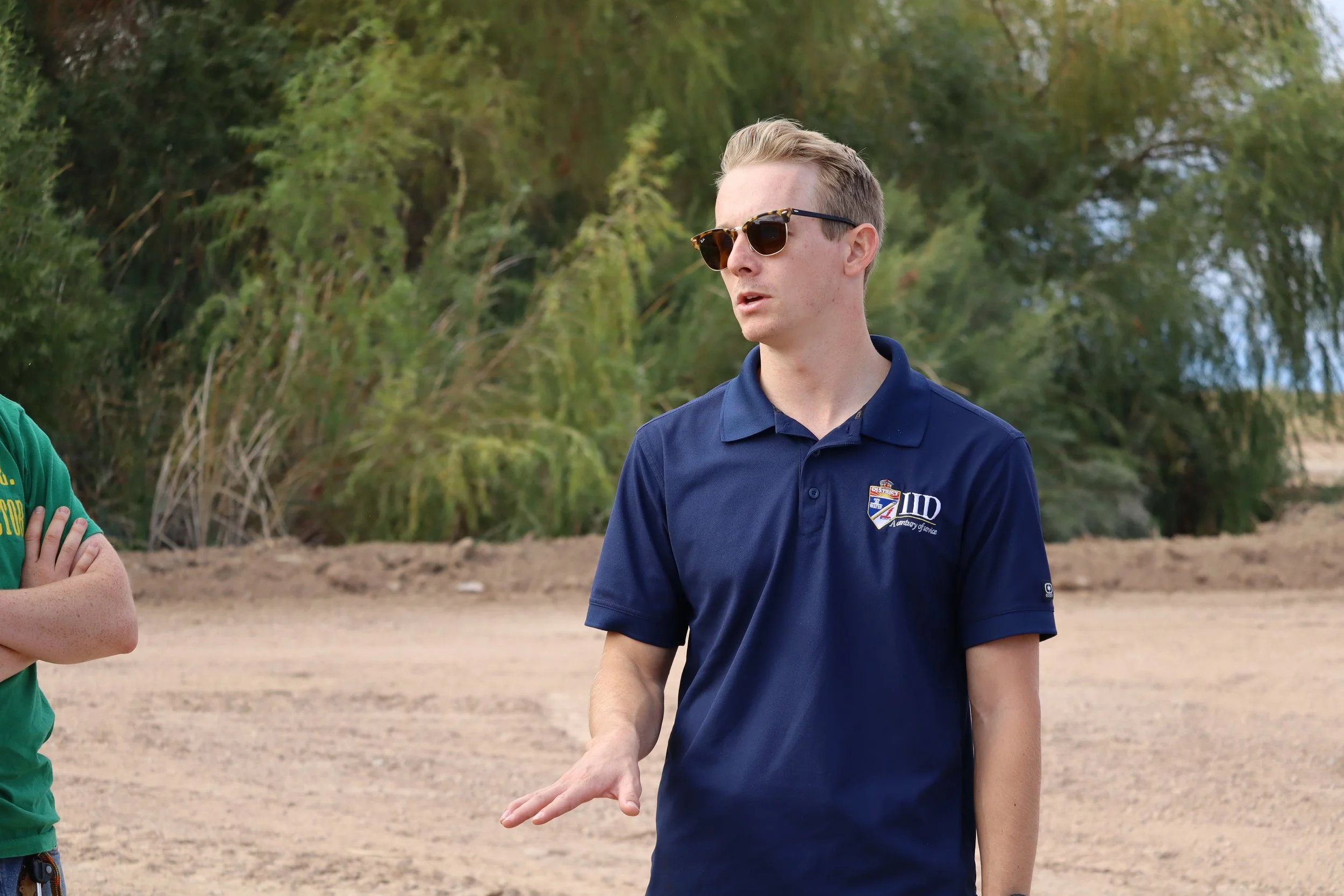
Dylan Mohamed and Ross Wilson
Water Conservation Analysts, Water Department, Imperial Irrigation District
Imperial, California
November 14th, 2025
A few westies gather in front of the glass window in excitement, waiting patiently for something to happen in the control room. Numbers, graphs, and more fill the computer screens as questions bubble up in our minds. We are viewing the control room at the operating headquarters of the Imperial Irrigation District (IID). The IID provides water to farmers and towns in the Imperial Valley, California. The Imperial Valley is where much of the leafy greens that we eat in the winter are grown, but they also grow much of the alfalfa that is used for the cattle industry. In the room right next door, we had the pleasure of meeting with water conservation analysts Dylan Mohamed and Ross Wilson from the IID.
Both Ross and Dylan grew up in the valley. Ross was especially acquainted with farming, as his family farm grows many crops, including alfalfa and carrots. Ross and Dylan are both Water Conservation Analysts for the IID's Water Department, although their paths to the IID and their respective jobs are quite different.
Dylan went to California Polytechnic State University and studied Agricultural Business. He has now worked for the IID for 9 years. He has worked in various positions over the years for the IID. He began as an employee in the field, checking canal pumps for the seepage recovery program. For the past 5 years, he has been working as a Water Conservation Analyst for the Water Department. Specifically, he has taken the lead in the Deficit Irrigation Program.
Ross attended Carthage College in Wisconsin, studying Geographic Information Systems before spending a few years working for an environmental consulting firm. He then began working for IID as an Environmental Specialist in their Environmental Management Unit. He worked in the Environmental Management Unit for three years. He helped oversee projects such as the Managed Marsh Project, which is aiming to create native wetland habitat. A few months back, he transferred to the Water Department, where he is a Water Conservation Analyst learning from Dylan. Additionally, Ross still helps manage his family’s farm.
During our time with Ross and Dylan, we learned about the water distribution in the valley and their more recent conservation programs. The IID has been providing water to farmers in the valley for over 100 years, even before the Colorado River Compact was signed. One of the conservation programs that the IID has been working on is the Deficit Irrigation Program, which pays voluntary farmers to hold off on watering their alfalfa for a portion of the summer. The goal of this program was to conserve water for Lake Mead. Ultimately, it raised Lake Mead by roughly 1.5ft. Other projects include recovering canal seepage and reusing it; ultimately saving large amounts of water in the valley. Meeting with Ross and Dylan expanded our knowledge of the lower Colorado River basin and how many people rely on the water and crops it sustains. We thank them both dearly for their time and wealth of knowledge.
by Ashley Hagen