
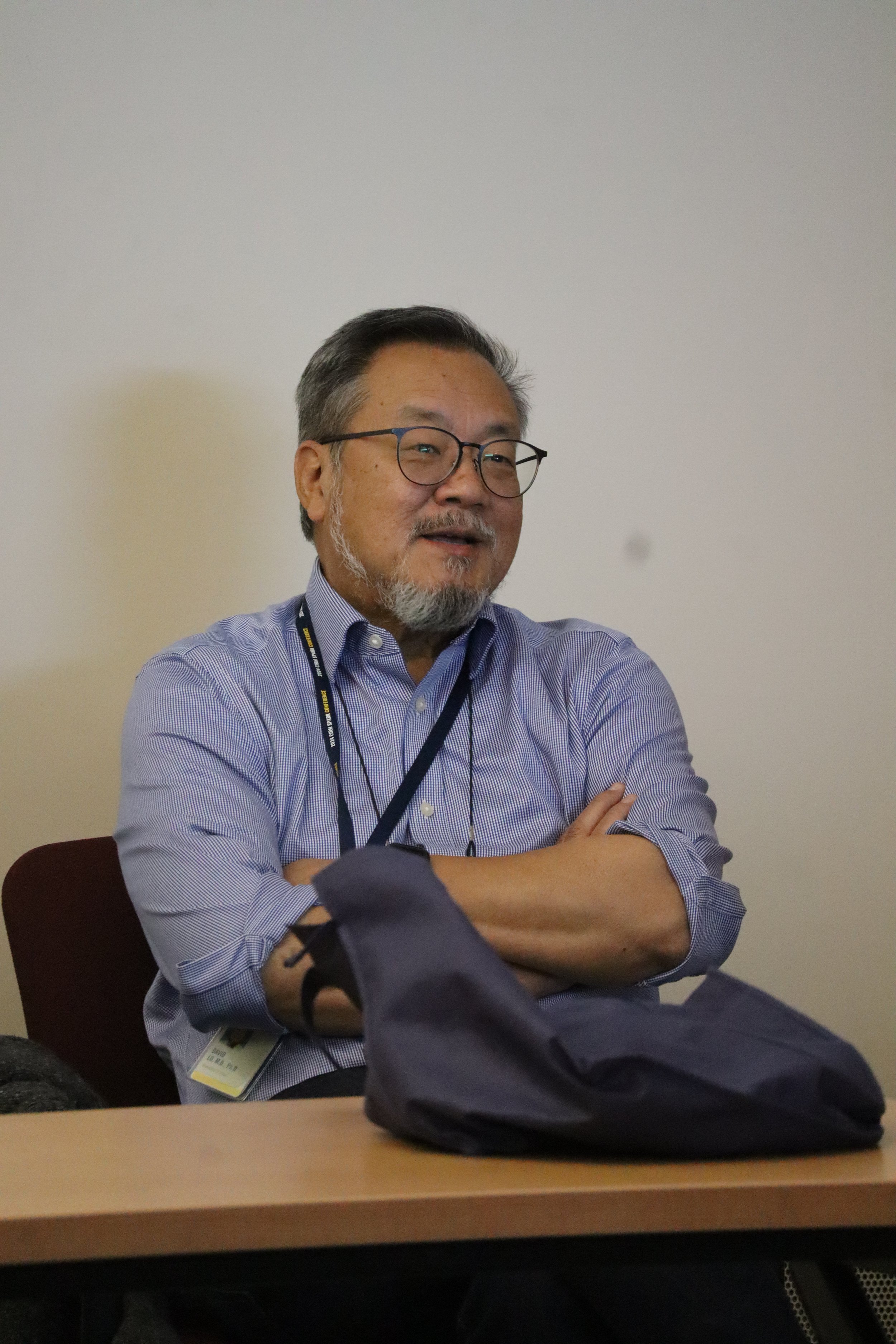
David Lo
Doctor and Professor of Biomedical Studies at UCR
Palm Desert, California
November 13th, 2025
After smelling the salt and feeling the dust from the Salton Sea from our campsite, we finally got to learn what we were breathing in from Dr. David Lo, a professor of biomedical studies at the University of California, Riverside. Westies met with him at UCR’s Palm Desert Campus to learn about the Salton Sea’s history and his present exploration of its impact on public health in the neighboring communities of the Salton Sea.
In 1905, the dry Salton Trough was flooded with Colorado River water when faulty engineering of an irrigation canal during a flood diverted the entire river into the dry, closed valley. It took two years to return the Colorado to its original channel, and as a result became a freshwater oasis in the Southern California desert. This new lake brought in vacationers, development, and economic growth. It also served as a dump for agricultural runoff as that industry grew as well, with the creation of vast irrigation abilities through the American and Coachella canals. In the 1970s, however, destructive storms occurred, causing damage to much of the real estate around the lake, and the sea and beachfront towns have only declined since. Now, the water's salt concentration is twice that of the ocean’s and is filled with elements such as selenium, nitrogen, potassium, phosphorus, and arsenic, toxic to breathe and swim in.
Over half a million people live near the Salton Sea and are exposed to the air every day. The high rates of asthma and other health issues, however, were never connected to the constant exposure. David and his team noticed this issue and began collecting dust and sea-spray samples, along with anecdotal data, to see if there was a relationship. Through this research, he found LPS, a molecule in the cell wall of bacteria that live in the Sea, induces immediate lung inflammation, tricking the body into thinking it is constantly under attack. As more of the Salton Sea floor becomes exposed, more dust and LPS cause human harm. David is hopeful, approaching this human and environmental health issue to find ways to adapt while creating long-term solutions; a powerful mindset as we all navigate the ongoing climate crisis.
by Rio Burk