Orange water swells around me as my legs sink deeper into the thick clay mud. The texture is soft and velvety, staining my clothes and skin. Feeling a childlike sense of carelessness, I give way to the will of the wash, falling often in spits of uncontrollable laughter. Wild and unruly, it pours over edges, winding in unpredictable patterns. Typically a dry desert channel, this wash is a result of the past week’s storms in the Southwest, causing sudden erosion. Rain like this is a rare and valuable resource in this landscape, changing the way we interact with it, and it with us. There’s a gentle fierceness to the wash, uncultivated and in control. The tug ofthe mud and pull of the stream bend around my body as I move with them—recognizing aliveness in the relationship between our forms.

Growing up, the idea that nature was alive was never a question to me. I’ve spoken to water for as long as I can remember, listening to my mother’s words telling me to respect the ocean’s limits and to ask the creek where it’s been. Whether from a bank or immersed beneath its surface, we feel energy in water that is more than inanimate matter. Water has a presence.
In his book Is a River Alive?, Robert McFarlane ponders the concept of rivers having beinghood and agency, an understanding foregrounded by Indigenous communities around the world. Collectively, much of humankind has forgotten our entwinement with these vital waterways. Rivers in the West are not only in a crisis of health, they are in a crisis of imagination. Through the commodification of rivers, we have developed a relationship of exploitation—seeing them as resources to irrigate, dam, or bottle. In doing so, we close ourselves off to the potential that rivers have selfhood. Without these water bodies and the infrastructure that controls them, life in the West could not exist as it does—simply, rivers give us life. But if rivers are life-giving, can they not be life-holding? To think in this way requires us to widen our definitions of aliveness.
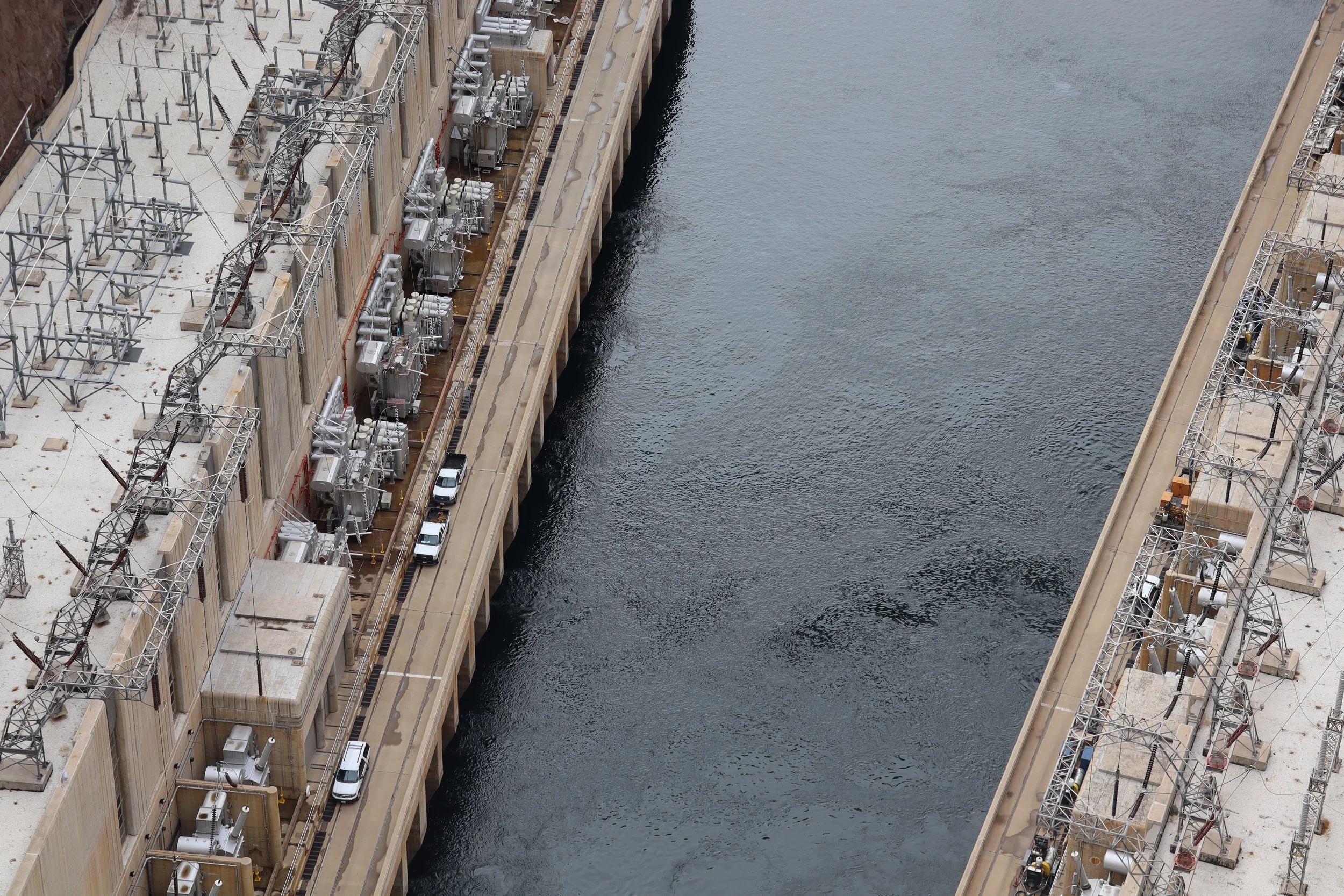
As we’ve travelled across the West, we’ve witnessed the passage of water through rivers and their tributary streams. We have seen riverbeds cracked in dry heat and lakebeds turned to dust. We have passed as water sprays pristinely green crops and watched as it is halted by dams, slowed by gates, and forced into perfect lines. Turning in plastic and infection, we have encountered water that is undrinkable, unswimable, untouchable. We have seen floods spill over banks, and trees downed by their force. Floating along the upper Klamath River only a year after its de-damming, we have witnessed chinook salmon jump, and later, gasped as sea lions hunted them at its mouth. The water we had seen at flood stage in the San Juan River, we observed moving slowly through the All-American Canal, heavily channelized and apportioned to feed America. Throughout the West, we have been accompanied by the Colorado River, who has poured into the Gulf of Mexico for millennia and now, no longer reaches its delta.
As we’ve followed rivers, I’ve wondered how this water has changed as we manipulate it, and how we’ve distanced ourselves from its aliveness.
Kneeling in a cabbage field in the Imperial Valley—a critical agricultural region in Southern California—I notice dew sitting on the slick skin of cabbage leaves, stretching for miles in all directions. Once rushing Colorado River water, small droplets are now slowly released through miles of carefully placed irrigation drips. As a consumer, I benefit, like thousands of others, from nutritious meals made possible by the agricultural systems of this Valley. While it is undeniable that our agrarian systems pose severe environmental impacts, communities need to eat and live in the cities we have created by pushing water’s limits. This tension becomes more pronounced as water in the West rapidly declines, making the control of rivers seem a necessity. But what if we were to understand our livelihoods not as dependent on our management of water but as connected to the livelihood of rivers themselves? What might we gain from understanding rivers as alive and deserving of agency?
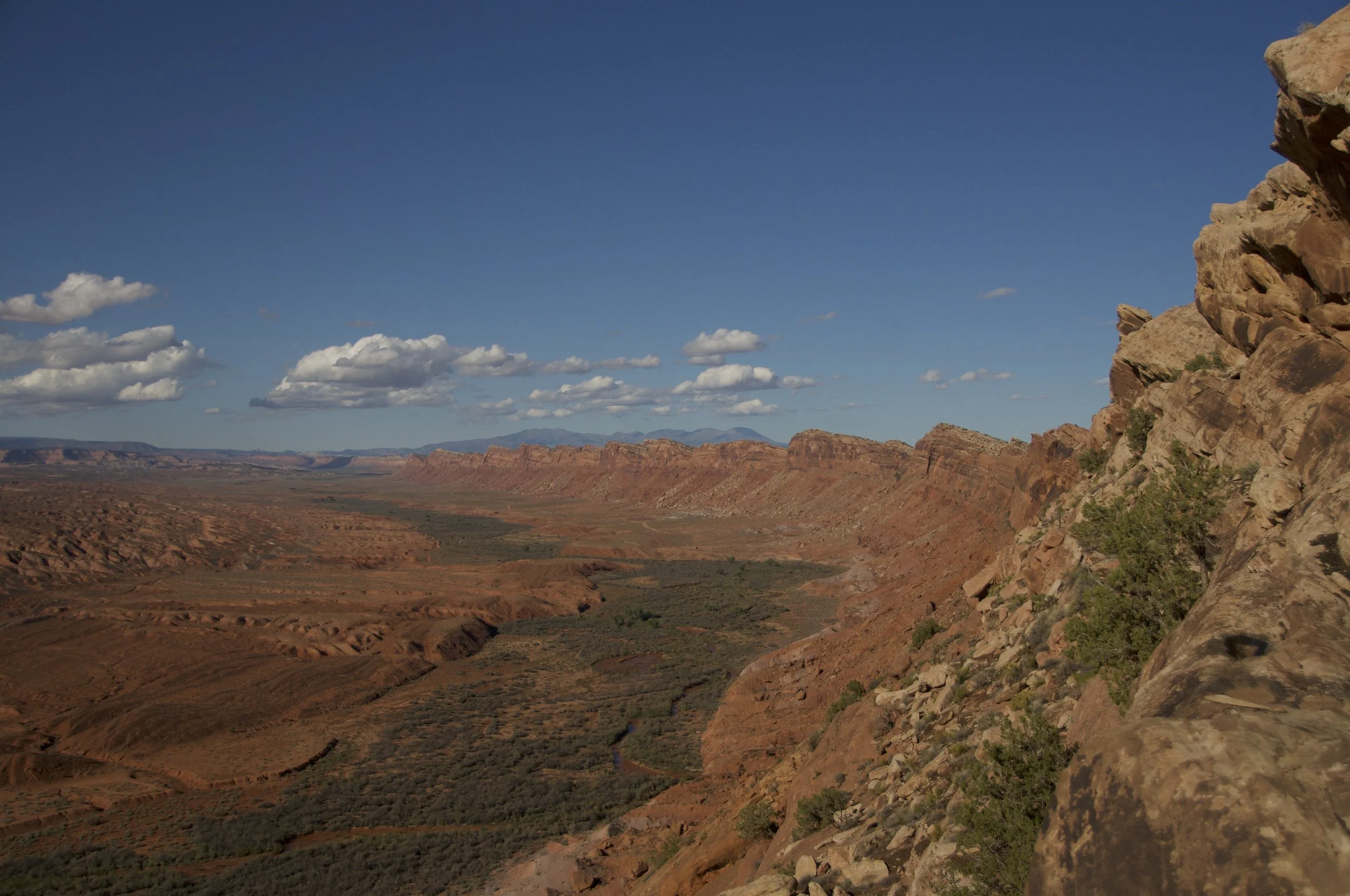
As I tread on flooded wash, encompassed by desert canyon, I feel the untethered energy of water as it regains control. Weaving in and out of brush and willow, its form resists boundaries, exercising its agency and beinghood. By unlearning rivers as inanimate matter and expanding our understanding of them as autonomous living bodies, we can better understand, honor, and advocate for the water we use to sustain us