
The narrative of the American West is that nature has been ruined by settlers, by their agricultural practices and unsustainable usage of resources. Well, let's imagine that all the people in the West decided to pack up and go, today. Could nature restore itself to a self-sustaining state?
The idea that everyone would clear out for the sake of healing nature is unrealistic, and isn’t the only solution. Restoration is situation-dependent; it can wear many hats. In the HJ Andrews Experimental Forest, an old growth forest in western Oregon, nature is given the space to heal itself after a disturbance without human intervention.
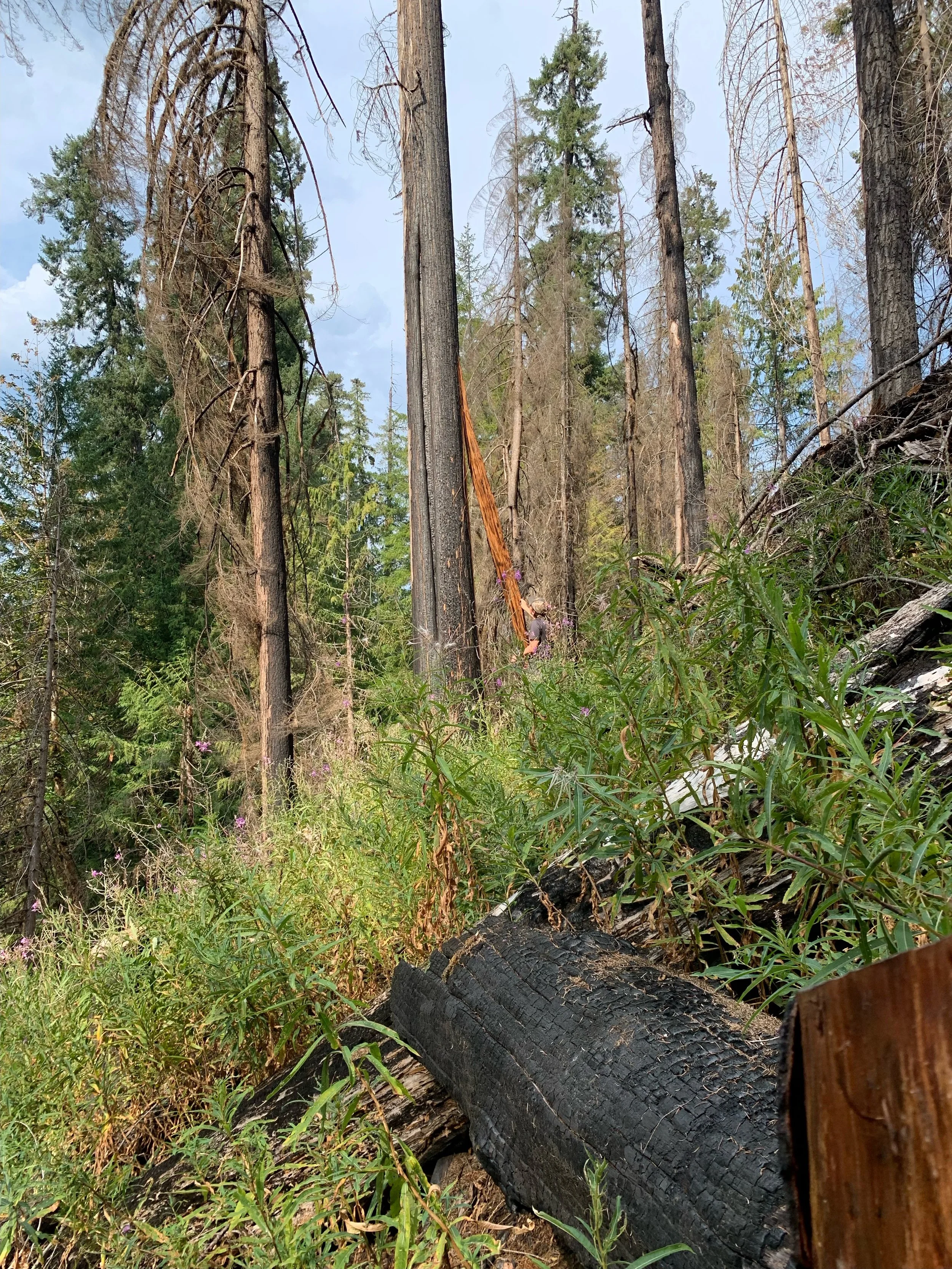
In 2023, the Lookout Fire ripped through 70% of the forest; a single lightning bolt took down centuries of growth. Fast-forward to 2025, and we are standing at one of the affected areas, observing signs of a disturbance. A landscape of charred logs and snags atop ashy soil stand in stark contrast to a bright green and purple blanket of fireweed, reworking the previously burned understory. Staying true to its name, fireweed commonly grows after a burn, loving the unique soil composition and abundance of light. Where a fire had caused so much death, there was so much new life. In a forest, fire is a natural part of its cycle, allowing for the growth of new trees and other plants that couldn’t compete for resources otherwise. Although the fire was devastating for so much plant life, the forest knows how to heal itself.
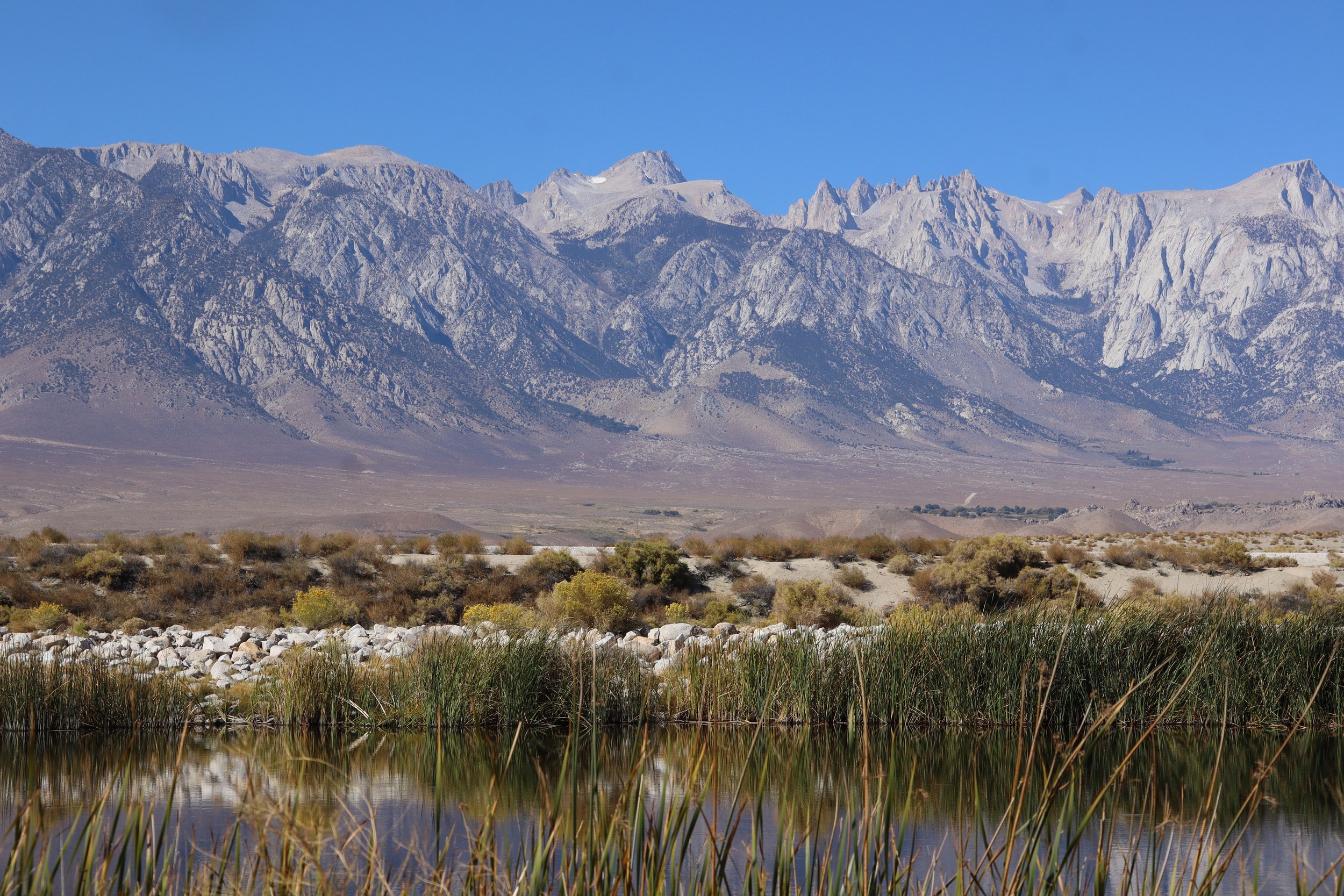
Restoration looks a little different in Owens Valley, California. In this valley lives Owens Lake, a lake without water, stretching out for miles in a grand expanse of flat, white land. We toured the dry lake bed, known as a playa, with Jeff Norton, from the Los Angeles Department of Water and Power (LADWP). The tour began at Owens River, a small stream bordered by wetland grasses. Before the LADWP began diverting water from the Owens River, it was the tributary of Owens Lake, bringing in spring runoff from the Eastern Sierras. Beginning in 1913, the Los Angeles Aqueduct was constructed to divert Owens River water 233 miles south to the city of Los Angeles and away from Owens Lake. As a result, the Owens River “was essentially dried out.” Today, the LADWP is temporarily managing the river, rewatering the lower section in an effort to remediate the ecosystem until it is able to restore itself. The river is not yet self-sustaining, but with human intervention it is repairing after undergoing a disturbance.
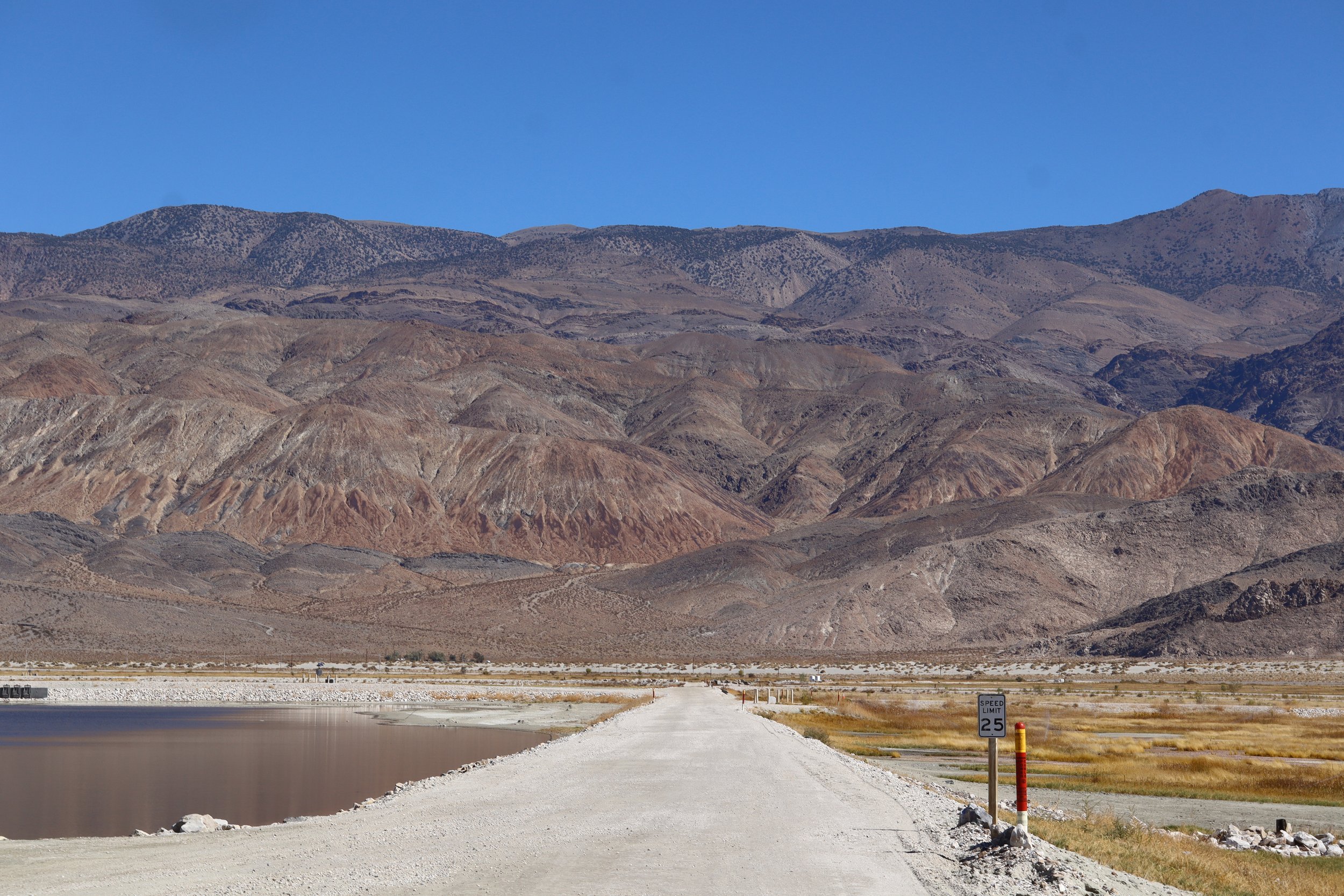
We left behind the green wetland ecosystem, entering a dull, dry landscape of checkerboarding dust control sites with gravel access roads dividing each square. This is Owens Lake. I was snapped out of romanticising the beautiful western landscapes SITW is known for. The LADWP isn’t getting any aesthetic points, but their presence is crucial to Owens Valley. The dusty playa poses a threat to air quality and human health. Toxic particulate matter easily becomes airborne, picked up in the dust by wind. In the past, severe dust storms made Owens Valley a human health hazard, with the highest concentration of airborne particulate matter in the United States.
Today, the LADWP uses three dust mitigation practices to maintain a healthy air quality. The first of these is laying down gravel, which weighs down the dust. They also use shallow flooding, wetting the dust so that it sticks. Their third practice is called managed vegetation, securing the dust with native plant roots. The effectiveness of dust mitigation is proven by consistent good air quality. When asked whether these practices would guide Owens Lake to be capable of self-restoration, Jeff responded that to control the dust, the LADWP must manage Owens Lake, forever. As long as Los Angeles relies on water diversions from the Owens River, Owens Lake will not heal itself.
The LADWP’s perspective on managing Owens Lake made us face the reality that the people that live in the American West need water and other resources, no matter how extractive it is to accrue them from nature. The natural regrowth occurring in the HJ Andrews Experimental Forest doesn’t function as the only restoration model. So I’ll say it again: restoration wears many hats. It can look like the natural cycle of an old growth forest, but it can also be a human effort to bring water and life back to a river that ran dry. Restoration can even be a playa with dust controls that protect life from toxic air. There will always be this tension between allowing for natural restoration versus human involvement, especially when disturbances are human-made. Ultimately, human intertwinement with the more-than-human is a complicated relationship thatbends our definition of restoration.