At the start of this program, what feels like forever ago, our professor, Eunice, posed us a question. She asked us what the word ‘wilderness’ meant to us. Whether or not we thought that somewhere in the world it still existed as untouched. This question lingered with me throughout the length of our journey.
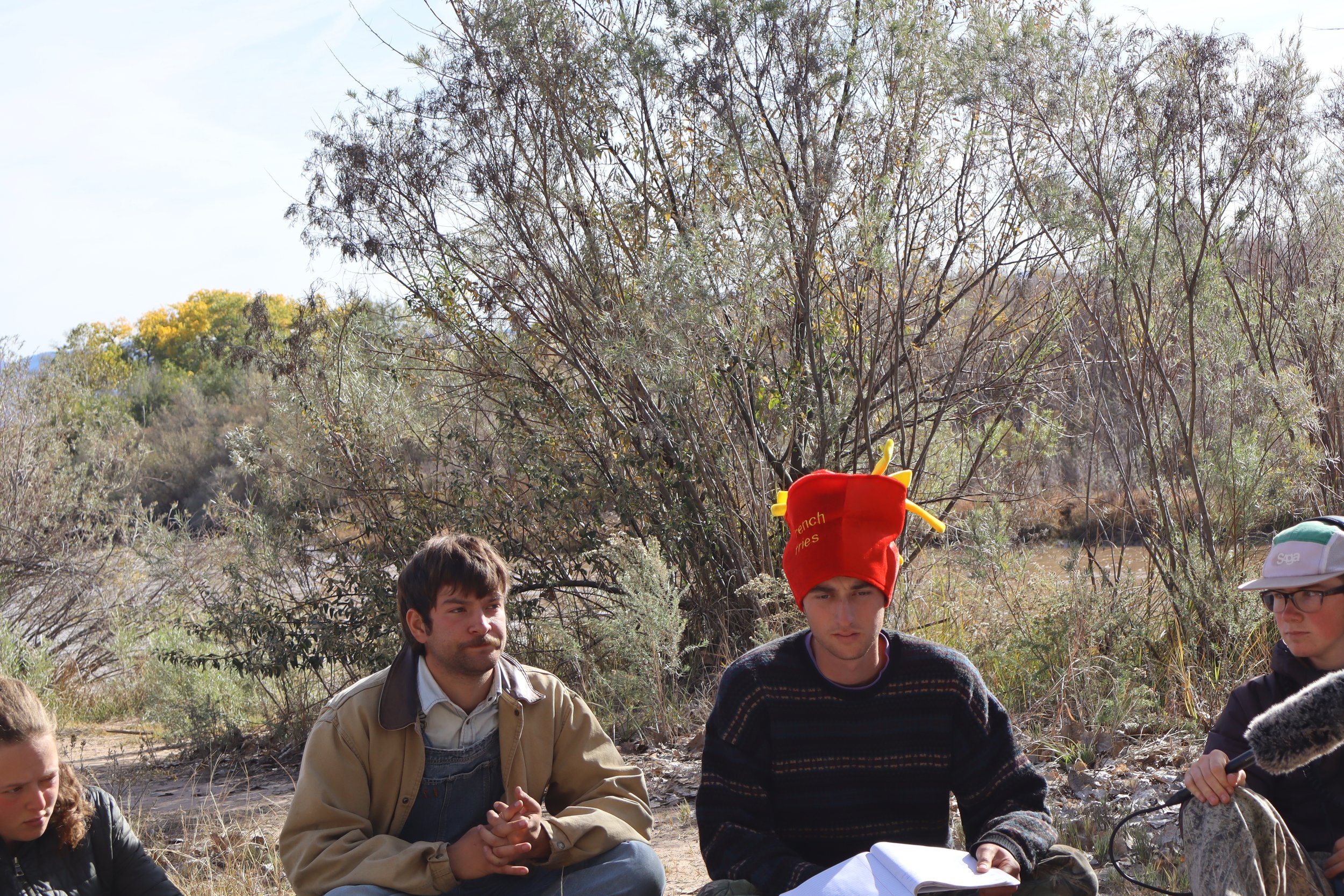
At our stop in Albuquerque, NM, we met with Laura Paskus, an environmental journalist. It was Halloween, and we sat in a small clearing between the cottonwoods, dressed up in our costumes. We listened intently as she told us the spooky story of Albuquerque and the ghost of the Rio Grande.
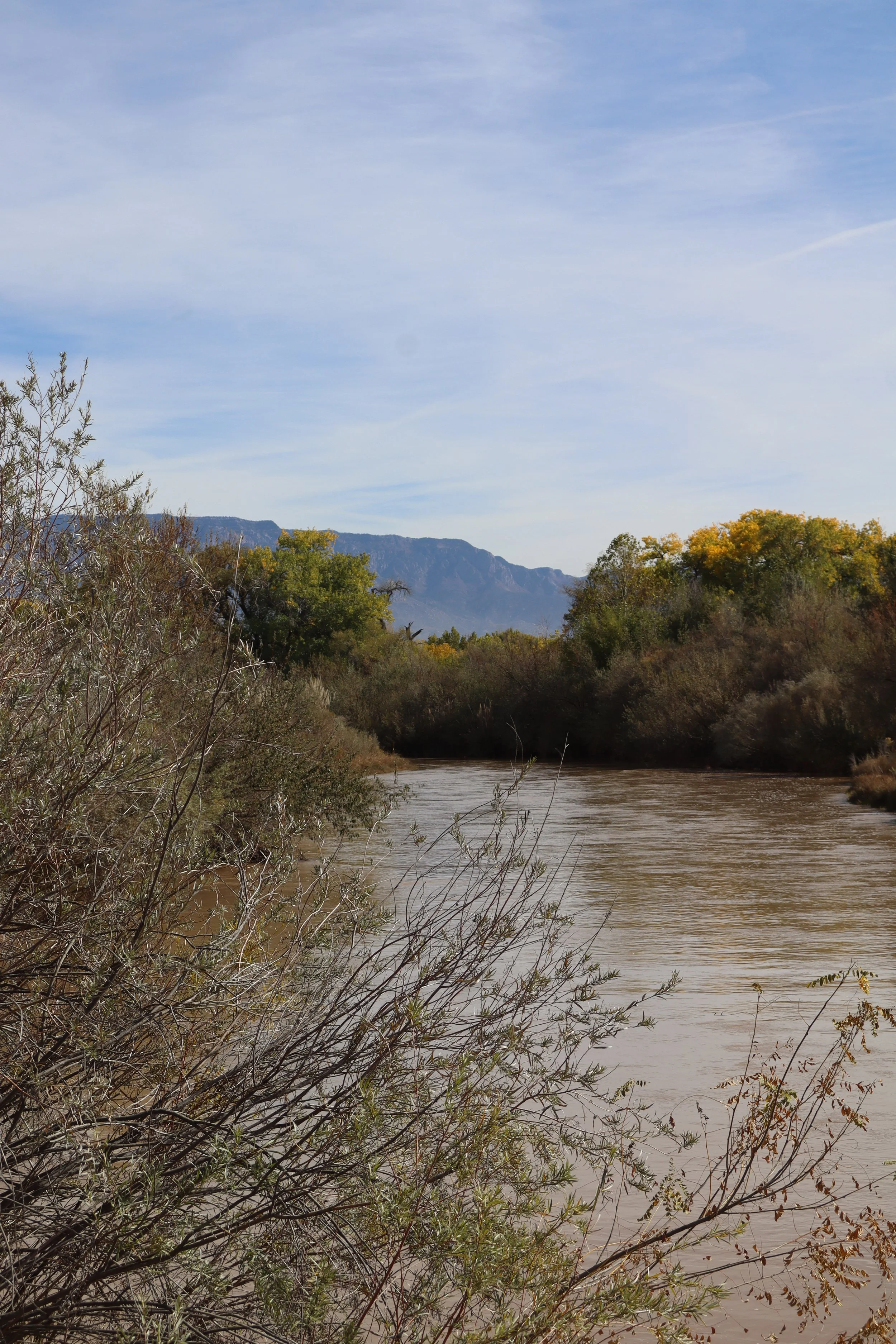
Before European settlement, the Rio Grande meandered through the valley where Albuquerque, NM now stands. In the 1800’s increases in human activity dramatically changed this environment. Increased sediment input bloated the floodplain and the city was threatened. In 1941, the river, fueled by heavy mountain snows, flooded downtown. This flood planted the seeds that would grow into the Bosque, the cottonwood forest that lines the river today. The Bosque is a central part of Albuquerque, a forest in the desert that grows in the middle of a city of 500,000. However, it’s not long for this world. The floodplain that planted the now 80 year old trees no longer exists due to the building of the Cochiti Dam in response to the 1941 flood. The river no longer meanders or overflows, but moves through the city in a single channel. In 20 years, the cottonwoods will reach the end of their life cycle, and with no floodplain to plant new trees, the Bosque will disappear.
When I learned that the Bosque was on the clock, I expected Laura to start explaining how people were working to save it. Instead, she talked about doing the opposite. Right now, the Bosque is the river’s largest water user. Keeping the Bosque alive would not only be expensive, but would require constant upkeep, there isn’t as much water in the area as there used to be, and new trees are water intensive. The environment has changed drastically from when these cottonwoods were planted, and mother nature can’t be expected to keep growing them now that the situation is so different. Preservation is no longer reasonable. Every aspect of our planet has been altered by human industrialization and climate change. Even the Bosque, which is the landscape’s adaptation from a change that happened only 80 years ago, is being forced to change again because of shifting environmental pressures. Losing the Bosque is a lesson in knowing when to let something go. While it would be great to live in a world where we can save everything, we don’t. '
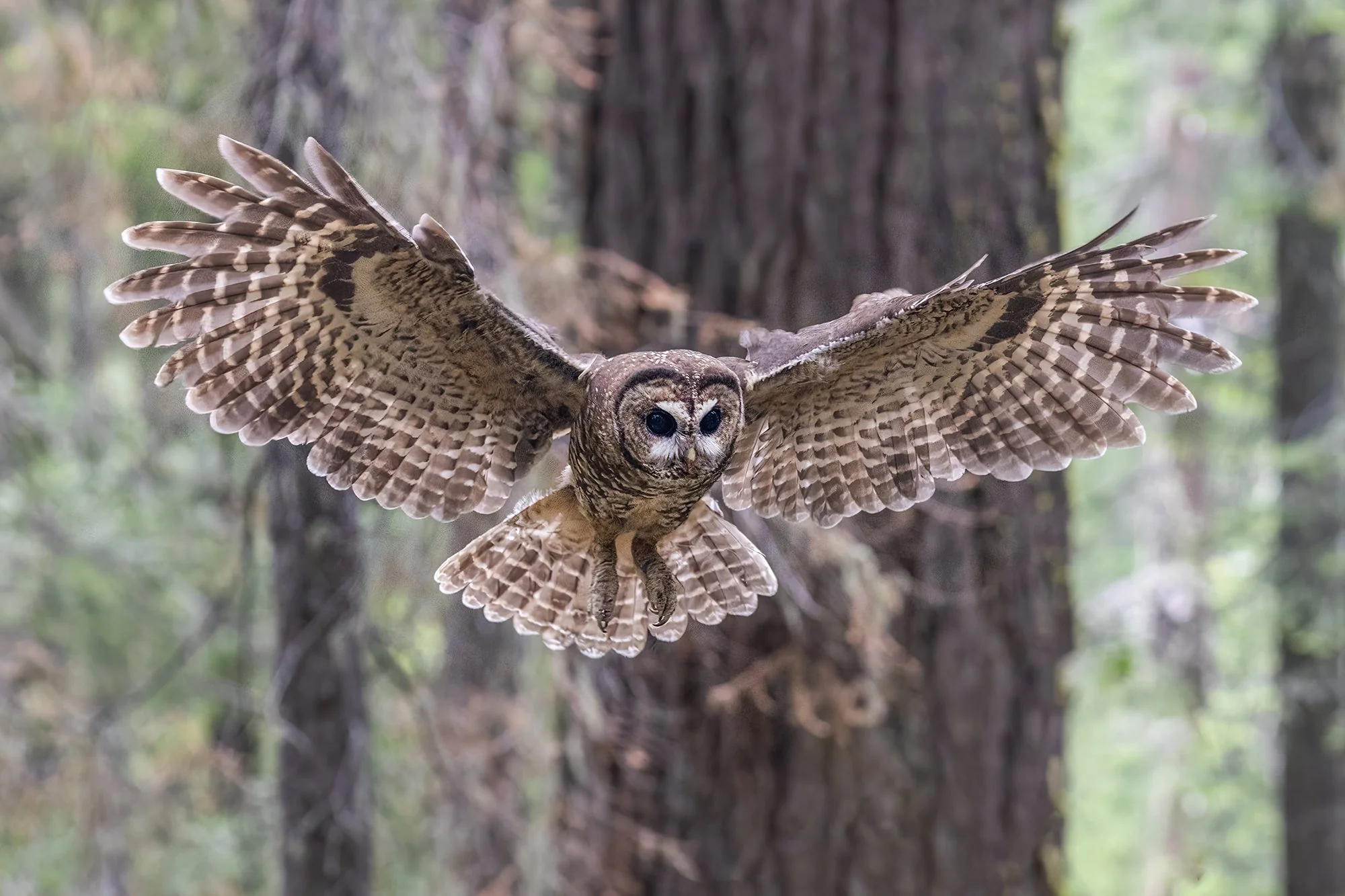
This is not an argument that we shouldn’t try to protect our ecosystems. This is an argument that it’s valuable to be able to tell when the amount of resources needed to protect an ecosystem is telling us that it’s a lost cause. This issue is not only found in the desert southwest. Another example can be found in the more forested northwest of the country, with the current United States Fish and Wildlife Service plan to kill 450,000 barred owls to keep the more specialized spotted owl from going extinct. This plan, which I like to call ‘the plan to kill 450,000 owls’ is estimated to cost upwards of $1.3 billion. Every species deserves to be protected from extinction, and the spotted owl is no exception. The spotted owl was at the center of what’s known as the ‘timber wars’ of the 80’s and 90’s. This battle to protect it, and the old growth forests it lives in, shaped how the Endangered Species Act is used as a preservation tool today. There’s a lot of debate on who won these timber wars, but the spotted owl certainly came out of them with better protections than it had before. Despite this, its population has continued to decline, hence ‘the plan to kill 450,000 owls.’ Although its struggle can be linked to the anthropogenic introduction of the barred owl, it’s time to accept that we have reached the point of severity where we maybe can do more for the ecosystem with the money it would take to save the spotted owl than saving the owl would.
As the program went on, my understanding of wilderness changed, along with my understanding of the extent of human impact. It’s clearer to me now that as a society we have altered every piece of wilderness on this planet. Knowing this, it’s clear that it’s unreasonable to believe that we can save every single species. If we are stuck too fast to this ideal, we will get bogged down in things like ‘the plan to kill 450,000 owls.’ We have to accept some losses if we want to keep making overall progress forwards. We can lose the battle and still win the war.