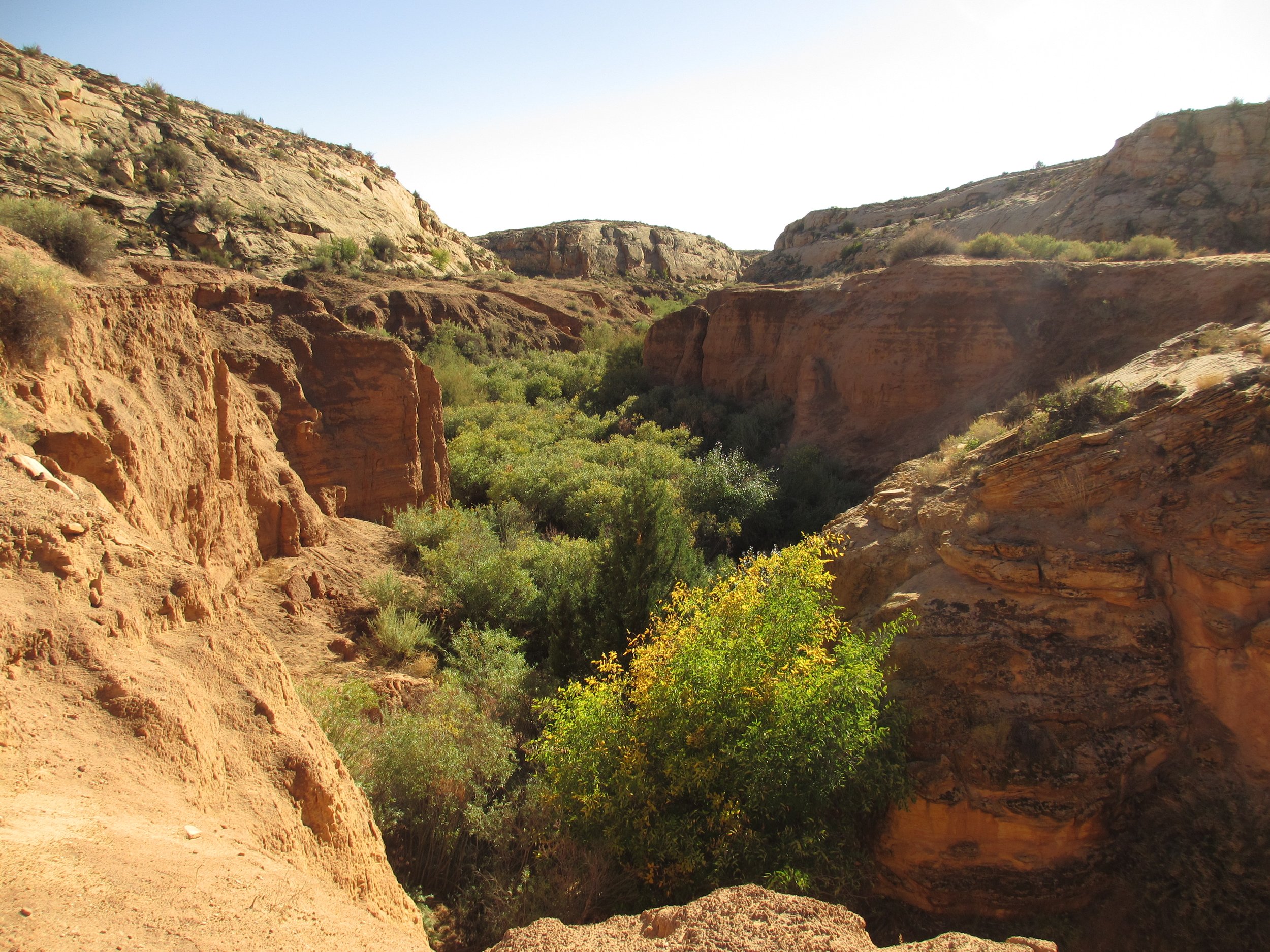
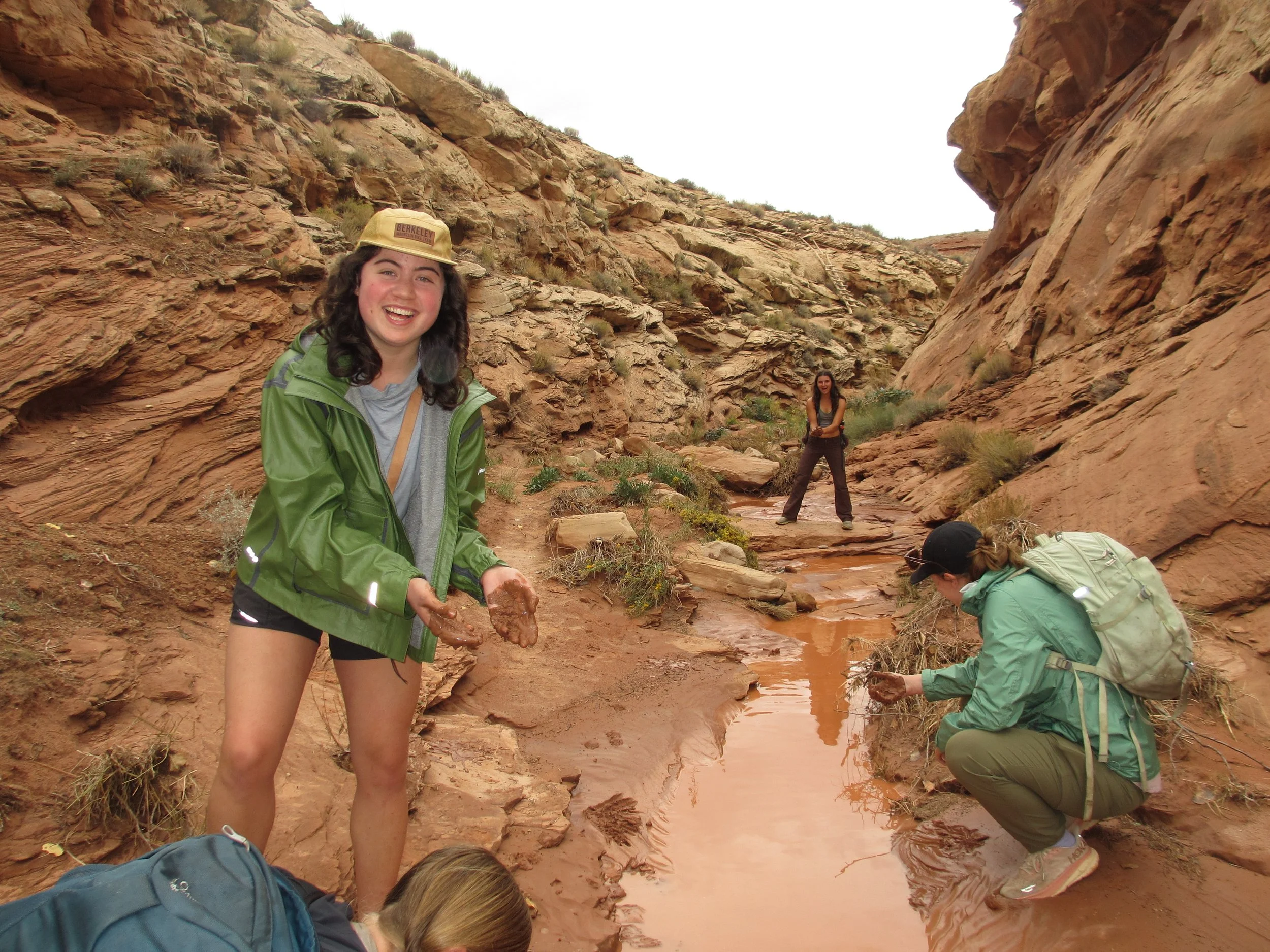
Crouching in red water, my naked body completely disappears an inch below where it touches my chest. Me and my group of adventurers have decided this murky puddle will serve as a fine place to wash off days’ worth of sweat and grime. We emerge from the small sandstone basin giggling and shouting, feeling content, although no more clean. But our spot wasn’t picked for its pristine water; tucked away against a cliffside, we perch on the higher level of one of many tributaries feeding into a ravine. Water from my campsite miles away has likely found its way into the river below us, taking souvenirs of dirt and debris as it slides along, rejected by the impermeable sandstone. Most of the year, these bowls in the ground are empty due to severe drought. But in our campsite on Comb Ridge of the Colorado Plateau, every slight depression has been filled from days of rare and spectacular rain. Peering into the ravine, I only guessed at the river’s size by a green mass of willows, carved out through dry sage country like an open wound. I knew this river, known as Butler Wash, was the place where runoff forgoes individual life, joining the collective on its journey to the San Juan.
Across the ravine, something catches my attention. Among streaks of brown patina, over a dozen preserved Ancestral Pueblo drawings are etched into the sandstone. The panel depicts large figures of human and animal resemblance. Two smaller comb-like shapes I recognize as baskets, dating them to the earliest basketmakers of the region. These drawings could be more than 2,000 years old. Eyes wandering, I spotted a shaded overhang on the next shelf over from our swimming spot. Approaching the overhang, I could make out a brick dwelling tucked into the alcove. The path leading up to the dwelling had entirely fallen away, stranding the structure.
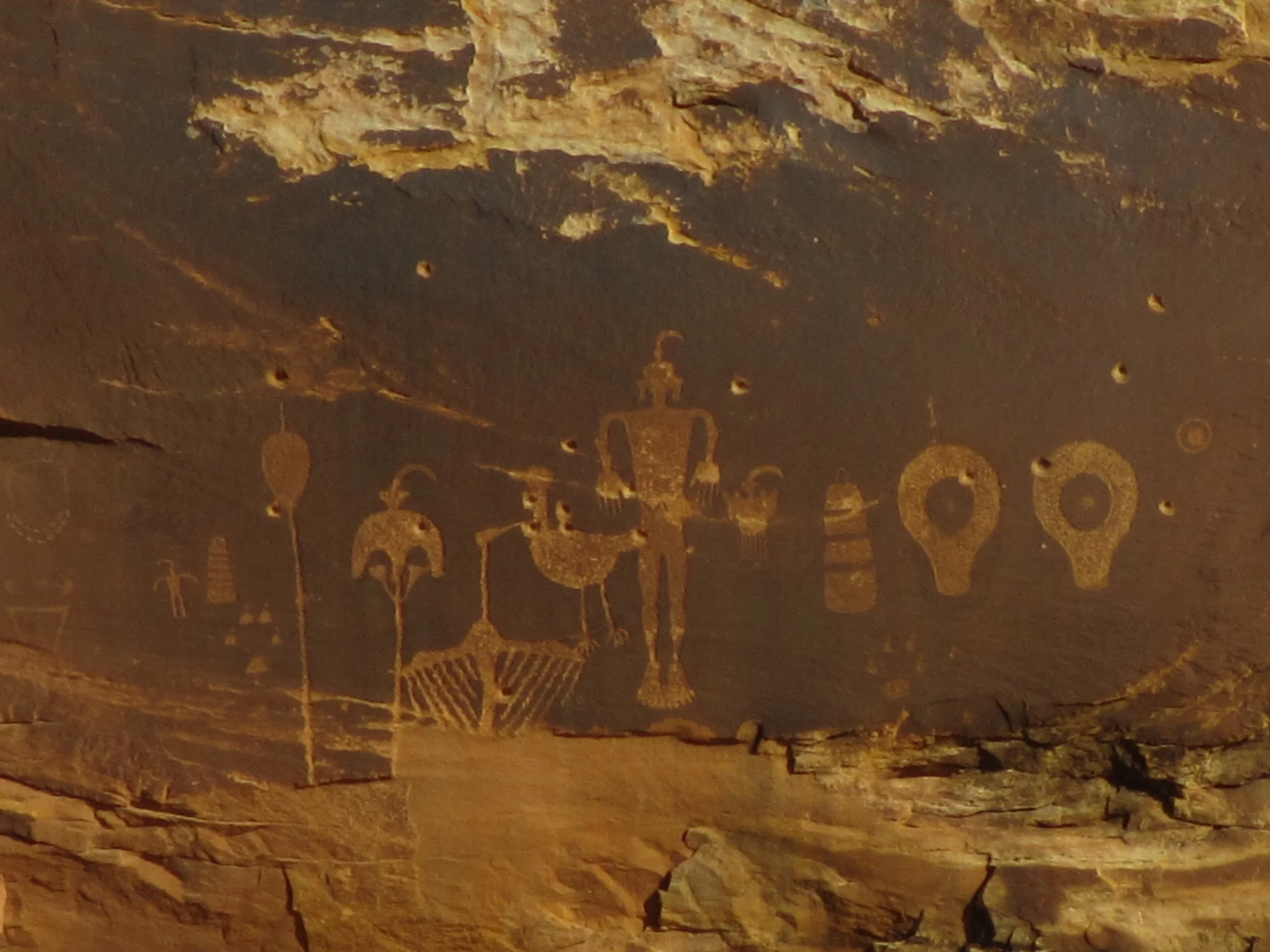
The rock art and the cliffside dwelling were confirmation of the life-giving nature of this place. Thousands of years ago, people made their way down into this ravine. Running water at the bottom made it sustainable to live within, so they constructed shelters. Carving rock art was crucial to their survival. Rock art serves as a form of communication and a navigational tool using astronomical alignment to indicate direction. Especially important to the Basketmakers were carvings that cast shadows to indicate seasons. In a culture that relied on agriculture, these artworks were important to know when to plant crops and when rain was likely to arrive. Water too holds symbolic meaning for the Pueblo People, denoting the passage of time and life.
In my search through the Pueblo homelands, the common thread I trace is water. In the desert southwest where water is scarce, it defines how a culture moves through a landscape. This is evident as we approach the San Juan River, where signs of past civilizations are more abundant than anywhere else in the region. For millennia, various Ute, Puebloan, and Navajo civilizations have used the River Valley as a convergence point for a vast exchange of goods and ideas, ancestral Puebloans using the river for irrigation and constructing houses along the bank. 1,300 years ago, a severe drought struck the region, and the receding of the San Juan was so much that many people migrated from their homes, never returning. Today, in the nearby town of Bluff, Utah, a similar drought is driving people from their homes. As the climate warms, the Southwest is becoming increasingly arid. The drought occurring in the Colorado Plateau puts Bluff and surrounding towns at risk of becoming another story of the past.
The dawn of this reality is being realized after years of taking water's finite availability for granted in the West. Unreliable and increasingly radical climate cycles dictate the carrying capacity for life within the Plateau. For the irrigators of the Ancestral Pueblo to the farmers that occupy Bluff today, water is the bringer of life and sustainability. Re-connecting to water is part of the process of healing our relationship to the land.
Lying in the murky basin, thousands of years of relief echo in the canyon through the sound of water rushing below me. On the opposite cliff face, the artworks and homes, the marks of people here before me, have remained for thousands of years, telling stories of sustaining life in the same rivers and ravines, through similar floods and droughts. Although myself and many others who occupy the West have no ancestral connection to the land or the art, I think this is what makes immersion with the land’s history so important. While navigating a changing climate, we must cherish the stories of the people and the natural systems that existed through these waters and let them pass their knowledge onto us.