
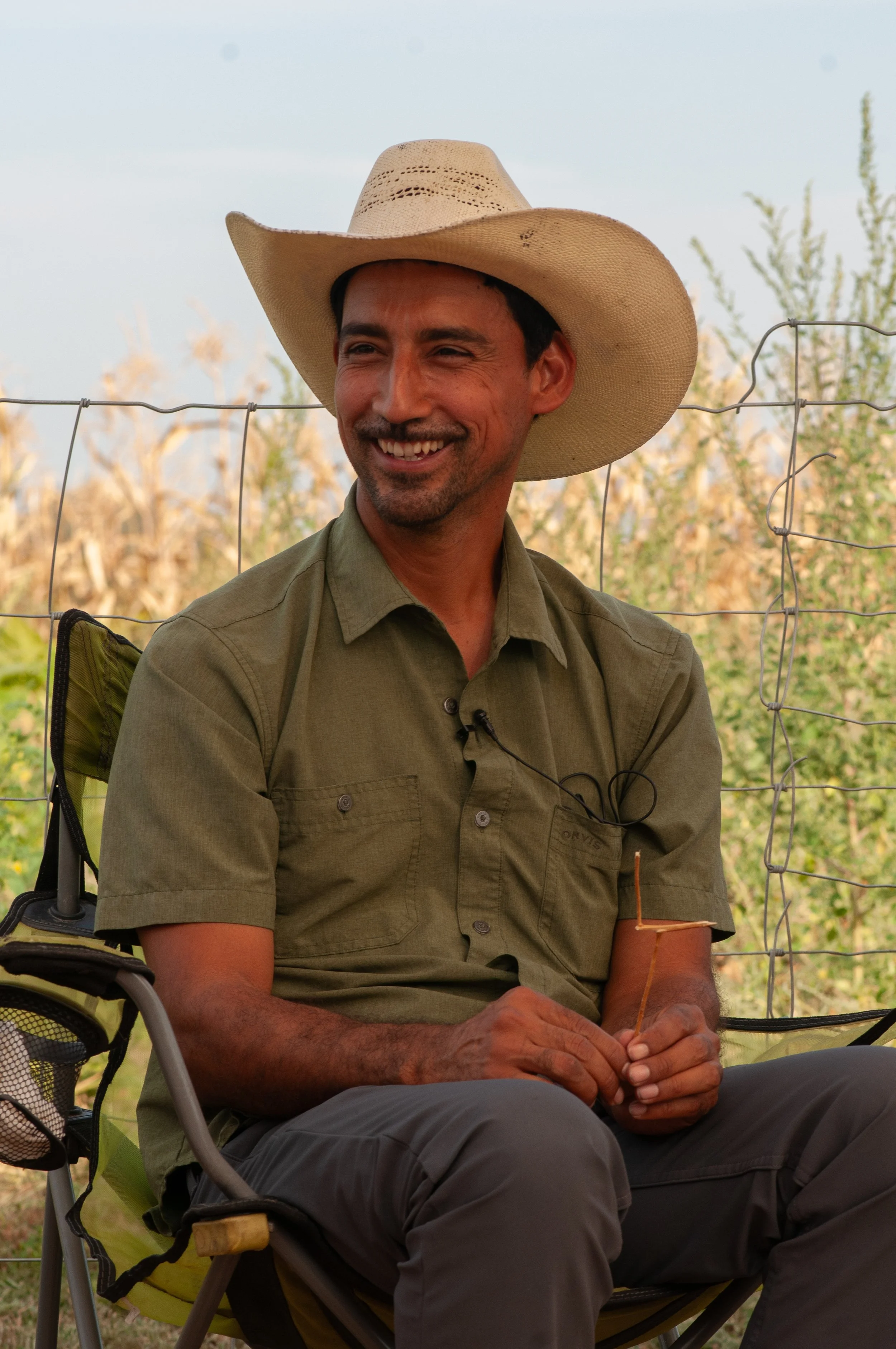
On a warm Tuesday evening, twenty-one students hailing from a private liberal arts college occupy an oval of chairs on David Lemus’s small homestead in the Yakima Valley. David, a Mexican immigrant, is a diesel technician by trade, although he grew up working in agricultural operations across the Yakima Valley with his father, who is also a Mexican immigrant. He wears a cowboy hat, a green button up shirt, and simple gray pants. A coy smile begins to creep across his face; he has just been asked how he can still have such a deep love for the land even after his family endured such hardships here. “There is something about the quiet that I do love,” he explains in his kind, soft voice.
David has had a close relationship with this land from a young age. While his classmates went to school dances, David labored in this western frontier with his father and two brothers along with countless other latinos and latinas harvesting asparagus, apples, and mint leaves. Born into what he put as “deep poverty,” David’s parents did not expect or ask much of him and his siblings. His father, having spent decades in this flawed industry, simply had one request: don’t stay in the fields.
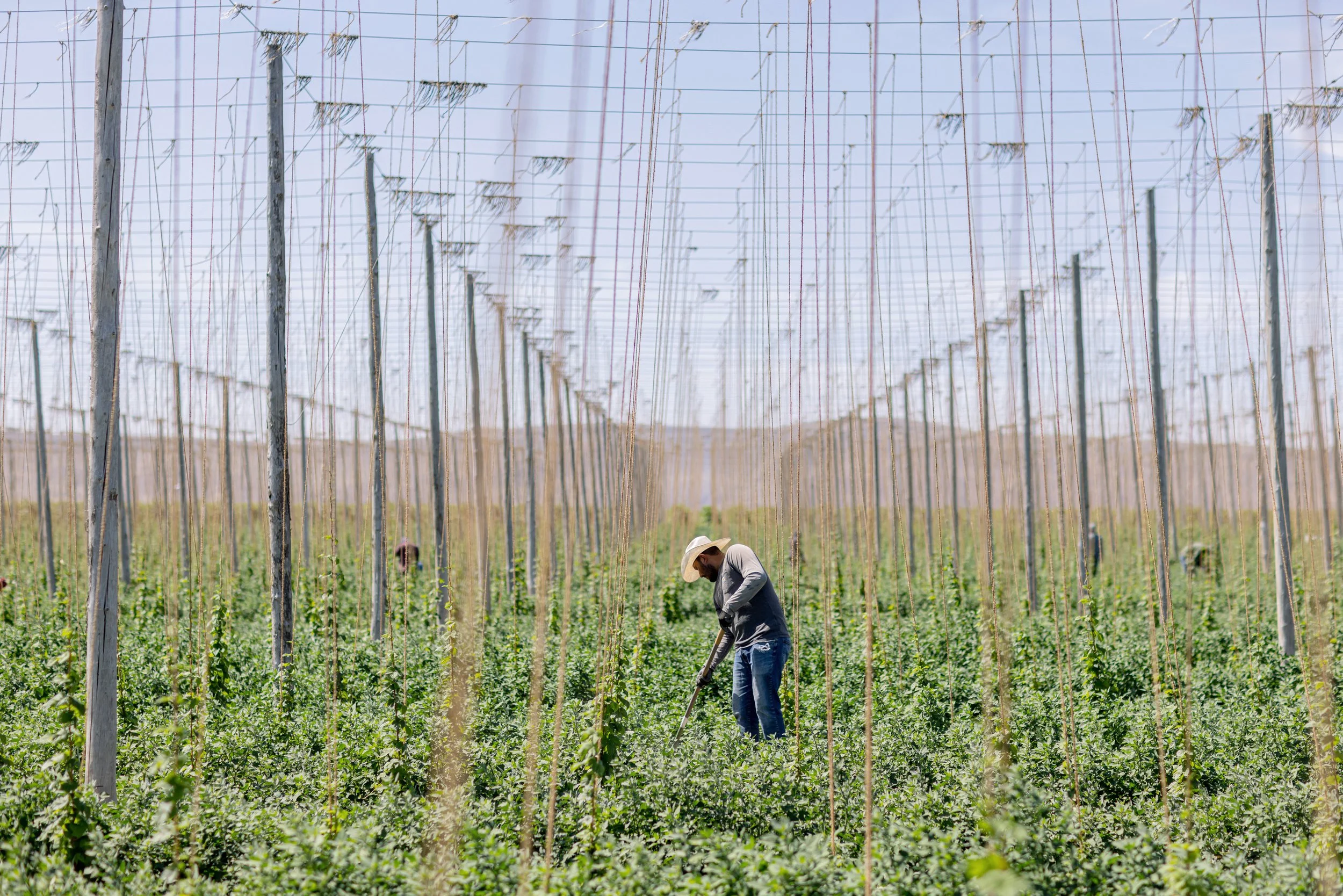
David’s place of residence, White Swan in the Yakima Valley, echoes a story very similar to his. Speckled with trailer homes and dilapidated houses, the only thing more obvious than the poverty in the area is the agricultural industry that perpetuates it. As we drive along the highway, endless corridors of hop vines flank our three SUVs. The brief glimpses between the rows only reveal more crops, flashing by us like a giant flipbook.
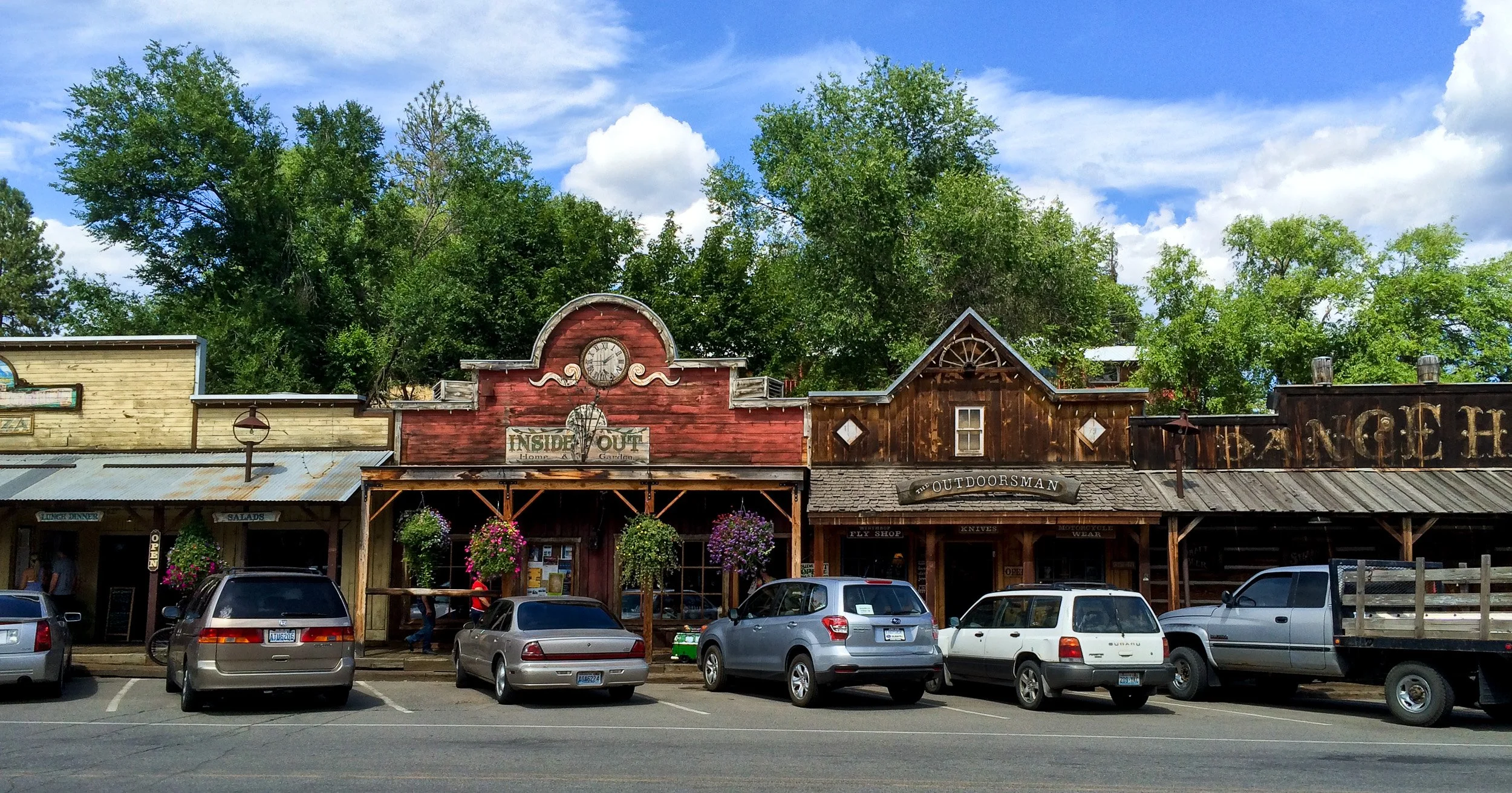
A couple hundred miles north lies a different valley: the Methow. Rolling hills peppered with pine trees enclose the sagebrush steppe. Snow-capped mountains watch solemnly from the distance. A few days prior to meeting David, my classmates and I found ourselves strolling the streets of Winthrop, a small town in the upper Methow Valley. As we wandered through the beautifully paved downtown areas we saw a predominantly white gentrified shell of a western town. False front stores were made to look as though they had existed since the days of the Wild West, when they truly arrived a century later. Inside these stores, you will not find horse tack or farming equipment, but instead organic food, outdoor goods, restaurants, and art galleries. And no, you cannot afford any of them. Acting as sentinels of their western oasis, million-dollar mansions dot the hills surrounding Winthrop, warding away those of lower incomes.
This is a stark contrast to David’s western reality. With a sobering tone, he says, “I enslaved myself to a system that takes as much as it needs to take, and then gives you the crumbs and expects you to do that over and over and over for the rest of your life.” David wasn’t the first to fall prey to this system, and he won’t be the last. Since the inception of our country, our government has worked hand in hand with large industries to continuously and systematically exploit the labor of several vulnerable ethnic groups. The continuation of this exploitation is especially highlighted in today’s agricultural industry, where migrant laborers are told to work in hazardous conditions, often with no protective equipment. If they get injured, the company will simply fire them - it is cheaper for them to hire another immigrant desperate to put food on the table than to help a worker through an injury. They are left wounded, without work, in poverty, and with no way forward.
Meanwhile, the fruits of their labor are enjoyed by a young couple along the sunlight rocks of the Methow river amidst a carefree afternoon. Juice from their Yakima apple runs down their chin as they stroll through the Western wonderland that is Winthrop’s downtown. They can’t taste the calloused hands of the migrant worker that picked it and was laid off a day later. They only see the sticker that says “locally grown” and “organic.” Engrossed in the ambiance of Winthrop, they bask in their admiration for this quaint “western” town, failing to understand that the reality of the west for millions of migrant workers is not apples and false-front stores, but chemical burns and 16 hour shifts.
Their ignorance is not their fault, David explains to us. He says that pointing fingers is not the answer and that we need to instead “point to history, and how history allows for this to happen in government and institutions set up for its own benefit…for the benefit of the very few.” He details how many forces in this country continue to sow seeds of division through careful rhetoric. By dehumanizing workers through a variety of means, benefactors of the agricultural industry manifest a more lucrative business.
Injuries, deaths, families torn apart, and dreams of a better life crushed, all in the name of profit and efficiency. Despite its classic portrayal as a land of equal opportunity and freedom, the reality of the modern American West has strayed far from this idyllic vision. However, this dream has not been snuffed out completely. Back on his small homestead, David grows something special alongside his corn, carrots and potatoes; he grows hope. David is living proof that there is a way out of the cycle of unjust migrant labor, and that perhaps one day a more equitable west may exist.