Meet our Guests: Zoe Garver

Zoe Garver

Scientists in the Parks Ecologist

Las Cruces, NM

November 2nd, 2025

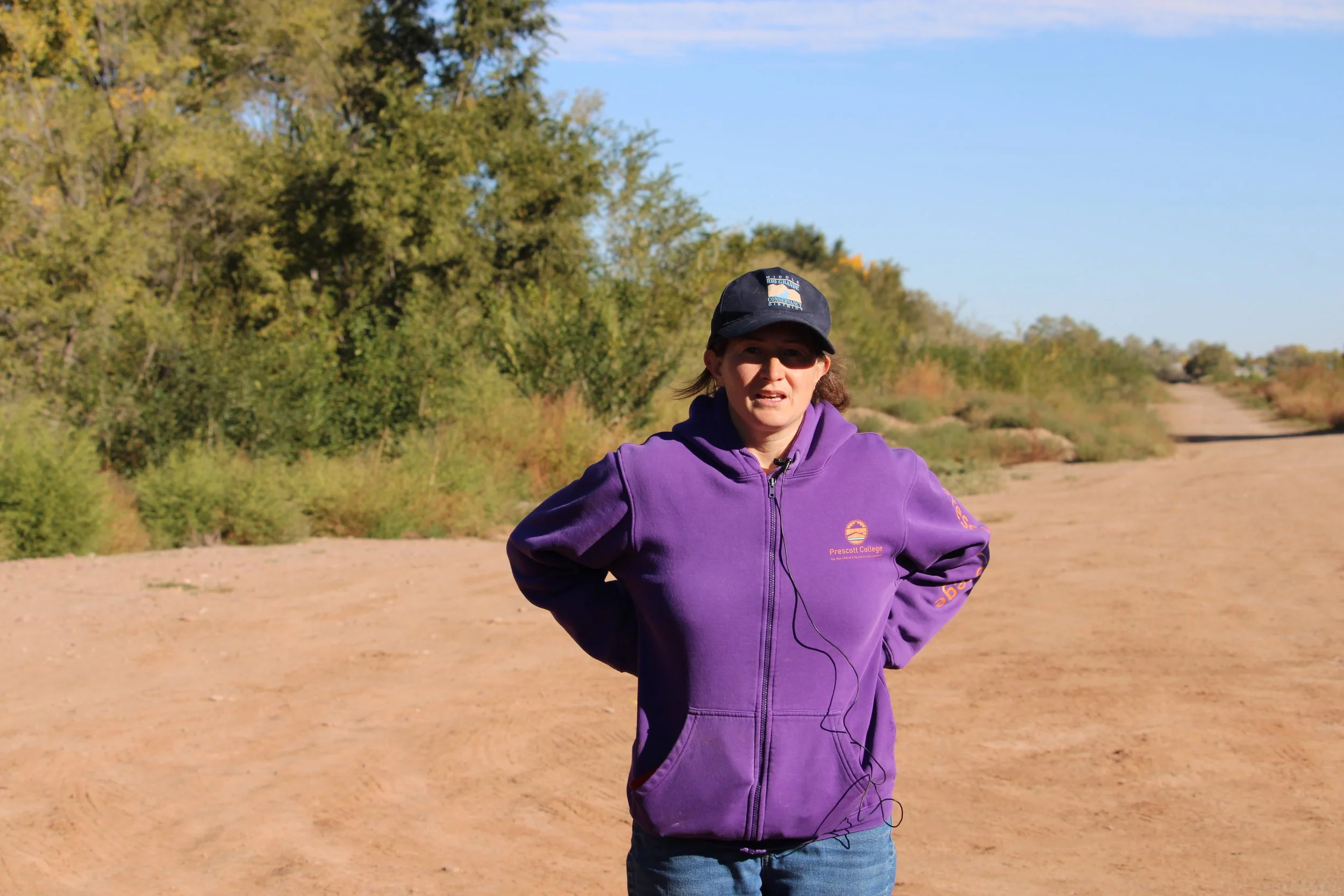
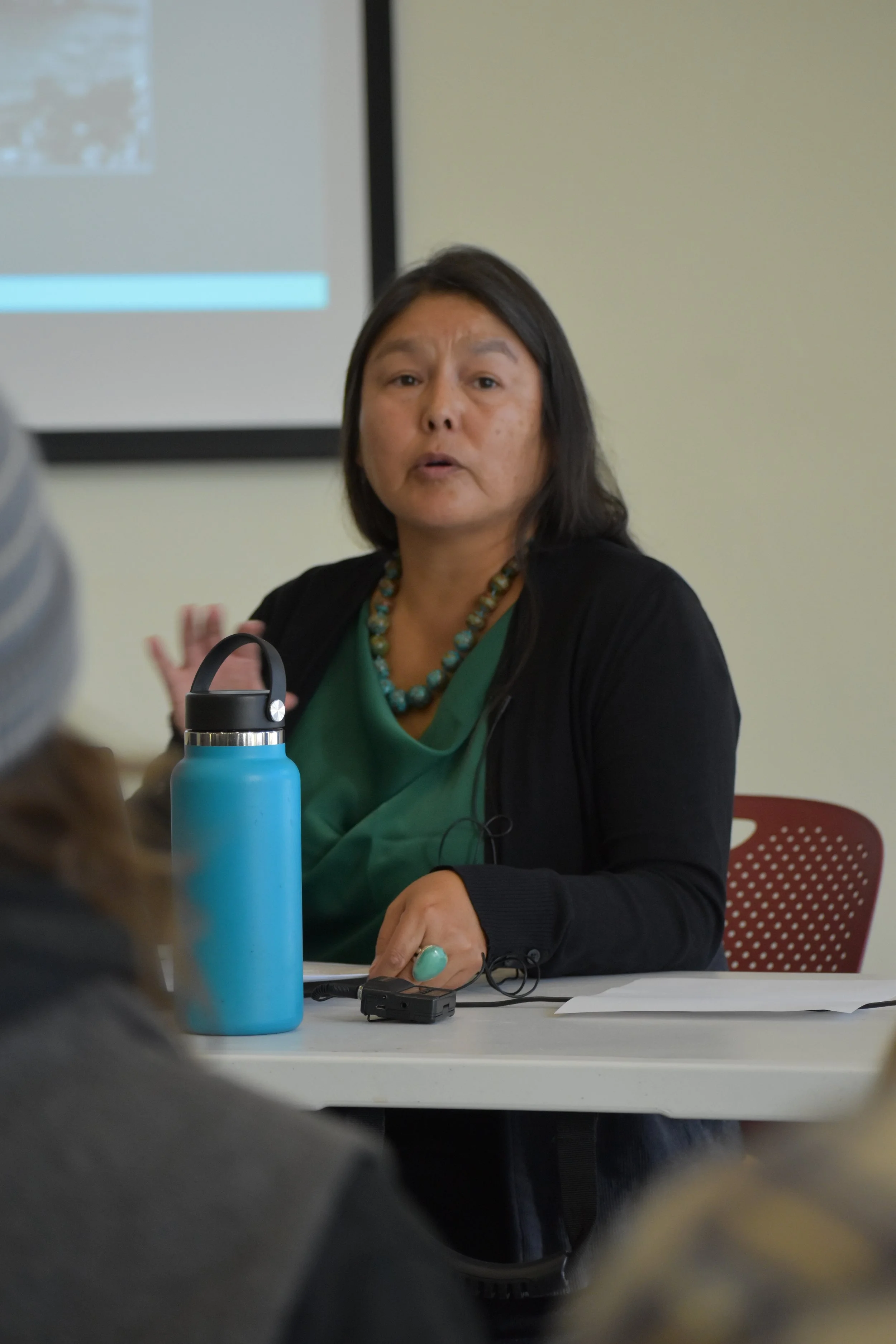
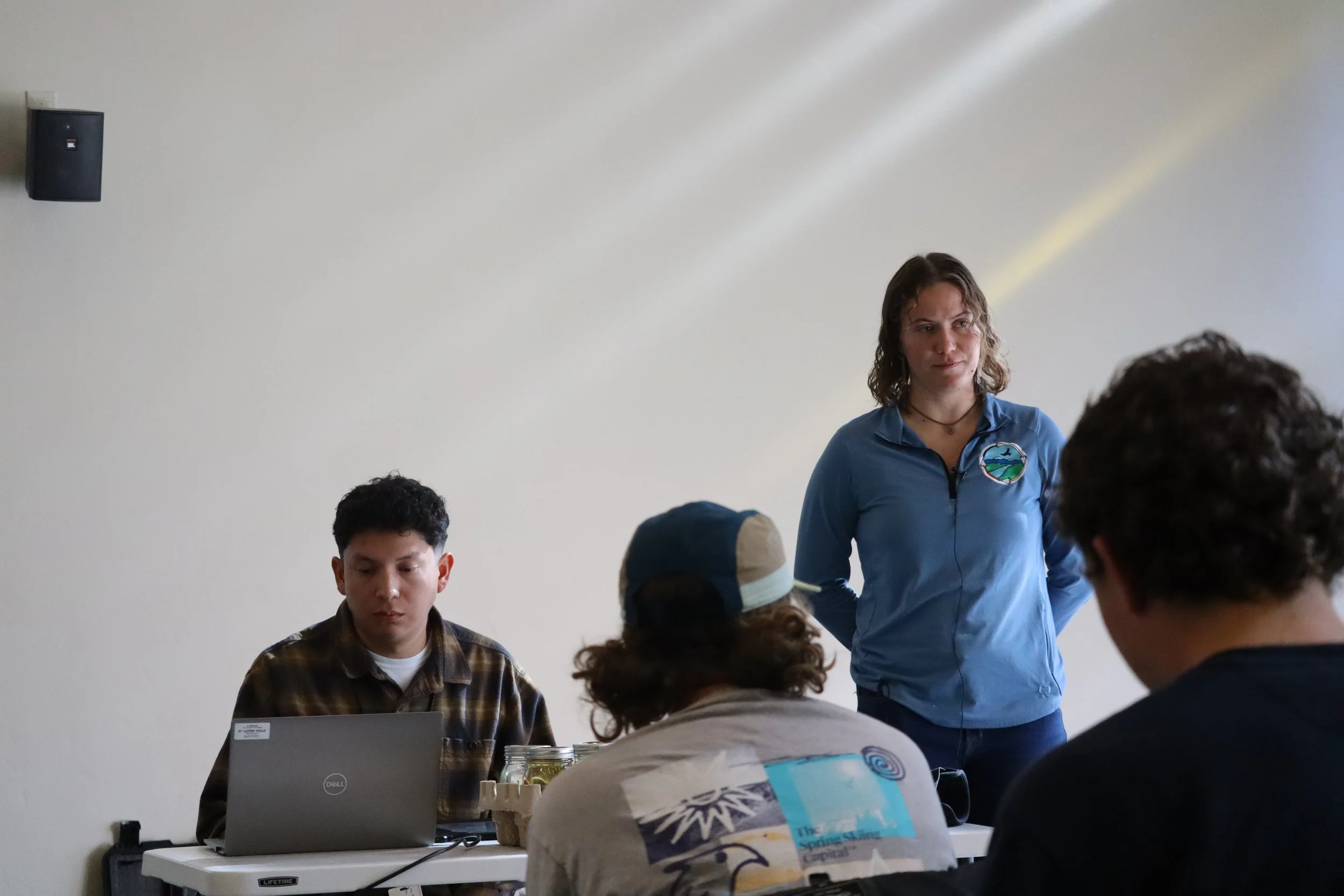
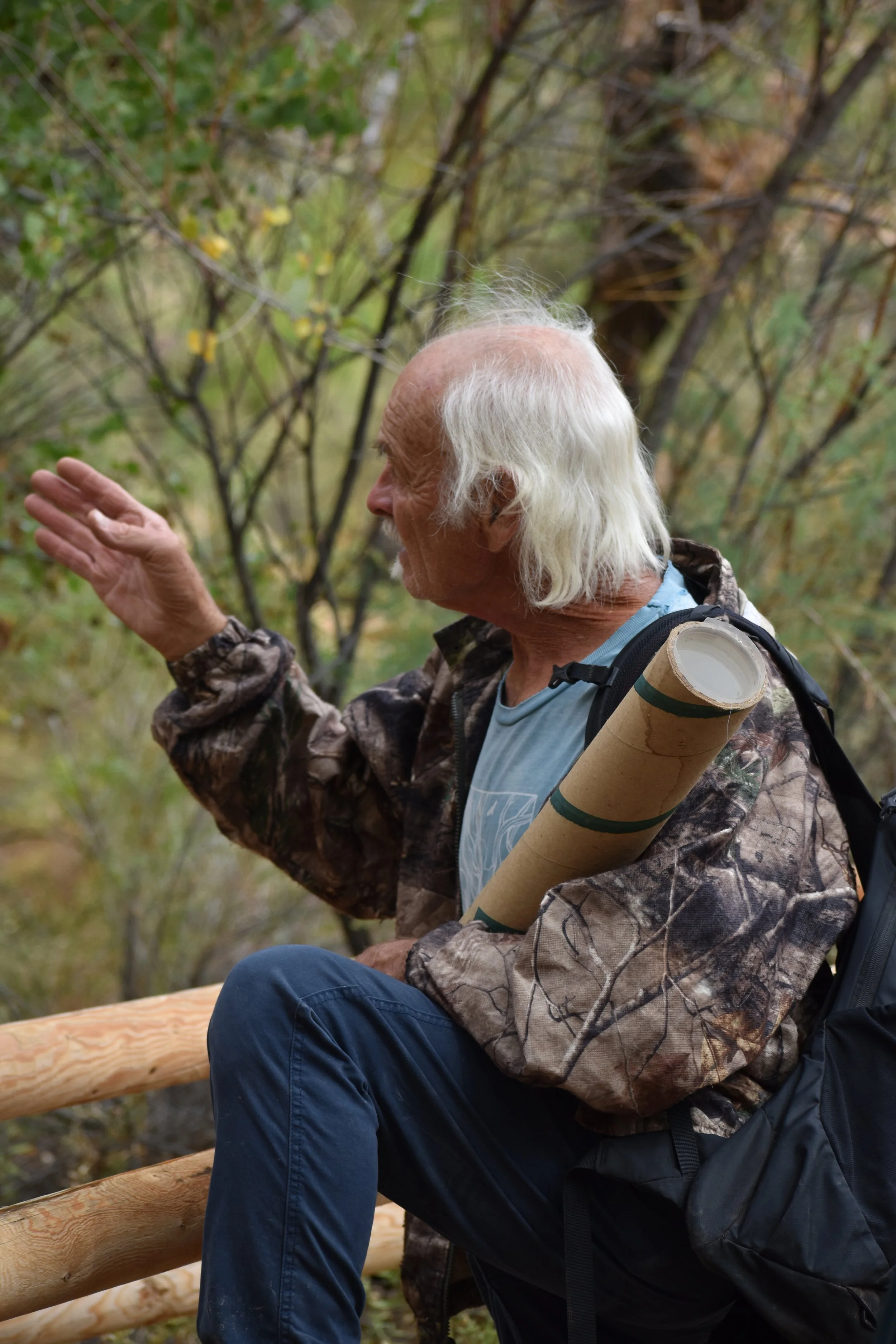
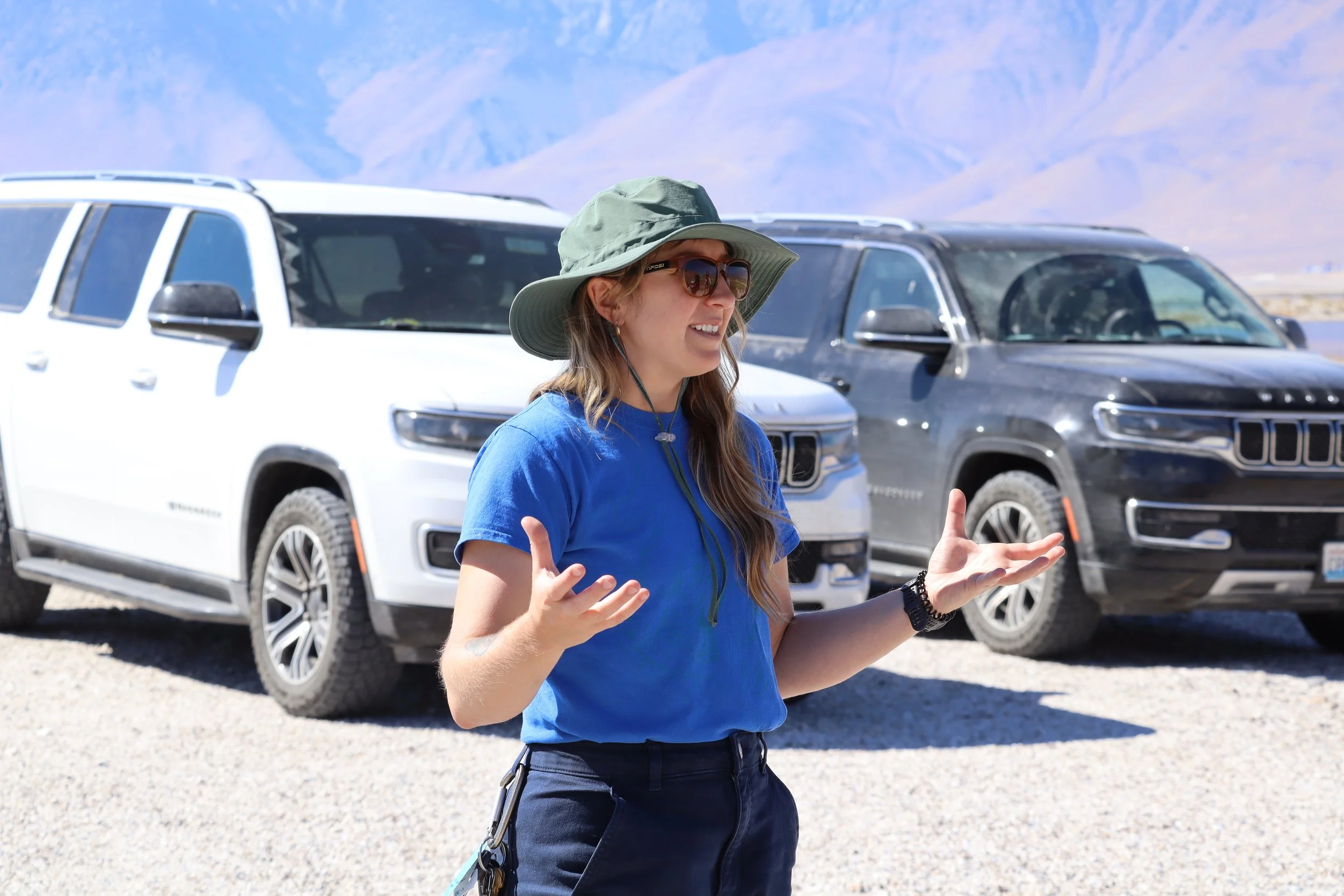
In the morning sun of the Organ Mountains in Las Cruces, New Mexico we met with Zoe Garver, a National Park Service scientist who works on the federal land across this region, often going out for multiple days to places like White Sands National Park or Desert Peaks National Monument. She recently graduated from Oberlin college last spring with a degree in Biology and French. With her extensive field experience, she was able to secure a job with the National Park Service’s Scientists in the Parks (SIP) program for a year-long seasonal position. During the government shutdown, however, she continued her work through a partner organization of the Park Service. Because Zoe is new to the area, she has spent the last few months getting to know the animals and flora that make up this desert ecosystem. She has been collecting data on the natural resources in this area and comparing it to baseline data that the parks have been collecting for decades to develop a basic understanding of the overall health of the environment and how it’s changing

.

So far, Zoe has been doing all her work in the uplands, areas of higher elevation, to escape some of the brutal heat of the region. Because of this, she does a lot of hiking and utilizes the plot method in order to monitor biocrust, soil, and species diversity. In the next few months, Zoe will shift her focus to different areas during the colder season, possibly working on river and water protocols. As a part of her internship, Zoe is also going to be using some of the data she collects to develop her own research project, though, as she recently started this position, she is still in the first stages of brainstorming.

by Hollis Wilson

Meet our Guests: Laura Paskus

Laura Paskus

Writer/Journalist

Albuquerque, NM

October 31st, 2025

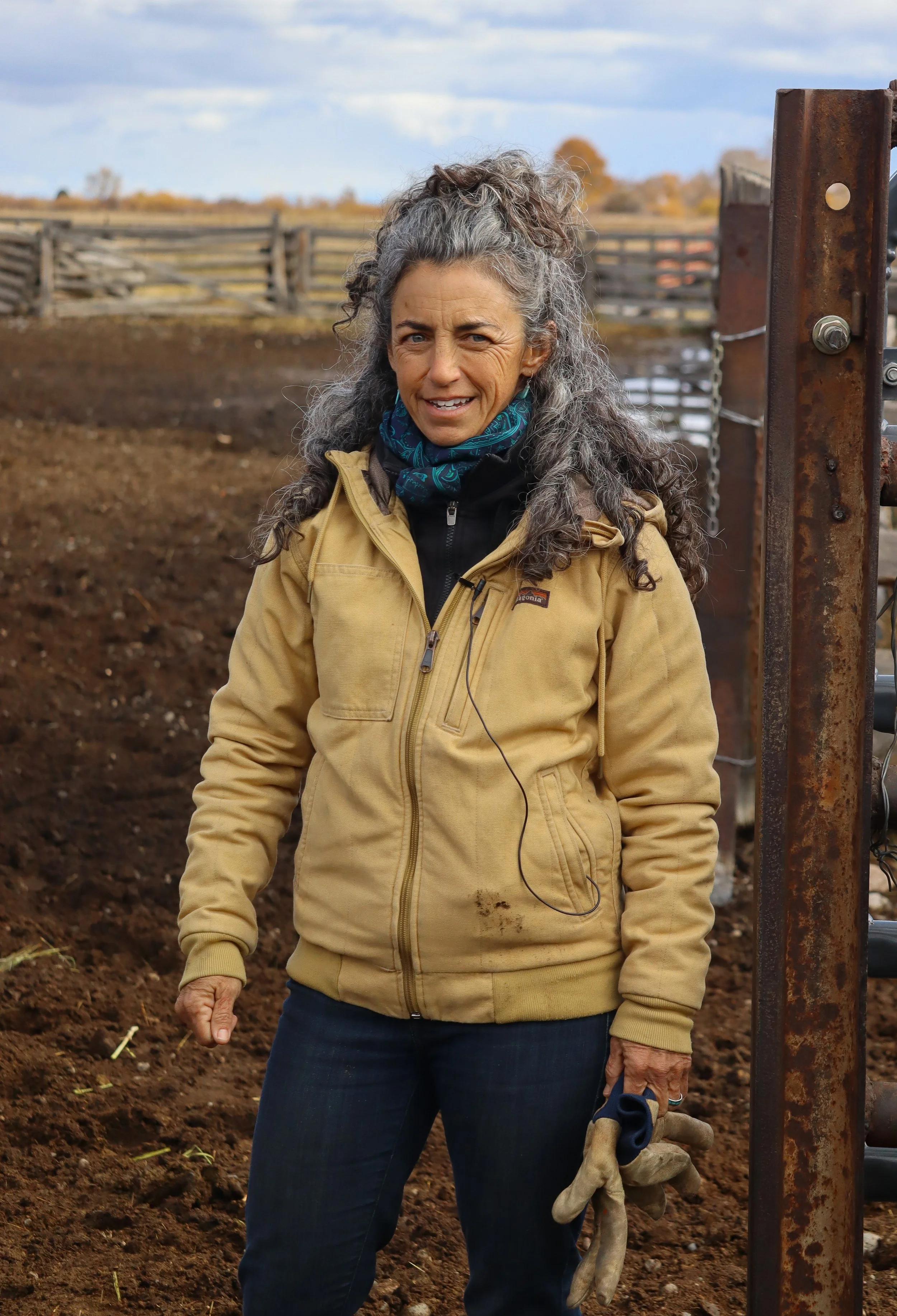
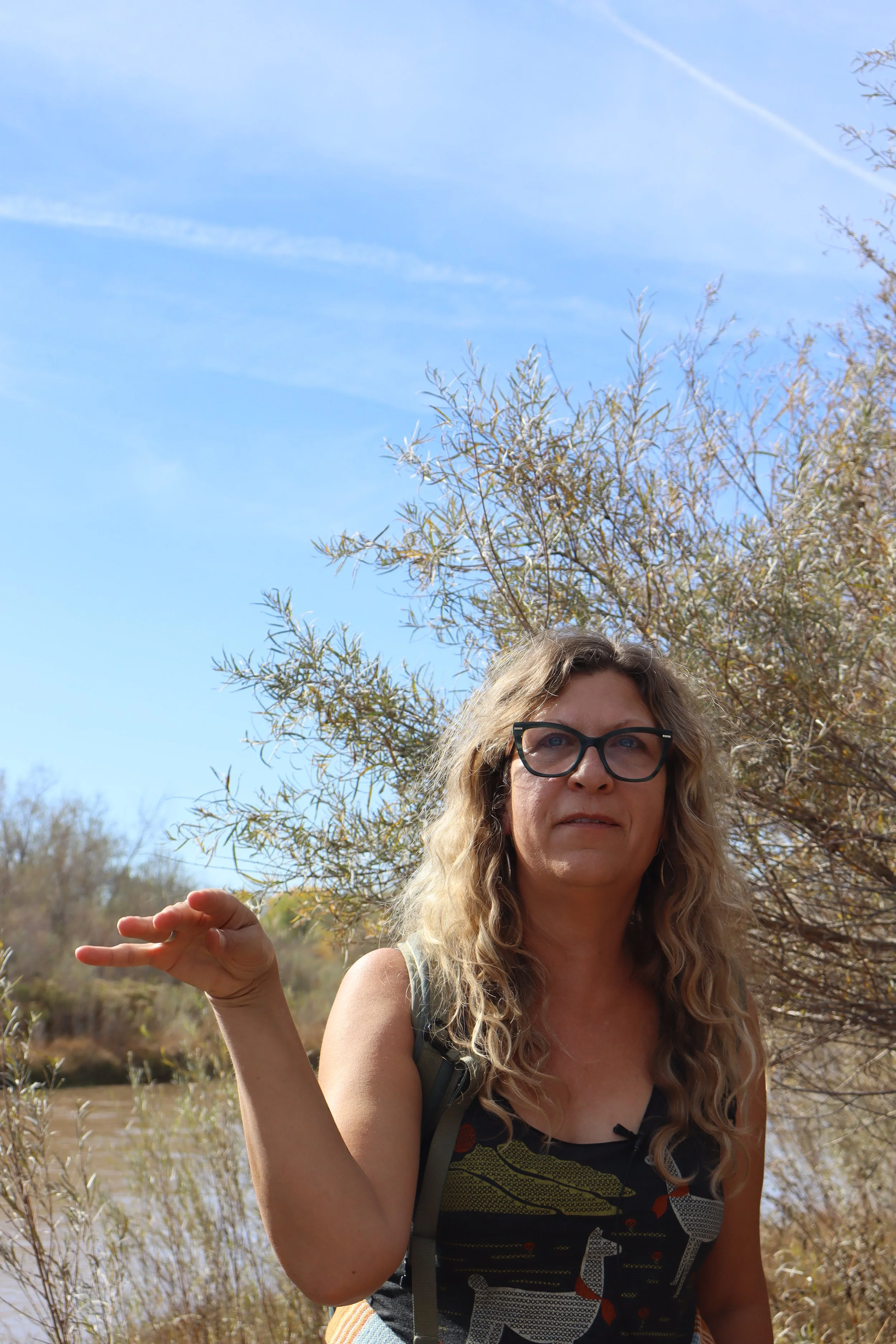
Laura Paskus is a longtime resident of Albuquerque who started her stay when she ‘escaped’ the East Coast to work as a contract archaeologist and tribal consultant in the city and ended up never leaving. Up until very recently, Laura had been the senior producer of the New Mexico PBS show, Our Land. We met Laura in a clearing in the middle of the Rio Grande’s cottonwood bosque. We walked with Laura through the bosque as she explained its importance to the people of the middle Rio Grande. As we sat decked out in our Halloween costumes, Laura, wearing an orange puffer over a colorful fall sweater, asked us each to introduce ourselves with our favorite home body of water. Whether that be a creek or a lake or a river. She gave us the writing prompt: "how do you think your home body of water sees you?” She encouraged us to think about nature in a greater context than humanity, telling us how the bosque is running out of time. Cottonwoods, which are the major tree that make up the bosque, only live for 100 years, and the floodplain that used to replant them no longer exists because of human engineering that has disconnected the river from its floodplain and because of the drier anthropogenic climate. But Laura doesn’t argue to maintain the bosque. The bosque is unnatural, just like the engineered state of the river, and it uses a lot of water. In the future of a drier west, a change that she has seen happen in her time living here, Laura hopes to see the city of Albuquerque accept the change that is coming to their forest within the city. But she hopes that they work to see it replaced with something like a native salt grass meadow instead of invasive grasses that may more robustly crop up.

by Jeremiah Harder
Meet our Guests: Jemez Pueblo Resource Management

Jemez Pueblo Resource Management

Jemez Pueblo, NM

October 30th, 2025

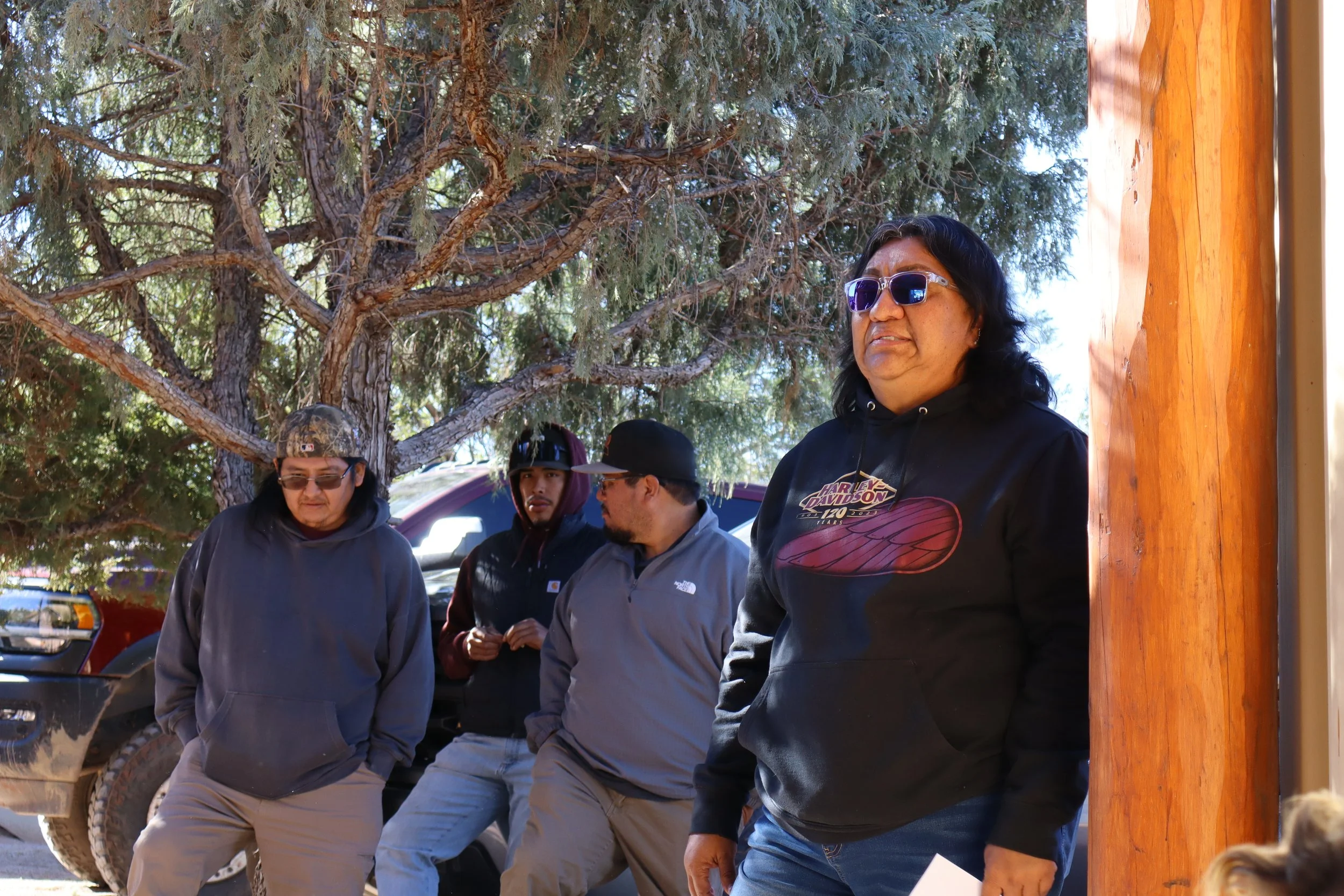
We arrived at the Jemez Pueblo to a multitude of welcomes. Clarice, the head of the Jemez Pueblo Natural Resources Department,had brought out her whole staff for us to meet and learn about their work for the Pueblo! The building was quaint, located in the heart of their community. The staff described being about to go home for lunch or go to a family member's house, giving the sense that it was an integral part of the community. The Natural Resources Department is tasked with protecting, preserving, and enhancing the natural and cultural resources for the benefit of the environment and the people of the Pueblo.

There are five main branches in the department: forestry management, cultural resources management, rangeland and wildlife management, environmental monitoring and compliance, and a field team. We spoke with each team and learned about the various projects concerning the tribe. Lots of the projects centered on Los Alamos National Labs, which is a nuclear testing site 50 miles from them. They have funding from the government allowing them to test water from nearby sources, and monitor for pollution from the lab.

They also work to monitor wildlife in the area. They described the recent uptick in cattle on lands that were not supposed to have cattle grazing. Often they said that farmers would just leave their cattle there and with no regulation or predator they were starting to take their toll on the landscape by overgrazing. They are currently unsure of how to deal with the population and are working on a way to address this growing issue.

Getting to meet with the Jemez Pueblo gave us a larger understanding of the greater Middle Rio Grande region, as well as the sense of community on the Pueblo. We appreciate them for spending the time to truly show us the inner workings of the organization and welcoming us into their space.

by Katharine Graham

Meet our Guests: Todd Caplan

Todd Caplan

Restoration Program Director

Albuquerque, NM

October 29th, 2025

Westies gather in a brightly lit class room at the University of New Mexico after waking to a cold morning in Albuquerque. Here we warm up while meeting with ecologist Todd Caplan. Originally from Nevada, he has lived in the area for the last 30 years doing work in New Mexico, Arizona, California, and also internationally through an office in Papua New Guinea. Todd started his career in alpine forest ecology, but after he moved to New Mexico transitioned into riparian ecology which helped him obtain a job working for the Santa Ana (Tamayomi) Pueblo. At the Pueblo he found some of his most rewarding work, building a department to bring educational, economic, and developmental opportunities to the tribe. During his seven years in this role, Todd also helped put together and execute a plan for the largest native vegetation restoration project along the Rio Grande flood plain. He has continued his dedication to restoration ecology, creating functional riparian habitat through consulting work. This includes a wide variety of restoration, mitigation, and monitoring projects around ground and surface water, soil health, mine drainage, native vegetation regrowth, rivers and flood plains, and more.

During our time together, Westies learned the significance of the river and flood plain interactions along the Rio Grande. Todd shared with us that “river and flood plains are one and can’t be decoupled without significant ecological impacts.” He taught us that to restore them, “it doesn't matter thinking outside of the box, it's about recognizing the box is changing.” There are alterations to the environment that are irreversible and require creative solutions to reach a point of long-term viability. Todd has dedicated his work to exploring and applying these solutions while educating others of their importance.

by Zandra Bakken

Meet our Guests: Stephanie Russo Baca

Stephanie Russo Baca

Middle Rio Grande Conservancy District Director at Large

Albuquerque, NM

October 28th, 2025


Standing next to a drainage ditch in Los Chavez New Mexico, our group of westies met with Stephanie Russo Baca in the bosque, the area surrounding the Middle Rio Grande River full of cottonwoods, willows, and notably lots of invasive species. After getting her degree in Agroecology from Prescott College, with minors in history and policy, Stephanie moved to New Mexico where she continued to grow her passion for water and agricultural policy. As a result, Stephanie attended law school, and eventually ended up at the Utton Transboundary Resource Center at UNM. She is currently the water rights adjudication ombudsman where she told us she is essentially “the neutral third party” that people can turn to for advice and information about legal issues concerning water rights in New Mexico.


Like many of our speakers, Stephanie holds a lot of responsibilities and roles, one of which is being Director at Large for the Middle Rio Grande Conservancy District. At its conception in 1925, irrigation along the Middle Rio Grande was the MRGCD’s main concern, but climate change and other environmental factors have inevitably affected the amount of water in the river and thus how much and to who that water is distributed. Since then, flood control, drainage, and recreation have been incorporated into the district’s missions. People are allowed to walk, run, and possibly even hunt along the acacias, but no motorized vehicles other than district trucks are allowed on the dirt paths.


With the river completely drying up this year and the lack of flooding already stressing the river ecosystem’s previous configuration, the bosque is struggling. This area is changing and will continue to change as we keep our firm grasp on the water. Water rights in New Mexico are very different than prior appropriation laws in Colorado and instead they operate on a more equal basis with everyone sharing in the water, even during drought. So as climate change reduces flows, the district is making necessary adjustments to ensure that no one is left behind.


by Allee Garver

Meet our Guests: Keri Brandt Off and David Off

Keri Brandt Off and David Off

Professor of Sociology, Fort Lewis College, Colorado : Rancher and Owner of Off Ranch

Del Norte, CO

October 22nd - October 25th, 2025

On a cold and frosty morning, we file into the warm workshop at the Off Family Ranch in Del Norte, Colorado. Keri Brandt greets us with a kind and friendly smile as she holds a large paper bag of freshly baked bread for us. As we sit down on crates, five-gallon buckets, and sofa chairs, Clementine, the ranch’s work dog quickly attracts our attention. We immediately feel at home in Keri and Clem’s warm and welcoming presence. Throughout our time at the Off Family Ranch, we explored some of the complex issues that exist in the basin including concerns about water, ranching, and farming.

Keri is a professor of Sociology and Gender and Sexuality Studies, at Fort Lewis College. Additionally, she works tirelessly on the Off Family Ranch. Keri first found Fort Lewis College as an undergraduate student before getting her Ph.D. at the University of Colorado. Along with her incredible wealth of academic knowledge, she shared her passion for the Off Family Ranch, where she lives. We learned about the complexities of ranching in the modern era. For example, Keri explained how people criticize small producers about market prices instead of the commercial food system as a whole. Keri argues that the commercial food system needs improvement because for a small generational ranch like the Off Family Ranch, they have little to no control over the prices set on their beef. Keri also explained some of her research on the ways in which animals create connections with each other and humans. This passion came alive when Keri and Clem worked the cows with flawless communication. With one swift sound from Keri, Clem would run at the cows, herding them through the small opening into the nearby pen. We all stood spread out along the fence line with eyes wide open in amazement.

We were also lucky enough to learn from Keri’s husband, David Off, who grew up on the ranch. David attended Fort Lewis College as an undergraduate studying education. He was later drawn back to his family ranch and now plays a huge role in the success of it. David explained how water rights work in the upper Rio Grande Basin. David helped us better understand the value of water and how deeply it affects the productivity of the nearby ranches and farms. For example, the Off Family Ranch relies on this water for growing hay whereas other farmers need it for growing potatoes. We left the Off Family Ranch not only feeling incredibly grateful for David and Keri’s time, but also for sharing their beautiful property with us during our three days in Del Norte.

by Ashley Hagen

Meet our Guests: Cleave Simpson

Cleave Simpson

General Manager, Rio Grande Water Conservation District and Minority Party Leader, Colorado State Senate

Alamosa, CO

October 24th, 2025


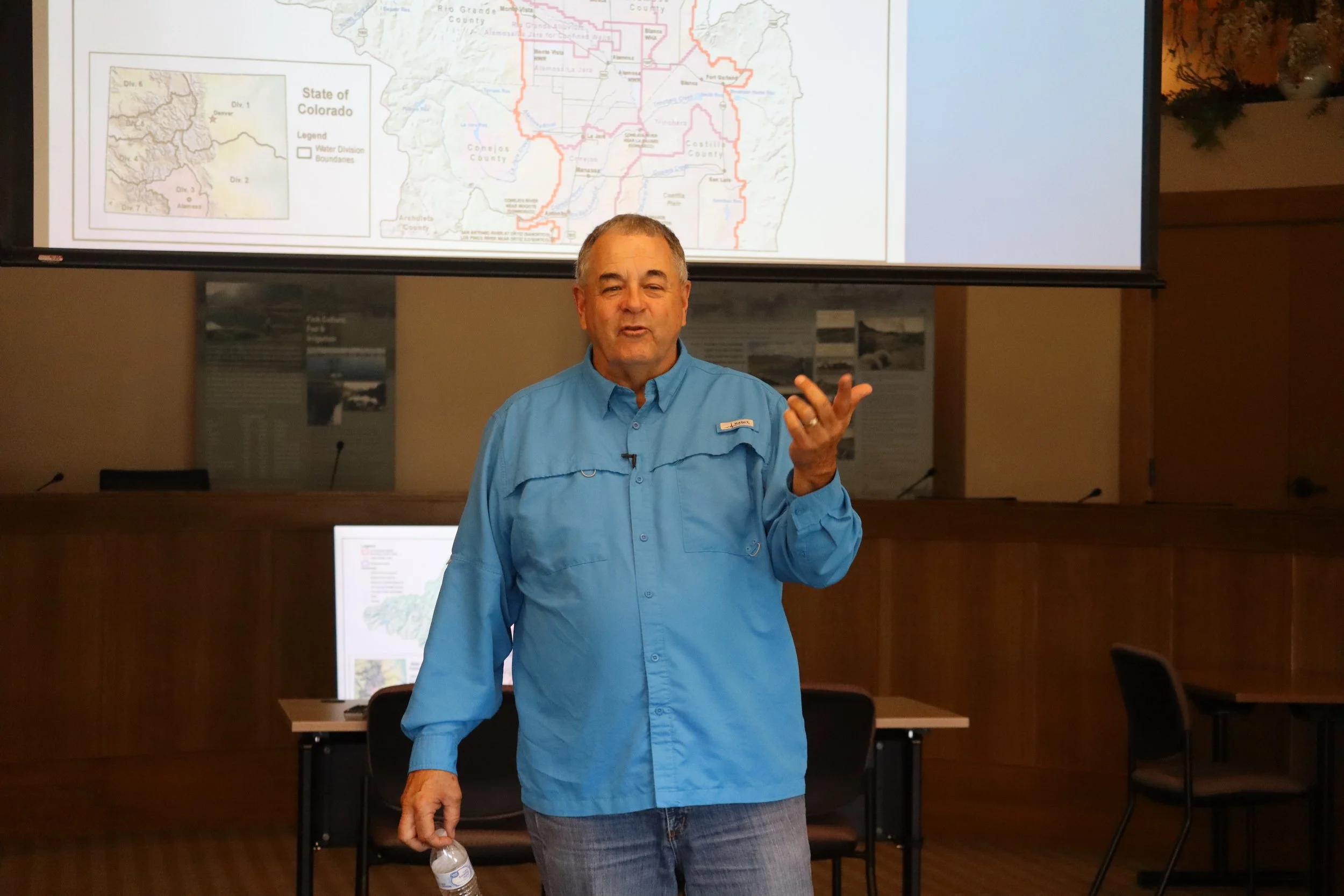
Cleave Simpson, born and raised in the San Luis Valley, is the Minority Party Leader in the Colorado State Senate. He represents the over 700,000 people who live in Colorado district 6 while also serving as General Manager at the Rio Grande Water Conservation District (RGWCD) and working on his own farm. At the RGWCD district office in Alamosa we met with Cleave to learn more about the San Luis Valley’s use of Rio Grande water for agriculture and municipalities.


The San Luis Valley farms over 500,000 acres of land. The main crops grown include alfalfa, hay, potatoes, and barley, all crops that require a great deal of water. As a result, the shallow aquifer that the valley is legally obligated to maintain has been dropping in level for decades. To combat this, RGWCD has been encouraging farmers to grow less water intensive crops, designating allowing water to pass through and percolate into the ground as beneficial use, and using more efficient irrigation systems like sprinklers instead of flooding. Despite the reduction in water usage, the aquifer level continues to decline.


Cleave cares deeply about his community and expressed his worry that people in the area seem not to know much about the severity of the issue. If the aquifer does not return to a sustainable level by 2030, the state will shut off many of the wells that supply the hundreds of farms in the valley. Things seem bleak, so we ask him what gives him hope. “This community, in my entire life, has found ways to come together and solve difficult problems,” he tells us. Educating Senate members from urban communities who know little to nothing about their rural neighbors and informing farmers and locals of the severity of the issue, Cleave continues to fight for the water rights of his constituents and the San Luis Valley, with the faith that they will be able to overcome this obstacle. 


By Katherine Finger

Meet our Guests: Kyler Brown & Emily Elliot Brown

Kyler Brown & Emily Elliot Brown

Potato farmers

Del Norte, CO

October 23rd, 2025

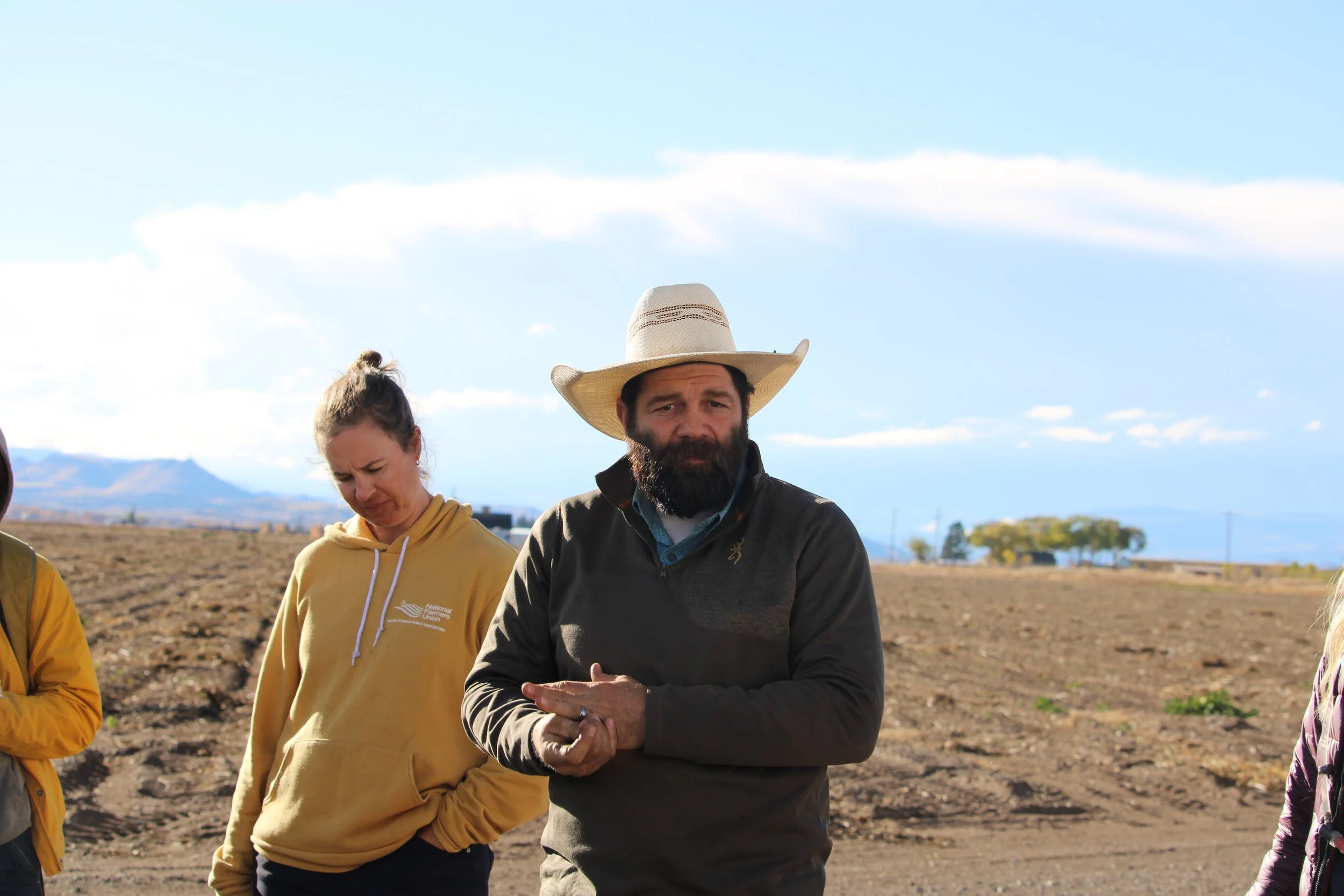
As we pulled into the farm, the rain was about to come. In a place that only receives less than 6 inches of rain per year, this is a magical moment. We took shelter in the potato storage room while the rain came for half an hour, bringing some wind and thunderstorm, but most importantly, ample flow in the Rio Grande. Kyler and Emily’s stage was a giant bin full of seed potatoes, with a humidifier fan blowing in the background to preserve them throughout winter. Emily received her master degree in Public Health, but eventually moved back with Kyler to her family farm while raising their kids.

Potatoes is 80% water, and for Kyler whether it is potato or beef, they are exporting water out of the valley. But when water is so rare, why do we have to export them? We learnt about how the Good Agricultural Practices discourages small, commercial farms like the Elliot farm to sell locally because of the extra auditing process required. It’s also hard for their food to enter the grocery system like Safeway, because their potatoes have to go to the distribution center in Denver and come back. Only a few who grow organic potatoes for a niche market (e.g. Whole Foods) can afford this costly process. For the majority of farmers, they have to compete in an economy of scale, where giant producers in Idaho with a third share of the national production dominate the market. That’s why Emily’s family started a co-op together with 8 other farmers to benefit from their shipping advantage in the Southwest.

As the sun came out, we were able to take a tour to the field. We stood in a transition place where potatoes meet malting bailey in a wide open space, that is, according to Kyler, a tiny farm of 640 acres. Kyler also took us to where his ditch meets the Rio Grande, now teeming with water. It is flowing now, but earlier this summer the river is recorded to run dry for hundreds of miles in New Mexico and Texas. The situation is dire for the land and for the farmers, who are hanging there day by day. The group left with the question of governance in our mind, about how we can make the system better for the land and the people involved.

by Linh Che

Meet our Guests: Andrew Gallegos

 Andrew Gallegos

Southern Ute Indian Tribe Council Member, Southern Ute Cultural Center and Museum

Southern Ute Indian Reservation, CO

October 21st, 2025

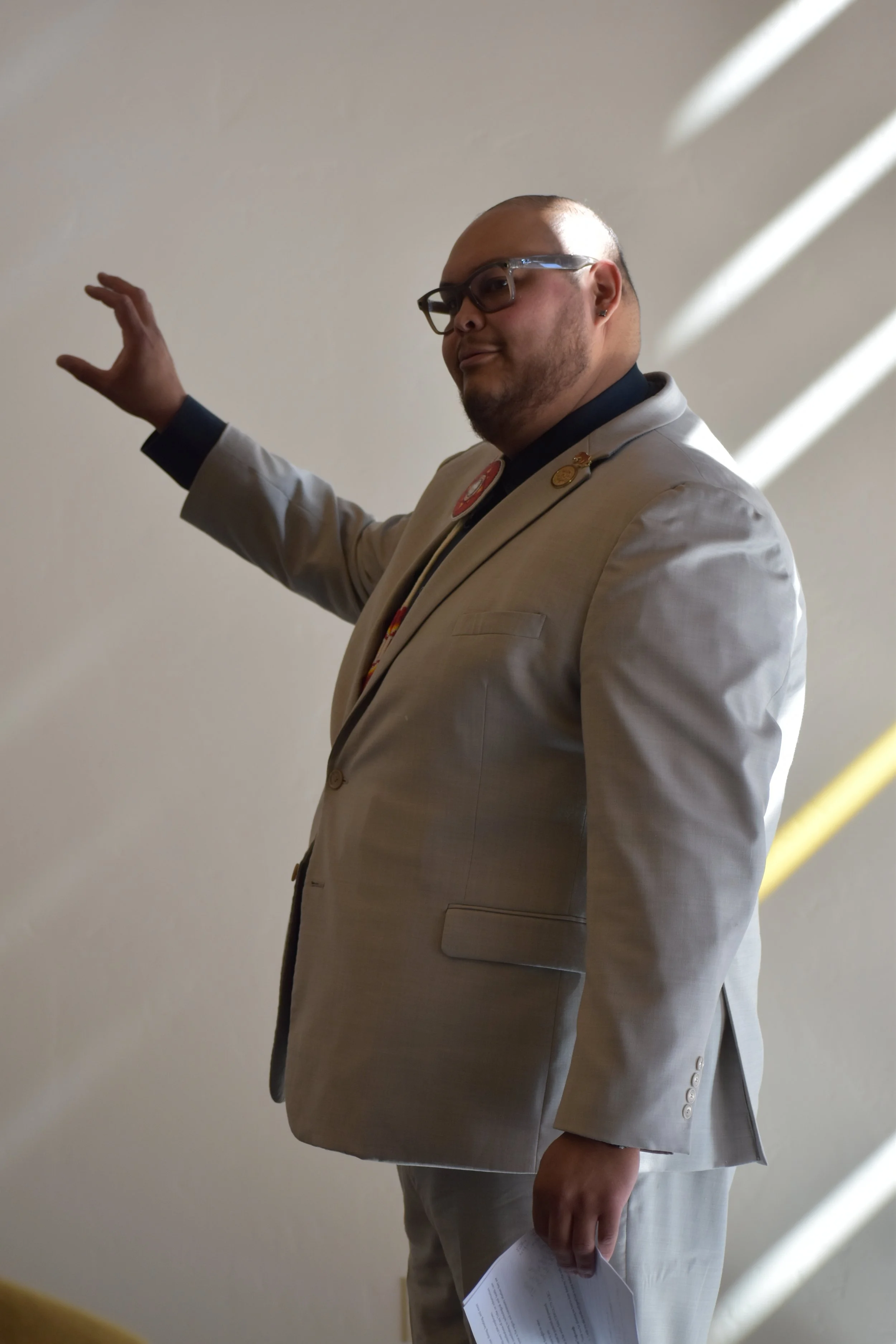
Councilman Andrew Gallegos was inaugurated to the Southern Ute Tribal Council in December of 2023. He serves as the youngest tribal council member currently and the second youngest in the council’s history. He ran on a platform of improving tribal member support, economic development and youth involvement. Gallegos was born and raised in the Southern Ute tribe and began working for the tribal council’s growth fund after high school, from there he worked his way up and learned all he needed to know to become a council member. He kindly met with Semester In The West at the beautiful Southern Ute Cultural Center and Museum in Ignacio, Colorado, built by tribal members in 2011. During our time with him, councilman Gallegos shared with us the history of the southern Ute tribe which is one of ingenuity and perseverance. The Ute people have been the residents of the area since time immemorial, During the Reservation Era their traditional lands were significantly reduced and the people were fragmented into three tribes: the Uintah Duray, the Ute Mountain Ute and the Southern Ute. The southern Ute, in the face of dispossession have, however, been able to gain strong economic sovereignty through oil and gas extraction on reservation lands. Through their economic investments they have been able to fund projects like the cultural center where we met councilman Gallegos and pioneer environmental standards in the industry.

by Penelope Doulis

Meet our Guests: Lisa Yellow Eagle

Lisa Yellow Eagle 

Tribal Water Attorney 

Southern Ute Indian Reservation, CO 

October 21st, 2025

Our group gathered in the window-walled conference room of the Ute Museum and  Cultural Center, where representatives of the Ute Mountain Ute Tribe met with us to talk about  water within their government. 

Lisa Yellow Eagle was the first speaker we met with. Yellow Eagle is a Tribal Water  Attorney representing the Southern Ute Indian Nation, she's been working for the tribe for four  years but tackling water issues for much longer. Throughout her career she has been involved in  crucial discussions and negotiations regarding water rights in the Colorado River Basin, particularly addressing the Utes senior water rights and the current drought affecting the region.

She explained to us how the 1905 supreme court case ‘Winans vs United States’ provided the basis for reserved water rights that the tribe uses today. The Animas La Plata project was authorized in 1968 as a result of this court case, allowing the Utes to finally get access to their

by Wilson Finlay

Meet our Guests: Angelina Miller and Joaquin King

Angelina Miller and Joaquin King

Air Quality Scientist and Planner and Water Quality Specialist

Environmental Programs Department

Southern Ute Indian Reservation, CO

October 21st, 2025


The Southern Ute Indian Reservation is renowned for its Environmental Programs Department (EPD) that monitors and maintains healthy air and clean water on the reservation. The representatives for the EPD, Angelina Miller and Joaquin King, met with us at the Southern Ute Cultural Center to tell us just why this department has made such big waves in the world of environmental protection. The EPD is split into two divisions: air quality and water quality. In addition to these, there is a youth community outreach program, Environmental Leadership Knowledge Seminar (ELKS).

Angelina is an air quality scientist and planner at the EPD. Her interest in air quality came from living and going to school in Salt Lake City, where the air quality is generally poor. She was drawn to working at the EPD because of instrumentation and the communication of science. Angelina shared that the EPD will fly a colored flag on top of the public library that corresponds to the AQI of the day, and that they share real time data online to communicate science in a tangible way to the community. In addition, she showed us a thermal infrared camera that the Air Quality Division uses to capture gas leaks.

Joaquin is a water quality specialist in the Water Quality Division of the EPD. He is a member of the Navajo Tribe and a Southern Ute descendant. He grew up in Ignacio, Colorado, and began his path in environmental science in high school when he interned for the EPD. Joaquin passed around a sonde, the technology that he uses to test water quality, as well as a collection of specimens in glass jars that he has found in the rivers that run through the Southern Ute Indian Reservation. He shared with us how the Water Quality Division will test residential wells if a community member notices something off with their water, and help to remediate water quality if it is poor.

On a larger scale, the EPD is currently working on cleaning up the Enterprise Gasoline spill, a record-breaking gas spill in Colorado that is currently affecting water quality in the Southern Ute Indian Reservation. The EPD’s timely response to the spill has helped to minimize the effects on water quality. A combination of effective community outreach and ability to take care of air and water quality on the Southern Ute Indian Reservation contributes to the Southern Ute’s success within their community and beyond.


By Lucy Brown

Meet our Guests: Abe Ott

Abe Ott

Cattle Rancher at James Ranch

Durango, CO

October 20th, 2025

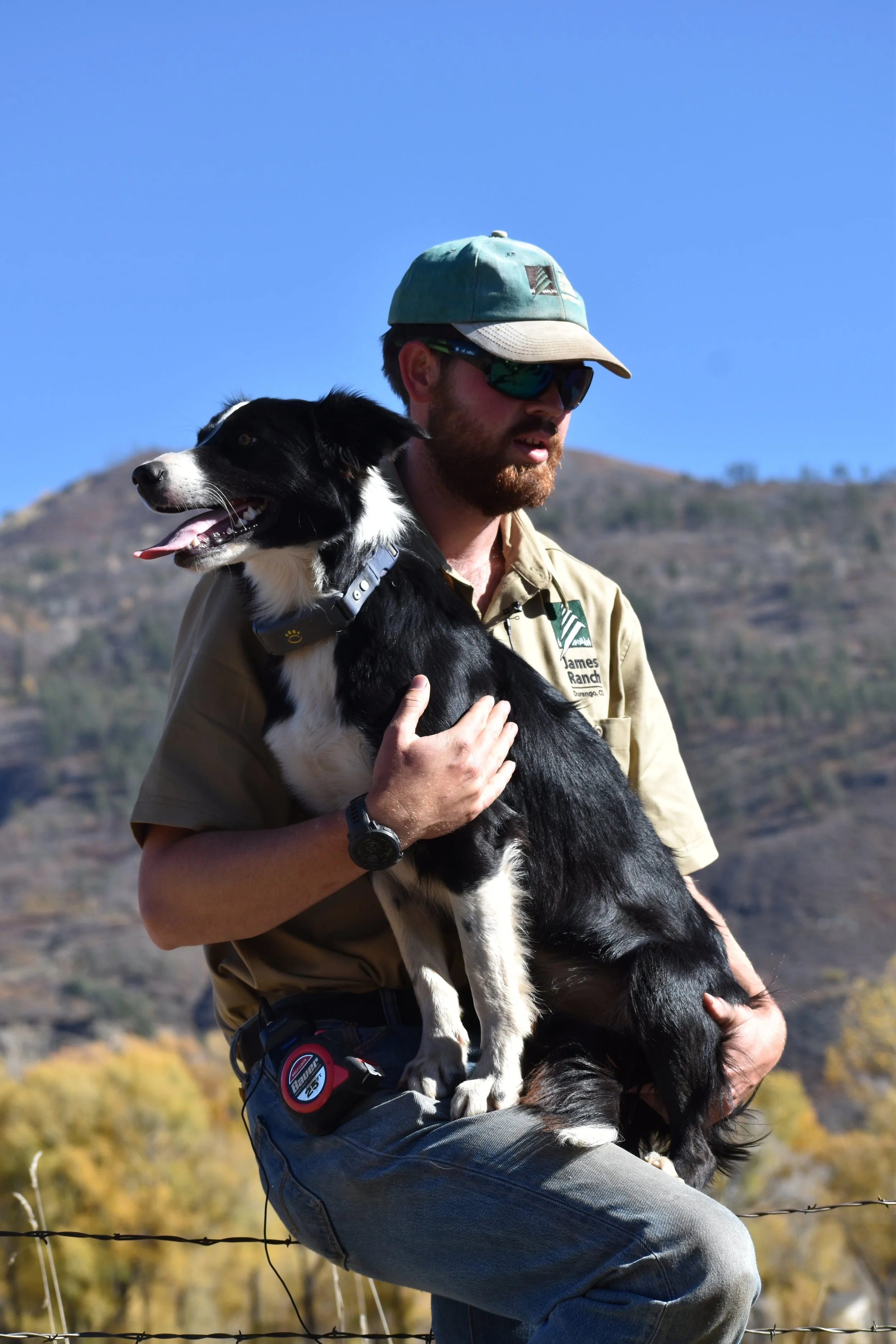
 Westies, just the night before, had eaten at the James Ranch Grill, enjoying locally processed beef burgers and the beautiful ranch property. The next day, we met Abe Ott, who manages the herd. As he introduced his job to us in more detail, the ranch prioritizes managing cattle in a way that emulates historical natural range use. He says he is attuned to the land, stewarding it in a way that mimics nature and regenerates the rangeland ecosystem. This way, James Ranch, a now multi-generational family farm and enterprise, can continue its legacy in Durango, Colorado. James Ranch began in 1961 and has continued to grow since Abe’s grandparents started the farm. Abe shared that his grandparents had almost sold their ranch; fortunately, his parents decided to buy it from them and began transforming it, diversifying their business and staying local. Now, fifteen of the twenty family members are working for the ranch in one way or another. The ranch is 400 acres total, half of it is leased for the beef business, and the rest is used for a variety of other businesses, such as their newly opened grill and market, as well as the family's homes.

Overall, James Ranch is a holistic business practice. Abe is incredibly passionate about thinking ecologically about ranching. Regarding his role in ranching, he shares that the cows have GPS collars and are rotationally grazed to replicate the disturbance-evolved grassland ecosystem. Although the Animas River flows through the ranch, Abe says they do their best to minimize and efficiently use water. He explains that they try to “slow down the water cycle” by maintaining reservoirs, using efficient irrigation methods, and making sure they recharge the underground aquifer. These efforts seem to be paying off; even though this past year was one of the driest the ranch has experienced, they were still able to grow more grass than usual using less irrigation.

Abe, when explaining the ranch's history, says, “It’s hard to realize what you have when you’re so close to it.” Abe is acknowledging his family’s closeness to their own business and livelihood, but perhaps this reflects humans' deep connection to the land we still disregard.


by Rio Burk

Meet our Guests: Steve Wolff and Mo Rock

Steve Wolff and Mo Rock

General Manager and Programs Coordinator

Southwest Water Conservation District, Durango, CO

October 16th, 2025

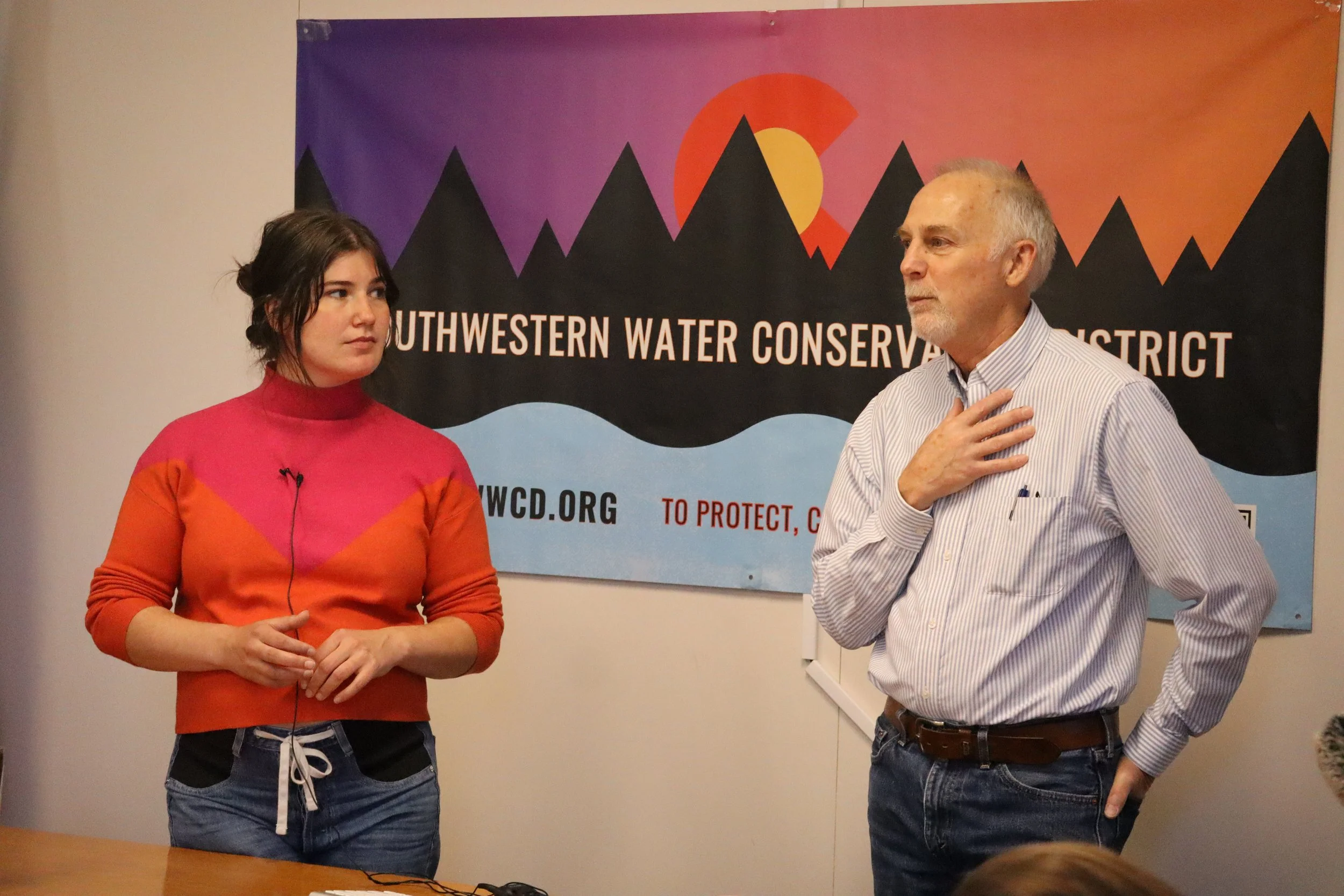
It was yet another cloudless day in Durango when we visited the Southwest Water Conservation District’s (SWWCD) headquarters. Here we met with Steve Wolff, the general manager, and Mo Rock, the Programs Coordinator for the conservation district. Steve has a long history in the Colorado River Basin, first working with Wyoming’s Fish and Wildlife department for twenty years before moving to Durango to aid water rights users in southwest Colorado. Mo grew up in Eastern Washington, and joined SWWCD after doing seasonal work, including helping NASA map earth environments from space. She now aids SWWCD in acquiring and giving various grants. After providing a hefty amount of snacks and coffee, the two explained their work as a part of SWWCD.

In 1922, every state within the Colorado River Basin was apportioned a certain percentage of the Colorado River’s flow. SWWCD, founded in 1941, works to ensure the water from the San Juan and Dolores rivers is protected, conserved, and utilized. Historically, the conservation district focused on developing water projects, but now is focused more on conservation. As a part of this mission, Steve and Mo work to award grants that help further develop local water infrastructure, give money to organizations protecting the health of watersheds and endangered species, and interact with entities from other states to ensure the future of the Colorado River Basin as a whole.

by Everett Calhoun

Meet our Guests: Mountain Studies Institute

Jules Coleman and Jordan Schoen

Mountain Studies Institute

Durango, CO

October 15th, 2025


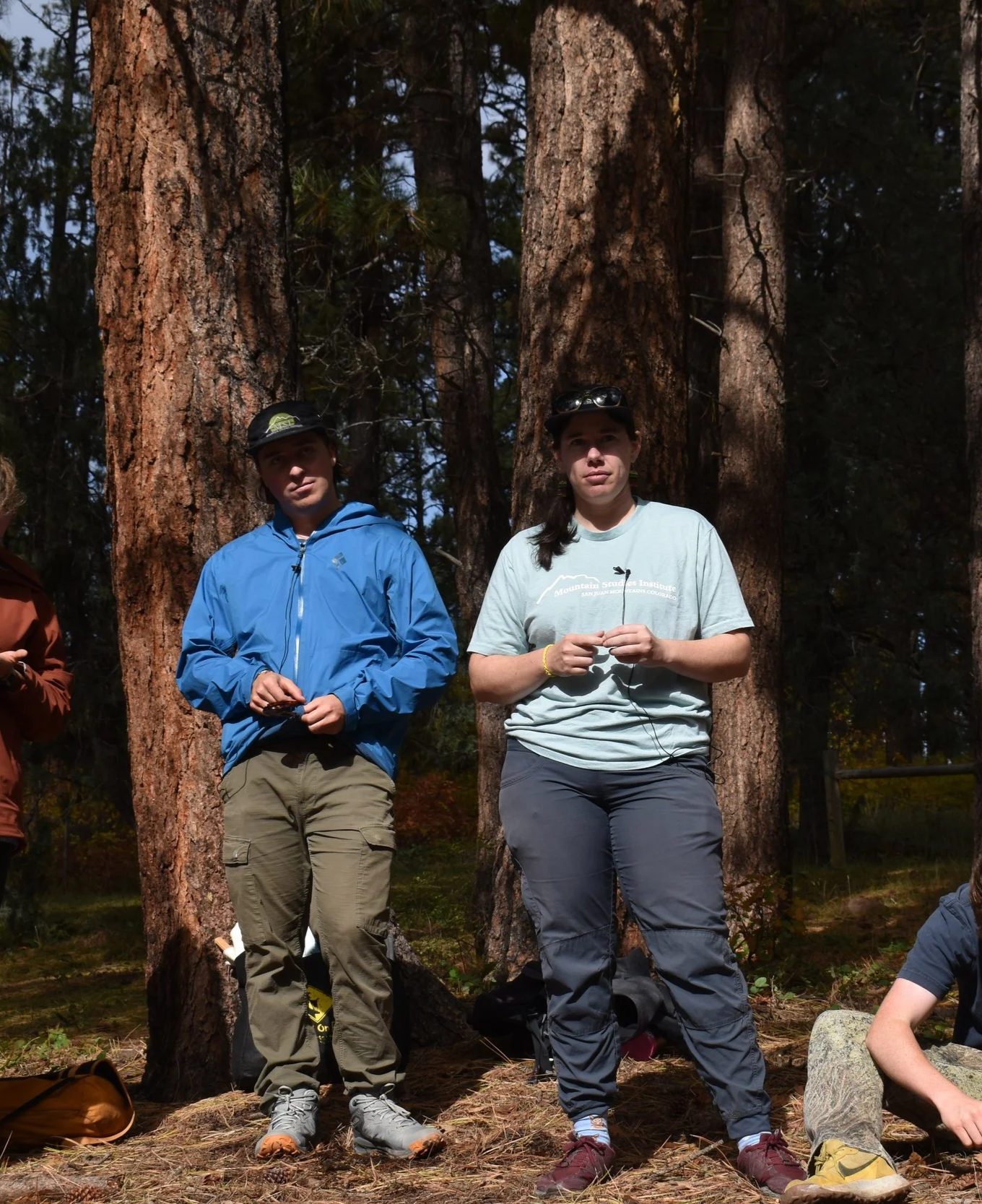
At the Hermosa Creek Trailhead outside Durango, Colorado, the Westies met with Jules Coleman and Jordan Schoen of the Mountain Studies Institute. MSI is a nonprofit focused on mountain research and developing science education programming for local environmental issues. Jules, the Director of Community Science, and Jordan, a Program Assistant, led us on a hike through the San Juan National Forest, where we learned about various bird species, forest fire resiliency, invasive species, tree rings, and elevation variation in forest ecosystems. Enthralled by the spits of rain, aspens, and warm autumn hues, the Westies were excited to be experiencing the Fall season within the Rocky Mountains. As we hiked, our conversation turned to the “416 Fire,” —the Columbine Ranger District’s 416th incident answered that year—which transformed the southwestern edge of Colorado’s San Juan National Forest in 2018. To avoid the approaching thunderstorms, we spent the afternoon in a park beside the rushing Animas River, still exhibiting the effects of recent flooding. There, we made native seed balls for planting in the 416 burn area, built various forest models to test fire resiliency, and learned about the Anamis and San Juan River and the species that inhabit them. Jules and Jordan explained how the Gold King Mine Spill—a 2015 mine water spill containing heavy metals—deeply affected the Animas River ecosystem by damaging the habitat of Caddis flies and Midges, which are an essential food source for trout and other fish. To end our day with MSI, we visited the Durango fish hatchery, where Rainbow Trout are raised to repopulate the Animas River. In typical Colorado fashion, our day was spent shedding layers and quickly relayering as storm clouds rolled in for a brief ten minutes of downpour followed by blaring sun. Jules and Jordan helped expand the Westies’ understanding of water within the Colorado Plateau, where water scarcity and drought threaten many vital ecosystems. Before returning to our camp, the Westies began an intense soccer game, ending in the unfortunate loss of our beloved ball, swept away by the force of a flooded river.


By Maea Fleming

Meet our Guests: Carolyn Cummins

Carolyn Cummins

Director of Fort Lewis College’s Four Corners Water Center

Durango, CO

October 14th, 2025

On a dark and stormy night (literally), Carolyn Cummins, PhD, introduced our group to one of the most critical topics of the arid west: the Colorado River. Despite the rain, wind, thunder, and occasional bouts of marble-sized hail, Carolyn gave us a thorough and accessible introduction to the ecohydrology of the Colorado River basin, and the history and politics of its apportionment. In 1922, states in the Colorado River basin agreed upon how much water each state would receive creating the Colorado River Compact. We learned that the Compact is up for renegotiation this year, which is an extremely turbulent and fraught issue for the seven states, numerous tribes, and Mexico, all of which rely on the river’s water. In her role as director of Fort Lewis College’s Four Corners Water Center, Carolyn plays an important part in the water science, policy, and community engagement occurring in Colorado, part of the Upper Basin. As a Bayfield local, Carolyn returned to the region after getting her doctorate at the University of Georgia. She focused her research on the effects of temperature on carbon cycling and aquatic insects in headwater streams, and is now using her expertise in freshwater science to educate students, community members, and groups like us. In the days that followed, we learned more about just how scarce water is in the Colorado basin, hearing from farmers, ranchers, politicians, and scientists about the destructive effects of the ongoing drought in the region. Thanks to Carolyn, we had the necessary context to understand the water issues that we would learn about, and gained a more appreciative perspective on the rain that poured down on us that night.

by Liza Lebo

Meet our Guests: Jude Schuenemeyer

Jude Schuenemeyer

Co-director of the Montezuma Orchard Restoration Project

Montezuma, Colorado

October 14th, 2025

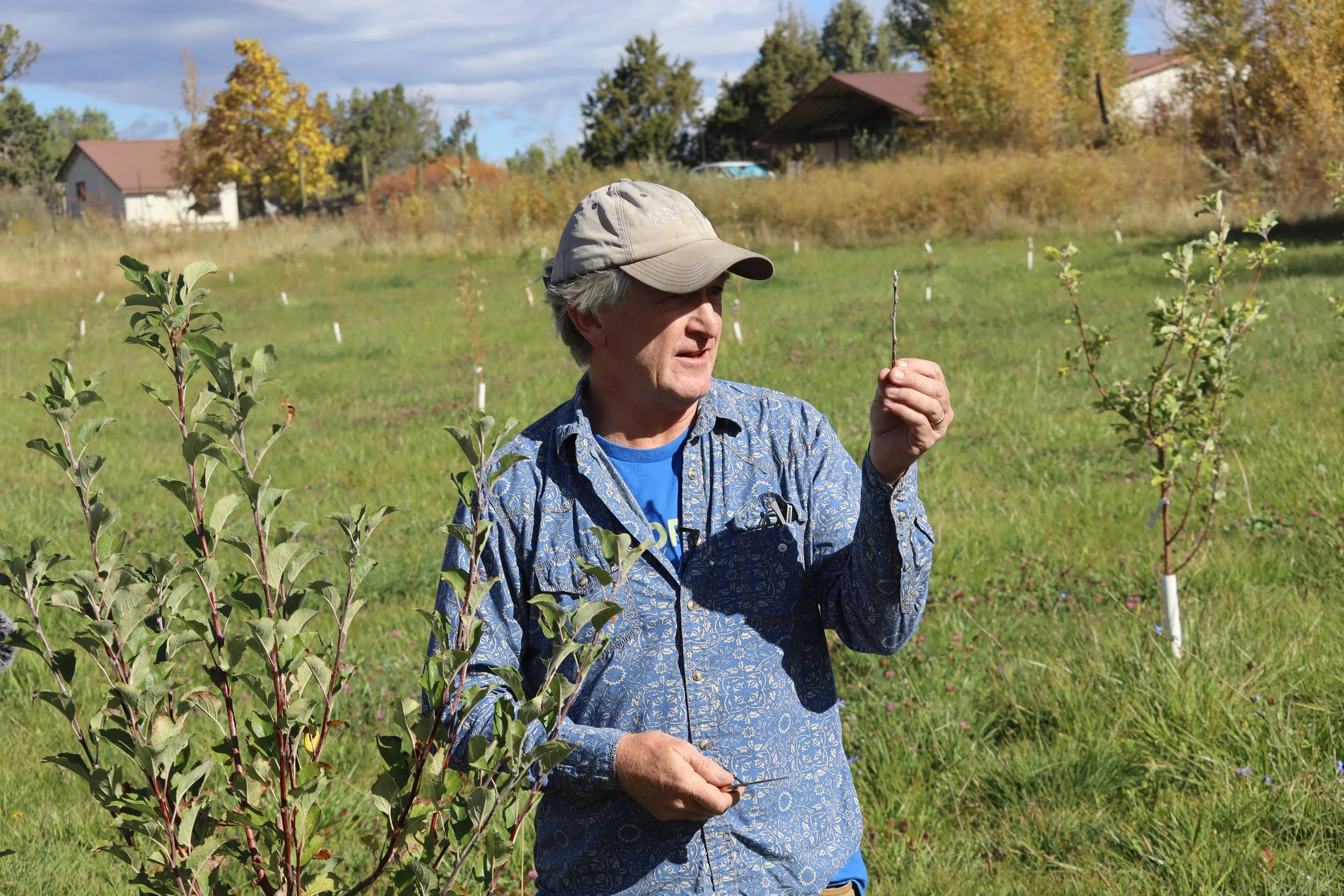
“We work against the cultural forgetting of what happened,” Jude Schuenemeyer tells the westies in his gentle, assured voice as we crest a muddy hill and look out at hundreds of baby apple trees. They are propped up by wooden stakes and, on occasion, encased in white plastic tubes. These trees are what Jude and his wife, Addie are trying to remember through their organization, Montezuma Orchard Restoration Project. They work unceasingly to preserve old varieties of apples that have been forgotten as agriculture has become more monocrop-centered. All these varieties of apples are called cultivars, selected for a specific trait like ripening early in mid-summer or ripening late in winter to increase the harvest period in a pre-refrigeration age.

Jude tells us about a time when hundreds of apple cultivars thrived in the high altitude orchards of the Montezuma Valley. Now, they are preserved in old gnarled apple trees interspersed throughout the valley. Jude uses a grafting technique to grow new clones of these old trees.

Jude invited us to pick some apples from the restoration project, and the westies enjoyed scurrying up and down branches and jumping to grab apples. We munched on them while we ate with Jude and sipped on delicious apple and peach juices. Jude inspired us with his quiet determination to see more apple cultivars and his commitment to restoration work.

by Jackson Garrison

Meet our Guests: Greater Basin Unified Air Pollution Control District

Molly Blakowski, Dan Lautzenheiser, Ian Bell

Greater Basin Unified Air Pollution Control District

Owens Valley, CA

October 7th, 2025

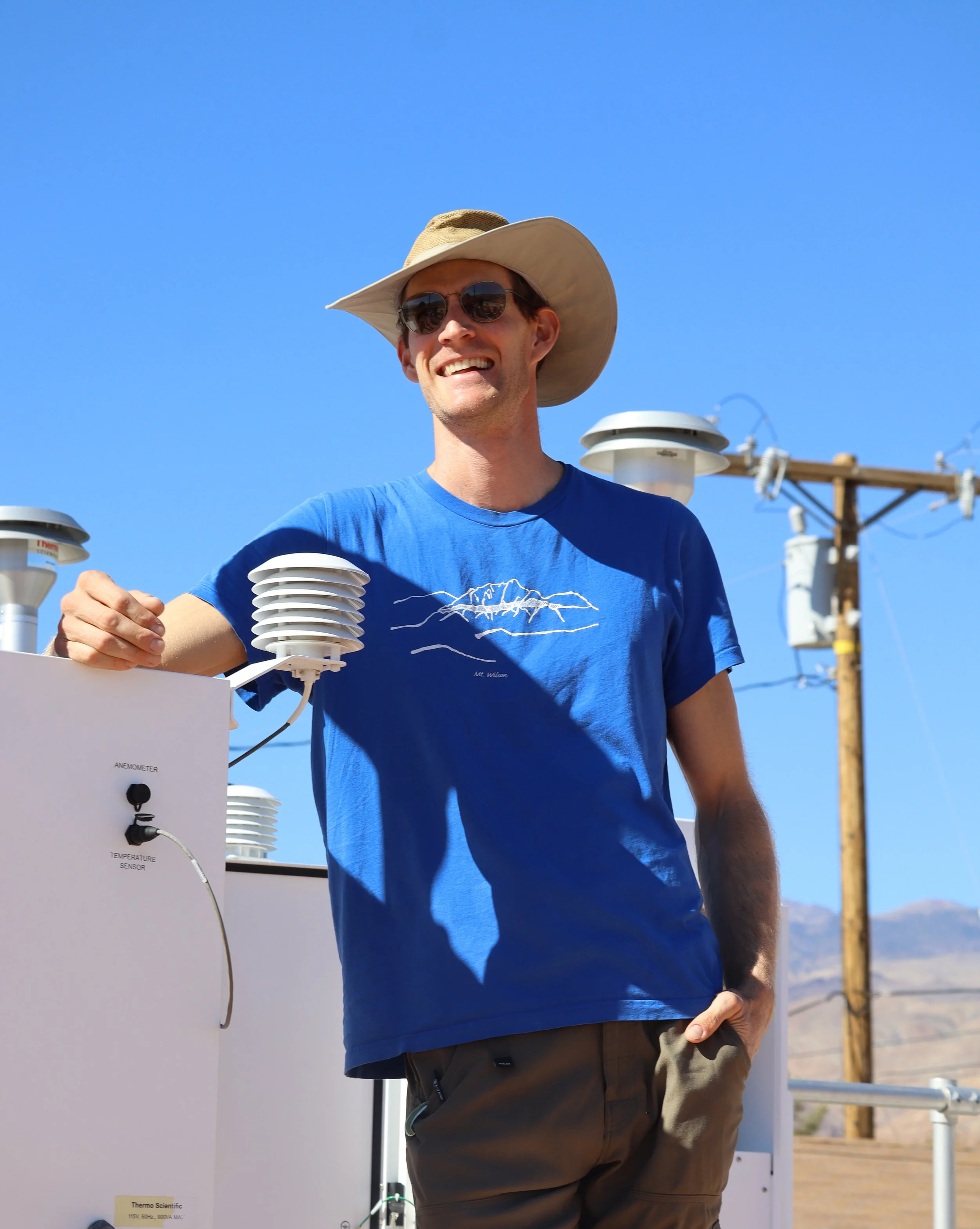
We sit on top of two shipping containers covered in air quality monitoring equipment. Dan Lautzenheiser is explaining the nuances of air quality measurement and equipment upkeep. Dan is tall, he’s well protected from the hot sun, wearing a dapper sun hat and sunglasses. As he shows us the workings of the various white boxes standing in front of us, he is backdropped by Cerro Gordo, the mining town that made LA rich in the late 19th and early 20th centuries. Within the crowd of students stands Molly Blakowski, dressed in a way that would make you think she was a Westie (blundstones and cool sunglasses), and Ian Bell, an actual former Westie, with his dog Oozel. Dan, Molly, and Ian all work for the Great Basin Unified Air Pollution Control District (GBUAPCD). One of 35 air pollution control districts in California. They measure air quality standards according to federal, state, and local levels to protect sensitive members of the community and to keep people informed throughout the counties of Inyo, Mono, and Alpine. GBUAPCD’s position is unique because Owens Lake is situated within their jurisdiction. The remains of a saline lake that has all of its tributaries diverted into the Los Angeles aqueduct. What is left is the largest single source of PM10 (particulate matter less than 10 microns in size) in the United States. Exposure to PM10, which is easily absorbed into your lungs and bloodstream, can result in a variety of lung problems, especially for those with preexisting conditions.

GBUAPCD receives much of their funding from the Los Angeles Department of Water and Power (LADWP), because of Senate Bill 270. This bill faults LADWP for the state of the lake. Before LADWP’s diversions, Owens Lake was a semi-ephermal lake that served as a rest stop for migratory birds, wasn’t an exposed dust plain, and was a food source for native peoples. Now the only thing it can support is hardy grasses that still require constant human upkeep to keep them surviving. And so, LADWP is tasked with dealing with the issue of a dry toxic lakebed. And GBUAPCD helps them with that, measuring air quality, helping with restoration projects, and keeping the public informed about their safety in relation to the lake bed.


by Jeremiah Harder
Meet our Guests: Los Angeles Department of Water and Power

Jeff Nordin, Lizbeth Calderon, and Keith Leon

Los Angeles Department of Water and Power

Owens Valley, CA

October 7th, 2025

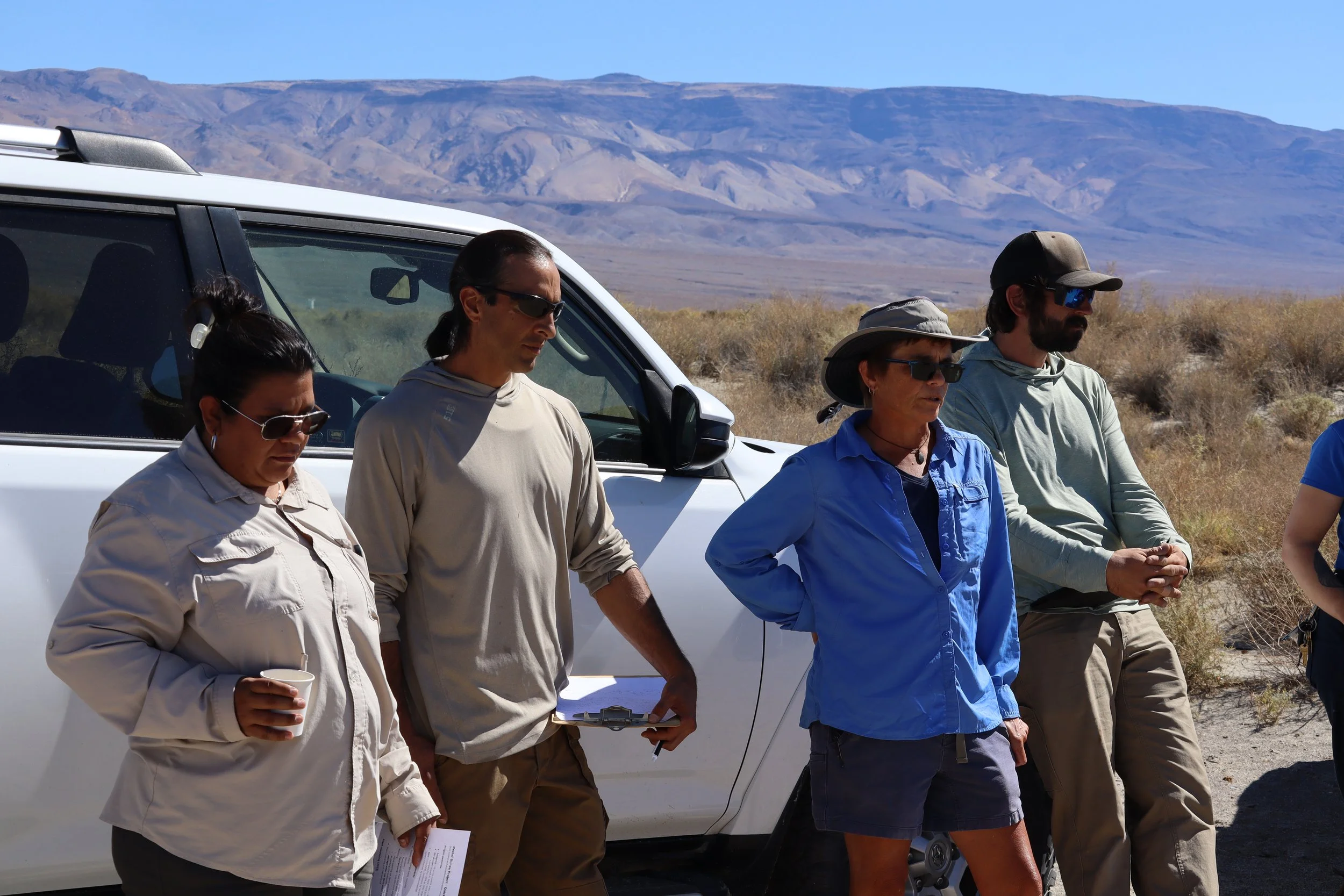
We met with the Los Angeles Department of Water and Power as we stood in the dried-up basin of Owens Lake, the Eastern Sierras standing watch over our conversation. Jeff Nordin, along with Lizbeth Calderon and Keith Leon, explained the ways in which Owens Lake is an incredibly valuable resource for the city of Los Angeles, and gave us a brief overview of the history of the saline lake and the highly desired waters that feed it.

The Los Angeles Aqueduct, which has been in active use since 1913, provides on average 30% of LA’s water. LADWP in its role to keep the city hydrated, diverts water that would otherwise flow into Owens Lake. These diversions have led to dessication of the lake, resulting in many changes to the environment including windborne dust eroded from the exposed lakebed that poses air quality hazards to locals and dramatic losses of habitat for residing species. 

Jeff, Keith, and Lizabeth explained their roles in the projects LADWP has enacted to protect the lakebed, as well as implement restoration adaptive management, prioritizing the necessary ongoing adaptations in the maintenance of environmental restoration. Some of these approaches include planting vegetation, shallow flooding, and gravel cover to protect the dry lake bed from becoming airborne. These dust mitigation and habitat restoration methods were presented to us as highly successful, and as potential models for regions with similar dust hazards.

Walking the line of a difficult issue regarding the necessity of water for millions of people and the concerns of ecological stability in the Owens Valley, the LADWP crew demonstrated their simultaneous interest in both sides of the conversation. They note the importance of aiming for a functioning environment rather than a complete restoration of the lake, emphasizing their belief in the necessity of human management in approaching ecological mitigation.  

By Rose Peterson

Meet our Guests: Lone Pine Paiute Shoshone Restoration Crew

Jeremiah Joseph, Lacy, James Fleming

Tribal Cultural Resource Protectors and Land Restoration Specialists

Owens Valley, CA

October 7th, 2025


Owens Lake is a desolate place. For travelers going to much more “pristine” environments on US-395 and California highways 136 and 190, it is difficult to visualize that Owens Lake is the site of one of the most significant ecological restoration and mitigation projects in the United States. Throughout the former lakebed, numerous areas must be managed by the Los Angeles Department of Water and Power (LADWP), as well as many other agencies, to mitigate hazardous dust emissions that have made the Owens Valley one of the most air-polluted regions in America. One of these sites is the Keeler Dunes project. Initiated in 2014, the dunes project was undertaken by the Great Basin Unified Air Pollution Control District to mitigate the impact of particulate matter caused by a degraded dune system near the town of Keeler. Through this project, members of the Lone Pine Paiute-Shoshone began working on the restoration and stabilization of the dunes by planting native vegetation.

Jeremiah Joseph, a member of the Lone Pine Paiutes, emphasized his people’s role in the restoration of the dunes, boasting an 80 percent survival rate of plants planted by the tribal crew, as opposed to 35 percent for non-tribal plantings. Jeremiah emphasized the role of Owens Lake (Patsiata) in his people’s culture and the role that the restoration crew has played in empowering the tribe and healing the land. Furthermore, the success of the Keeler Dunes Project has enabled the tribe to expand into additional areas of the lake, including collaboration with the LADWP, a typically adversarial entity. Finally, Jeremiah and the members of the tribal restoration crew emphasized the success of integrating traditional ecological knowledge with Western science on the dunes and expressed hope for the success of future projects.


We thank the Lone Pine Paiute Shoshone restoration crew for explaining their people’s relationship with the land in the Owens Valley, for their continued stewardship of their traditional homeland, including Keeler Dunes, and for spending time with us on Semester in the West!

by Trevor Maziek

Meet our Guests: Ryan Garrett

Ryan Garrett

Education Director at Mono Lake Committee

Mono Lake, CA

October 4th - 5th, 2025

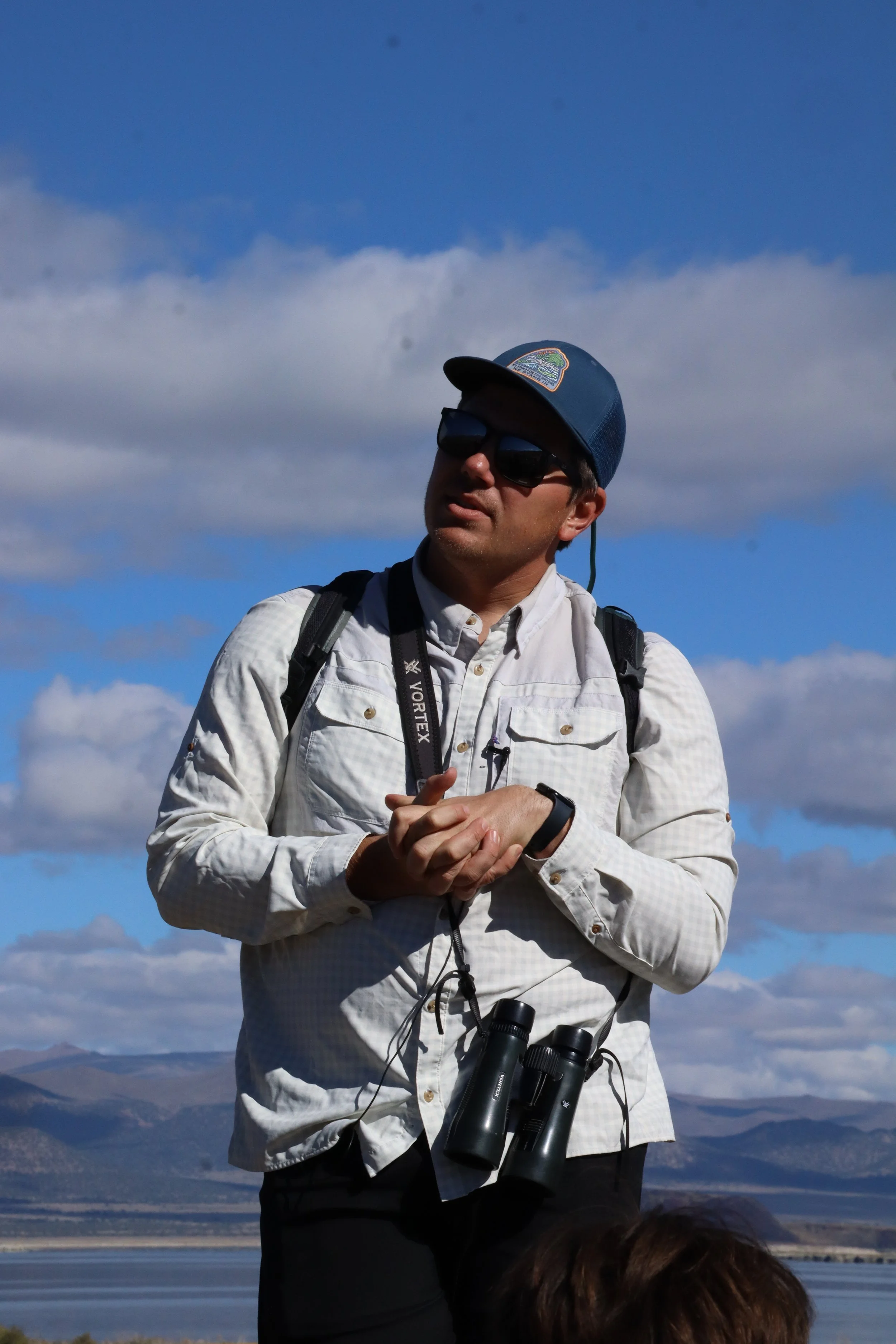
Wearing a Mono Lake Committee hat and a smile, Ryan Garrett greets us in his element, in front of the pale blue Mono Lake. Ryan graduated from Whitman College in 2018 and is now the education director for the committee. He expertly guides us through the basin, its different headwaters, and the complex ecological and political history of its water.

Mono Lake Basin is at the center of many ranges, shadowed by the Sierra Nevada’s, and surrounded by the Bodie Hills, Cal Track Mountains, and Mono Craters. Being at the center, Mono naturally collects water that flows down from these ranges and, over thousands of years, has accumulated salt, forming a saline lake. As salty as it is, the Mono Basin is an extremely ecologically diverse place. Ryan identifies each bush we pass and bird that flies by, emphasizing their importance in not only the environment but the fight to save Mono Lake as well.

On the geological time scale, the fight for water in Mono is a blip in time, but in the Mono Lake Committee's history, it has been a lifelong effort. Since the 1900s, the Los Angeles Department of Water and Power (LADWP) has been diverting water from the Eastern Sierra Valley region via aqueduct for the use and growth of the city of Los Angeles (LA), 331 miles away. In 1941, four out of five water sources of Mono Lake were diverted to the LA aqueduct as the first lake LADWP had diverted, Owens Lake, ran dry. Due to these diversions, Mono Lake’s water level dropped 45 vertical feet. This loss has emphasized the uniqueness and importance of Mono Lake. Tufas, fossilized freshwater springs that had formed underwater due to Mono’s chemical composition, as well as the shore, were revealed. Although beautiful and tourist attracting, this sight is unnerving, a sight only visible because of the water recession. The loss of water also increased the salt concentration, making Mono Lake a more extreme and inhospitable place for endemic brine shrimp and alkali fly species. These small creatures are the foundation of the ecosystem for many visiting and local animals. Mono Lake is a part of the Pacific Flyway, a stop for migratory birds to rest on tufa and feast on shrimp before continuing their long journey south. They also play an important historical role for the Kootzadaka people of the Mono Basin who harvested the alkali fly pupae for food and trading.

Today, these factors matter all the more in saving Mono Lake. The Mono Lake Committee has continued tirelessly working with all actors of this water issue. Through their work and collaboration, Mono Lake only provides 2% of the city of Los Angeles' water, taking less than historically, even as their city population continues to grow. In the future, they hope to meet with all organizations to reevaluate their balancing system of use and preservation.


by Rio Burk