Jacques Neukom
Farmer, Neukom Family Farm
Willow Creek, CA
October 1st, 2025
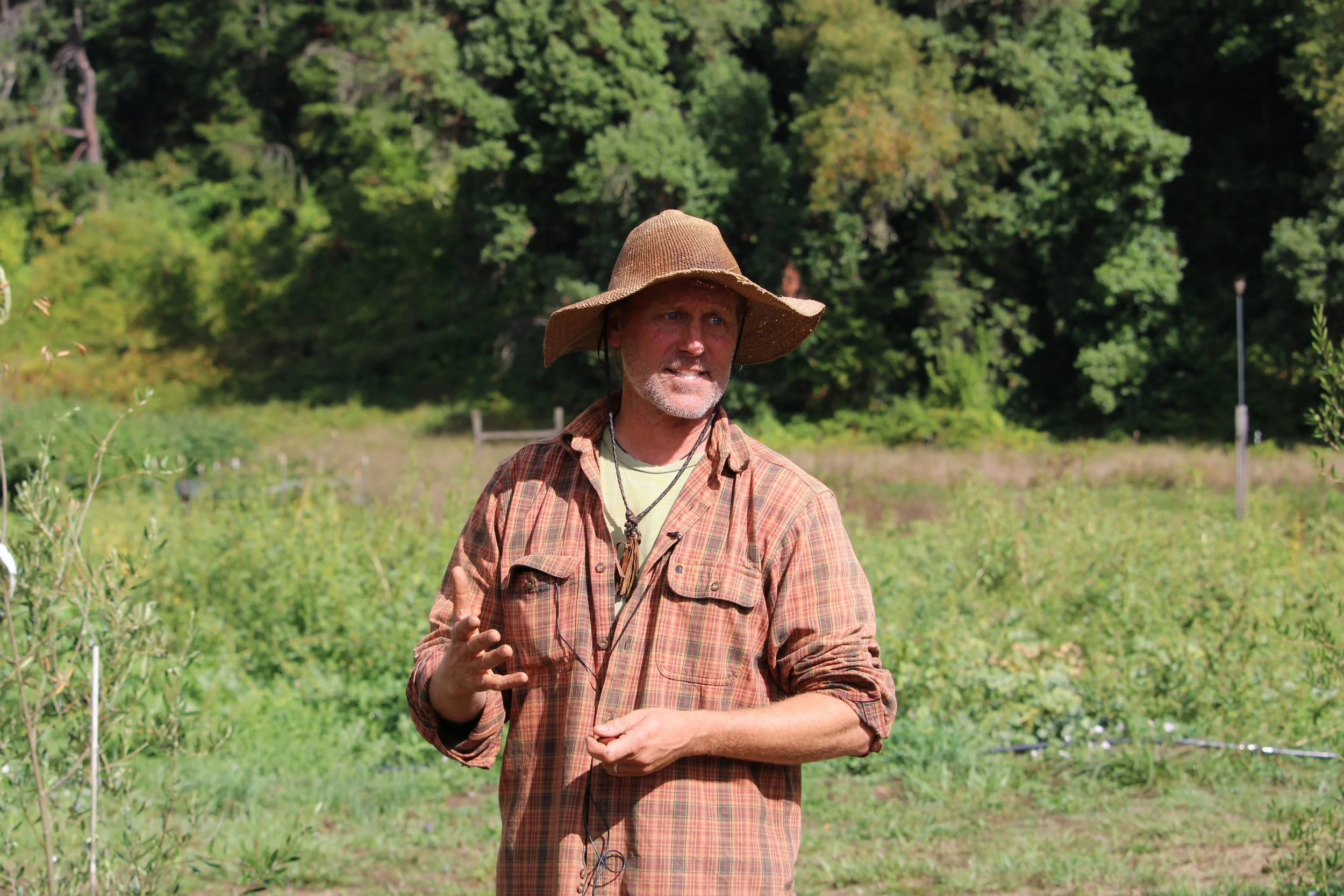
It was fitting to meet Jacques and learn about cannabis cultivation near the end of our trip with Eunice, because the story of this plant tied back to all the topics we have discovered: the timber war, agriculture and labor, water and salmon. Cannabis arrived in Humboldt county as early growers took over secluded lands that once were logging ground, taking up and polluting water resources that are crucial for salmon and the Yoruk tribe in the area. Amid the collapsing industry that had been oversupplying the market while polluting the environment, Jacques’s farm seems unaffected as a small, well-known producer. Weed is not the only plant here, Westies also saw plenty of watermelon, pears, corn, etc. When Jacques came here in the early 1990s, it was in the middle of the Drug War and cannabis was very illegal. He built his reputation with peaches and tomatoes, and is proud of the supporting community around Humboldt for local food products that led to his success. Diversity means resilience – Jacques is a perma-culturalist who does not rely on cannabis but the variety of crops that rotated around after every season, the diversity of cover vegetation that helps keep the soil structure healthy, and the compost at the edge of the farm that produced organic manure. His farm is run by his family and two regular workers who are paid well and supported with housing. We learnt that his 18-year-old daughter is proud of what the family is doing and in the last season has helped to sell produce at the local farmer’s market.
Cannabis plants are in harvesting season now. They are magnificent to stand by, bigger than I thought – healthy trees around 6 ft. tall, each comes with a plastic tag for state regulation. Leaves are lush green; the buds exude layers of aroma that attract a variety of insects beneficial to the garden. This plant is not native here, yet it has become an important story of this landscape. Driving just a few minutes away from Jacques’s property, we encountered an industrial plantation where dead rows of trees stand in their plastic pots. The owner has abandoned them for three years as they could not make a profit out of this business. There's so much instability and exploitation in this economy, and for Jacques, his model of small-scale farming which provides food locally is one of the few things that still works and that he would like to see more happening. We left not only with an awareness of the ethical problems in cannabis farming and how consumers might be a part of that, but also plentiful of sweet pears, plums and melons that Jacques generously gave us.
By Linh Che