dan mar
Professor of Cannabis Studies at Cal Poly Humboldt
Arcata, CA
September 30th - October 1st, 2025
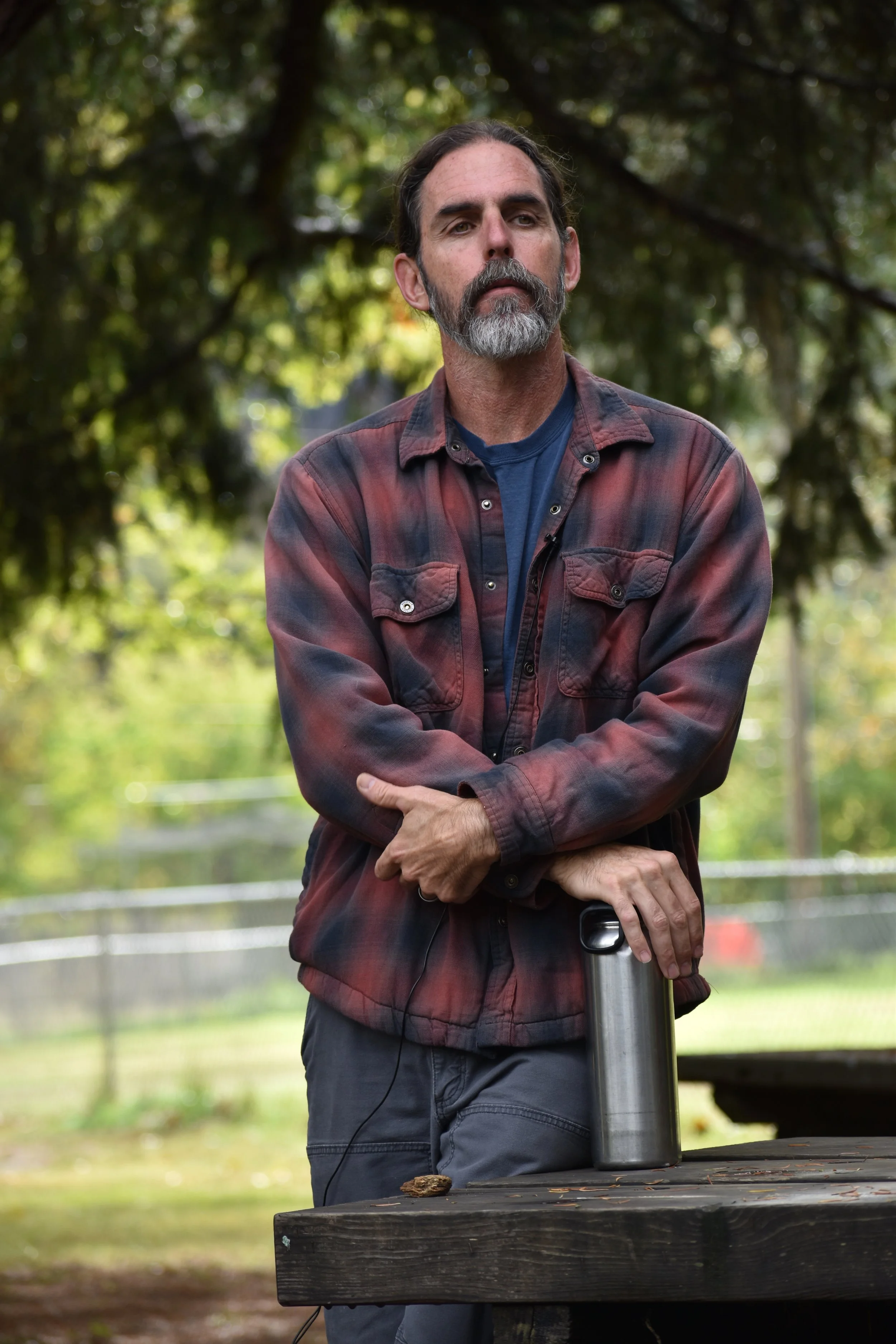
We met with Dan Mar for the first time on a rainy afternoon in the basement of an academic building on the Humboldt campus of California State Polytechnic University, where Dan is a research associate in the Cannabis Studies Department. He put together a panel of professors at the university to introduce how interdisciplinary cannabis studies are. Cannabis studies at Cal Poly covers interdisciplinary topics such as health, societal issues, and the environment. We spent the next morning at a small park learning more of the specifics that Dan himself teaches: the environmental side. Dan became introduced to the university through his permaculture business that he runs with his wife, named High Tide, which he uses to deepen the knowledge within the classes he teaches. Dan mainly explained how the cannabis industry has changed drastically in the past decade in Humboldt County since the legalization in 2016, which has also brought many policy changes and new regulations. Beforehand, the remoteness of Northern California allowed many people to trail the logging industry and use the stripped space or illegal growing operations. Because the process was completely unregulated, growers often diverted large amounts of water and used harmful chemicals that polluted the streams.
Legalization drew a spotlight on growers and introduced new standards that had to be followed. One would think this would create a win-win situation. However, the harsh regulations have created a power dynamic where large growing operations with more resources and money can withstand the new permitting fees and spend heavily to update infrastructure, while small growers are outcompeted. This dynamic causes the industry to become monopolized, which has created a crash in the market. For locals the cycle of boom and bust looks eerily like what happened in the logging industry.
To lessen the effects on small growers, Dan actively works with them to create more sustainable growing methods, with regenerative practices that adopt fundamental knowledge. Dan also pointed out that diversifying their growing with other products like fruits and vegetables, even in small quantities, can be very profitable and allow smaller operations to compete, with healthier soil or different seasons creating profit that is more continuous and less dependent on the success of just one plant yield.
Dan stressed to us how the lack of sustainable growing partially stems from the lack of demand for a sustainable product from consumers. There is little talk about how products are grown, such as outdoor/indoor, sun-grown/greenhouse, rainwater/diverted stream water, which has created a large disconnect from growers to packaging, packaging to distribution, and distribution to consumers. Dan stressed that the industry needs to make some big changes in California to work towards becoming more sustainable and less monopolized.
by Hollis Wilson