Meet our Guests: Dave Carle

Dave Carle

Mono Lake State Tufa Reserve Park Ranger and Fisheries Biologist

Mono Lake, CA

October 3rd, 2025

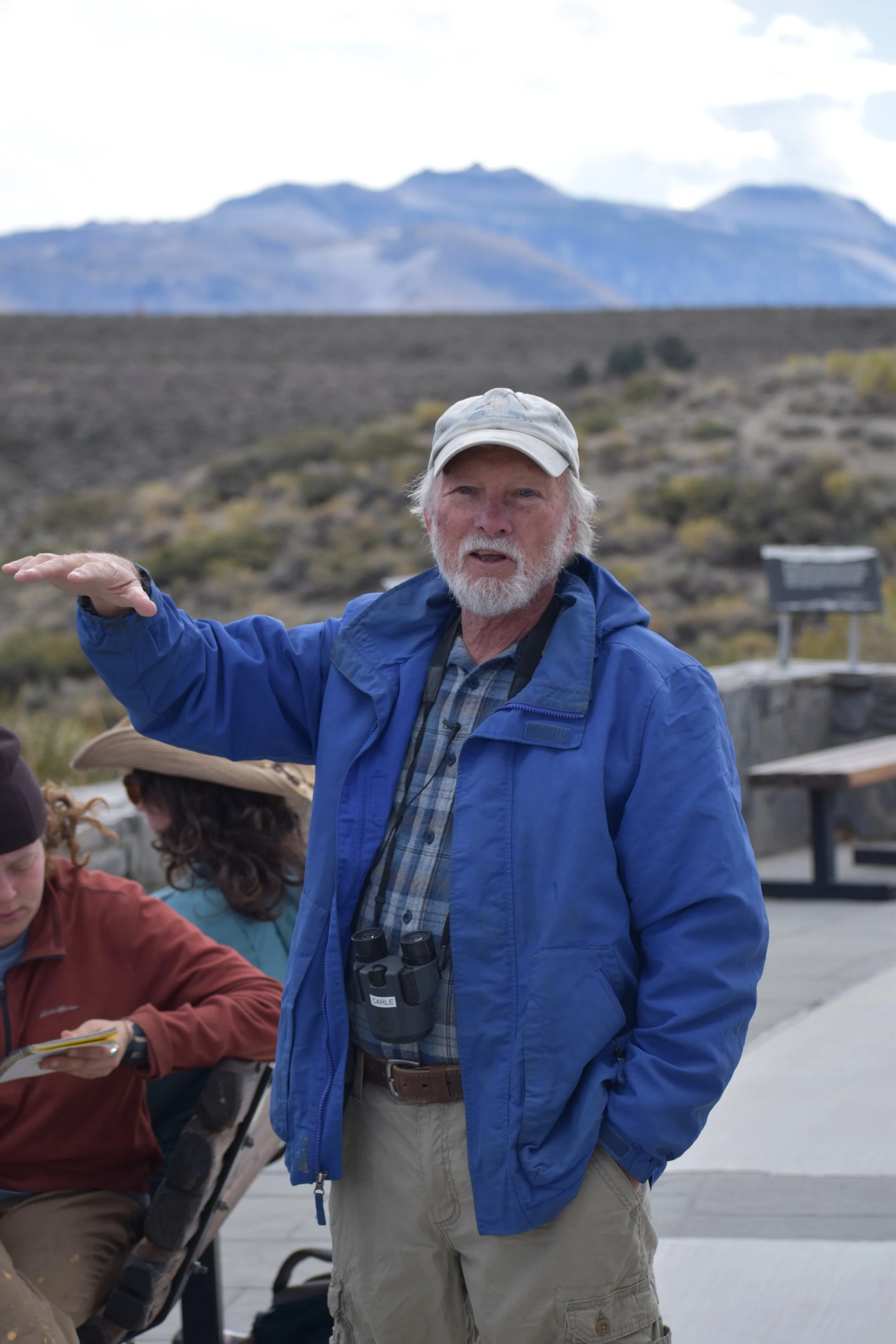
Westies stand in awe, admiring the tufa in Mono Lake from the visitor center overlook as Dave Carle introduces us to the history and geography of the area. Originally from Orange County, California, he moved around working as a park ranger after graduating with a bachelor's degree in Wildlife and Fisheries Biology and later a masters degree in Recreation and Parks Administration. In 1982, Dave ultimately ended up in Mono City working in a joint role with his wife as a Park Ranger for the Mono Lake Tufa State Reserve. Though he initially didn’t imagine settling here, he remained because of his love for the area and small community. Dave has now been retired for over 20 years but still volunteers with the Mono Lake Committee, continuing his role as a steward by providing a vast amount of knowledge for travelers such as ourselves.

From the surrounding mountains to the local wildlife, Dave helped teach us the importance and vitality of Mono Lake and why it’s worth protecting from the constant extraction of its tributary stream waters. Mono is unique with its high salt content water, fostering a habitat that platonic algae, Brine Shrimp and Alkali Flies thrive in. While not typically seen as something worth protecting, these organisms are culturally significant to the Indigenous Kootzaduka people and support other wildlife, specifically birds. From California Gulls, Phalarope, Osprey and many others, Dave was able to detail the importance of every species in the food chain starting from the smallest. Due to consistently low water levels that threaten the life in Mono Basin, Dave continues advocating for restoration of Mono Lake in hopes of making lasting positive change for the region.

by Zandra Bakken
Meet our Guests: Dan Mar

dan mar

Professor of Cannabis Studies at Cal Poly Humboldt

Arcata, CA

September 30th - October 1st, 2025

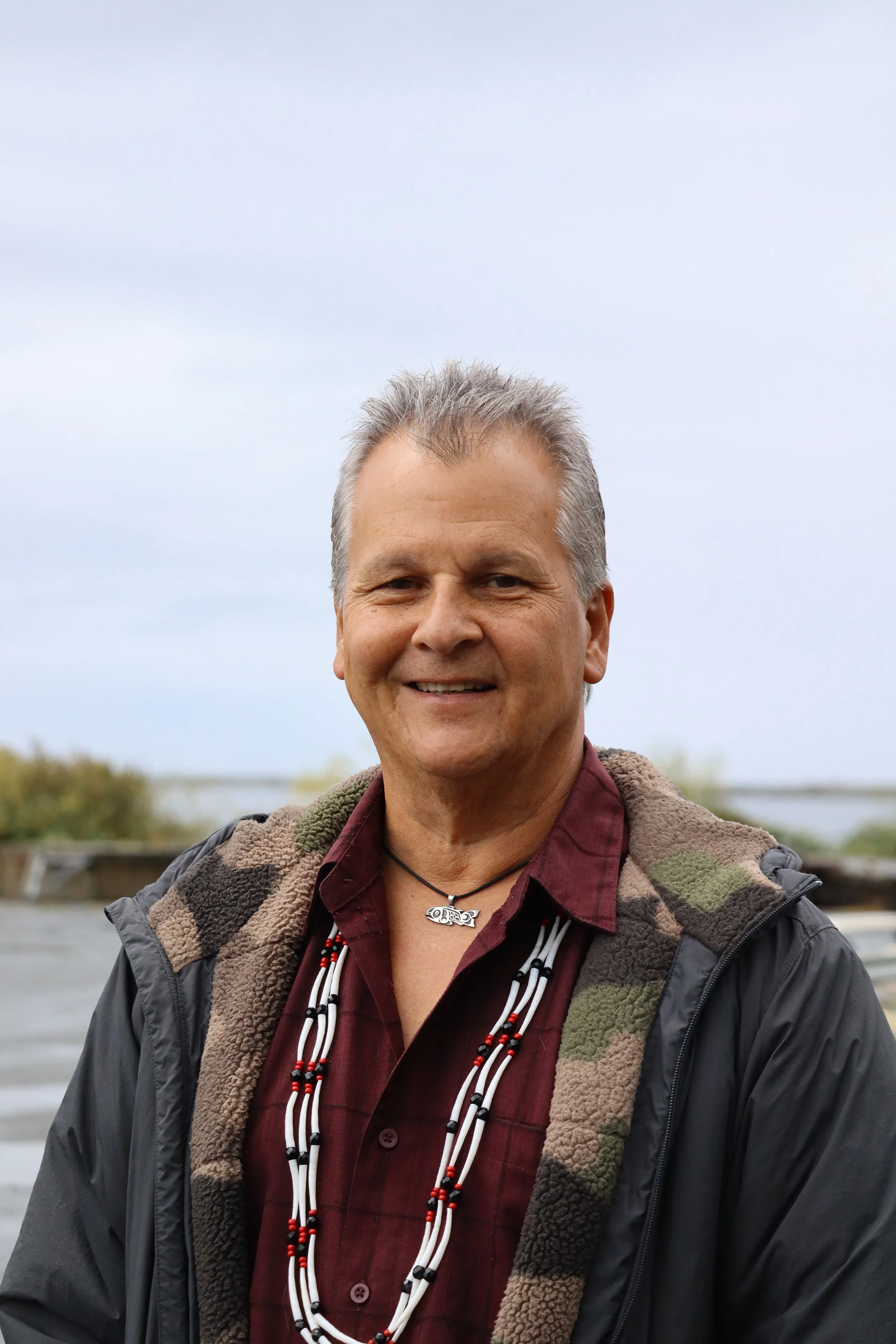
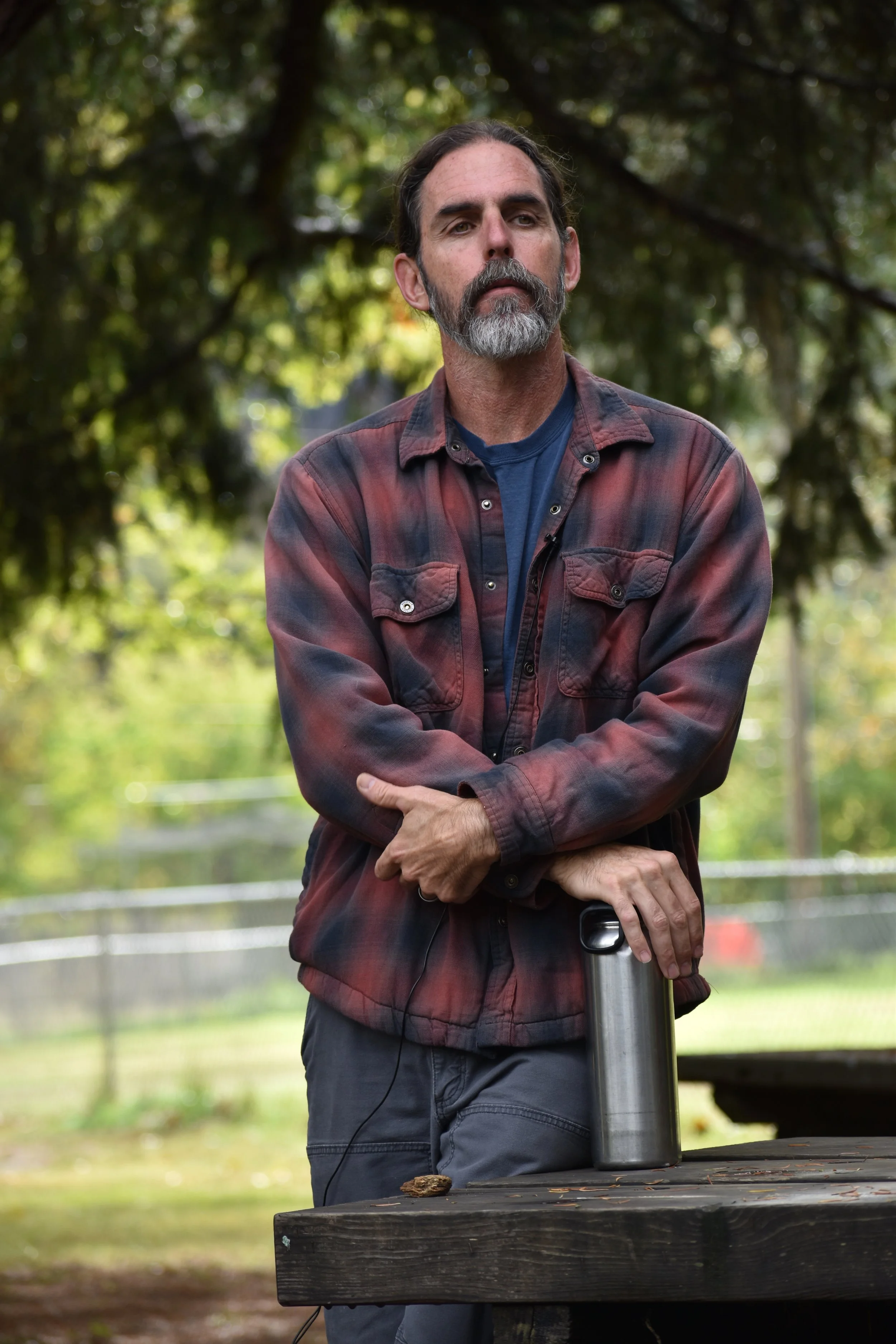
We met with Dan Mar for the first time on a rainy afternoon in the basement of an academic building on the Humboldt campus of California State Polytechnic University, where Dan is a research associate in the Cannabis Studies Department. He put together a panel of professors at the university to introduce how interdisciplinary cannabis studies are. Cannabis studies at Cal Poly covers interdisciplinary topics such as health, societal issues, and the environment. We spent the next morning at a small park learning more of the specifics that Dan himself teaches: the environmental side. Dan became introduced to the university through his permaculture business that he runs with his wife, named High Tide, which he uses to deepen the knowledge within the classes he teaches. Dan mainly explained how the cannabis industry has changed drastically in the past decade in Humboldt County since the legalization in 2016, which has also brought many policy changes and new regulations. Beforehand, the remoteness of Northern California allowed many people to trail the logging industry and use the stripped space or illegal growing operations. Because the process was completely unregulated, growers often diverted large amounts of water and used harmful chemicals that polluted the streams.

Legalization drew a spotlight on growers and introduced new standards that had to be followed. One would think this would create a win-win situation. However, the harsh regulations have created a power dynamic where large growing operations with more resources and money can withstand the new permitting fees and spend heavily to update infrastructure, while small growers are outcompeted. This dynamic causes the industry to become monopolized, which has created a crash in the market. For locals the cycle of boom and bust looks eerily like what happened in the logging industry.

To lessen the effects on small growers, Dan actively works with them to create more sustainable growing methods, with regenerative practices that adopt fundamental knowledge. Dan also pointed out that diversifying their growing with other products like fruits and vegetables, even in small quantities, can be very profitable and allow smaller operations to compete, with healthier soil or different seasons creating profit that is more continuous and less dependent on the success of just one plant yield.

Dan stressed to us how the lack of sustainable growing partially stems from the lack of demand for a sustainable product from consumers. There is little talk about how products are grown, such as outdoor/indoor, sun-grown/greenhouse, rainwater/diverted stream water, which has created a large disconnect from growers to packaging, packaging to distribution, and distribution to consumers. Dan stressed that the industry needs to make some big changes in California to work towards becoming more sustainable and less monopolized.

by Hollis Wilson

Meet our Guests: Jacques Neukom

Jacques Neukom

Farmer, Neukom Family Farm

Willow Creek, CA

October 1st, 2025


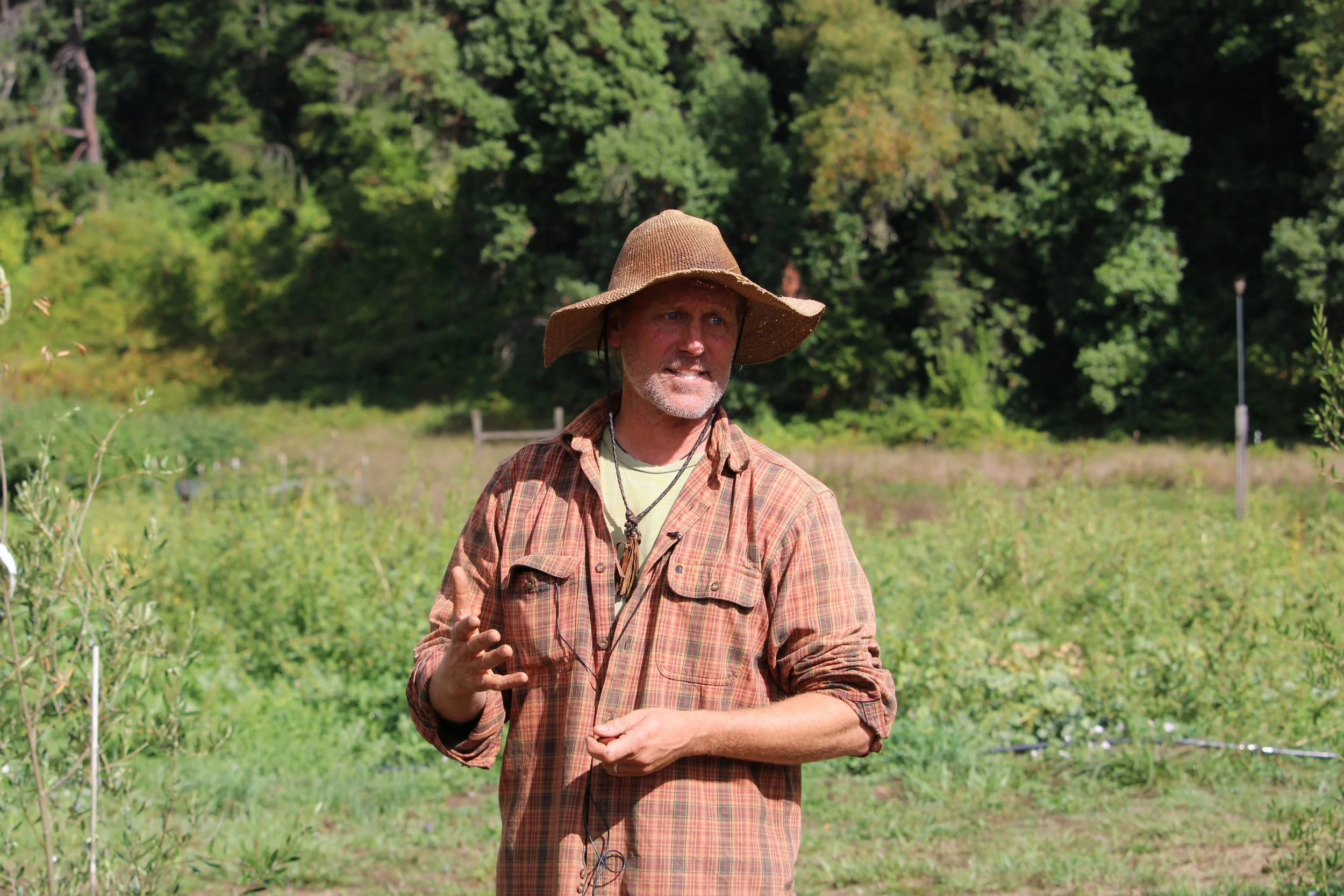
It was fitting to meet Jacques and learn about cannabis cultivation near the end of our trip with Eunice, because the story of this plant tied back to all the topics we have discovered: the timber war, agriculture and labor, water and salmon. Cannabis arrived in Humboldt county as early growers took over secluded lands that once were logging ground, taking up and polluting water resources that are crucial for salmon and the Yoruk tribe in the area. Amid the collapsing industry that had been oversupplying the market while polluting the environment, Jacques’s farm seems unaffected as a small, well-known producer. Weed is not the only plant here, Westies also saw plenty of watermelon, pears, corn, etc. When Jacques came here in the early 1990s, it was in the middle of the Drug War and cannabis was very illegal. He built his reputation with peaches and tomatoes, and is proud of the supporting community around Humboldt for local food products that led to his success. Diversity means resilience – Jacques is a perma-culturalist who does not rely on cannabis but the variety of crops that rotated around after every season, the diversity of cover vegetation that helps keep the soil structure healthy, and the compost at the edge of the farm that produced organic manure. His farm is run by his family and two regular workers who are paid well and supported with housing. We learnt that his 18-year-old daughter is proud of what the family is doing and in the last season has helped to sell produce at the local farmer’s market.


Cannabis plants are in harvesting season now. They are magnificent to stand by, bigger than I thought – healthy trees around 6 ft. tall, each comes with a plastic tag for state regulation. Leaves are lush green; the buds exude layers of aroma that attract a variety of insects beneficial to the garden. This plant is not native here, yet it has become an important story of this landscape. Driving just a few minutes away from Jacques’s property, we encountered an industrial plantation where dead rows of trees stand in their plastic pots. The owner has abandoned them for three years as they could not make a profit out of this business. There's so much instability and exploitation in this economy, and for Jacques, his model of small-scale farming which provides food locally is one of the few things that still works and that he would like to see more happening. We left not only with an awareness of the ethical problems in cannabis farming and how consumers might be a part of that, but also plentiful of sweet pears, plums and melons that Jacques generously gave us.


By Linh Che

Meet our Guests: Keith Parker

Keith Parker 

Senior Fisheries Biologist for Yurok Tribe and Professor at Cal Poly Humboldt

Klamath River Basin, CA

September 29th, 2025


For the past several years, after working in the finance world, Keith Parker is dedicating his time, energy, and anger about the state and treatment of the river and salmon towards making a difference. As the Senior Fisheries Biologist for the Yurok tribal fishery and a registered member of the Yurok Tribe, Keith says that most of his time is spent acting as translator between worlds. “As a tribal scientist, I live at the intersection of traditional ecological knowledge, TEK, and Western science.”


Keith converts traditional terms and knowledge into scientific terms and goes back and forth between the tribal council and committees and the US Fish and Wildlife or Bureau of Reclamation California trying to help facilitate a conversation between these contrasting worlds. This is by no means a small task, and on top of that, Keith also teaches part time at Cal Poly Humboldt in the Native American Studies department and Environmental Science and Management department. Not to mention the fish scale research he is also conducting for the tribal fishery. Keith is a force to be reckoned with but also an incredible force to collaborate with to make productive, collective change in partnership with one another as well as the Earth.


For Keith, these rivers and lands and the beings within them are worth protecting and fighting for. It is “not just a job, it’s our community.” Part of being a good steward of the land is paying attention to its rhythms and knowing when to step back when something is threatened or struggling. In 2017 and 2023, the Yurok tribe intentionally closed its fishery for an entire season and chose not to harvest any fish to help promote the return of salmon to spawning grounds so there would still be salmon in the Klamath left to harvest by future generations.


Salmon are a traditional first food of the Yurok people and heavily ingrained in their place-based identity, so the destruction of this species is not just environmental but social and cultural. Keith is attempting to foster hope in his efforts of salmon research, and, with any luck, these efforts will prove successful for generations to come. Since the removal of the Klamath River dams only one year ago, they have already begun to see improvements in the quality of the river and health of the fish. We can only imagine what the future may bring, but with people like Keith Parker and Hunter Matz, another member of the Yurok tribe and young apprentice to Keith at the fishery, there is still hope to be found in the world.


by Allee Garver