Christine Gemperle
Almond Farmer
Ceres, CA
November 21st, 2025
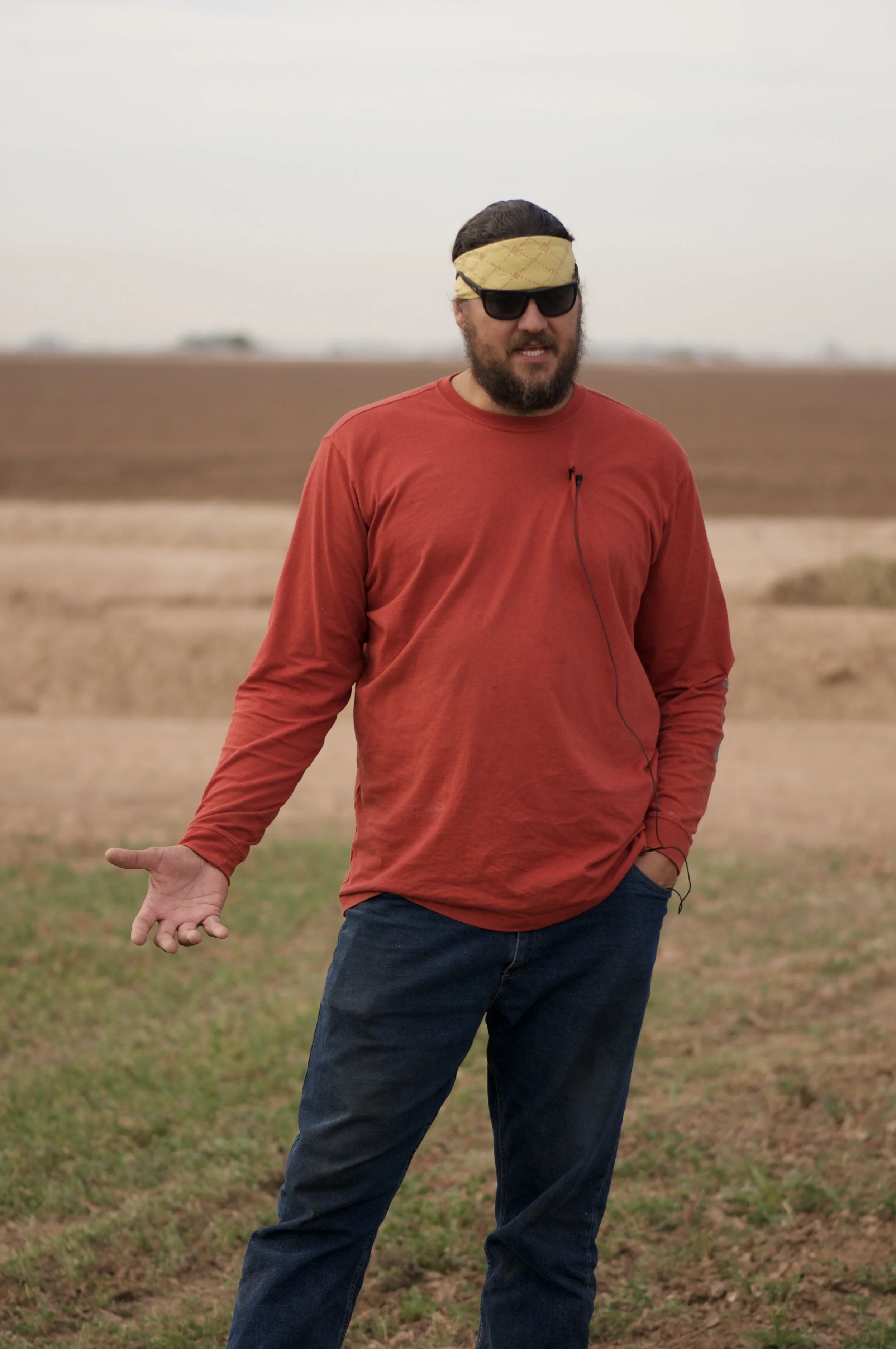
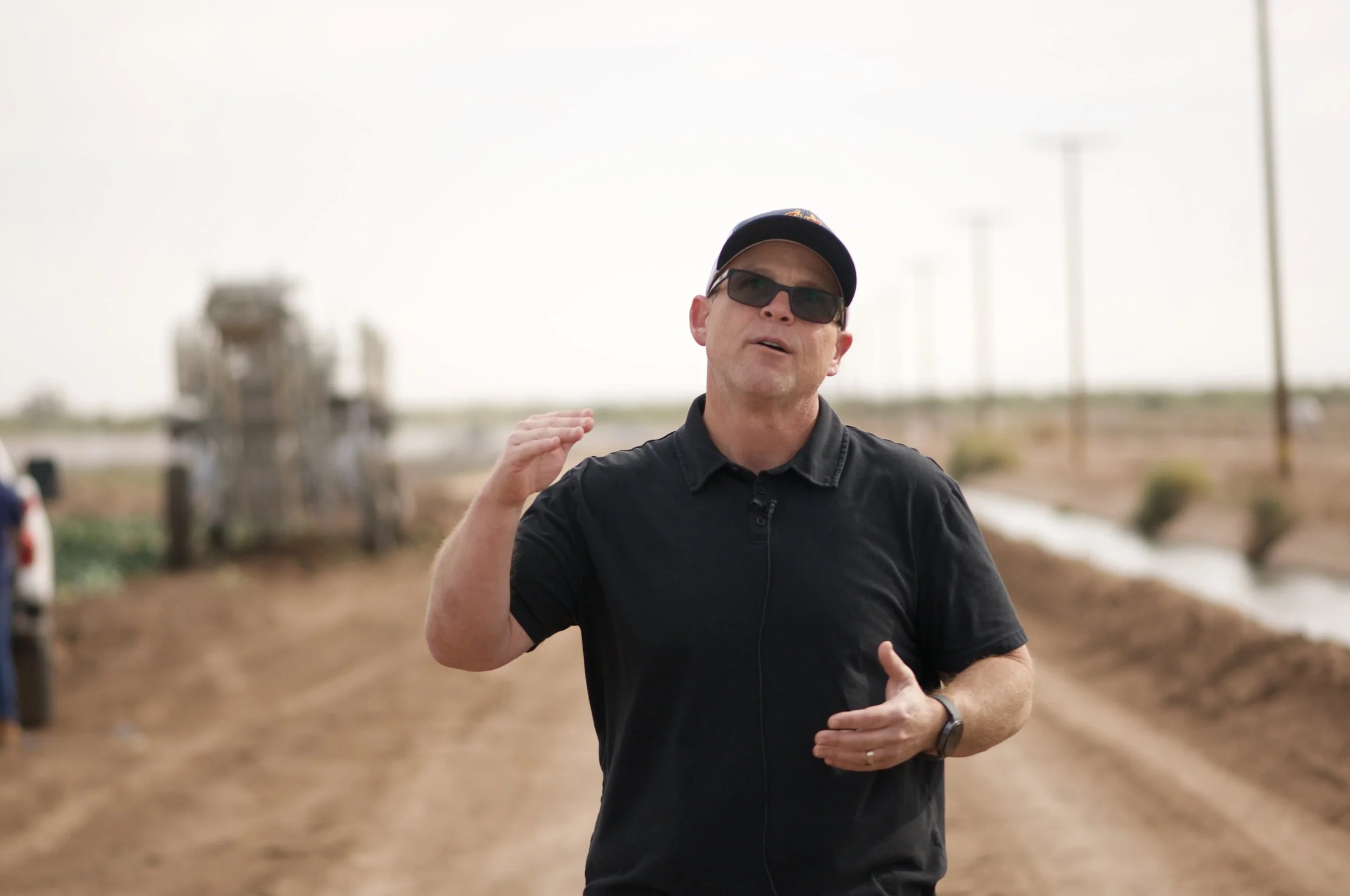
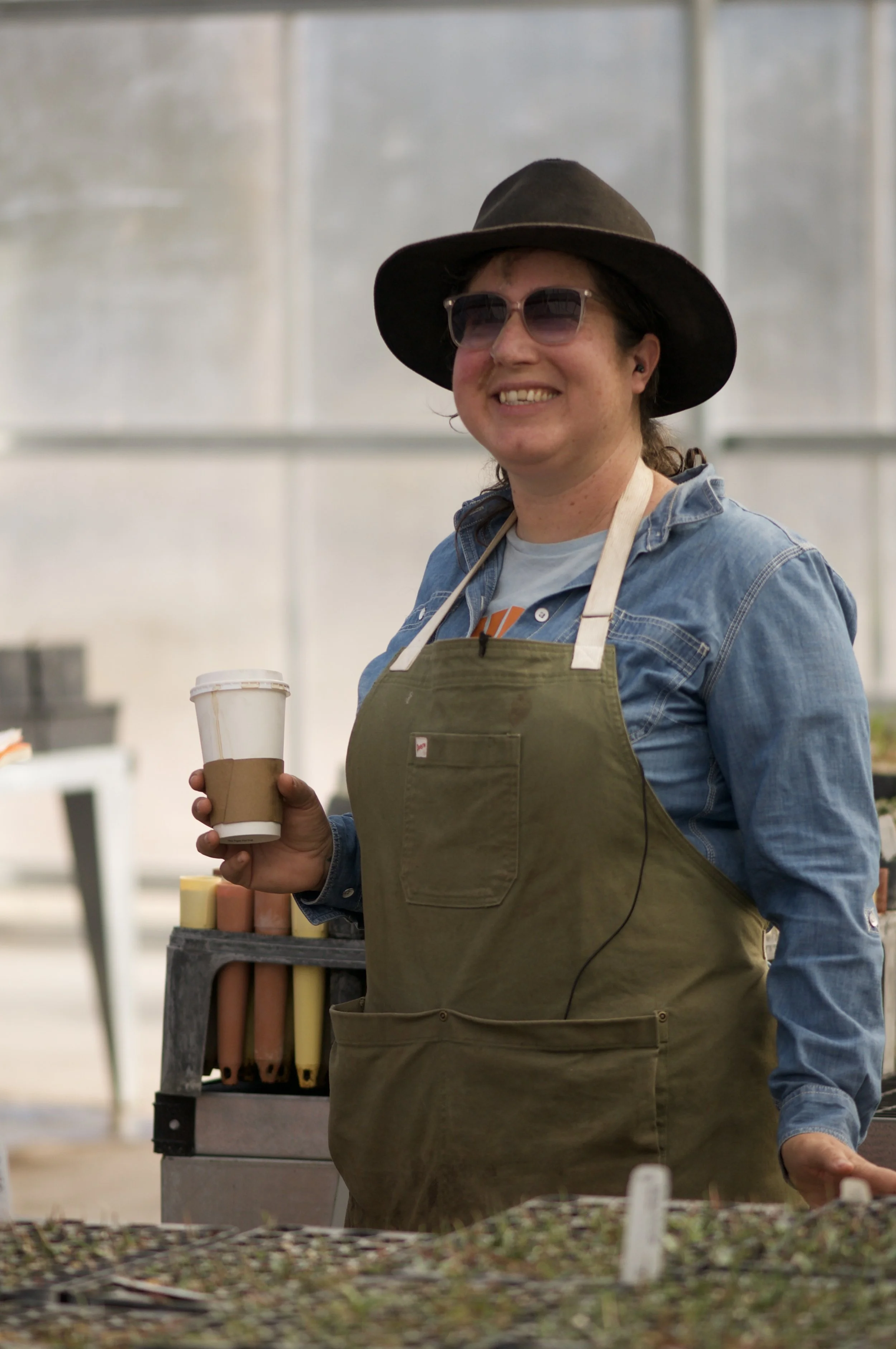
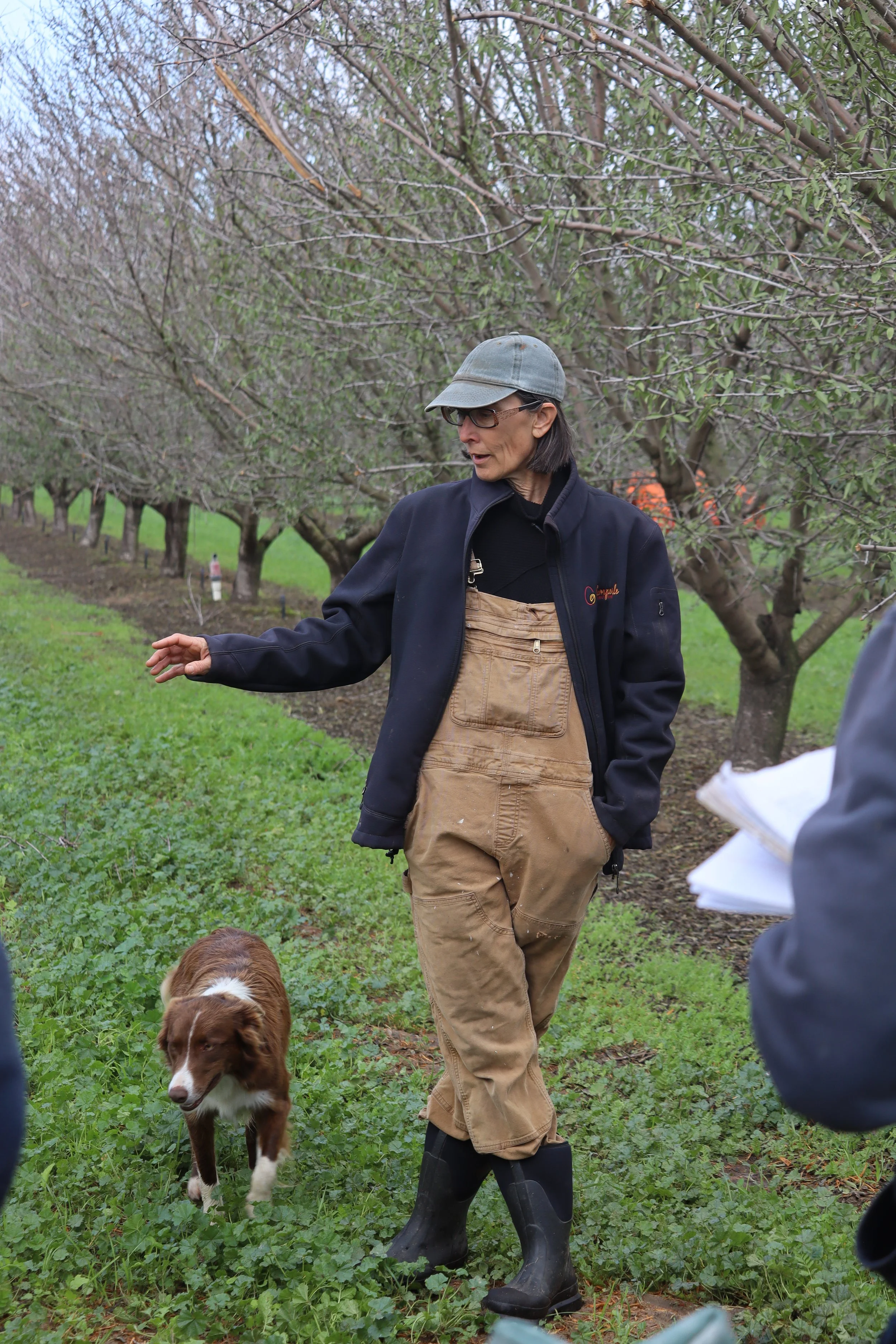
On the morning of our last field day, we woke to the sweet smell of soil in Christine Gemperle’s beautiful almond orchards. We spent the day with Christine learning the ins and outs of farming in the Central Valley. She introduced us to the complex, fascinating, and polarizing world of almond cultivation. In the mid-2010s, people framed almonds as the central villain in the saga of wasteful water consumption in the American West. This all started because of a Mother Jones article that revealed a startling statistic: a gallon of water is needed to produce a single almond. This statement, although accurate, is simply not the whole truth. Christine is working to combat this narrative while innovating new ways to make almond farming a more sustainable industry.
On her farm, which she works with her brother, she practices many techniques of regenerative agriculture. Cover cropping using mustard and clover provide bees with more reliable sources of pollen and helps maintain soil health. Hedge rows planted with native plants increase biodiversity and provide even more diverse habitat. During winter, she is part of a ground water recharge pilot project to help replenish the diminishing ground water supplies through flood irrigation in fallow orchards. In the orchard they use soil amendments of compost, manure, and bio char. They have recently been experimenting with whole orchard recycling: when an orchard is phased out, the woody matter from the trees is chipped up and tilled in to add carbon back into the soil and increase its water holding capacity by 30%.
Christine’s almond knowledge and passion are evident to all of us. She inherited this profession from her father and now shares it with her brother. Despite this generational history, her methods are always evolving, forward thinking and innovative. As a woman in the agricultural sector, she has had to work extra hard for her talent and ideas to be heard and respected. She has become a household name in the world of regenerative farming and serves as a director on the almond board of California. She is working to make every gallon of water used on the vast almond orchards of the central valley count, by putting every part of the almond tree to use. From the core of the nut that we love to snack on, to the outer hull that can be used in animal feed, biochar and even sustainable cement, to the branches and trunk that enrich the soil as they are turned back into it.
by Penelope Doulis