
The last lone auroch died in Poland in 1627, with no others of her kind by her side. For nearly 2 million years, the species had been a strong ecological force across Asia, Europe, and parts of Africa. Then domestication began, transforming aurochs into the modern cow. While domestication paved the way for agriculture, and therefore civilization, it was ultimately the downfall of the aurochs. As livestock numbers expanded, they lost habitat and were exposed to diseases carried by their domesticated counterparts. Overhunting restricted their populations further, until the last individuals survived only in royal hunting reserves within Poland’s forests.
Just four years after the last auroch disappeared from the world, cows were introduced to the East Coast of North America, beginning a spread westward that would eventually make them a cornerstone of American culture. In the Pacific Northwest, cattle became widespread about 200 years ago, when the Gold Rush drew settlers to the region and created permanent communities. Cows quickly became a staple food source and have remained so ever since.
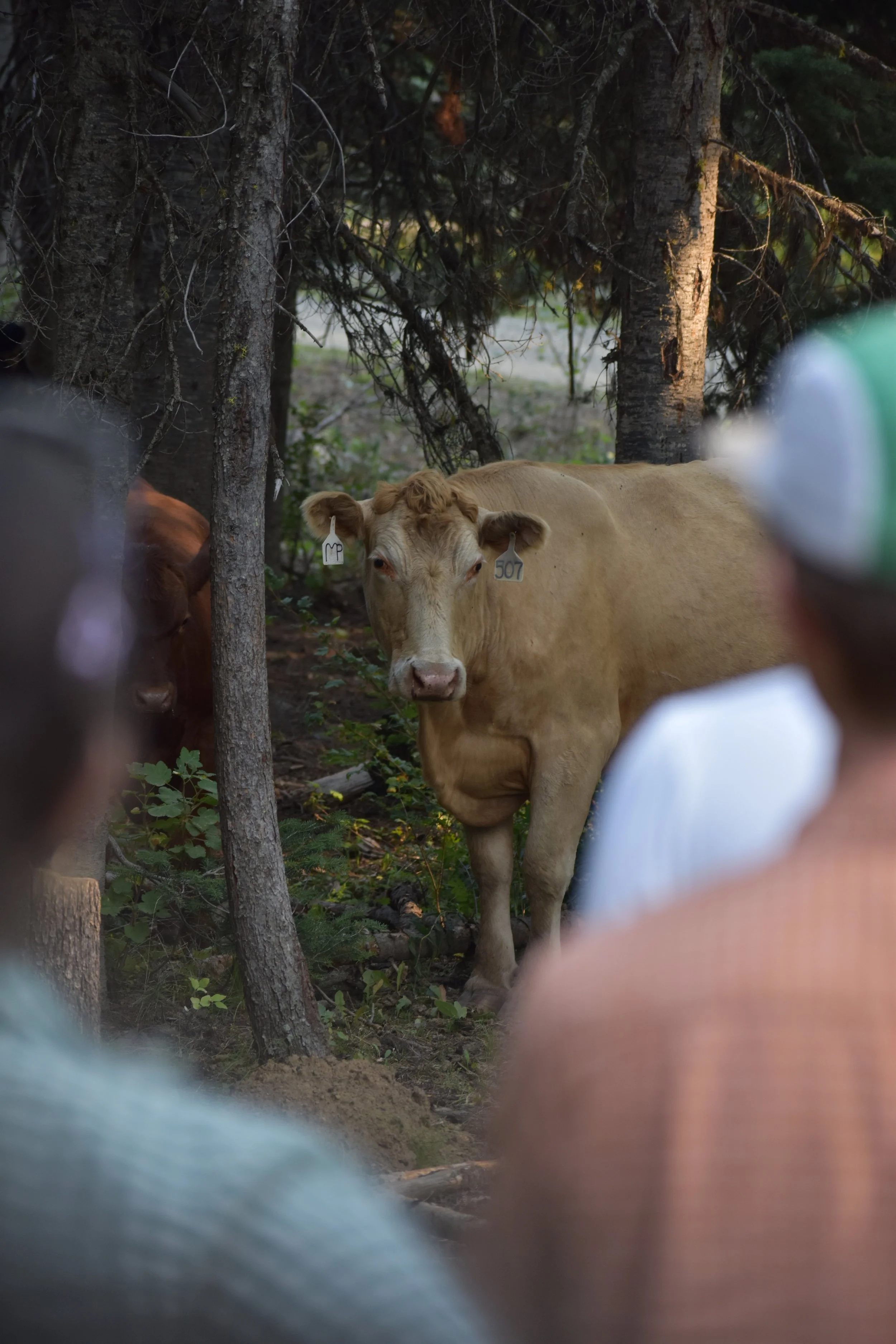
Though cows are not native to this region, they do not feel out of place on the rolling hills of the Methow Valley in central Washington. Deed Fink, a lifelong third-generation rancher, leases grazing rights on those hills for his herd. The cows move easily across the landscape, unaware that their presence is part of a much larger ecological story shaped entirely by human choices. They fit into these spaces because we altered the land to make room for them. As a result, landscapes have become overgrazed, and with fewer plants and root systems, soils are more prone to erosion, increasing sediment content in rivers. Overall, the shift from past native grazers to cows has left these systems strained, and as agencies attempt to restore healthier conditions, new conflicts emerge. For Deed, one of those conflicts is wolves.
Wolves, unlike cows, carry the opposite history in this region. Once abundant across North America, they were hunted and exterminated to allow the livestock era to boom. Their disappearance contributed to ecological imbalance throughout the West, especially as deer and elk populations expanded without predation. But restoring wolves is complicated, not only ecologically but culturally, economically, and emotionally.
Washington’s wolves returned naturally from reintroduction programs in neighboring states, but Deed sees it differently. For him, the reappearance of wolves is a decision agencies such as the Washington Department of Fish and Wildlife (WDFW) made with little thought for the small ranchers it would affect. Wolves do not care that cows are non-native; to a wolf, a calf is simply prey. Deed described the scence, “It's a fight and it's an ugly fight, because you get four or five wolves after a cow or a calf, and they're fighting for their lives.” The first time Deed lost a cow, “There was carnage everywhere… And so, yes, it is sickening.”
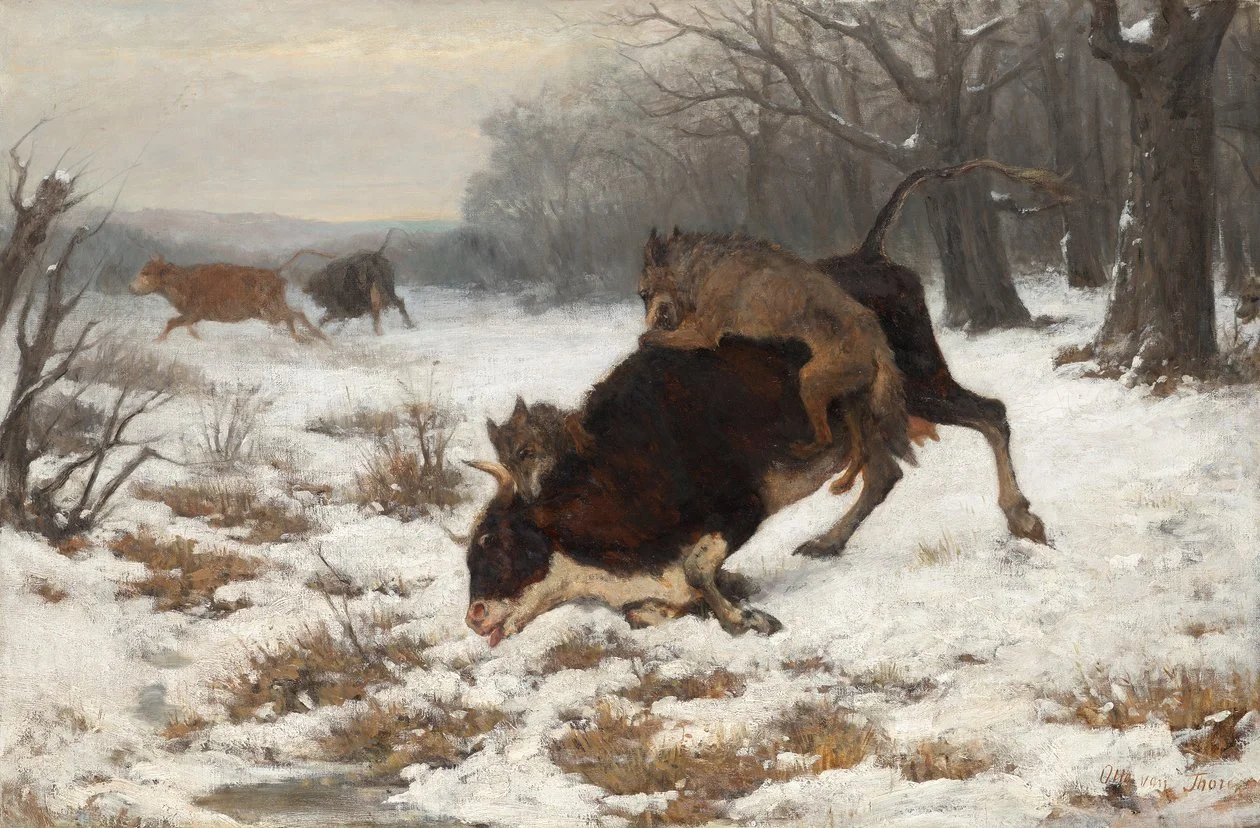
There is an added devastation in knowing that little will come from this loss. The WDFW Wolf Resolution Program, created to compensate ranchers for cattle killed by wolves, rarely functions as intended. Deed explains that it has been nearly impossible to get someone from WDFW to confirm the kill, and even harder to receive compensation. Regardless of the action he takes, he has yet to see positive results, making the time and emotional energy required a cost few ranchers can afford.
But while Deed’s pain is real, cows exist here because humans shaped entire landscapes to accommodate them. Wolves existed in the West long before settlers ever stepped foot on these soils. And while we tend to view cows as harmless or even natural because they have become an integral part of our society, they are a human-created force, far removed from the aurochs that once shaped landscapes through movement and coevolution with predators.

The tension between cows and wolves is not about the animals themselves but about the effects their dynamic has on humans who created a world where domesticated cattle replaced wild grazers, predators were erased, and landscapes were managed for production instead of balance. Now wolves are returning to systems shaped around the cow, not the other way around, and the friction is unavoidable.
Standing in the Methow Valley, watching cows drift across the hills and hearing their low calls blend with Deed’s fears for the future of the West, it becomes clear how out of balance these ecosystems have become compared to the lands aurochs once helped manage. Aurochs moved in ways that kept everything else in check through their grazing, creating diverse landscapes that cows, a indroduced grazer, don’t fully replicate. Today, cows and wolves meet in spaces that carry only faint echoes of stable ecological relationships where predators and grazers worked in tandem. If we cannot find a way to cultivate healthier, more resilient ecosystems, ones with more room for predators and less pressure from grazers, then there will be more soil erosion, and polluted rivers. These systems will continue toward imbalance, until they eventually vanish just as the aurochs did.