
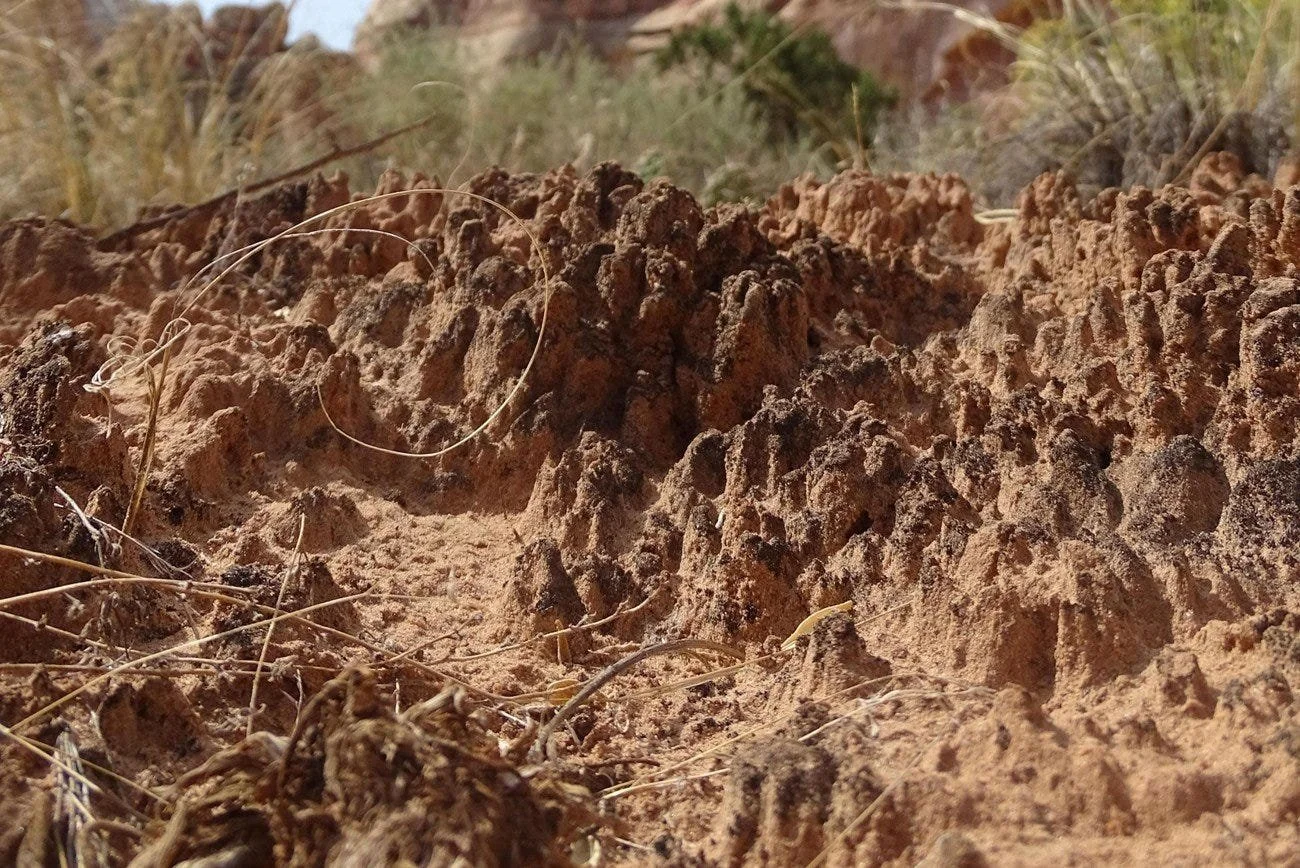
From someone else's perspective, I look crazy, jumping from rock to rock, eyes intensely locked on the ground where my feet land. I am, in reality, trying not to step on the cryptobiotic soil, a biological crust full of slow-growing life on the bedrock of Comb Ridge in Bluff, Utah. In the desert environment, this cryptobiotic soil is a crucial foundation for ecosystem productivity, carbon storage, and overall health. One footstep and it could take from decades to centuries to recover. I feel obligated to preserve the layers of fungi, algae, bacteria, and lichen. Sometimes, I would land on a small rock and find myself stranded on an island in the sea of crypto soil. There is nowhere I can go without being an agent of destruction, leaving my footprints in the fragile soil. I made these choices, these footprints, countless times during our week in Comb Ridge, and during that time, I learned about other choices of intentionally preserved life and history.
Joe Pachak is a dedicated artist and archaeologist whom we met during our time in Utah. Joe introduced us to his personal connection to the area’s history as we walked through Sand Island, a state park and one of many places once occupied by the Puebloan people since time immemorial. Most physically evident of this were the petroglyphs that Joe had brought us to see. Seeing this ancient art, I felt overwhelmed by a feeling of sacredness and awe. Here was evidence of human life and thought, centuries old, preserved, right in front of me.
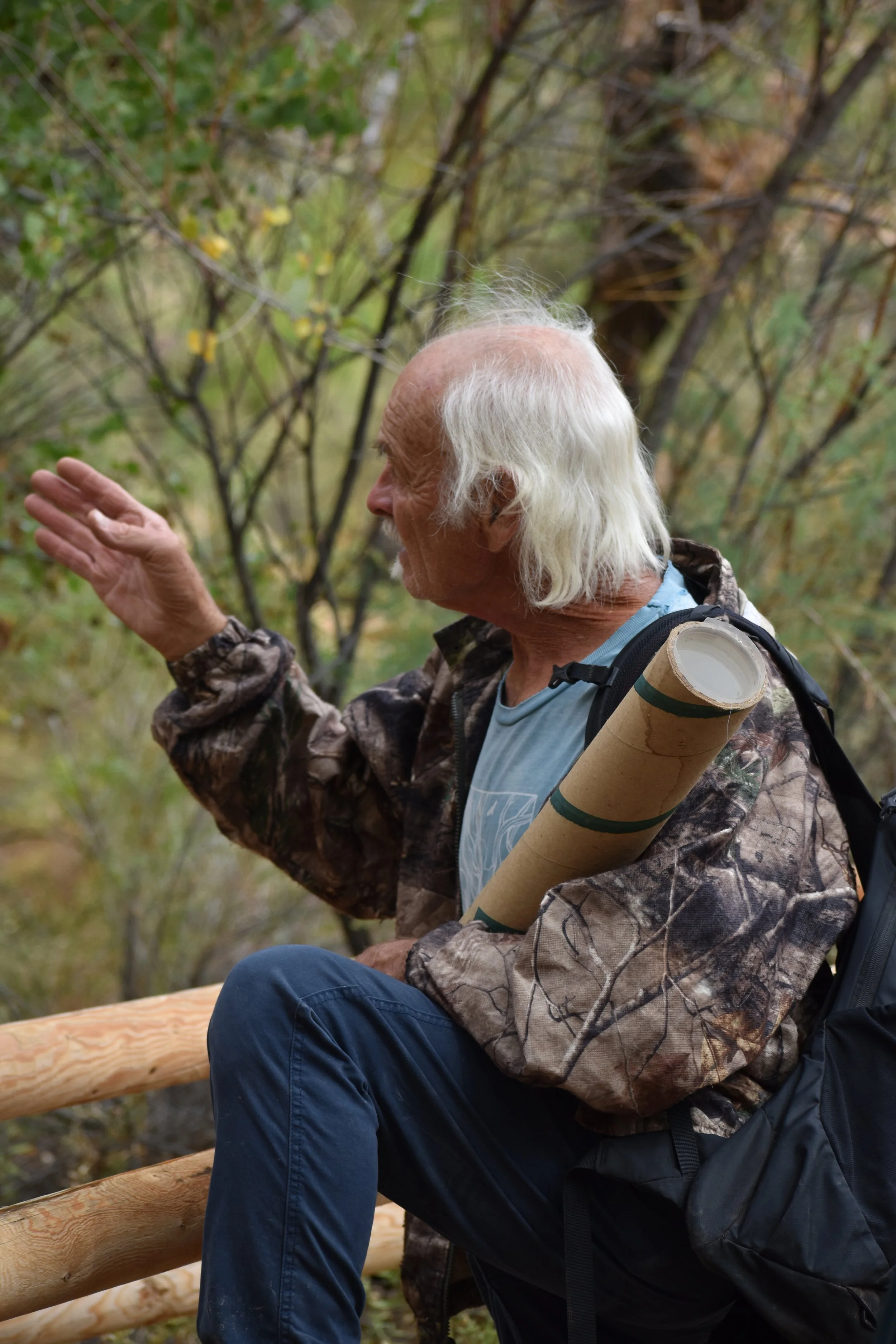
Joe shared this wonder, describing the intentionality of art and how its very existence proves its importance. The carvings resembled things familiar to us today, human bodies and four-legged creatures, orange against the black varnished rock. To interpret them is a challenge; Joe connects them to evolution and survival. He says that the rock images were something they were doing to increase the possibility of life. These rock images shared and showed what was most vital, information people needed to live on. For example, some rock art indicates fertility through twin circular symbols as well as anthropomorphic beings with vulvas and lines connecting to each other. Other things were carved too, such as atlatls and fending sticks, as well as ways to orient, spirals that a shadow would hit differently depending on the time of the year, an example of ancient astronomy. These panels depict a plethora of knowledge rooted in their strong relationship with the “natural” world over a millennium. Joe says that where these carvings concentrate became meeting places and landmarks for navigation, a place shared amongst travelers and artists alike. Perhaps these generations of people understood the importance of recording their cultural knowledge.
Jude Schuenemeyer, of Montezuma Orchard Restoration Project, practices this philosophy through apple horticulture. Jude and his wife, Addie, have spent the past 24 years collecting, growing, and identifying rare and near-extinct apple cultivars. His work is rooted in remembrance of the past for the sake of the future. Of the 20,000 historic apple varieties America once had, only 6,000 remain today. Jude explains that this loss occurred because cultivars can only be sustained through human interaction, by grafting a branch onto a rootstock. As agriculture in America has become further streamlined with increased efficiency and shelf-life, cultivars have become devalued, forgotten, and lost.
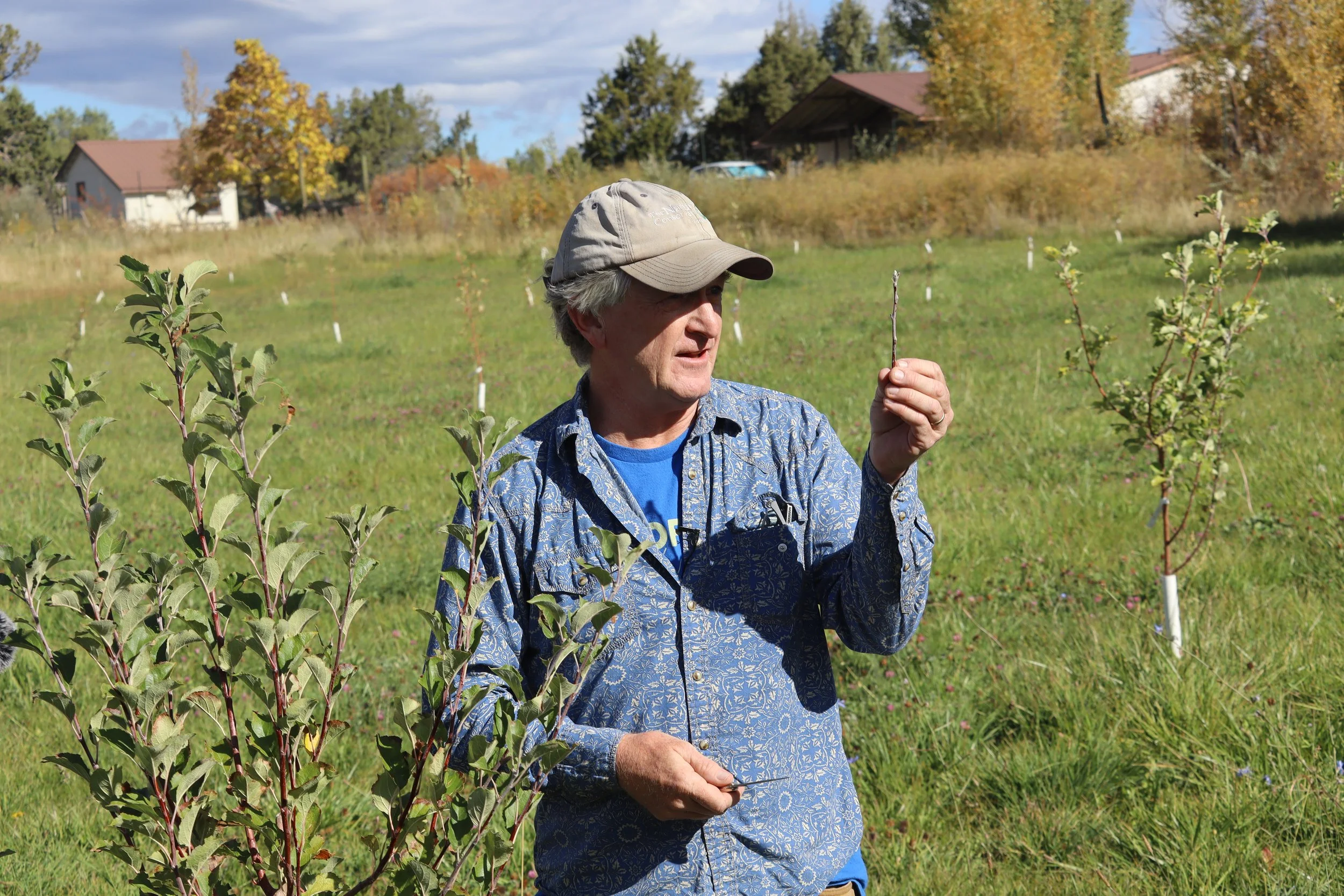
Jude, however, values this knowledge. He believes that we, humans, are symbiotic with the trees, in which their sustained life and ours are mutual. Preservation of any history is this way: if we do not view something as valuable or worth preserving, it’s forgotten and lost. Joe, for example, has recorded rock art that is now gone due to rising water levels created by dam construction. Although the original is gone, its existence lives on, through ancestral memory, and thanks to Joe, painted on the walls of the Edge of the Cedar Museum. If history or knowledge can be owned, preserving it should not grant ownership. Joe and Jude are two people dedicated to this mission, stewarding for its continued remembrance and dissemination.
Preservation is incredibly nuanced. For Joe, it means recording and sharing so Indigenous knowledge and history are remembered in the future. For Jude, it means growing the past for the sake of its future existence. Both Joe and Jude preserve what they deem as valuable, whether it be physical evidence of evolution, identity, and culture-making, or historical ecological diversity. Maybe the Puebloan and Basketmaker people thought similarly, wanting to sustain a future and preserve their culture through art. These choices shape what exists and what is known in the future, culture, and life itself. Jude says, about his work, “You don’t need to see the future to impact it.” Perhaps this is the way we should treat the world and all it has to offer. I am not trying to preach keeping everything on Earth the same; that’s unrealistic and ignores the dynamism of life itself. Instead, I hope to recognize the actors that influence what knowledge we preserve. If I were to trample all over the crypto soil, there may be none to come back to, only the carbon released and the plants dry, devoid of nutrients. Why not instead, I jump around, led by my values and morals, to let history live and create itself.