
When Fred Swanson looked up through a dark haze and saw charred fir needles whirling in the dry wind of his backyard, He said goodbye to the forest he loved. It was August 2023, and a lightning strike had set H.J. Andrews Experimental Forest ablaze. He remembers driving into the woods after the fire had burnt its fill; looking out upon devastated houses buckled and contorted from flame. However, upon entering the woods, he found a sort of dark majesty; there was beauty to this scorched forest. I imagine him walking over the parched earth, moving past standing giants. As he describes this moment to me, his words resemble religious practice — reverence in mourning.
Fred is tall, with a trimmed white beard, a plaid shirt, and worn work pants that must have once been clean. In a gentle cadence, he describes a moment at the beginning of his career in H.J Andrews, when he found himself standing on a 10-foot-wide tree stump. The rings were red and orange and slightly uneven; all that was left of a more than 500-year-old tree. Fred saw the stump he was standing on as an opportunity to look into the past, to learn from the history of the forest. In his research, he found that nearly 500 years earlier, a fire of unimaginable size and power had leveled much of what we now know as central Oregon, including what predated H.J. Andrews Experimental Forest —- Its scarring was left written into the trees.
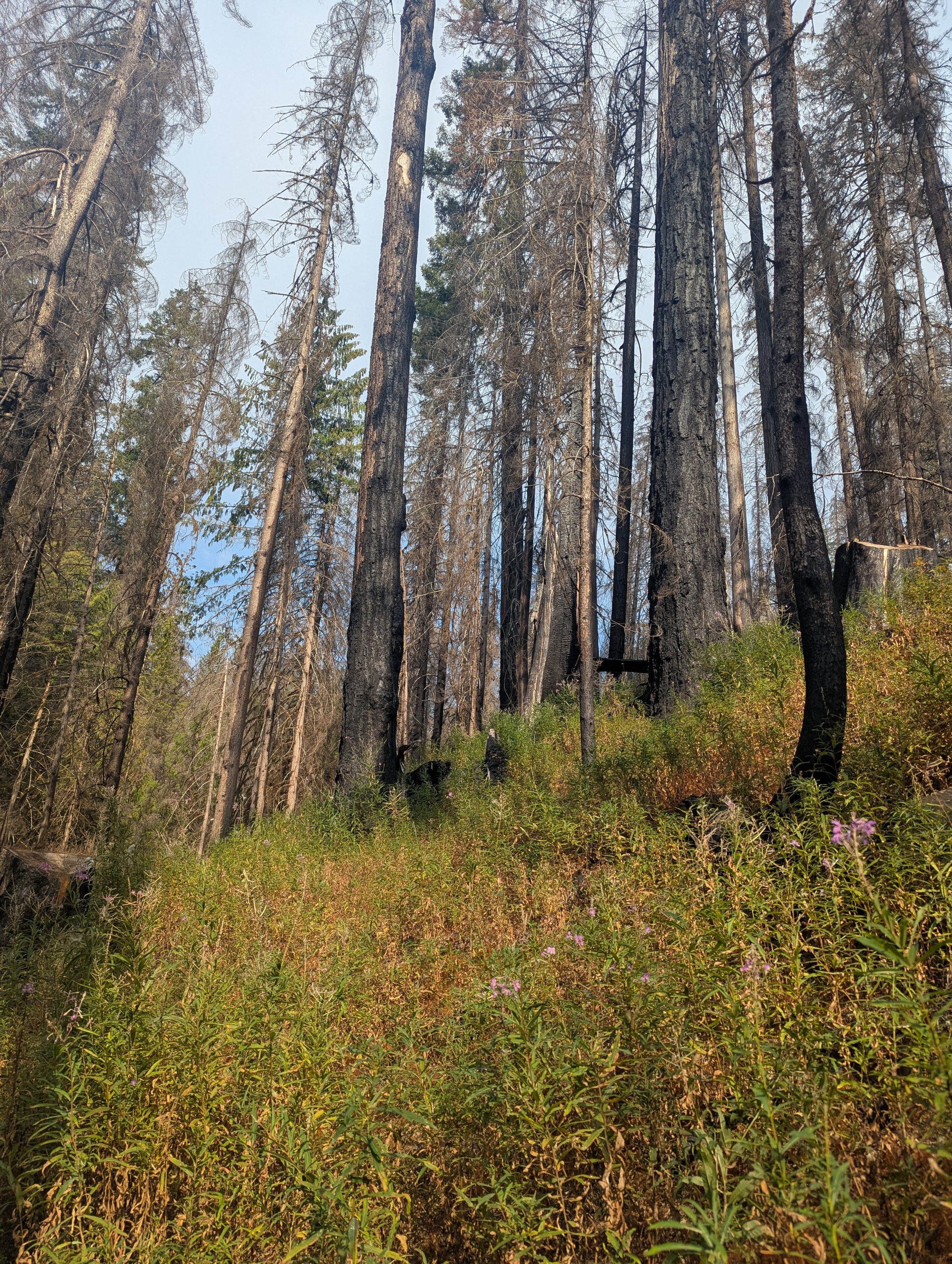
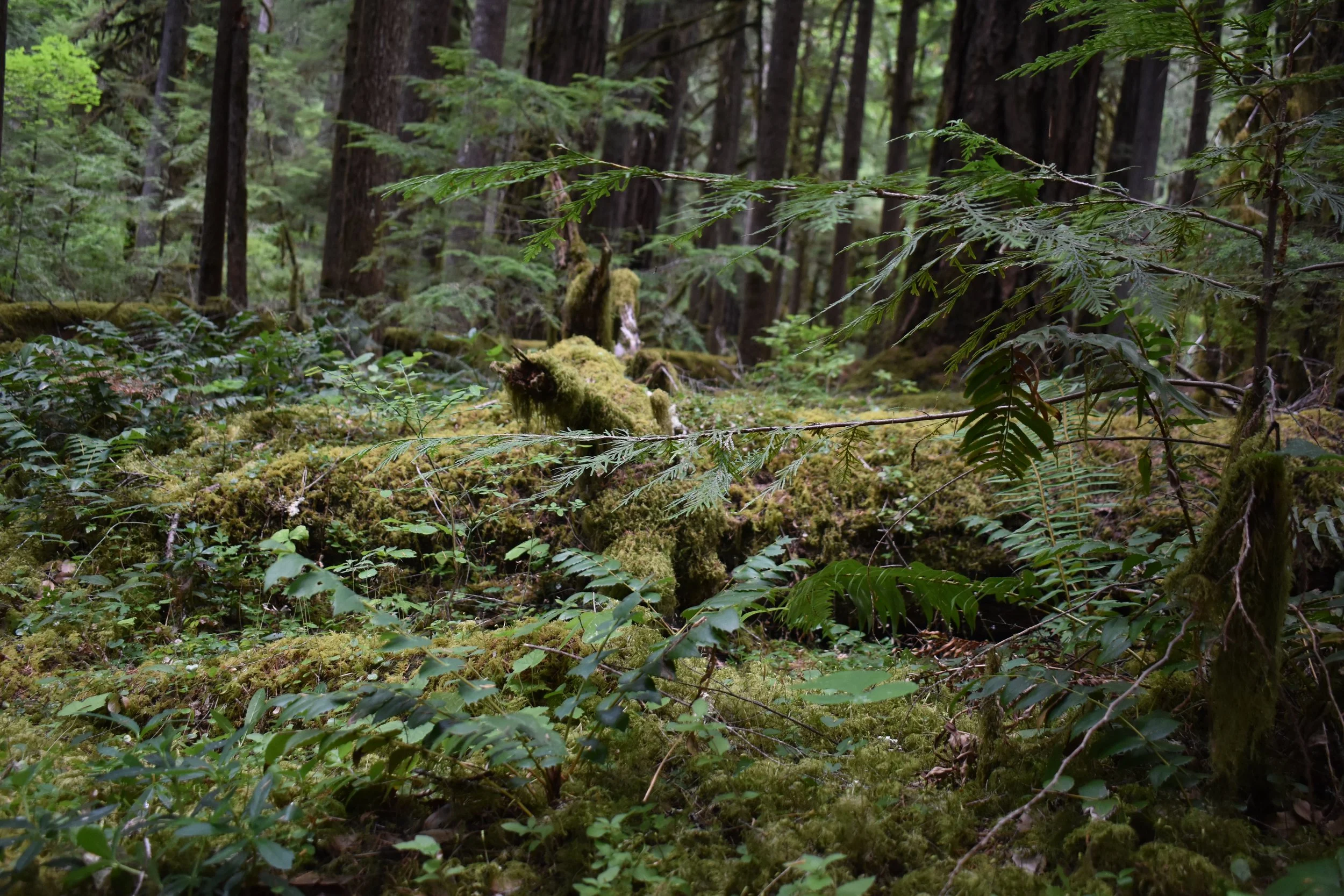
Fred drove with me up to the edge of a three-year-old burn area. To my left, old-growth trees covered in moss towered into the sky. On my right, Fireweed, unsteady soil, and blackened trees defined the landscape. It is astonishing to imagine that H.J Andrews was born from something like this. As Fred stood amidst burnt husks, he explained how he found hope in this cycle of death and rebirth, telling me, “The forest has one rule: start over, making use of what remains.” Fred has borne witness to this rule— both in expanding orange tree rings and the aftermath of fire. His work shows us how to trust in natural cycles and find hope in forest regeneration. Resilience is a sort of wisdom—strength, built in disruption. Whether by a lightning bolt in a dry forest, or the emotion that emerges through loss and upheaval — histories display strength in what is deemed damaged.
In Seattle, Washington, Yesenia Hunter sunk her hands into the upturned dirt of her backyard garden. Feeling the soil on her palms, she immediately recoiled in revulsion. As a child, Yesenia had labored over this same practice, planting seeds and harvesting the products. She recalls the swish of her knife as she cut asparagus stalks and the thunk as they landed in a crate. Later in the season, apples falling into their bins made the same sound. For years, she practiced these movements, working before and after school under a blazing sun.
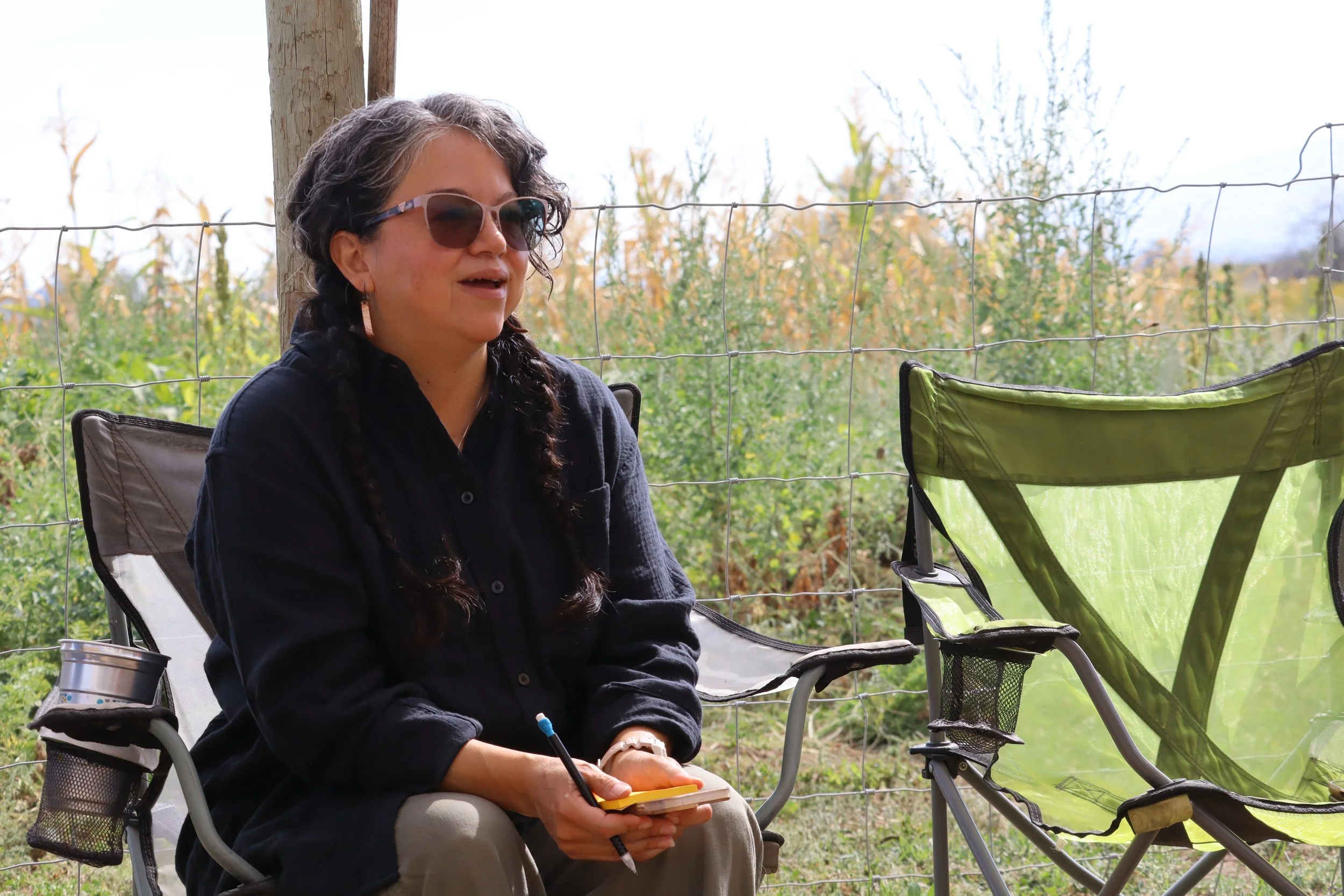
Yesenia’s attempt at gardening acted as an exigence for the unresolved and compiled trauma she experienced as a laborer. She recalls this moment to me, explaining how exploitation as a worker in the fields of the Yakama Valley had separated her from her hands, leaving her traumatized and disconnected from her heritage. Earlier that year, Yesenia’s daughter had told her that they, a Mexican family, were Japanese. Startled, Yasenia realized that her own cultural disconnect, informed by the trauma of farmwork, had separated her family from their Mexican heritage. Yesenia made the decision to become a generational changemaker, proudly bringing her culture into her life by teaching colonial histories, and practicing traditional Mexican music and art.
As we sit with her and her family in the dusk light of the Yakima Valley, Yesenia stomps her feet and dances as she sings a Bamba, a celebratory Afro-Cuban tune. Her hand moves with mesmerizing speed up and down on the eight colorful strings of a Charango. By celebrating traditions like these, Yesenia finds reconnection with herself and her heritage.
Similarly to Yesenia, Fred has looked into histories to find resilience. Four times a season, he tramps into the burn of H.J. Andrews in search of beauty. He and an artist are mapping out the regrowth of the forest, represented in black and white photographs of twisted blackened trees, and unfurling understory. Through this process, Fred is able to maintain his relationship with the forest he loves, while sharing a visual representation of the persistence that it represents.
Histories, whether cultural or ecological, hold stories of resilience, which Yesenia and Fred have accessed to heal in the present and move forward with hope.