The world is covered in roads. Roads for logging, mining, traveling, and recreation. But humans are not the first to build roads, for there also exist those built by animals. Before the first concrete road was laid, there existed what we now call “game trails”, connected in a great web that fueled the migration of millions of large mammals across the country. That web has been severed, and the land has been cut up and blocked into dozens of different types of “public lands” designed to “protect wilderness”, managed by government bureaucracy.
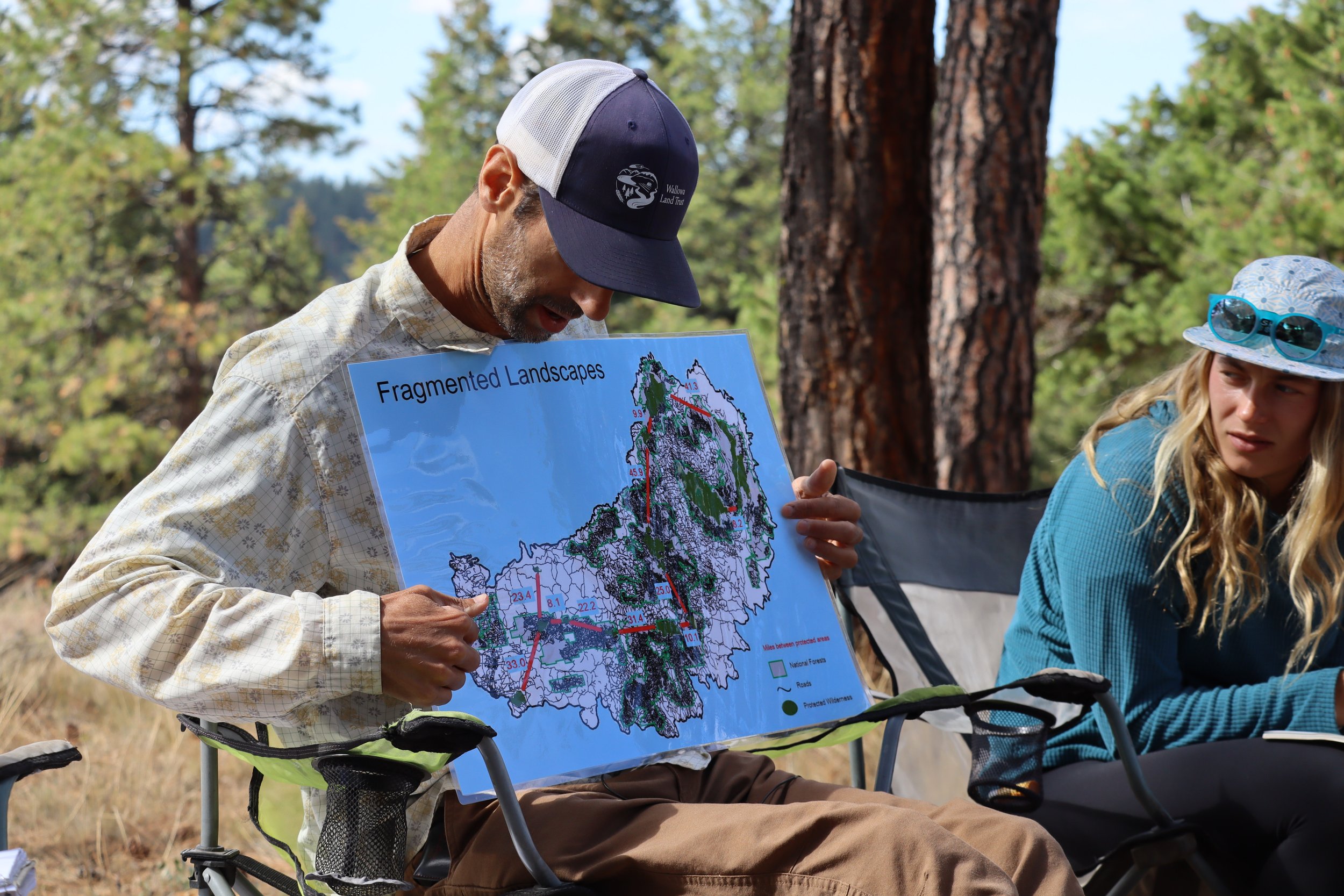
In Wallowa County, Oregon, atop Starvation Ridge in the Wallowa-Whitman National Forest, we meet with systems ecologist David Mildrexler. He explains to us that the threat to animals worldwide is habitat loss and fragmentation disrupting migration patterns. He passes out a map showing a large mammal migration range, the vast distance between “protected areas”, and where roads have been built. The map is covered in tiny black lines, in some areas so thick that all you’re looking at is a nearly solid black mass.
What exactly is “wilderness” in the United States if not places “freed” from human influence? Settlers set aside these lands for the purpose of “protecting them” from themselves, knowing that no other living being reads a map when deciding where to migrate. Even these intangible boundaries aren’t honored, considering the roads that have spurred the timber and mining industry to stick their fingers deep into the heart of places that were originally set aside to mitigate the loss generated by progress.
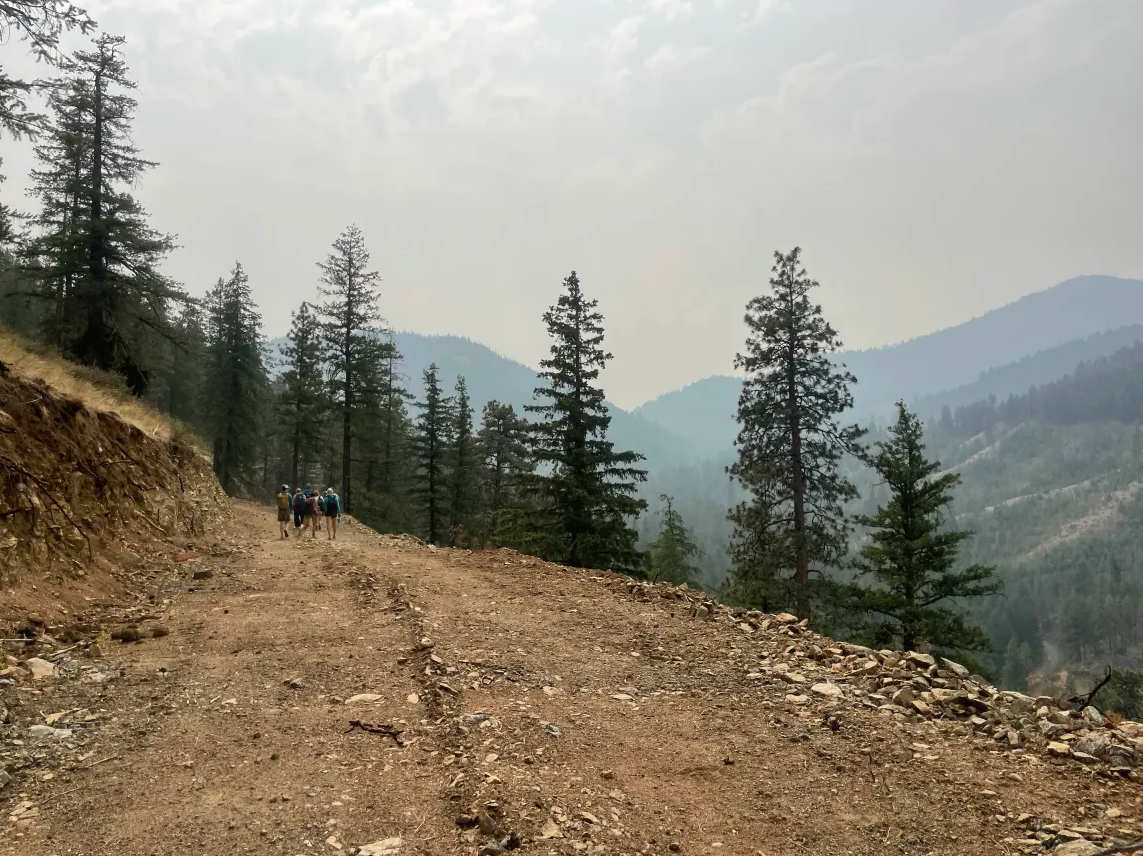
Where we walk within the Okanogan-Wenatchee National Forest, there is a suffocating quietness, broken only by the sounds of our bodies moving and murmuring. Our heads turn left and right, taking in the fragments of what once was a cohesive forest. Now, within the clearcut section, there are only stumps and branches concealing the earth below. It is only visible where we stand, where heavy machinery has clawed, and scoured the ground into a barren road. I feel the weight of the place, the stillness of the birds, the stillness of the breeze, of the dead branches.
All across the West, both forests and deserts lay in ruins, carved and sectioned by roads built to carry the equipment needed to clearcut them or mine them. In their wake, both flora and fauna suffer, struggling to cope with the profound transformation of these landscapes they once were capable of moving across with ease. Roadkill lines every highway, each one frozen in death during their desperate attempt to cross. Not a day goes by where we don’t see at least one mangled body, often of a deer, their entrails strewn across the road.
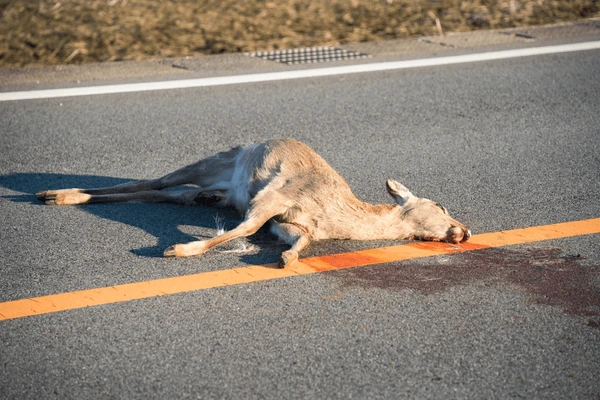
The history of white settlement pales in comparison to the millennia that deer have spent traveling these lands. These animals are not to blame for their death, for they have simply followed the knowledge built by their ancestors, the instinct to move through these places despite their unfamiliarity. Deer continue to cross the road, even with the deadliness of rushing traffic, just as all large mammals do, because they have no other option. With tens of miles between what’s left of their original habitat, they have no choice but to simply try.
Highways, of course, behave differently than your average logging road deep within a national forest. Where I stand on that road, I am surrounded by broken branches, torn earth, and a heavy silence that would be a rare treat along a busy interstate. Yet whether I am looking at a deer twitching on the side of the road, or whether I am looking at the memory of a forest, I feel the same yawning hole within. Grief.
Do the deer feel the same when they tread softly along this road? I lean over to examine their tracks, stepping down from the bank onto the treaded earth where So and Pinar, founders of Queer Nature, suggest that perhaps the road may be nicer to walk on. They ask me to imagine the animal as they move through the landscape, to ponder the who, what, when, why, and how of their movements. I look at the tracks again.
Even if they do feel the same, the same loss as they scan this place, searching for danger, they continue on their way, slow and cautious. The tracks lead down the road until they disappear into the ground, perhaps washed away by rains. The weight of the place lifts slightly on my heart. Despite the loss of habitat, the shift in their migration, the erasure of their ancestral knowledge, I know that they will keep moving forward, following the roads that existed then and exist now. They will not give up, they will keep on living.