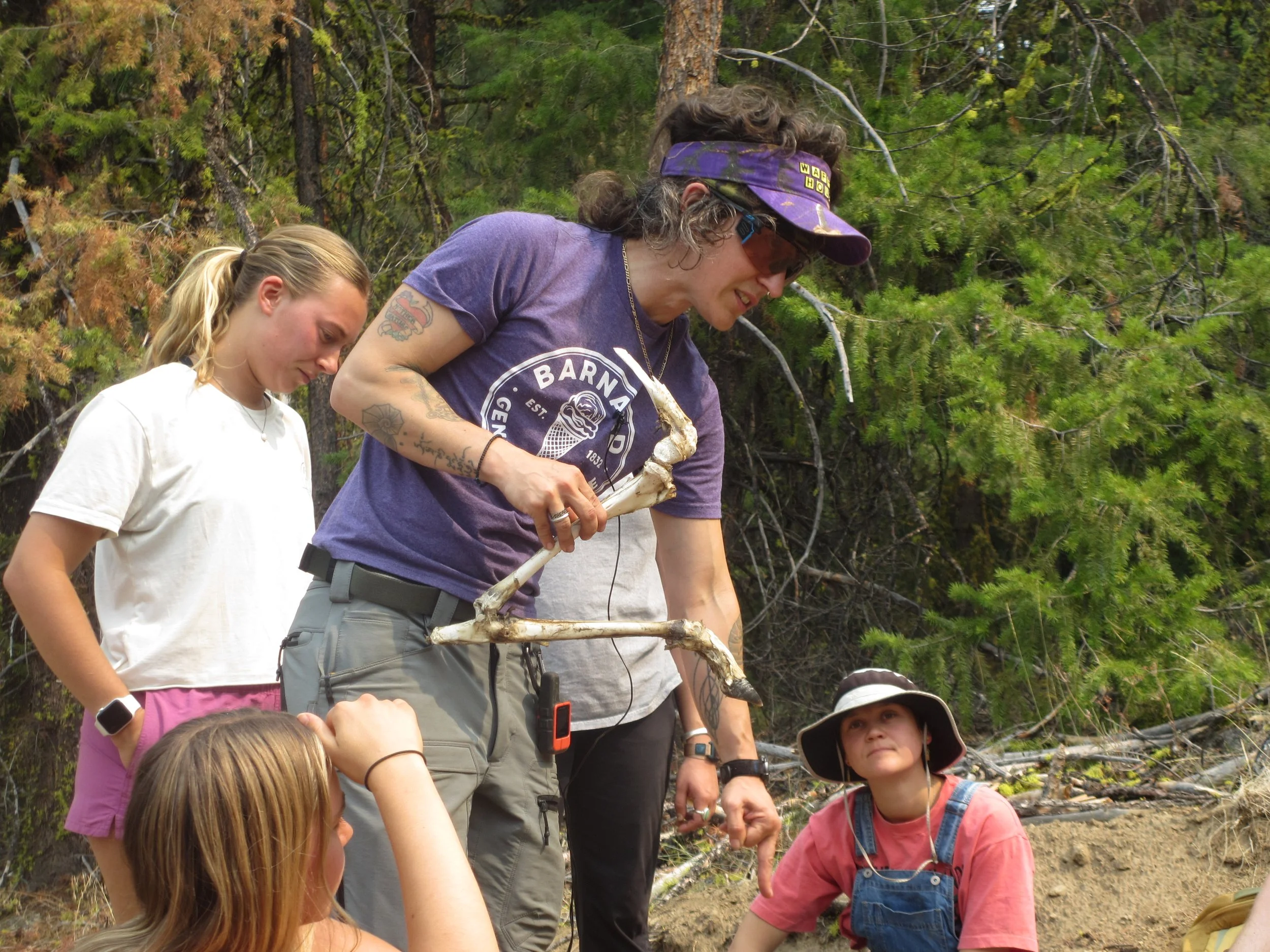
In the Methow Valley, we went animal tracking with So, Pinar and Nick. Bending over the faint footprints in the gravel, we trace our way back to what happened a week earlier. Did a wolf, or a coyote, step on this trail? Did they eat the last juneberries of the season? Wolves tend to travel together, and some of us asked how many are there in a pack? So said in late summer when the wolves have left, scientists go to the wolves’ old dens and count the beddings. Why do the wolves leave their old home anyway, the bedding that once retained their warmth, where they raise their children, who were too young to follow them on the hunt?
This summer on a late July day I was laying in the park in Budapest looking at my friends’ painting of humans dancing. Their hips were full, the legs were disproportionately larger than the rest of the body. They asked me if I ever thought about becoming something else, like if my hand could be elongated to reach over to the canopy above us. Or an octopus for example, then I would have eight hands to touch to hold and glide away. It’s an interesting thought. Sometimes an image of myself flashed back to me, like when we were on a car ride and I would catch myself in the mirror. A strange feeling ran through as I realized how far I have carried my body moving through the world. Now I imagine myself a wolf pup curling up with my family on a winter day.
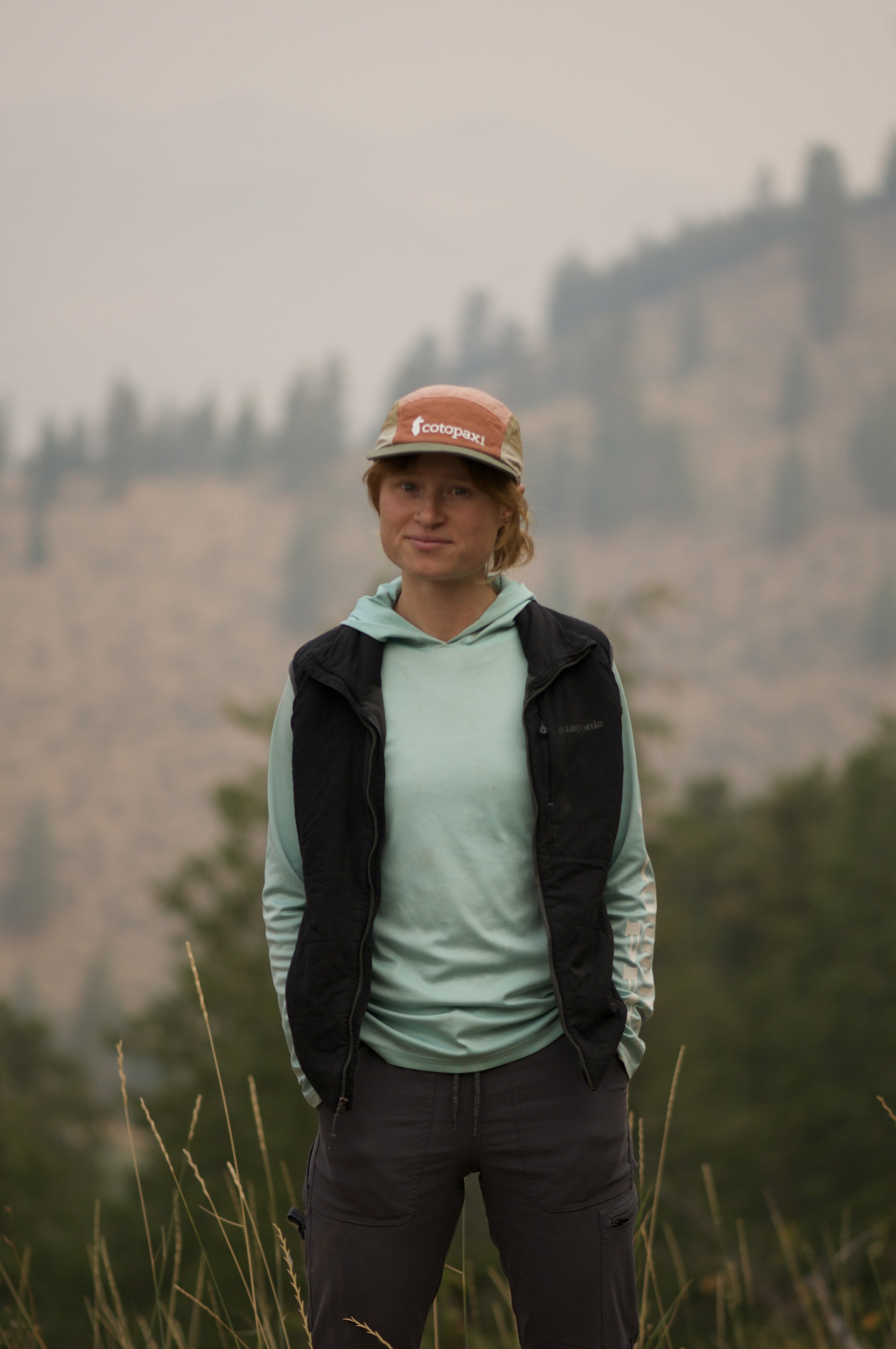
Science rarely approaches nature somatically, the body perceived from within. It is the word “nature” that has historically been used to classify what is socially acceptable. To exist in a world where we are detached from “nature”,Nick said to us: “That’s why queer people are not taught to reflect the image of ourselves outside. That the natural world is also queer”. Nick is passionate about lichen, a symbiotic relationship between at least one fungus and one alga species. As a plural form of existing, lichen defies the scientific definition of a species as a being that exists on its own. It invites humans into the act of imagination to expand our own skin and think about new possibilities of being and relating. Being queer then does not only relate to gender expressions or sexual orientations, but also means our relationships to things around us are different than the dominant culture. Relationships we thought we had lost and which seems impossible to have in this modern world where the market dictates how we ought to live.
In the Methow Valley, we met with Paul, a Methow descendent of the Nez Perce. He wore a T-shirt and jeans like the rest of us. He talked of the cultural trauma tracing back to the 1877 War and the relocation of Chief Joseph’s band to Colville Reservation. Paul was lucky to grow up with his grandparents in the reservation to know certain aspects of the culture, but as he moved outside, he saw Indigenous people whose lives are disconnected from the past. Many elders like his grandmother grew up with the legacy of the war, and were taught not to show any signs of being Nez Perce for their safety. Paul shared that an elder was adamant about disclosing sacred places, even with Indigenous people. One time, people from University of Washington dug up a burial ground for their study and never returned the remains.

“Joy, beauty, and meaning-making are possible, even in conditions of collapse, of fragmentation, of scarcity” - as So and Pinar wrote. Paul showed us that even when we cannot undo the trauma, what happened in the past that has left those marks behind had already happened; we can continue to leave our marks with good intentions. Together with other tribal members, he learns to practice the culture through gathering and cooking moss, which were forbidden after the genocide and thus not a part of everyday life for them anymore. Cooking together could be seen as a somatic practice that does not only remember the memory of the past, but also actively enact and make it a part of their collective existence, albeit differently.
I thought about when I was a middle-school student coming to English classes with my friends. A long time had passed since then, and now there’s none of that feeling when it’s kind of strange and exciting to use another language rather than my mother tongue to speak. In the ongoing rhythm it might seem irrelevant to remember the old times, to take into account the certain flashbacks that occur to us every now and then. But they are the footsteps that we have left on our way here, and mine have stretched a thousand miles from where I came from. Sometimes it’s worth it to crawl down and look closely at one, and everything around it, and try to remember what took us here and where we belong.