Liza Lebo: The Southern Ute Tribe: a Paradox of Extraction and Stewardship  

The Southern Ute Indian Tribe has no migration story. They were placed in the Rocky Mountains by their creator and have been there since time immemorial. With an acute sense of geography and ecological knowledge of the land, they followed the movement of animals throughout their homelands, from the Great Basin of Central Utah, to the Rocky Mountains and the Great Plains. Their way of life was, and still is, intrinsically connected to the mountains and the beings that inhabit them. Today, this same landscape provides wealth and prosperity to the tribe, albeit in a much different way. 

By 1880, the U.S. Government had forcefully removed the Southern Utes from their homelands, placing them on a small portion of agriculturally unproductive land, which is now only 1% of Colorado in the Southwest corner of the state. Their severance from their ancestral homelands and traditional food sources left the Southern Ute impoverished. Indian reservations are known for their remoteness, resulting in a lack of economic opportunities, social services, and access to nutritious foods. Until recently, the Southern Ute reservation was no different. 

A state-of-the-art museum surrounded by lush, artfully-designed landscaping was hard to miss when the Westies arrived at that same reservation to meet with tribal councilman Andrew Gallegos. A large steel structure towered above the entrance, an exaggerated version of the tribe’s traditional teepees. Inside, natural light poured in as Gallegos recounted the story of his people and how they changed the tribe’s economic trajectory. 

This modern museum reflected a wealth that the tribe achieved through the entrepreneurial efforts of their Southern Ute Growth Fund, which oversees a portfolio of companies and investments in real estate, construction, and most importantly, oil and gas. Unbeknownst to the U.S. government, the small strip of land that the tribe was forced onto would contain abundant reserves of oil and gas. There are now more than 2,000 producing wells on the reservation, and although only a tiny fraction of Colorado land, 15% of the state’s major oil development facilities are located there. These businesses have propelled the Southern Ute tribe to become the largest employer in the county. As of 2024, their assets are estimated at four billion dollars. 

This prosperity equipped the tribe to develop a world-class environmental program dedicated to protecting air and water quality on the reservation. Joaquin King, a member of the Navajo Nation and a Southern Ute Descendant, works for the program’s water division. He is a young, bright-eyed environmental scientist, passionate about his work collecting aquatic bugs and water samples, checking pH levels, and tagging fish. “I definitely just want to be a steward of the land… As well as the tribes downstream, I think we are all collectively shooting for one goal, and that’s to protect Mother Earth.” 

Listening to Andrew Gallegos about the tribe’s economic development and Joaquin King about their environmental work, I grappled with this seemingly paradoxical relationship. The scope of Joaquin’s environmental stewardship work is only possible because of the tribe’s profits from fossil fuel extraction. The tribe’s relationship with the land, one of reverence, stewardship, and deep ecological knowledge, is now complicated by their energy extractions that contribute to climate change. 

I was reminded of a landscape more than 3,000 miles away that at first glance is starkly different from the arid Southern Ute Reservation, but is quite similar beneath the Earth’s surface. My hometown of Anchorage, Alaska is known for its mountain landscapes, nearby glaciers, and ecological richness. Simultaneously, my city’s economy is fueled by oil and gas drilling and production. Many of the wealthiest people in our community work in oil. When the industry is doing well, our public schools, hospitals, businesses, and social programs benefit. As Alaskans, we profit from the industry that is warming our climate, melting glaciers, and harming our healthy ecosystems, the very things that make the state special.  

Alaska and the Southern Ute tribe participate in a lucrative industry that is causing environmental catastrophe. However, through oil and gas development and investment, the tribe has pulled its community out of poverty. The industry is employing and feeding their people, providing a quality of life that they otherwise wouldn’t have on the land that they were forced onto. Can anyone blame the tribe for taking advantage of the opportunity to bring their people out of economic, cultural, and political marginalization by participating in the fossil fuel industry? All of us are entrenched in systems of extraction. 

We often approach the fight against climate change as a black and white issue: fossil fuels versus green energy, greenhouse gas emissions versus carbon neutral. The paradox that the Southern Ute tribe uses their fossil fuel profits to provide first-rate environmental stewardship demonstrates that it’s not black and white. To acknowledge these complexities and the gray area is to approach climate work more realistically and comprehensively. 
Jeremiah Harder: The Plan to Kill 450,000 Owls

At the start of this program, what feels like forever ago, our professor, Eunice, posed us a question. She asked us what the word ‘wilderness’ meant to us. Whether or not we thought that somewhere in the world it still existed as untouched. This question lingered with me throughout the length of our journey.

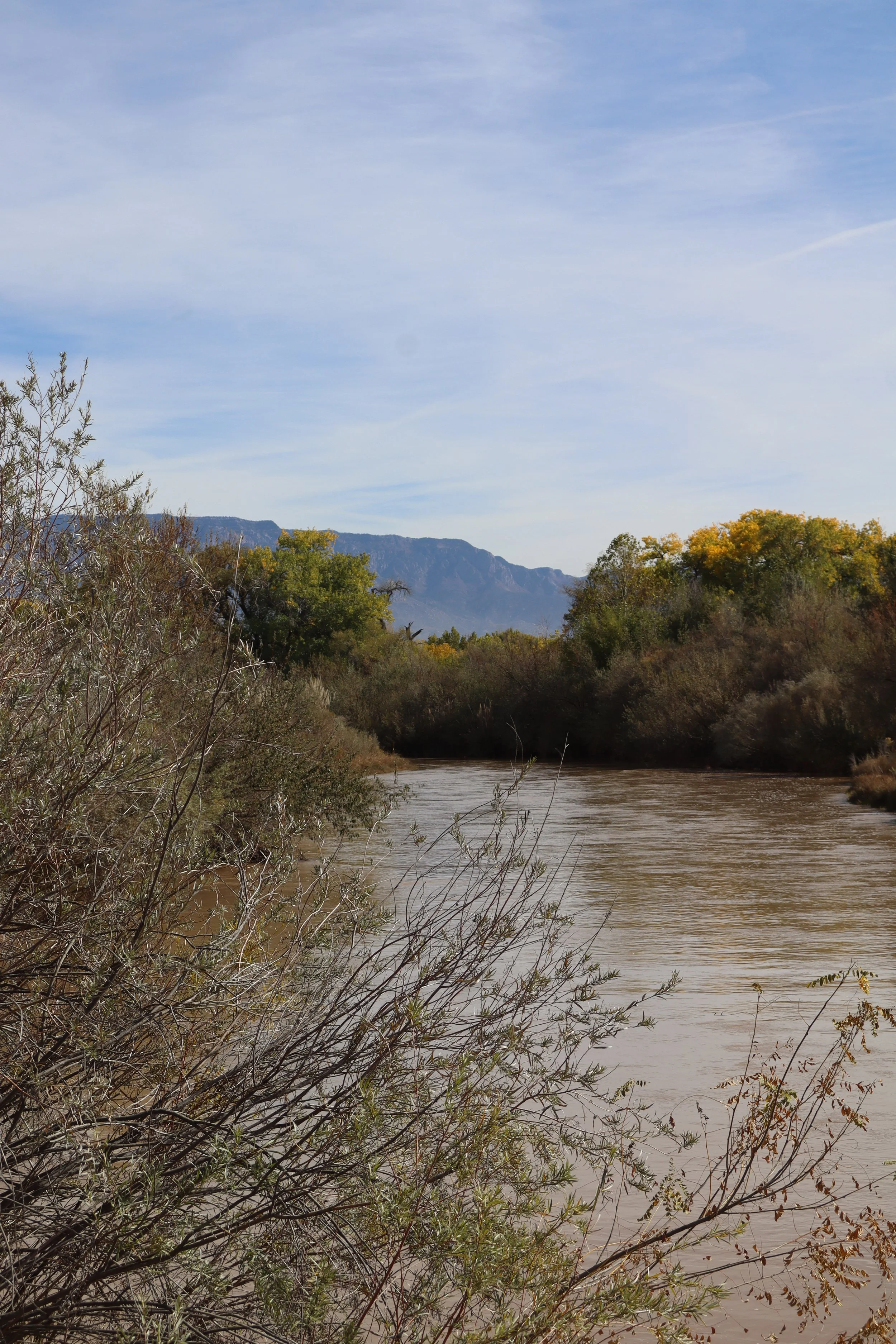
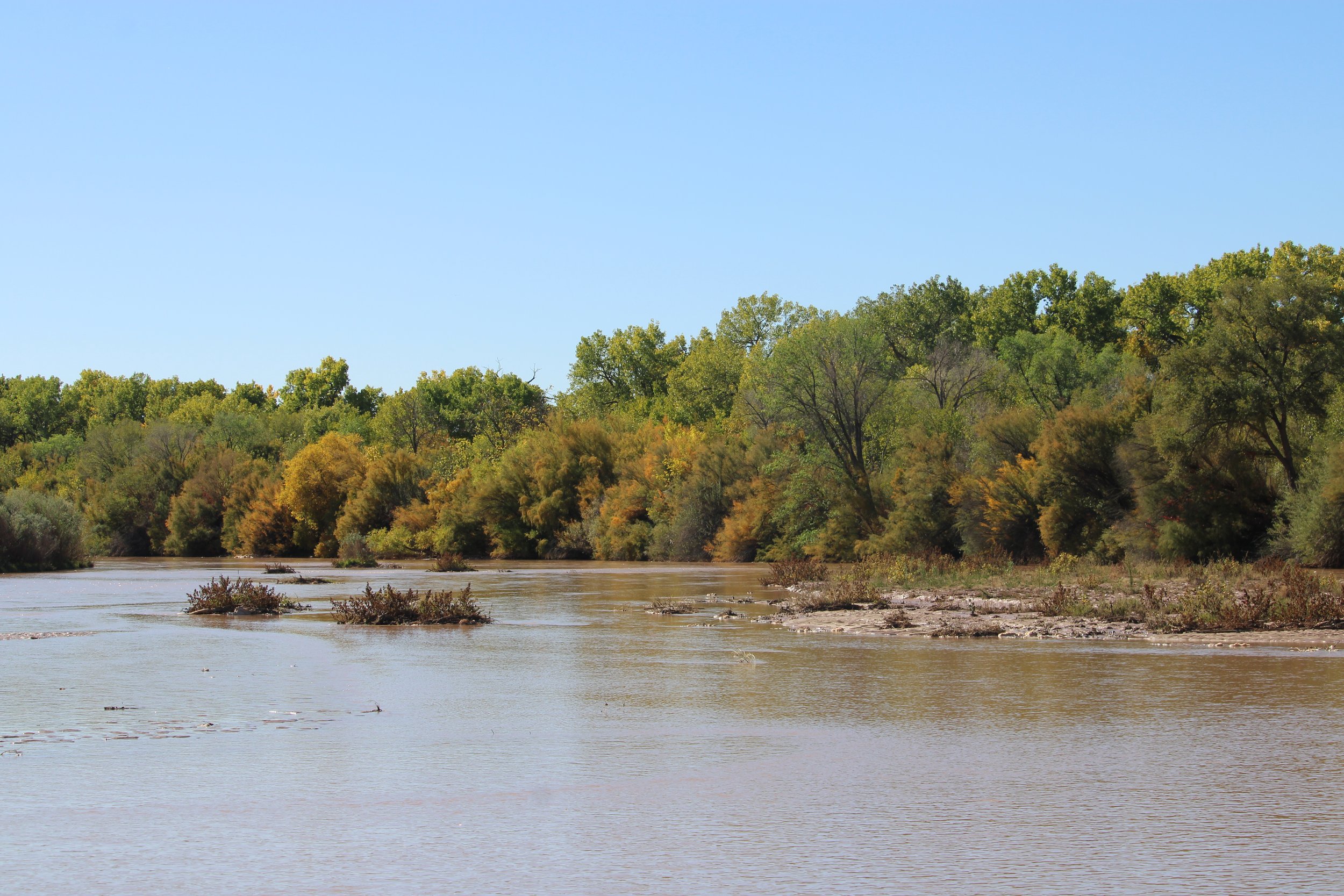
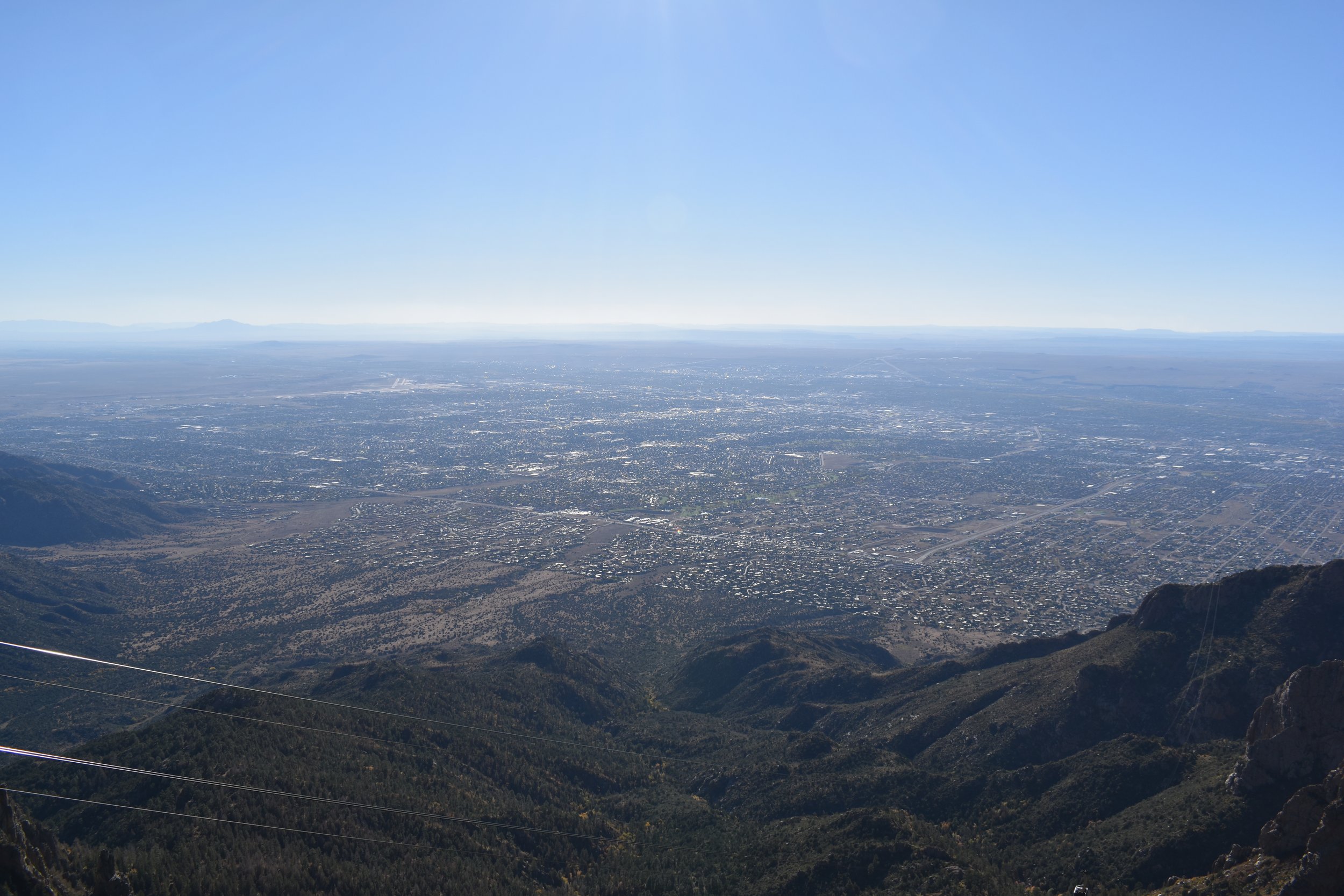
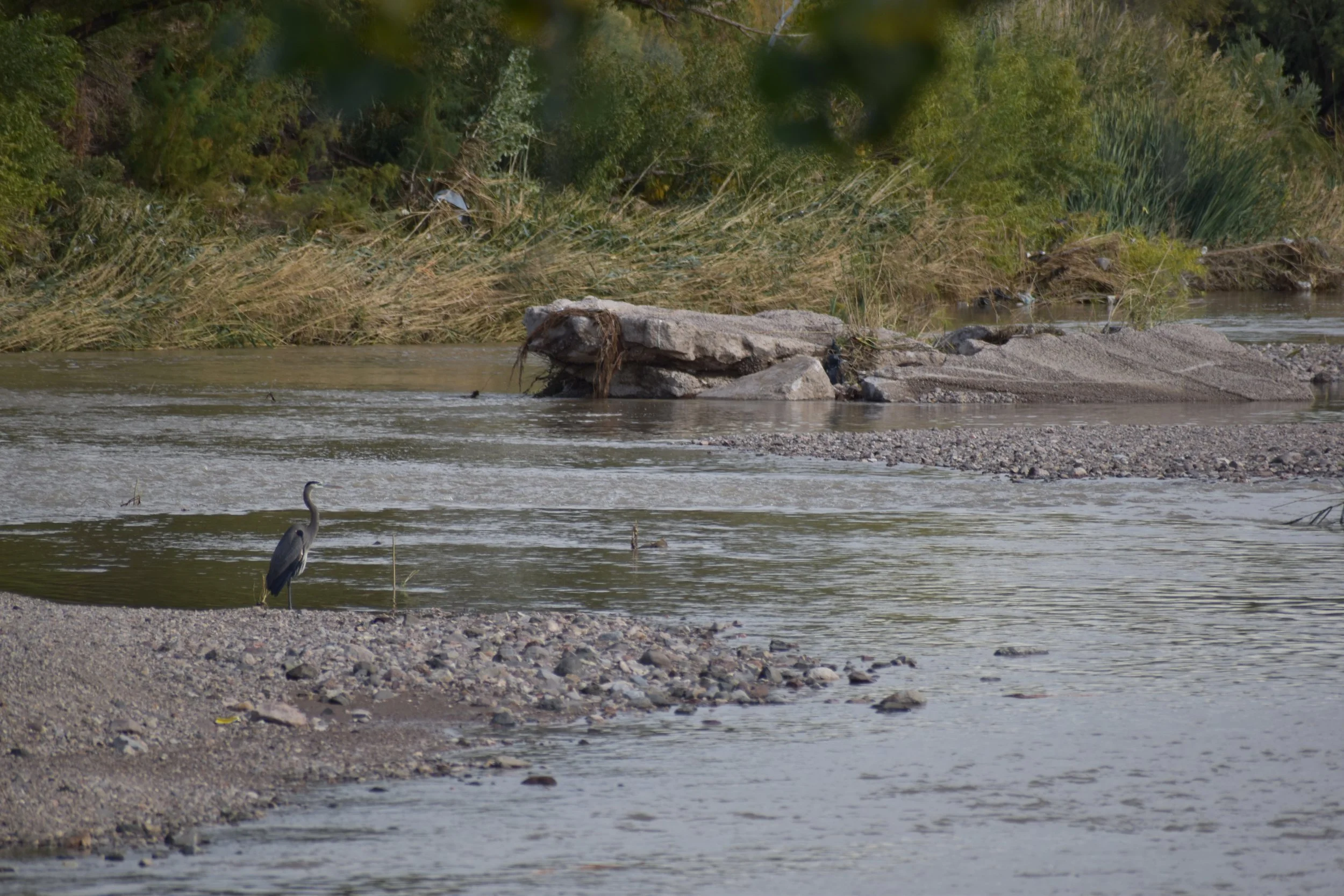
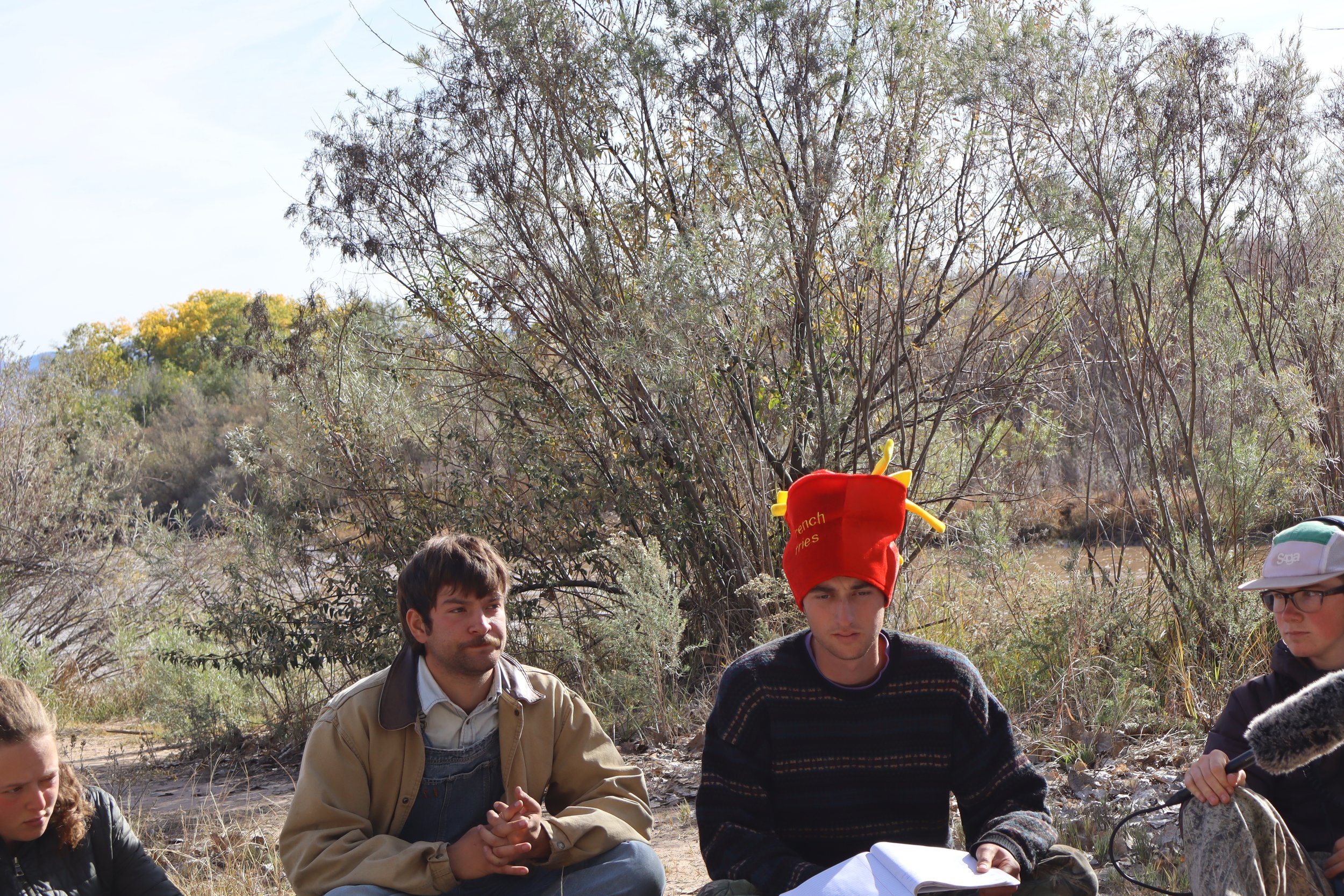
 At our stop in Albuquerque, NM, we met with Laura Paskus, an environmental journalist. It was Halloween, and we sat in a small clearing between the cottonwoods, dressed up in our costumes. We listened intently as she told us the spooky story of Albuquerque and the ghost of the Rio Grande.

Before European settlement, the Rio Grande meandered through the valley where Albuquerque, NM now stands. In the 1800’s increases in human activity dramatically changed this environment. Increased sediment input bloated the floodplain and the city was threatened. In 1941, the river, fueled by heavy mountain snows, flooded downtown. This flood planted the seeds that would grow into the Bosque, the cottonwood forest that lines the river today. The Bosque is a central part of Albuquerque, a forest in the desert that grows in the middle of a city of 500,000. However, it’s not long for this world. The floodplain that planted the now 80 year old trees no longer exists due to the building of the Cochiti Dam in response to the 1941 flood. The river no longer meanders or overflows, but moves through the city in a single channel. In 20 years, the cottonwoods will reach the end of their life cycle, and with no floodplain to plant new trees, the Bosque will disappear. 

When I learned that the Bosque was on the clock, I expected Laura to start explaining how people were working to save it. Instead, she talked about doing the opposite. Right now, the Bosque is the river’s largest water user. Keeping the Bosque alive would not only be expensive, but would require constant upkeep, there isn’t as much water in the area as there used to be, and new trees are water intensive. The environment has changed drastically from when these cottonwoods were planted, and mother nature can’t be expected to keep growing them now that the situation is so different. Preservation is no longer reasonable. Every aspect of our planet has been altered by human industrialization and climate change. Even the Bosque, which is the landscape’s adaptation from a change that happened only 80 years ago, is being forced to change again because of shifting environmental pressures. Losing the Bosque is a lesson in knowing when to let something go. While it would be great to live in a world where we can save everything, we don’t. '

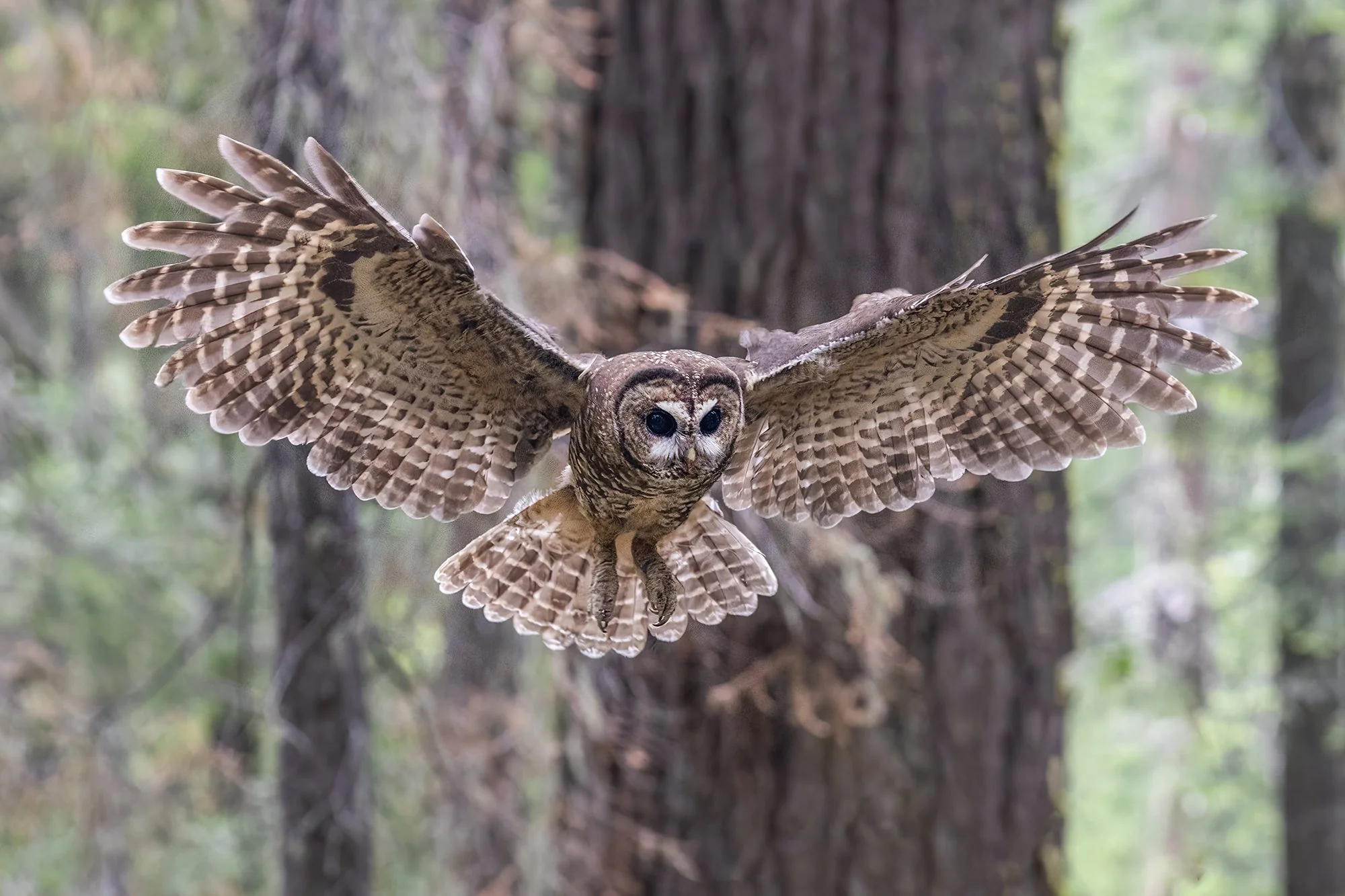
This is not an argument that we shouldn’t try to protect our ecosystems. This is an argument that it’s valuable to be able to tell when the amount of resources needed to protect an ecosystem is telling us that it’s a lost cause. This issue is not only found in the desert southwest. Another example can be found in the more forested northwest of the country, with the current United States Fish and Wildlife Service plan to kill 450,000 barred owls to keep the more specialized spotted owl from going extinct. This plan, which I like to call ‘the plan to kill 450,000 owls’ is estimated to cost upwards of $1.3 billion. Every species deserves to be protected from extinction, and the spotted owl is no exception. The spotted owl was at the center of what’s known as the ‘timber wars’ of the 80’s and 90’s. This battle to protect it, and the old growth forests it lives in, shaped how the Endangered Species Act is used as a preservation tool today. There’s a lot of debate on who won these timber wars, but the spotted owl certainly came out of them with better protections than it had before. Despite this, its population has continued to decline, hence ‘the plan to kill 450,000 owls.’ Although its struggle can be linked to the anthropogenic introduction of the barred owl, it’s time to accept that we have reached the point of severity where we maybe can do more for the ecosystem with the money it would take to save the spotted owl than saving the owl would.

As the program went on, my understanding of wilderness changed, along with my understanding of the extent of human impact. It’s clearer to me now that as a society we have altered every piece of wilderness on this planet. Knowing this, it’s clear that it’s unreasonable to believe that we can save every single species. If we are stuck too fast to this ideal, we will get bogged down in things like ‘the plan to kill 450,000 owls.’ We have to accept some losses if we want to keep making overall progress forwards. We can lose the battle and still win the war.

Katharine Graham: Fact or Fiction

A brown sign with bright orange lettering  protrudes from  the understory alongside the road. “Only YOU can prevent forest fires,” it reads. Smokey Bear stands proudly next to those words with a smile that says, “I’m here to protect the forest from all harm.” Smokey Bear has become an icon, serving to inform and educate the public. He is beloved by kids and looked up to by adults. Yet what made him truly remarkable is the impact that he had on changing public opinion about forest fires, creating a very convincing, yet inaccurate narrative that forest fires are entirely unnatural and harmful to the ecosystem.

Since its inception, the United States Forest Service has been working to eradicate forest fires, and their Smokey Bear advertising campaigns effectively spread misinformation about forest health. The Forest Service created a zero tolerance campaign, since they believed fires were a waste of lumber. Trees, they believed, were meant to be logged – and if they burned, no profit could be made. However, through suppression of fires for many decades, “fire debt” has accrued. Fire debt is a term used to describe the impacts of going multiple years in a forest without fire. Fire is a natural part of the forest ecosystem,  and when a forest goes without fire, flammable material accumulates. Inevitably, whether manmade or naturally ignited, a fire will come through  – and when it does, the “fire debt” that has accrued will cause the fire to reach higher temperatures, and cover more acres making it even more destructive. 

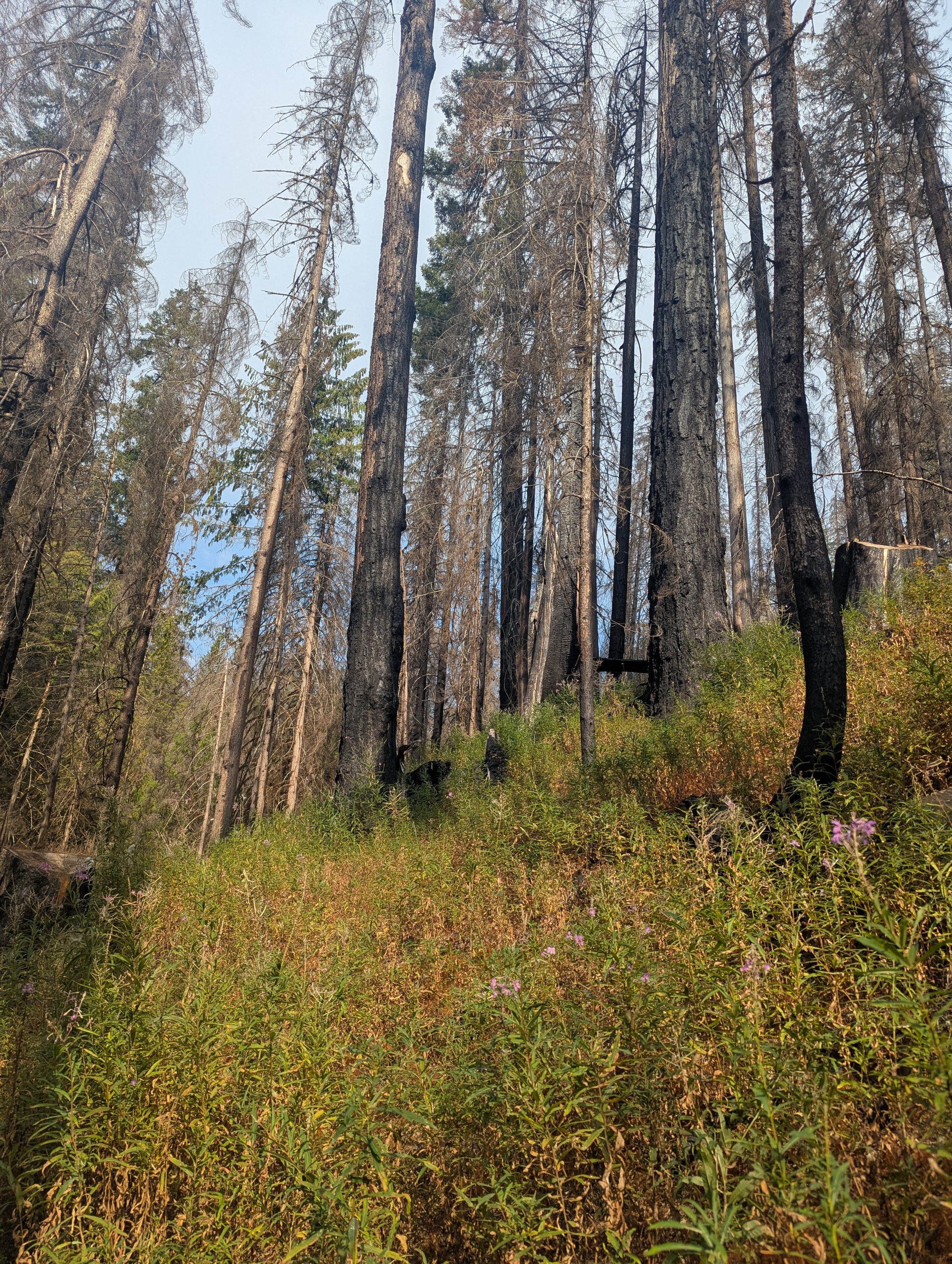
While in Durango, I saw the aftermath of the 416 fire, which burned 54,120 acres. The impacts of this fire were vast and many trees burned  – yet  some survived. Trees that are native to the ecosystem are fire-adapted. Ponderosa pine has thick bark allowing  it to burn on the outside yet while the interior remains unharmed. Lodgepole pine, another native tree, is only able to sprout after a fire has swept through, creating the disturbance needed to seed.


The best way to prevent large-scale fires is to allow forest ecosystems to burn more frequently. Forest ecosystems are built to withstand regular fires, yet the Forest Service changed public perception, which led to a misrepresentation of what is natural for a forest. As the narrative surrounding forest forest has slowly changed to acknowledge the harm that suppressing fire can have prescribed burns are becoming increasingly more common.

Though not a forest in the colloquial sense of the word, the reality of almond orchards in the central valley of CA are also being influenced by public perception. 

“A gallon of water is needed to create a tiny little brown seed.” This blanket statement about almonds was used to persuade the American public to drink less almond milk. At the peak of their popularity, this “fact” was an easy way for competitors to frame almonds as harmful to the environment. It was first brought to the public’s attention in an article in Mother Jones magazine. “Hipsters,” to quote the term used in the article, “Stop drinking all that almond milk.” Dialogue around this article caused almond consumption to plummet. Almonds became known as the water sponge of the west.In the long term drought that California continues to face, Almonds are one of the most commonly cited scapegoats.

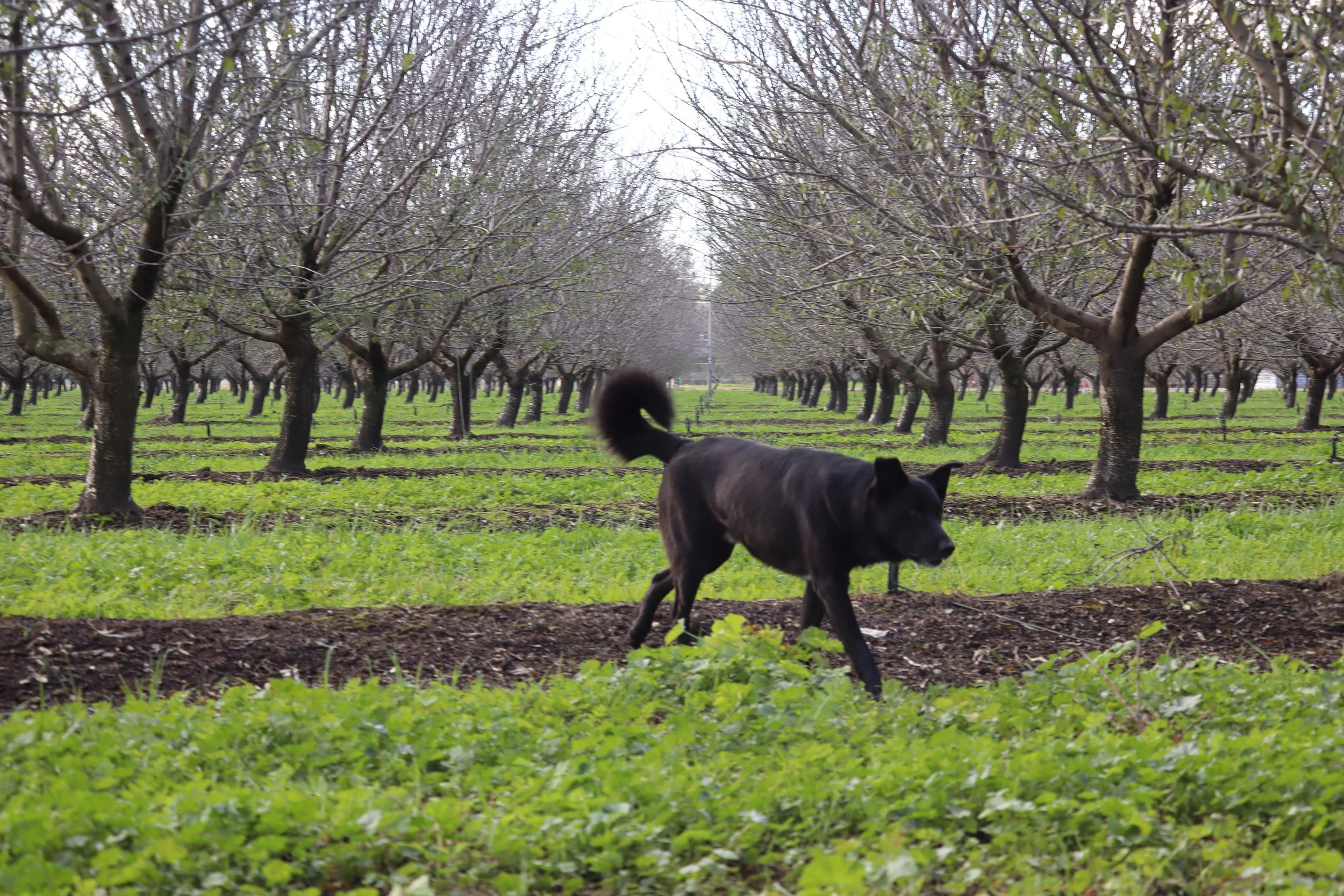
We met with Christine Gemperle in Ceres, California, in her almond orchard, where mustard and clover grew in between each row of trees and a beautiful wild hedge bordered the sides. Birds chirped loudly and her four dogs ran circles around me. I pictured the water pouring into each row of trees, soaking up this valuable resource, all for a nut we could live without. Yet, as we stood in the middle of the orchard, I learned how these trees incorrectly became the poster child for water wastage in the west, through a manipulation of information. 

One gram of beef uses four gallons of water, four times as much water as almonds. Christine combated the almond  narrative stating that almonds are shelf stable, high in nutrients, and every aspect of the almond has a purpose. Almonds are not wasted, they are non-perishable. Peaches, watermelons, and tomatoes, all high water users often don't make it to market in full yield due to their limited shelf life, and bruising. Almond farmers are researching uses for all aspects of almonds. Hulls, which are a soft pulpy casing covering the almond, are now used in poultry feed and can provide protection against salmonella. Almond shells, the hard outer covering, are being used for bioethanol fuel, a renewable fuel source.

Forest fires and almond farming, although seeming unrelated, have both been impacted by public perception, based on a narrow or incorrect narrative. Prior understanding of forest fires still impacts our woodlands today as we continue to live with fire debt. Reducing consumption of almonds seemed like an easy fix to address California’s drought, yet water use in the west remains a serious issue in agriculture, with consumers choosing to focus on simple solutions without understanding the broader problem. Perceptions can cause lies and misrepresentations to take the form of fact such as the two fallacies about forest fires and almond farming, easily spreading incorrect narratives that impact ecosystems for the worse. 

Katherine Finger: In the Face of Loss

The world is covered in roads. Roads for logging, mining, traveling, and recreation. But humans are not the first to build roads, for there also exist those built by animals. Before the first concrete road was laid, there existed what we now call “game trails”, connected in a great web that fueled the migration of millions of large mammals across the country. That web has been severed, and the land has been cut up and blocked into dozens of different types of “public lands” designed to “protect wilderness”, managed by government bureaucracy.

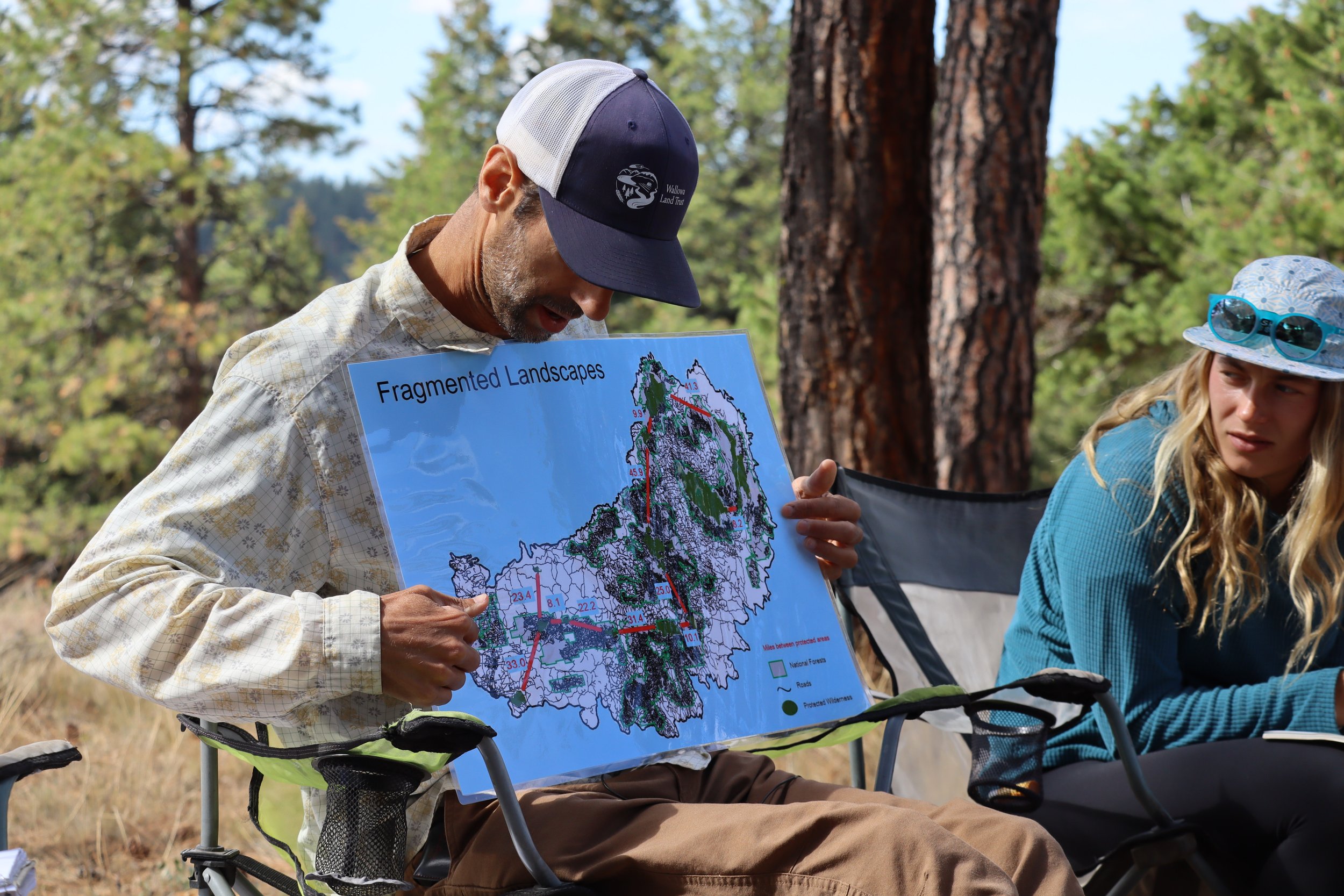
In Wallowa County, Oregon, atop Starvation Ridge in the Wallowa-Whitman National Forest, we meet with systems ecologist David Mildrexler. He explains to us that the threat to animals worldwide is habitat loss and fragmentation disrupting migration patterns. He passes out a map showing a large mammal migration range, the vast distance between “protected areas”, and where roads have been built. The map is covered in tiny black lines, in some areas so thick that all you’re looking at is a nearly solid black mass.

What exactly is “wilderness” in the United States if not places “freed” from human influence? Settlers set aside these lands for the purpose of “protecting them” from themselves, knowing that no other living being reads a map when deciding where to migrate. Even these intangible boundaries aren’t honored, considering the roads that have spurred the timber and mining industry to stick their fingers deep into the heart of places that were originally set aside to mitigate the loss generated by progress.

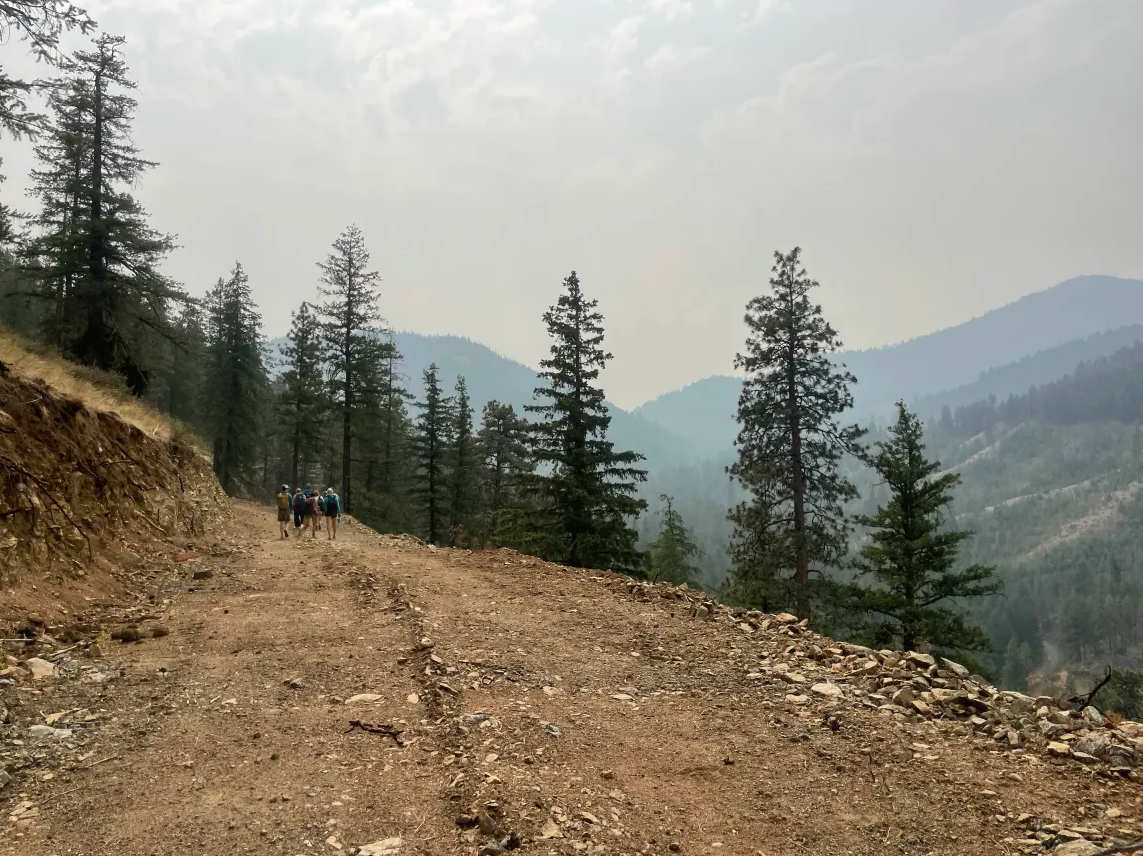
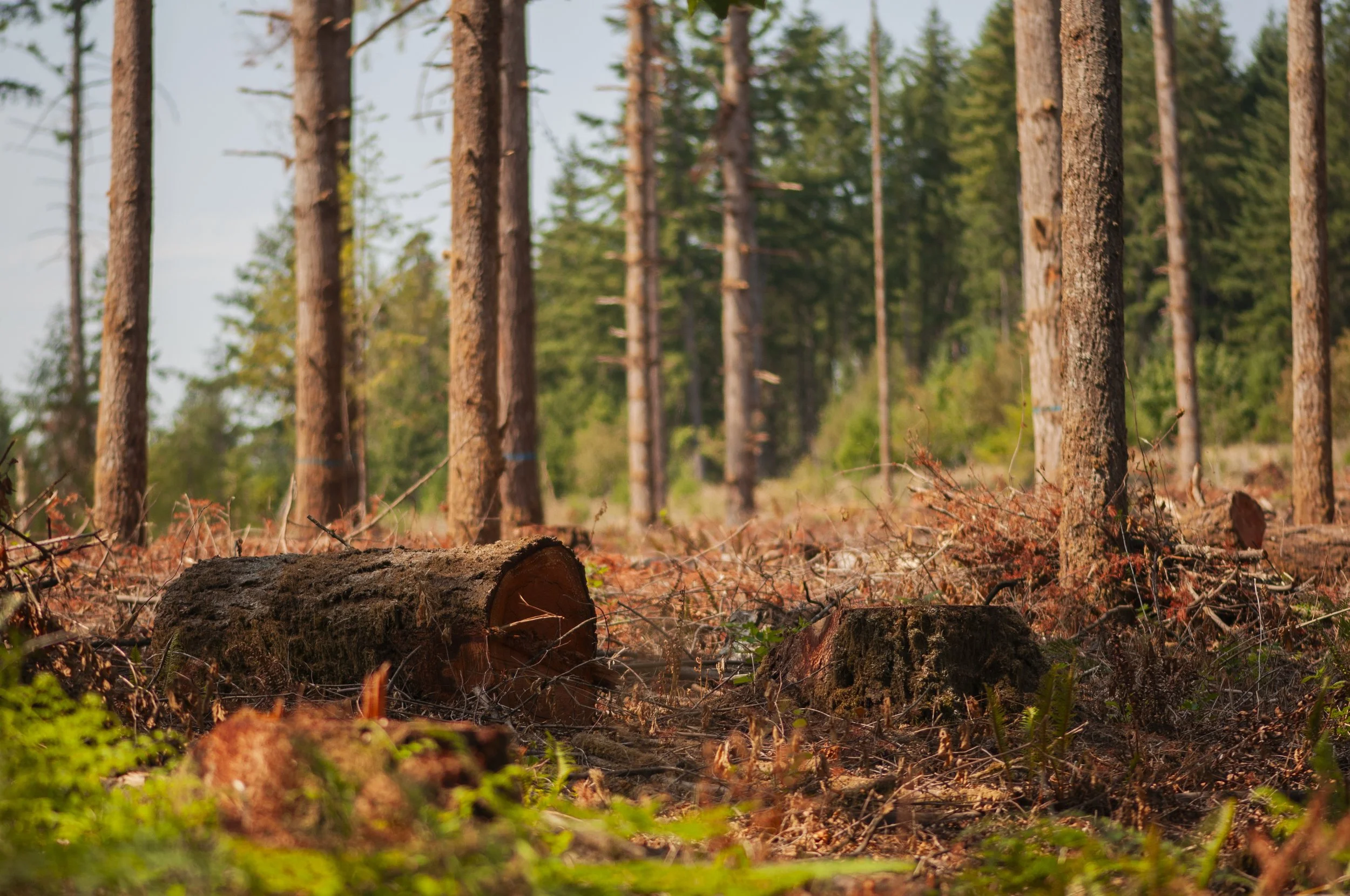
Where we walk within the Okanogan-Wenatchee National Forest, there is a suffocating quietness, broken only by the sounds of our bodies moving and murmuring. Our heads turn left and right, taking in the fragments of what once was a cohesive forest. Now, within the clearcut section, there are only stumps and branches concealing the earth below. It is only visible where we stand, where heavy machinery has clawed, and scoured the ground into a barren road. I feel the weight of the place, the stillness of the birds, the stillness of the breeze, of the dead branches. 

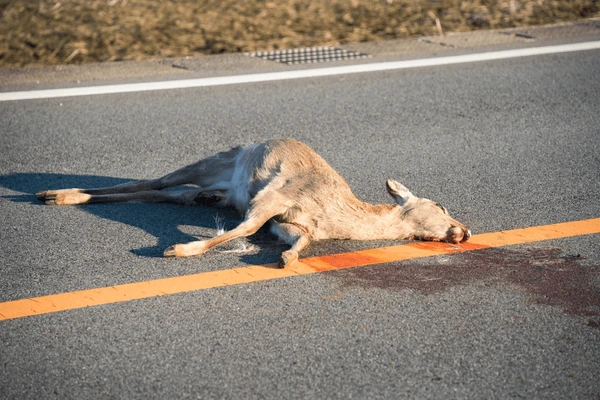
All across the West, both forests and deserts lay in ruins, carved and sectioned by roads built to carry the equipment needed to clearcut them or mine them. In their wake, both flora and fauna suffer, struggling to cope with the profound transformation of these landscapes they once were capable of moving across with ease. Roadkill lines every highway, each one frozen in death during their desperate attempt to cross. Not a day goes by where we don’t see at least one mangled body, often of a deer, their entrails strewn across the road.

The history of white settlement pales in comparison to the millennia that deer have spent traveling these lands. These animals are not to blame for their death, for they have simply followed the knowledge built by their ancestors, the instinct to move through these places despite their unfamiliarity. Deer continue to cross the road, even with the deadliness of rushing traffic, just as all large mammals do, because they have no other option. With tens of miles between what’s left of their original habitat, they have no choice but to simply try. 


Highways, of course, behave differently than your average logging road deep within a national forest. Where I stand on that road, I am surrounded by broken branches, torn earth, and a heavy silence that would be a rare treat along a busy interstate. Yet whether I am looking at a deer twitching on the side of the road, or whether I am looking at the memory of a forest, I feel the same yawning hole within. Grief. 

Do the deer feel the same when they tread softly along this road? I lean over to examine their tracks, stepping down from the bank onto the treaded earth where So and Pinar, founders of Queer Nature, suggest that perhaps the road may be nicer to walk on. They ask me to imagine the animal as they move through the landscape, to ponder the who, what, when, why, and how of their movements. I look at the tracks again. 

Even if they do feel the same, the same loss as they scan this place, searching for danger, they continue on their way, slow and cautious. The tracks lead down the road until they disappear into the ground, perhaps washed away by rains. The weight of the place lifts slightly on my heart. Despite the loss of habitat, the shift in their migration, the erasure of their ancestral knowledge, I know that they will keep moving forward, following the roads that existed then and exist now. They will not give up, they will keep on living.

Rio Burk: Agents of Preservation

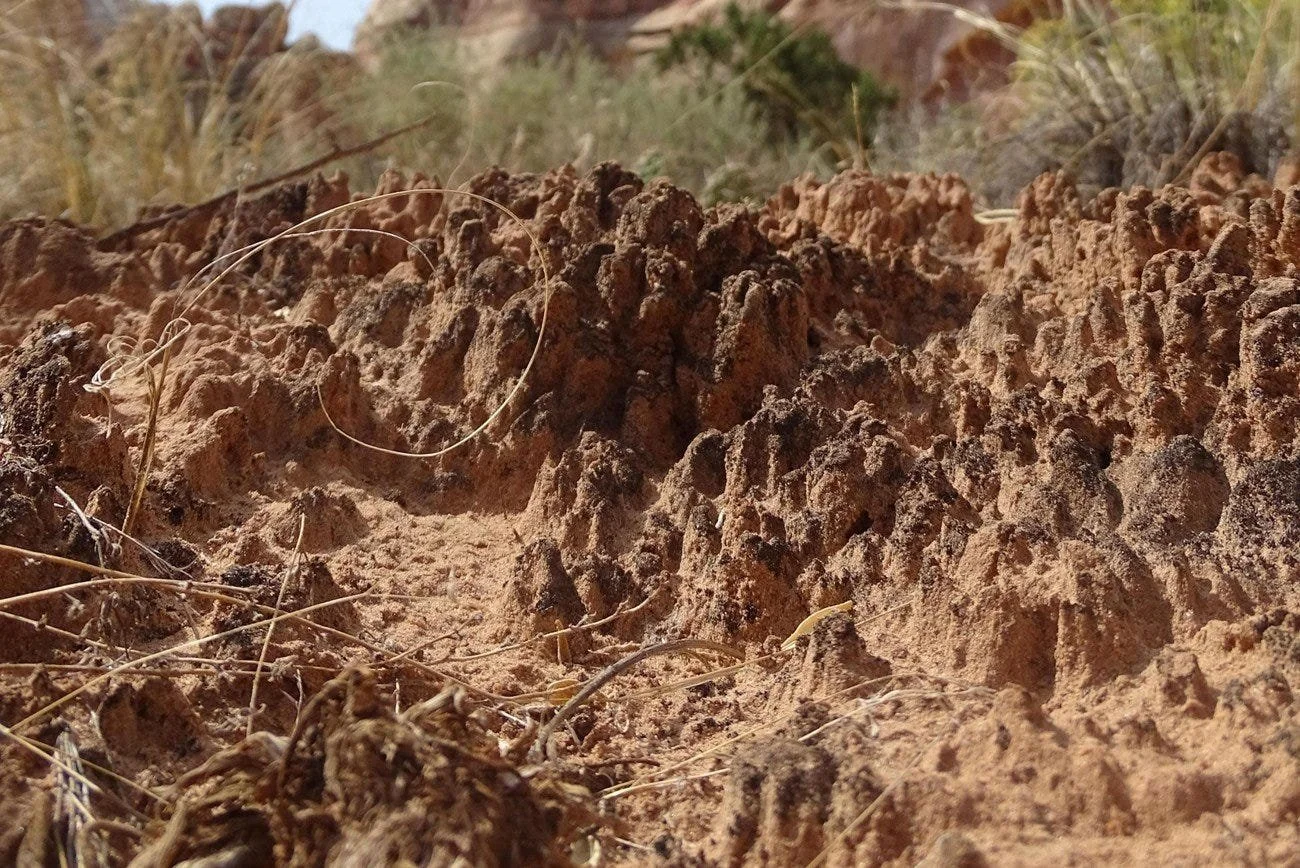
From someone else's perspective, I look crazy, jumping from rock to rock, eyes intensely locked on the ground where my feet land. I am, in reality, trying not to step on the cryptobiotic soil, a biological crust full of slow-growing life on the bedrock of Comb Ridge in Bluff, Utah. In the desert environment, this cryptobiotic soil is a crucial foundation for ecosystem productivity, carbon storage, and overall health. One footstep and it could take from decades to centuries to recover. I feel obligated to preserve the layers of fungi, algae, bacteria, and lichen. Sometimes, I would land on a small rock and find myself stranded on an island in the sea of crypto soil. There is nowhere I can go without being an agent of destruction, leaving my footprints in the fragile soil. I made these choices, these footprints, countless times during our week in Comb Ridge, and during that time, I learned about other choices of intentionally preserved life and history.

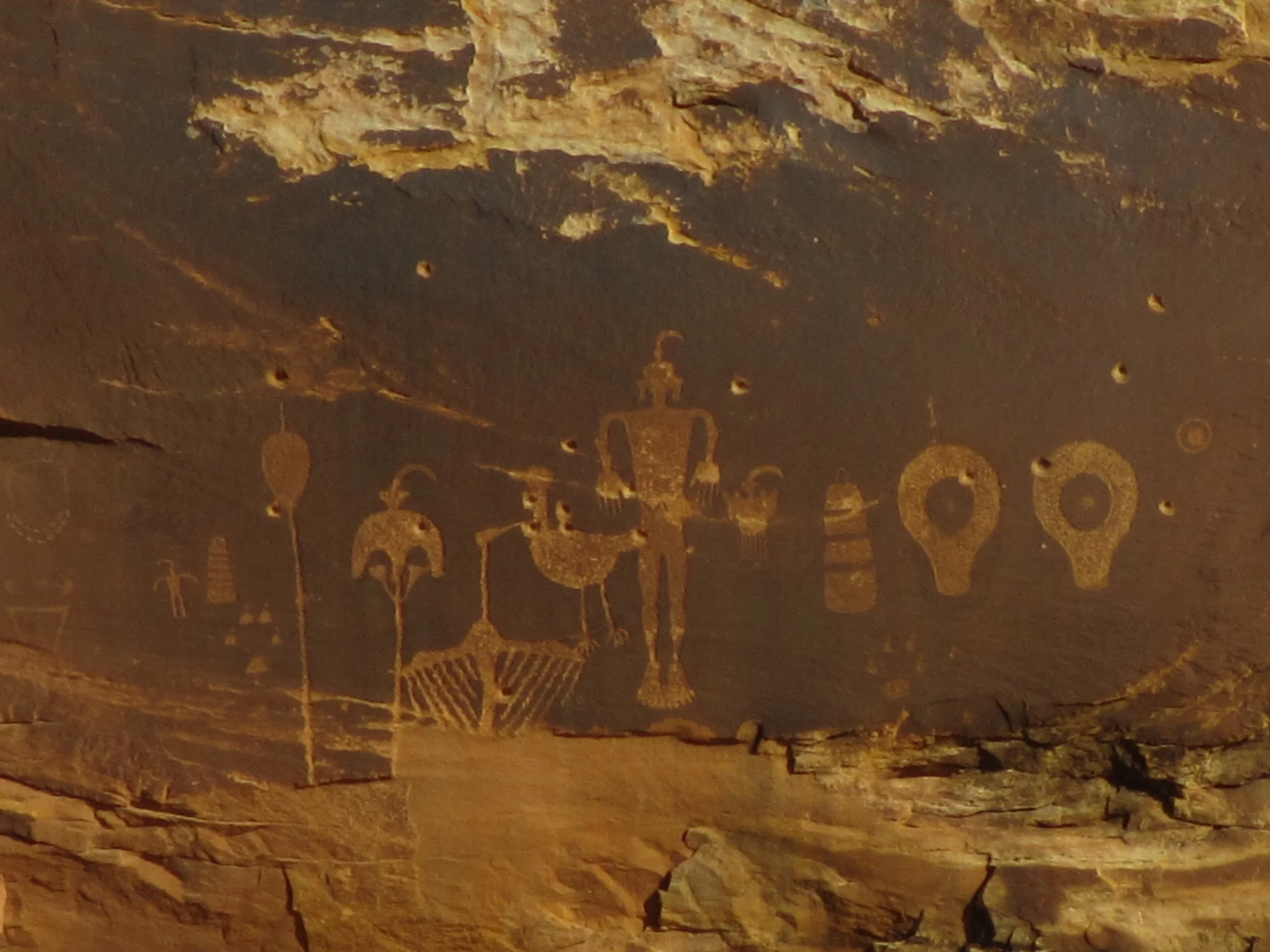
Joe Pachak is a dedicated artist and archaeologist whom we met during our time in Utah. Joe introduced us to his personal connection to the area’s history as we walked through Sand Island, a state park and one of many places once occupied by the Puebloan people since time immemorial. Most physically evident of this were the petroglyphs that Joe had brought us to see. Seeing this ancient art, I felt overwhelmed by a feeling of sacredness and awe. Here was evidence of human life and thought, centuries old, preserved, right in front of me. 

Joe shared this wonder, describing the intentionality of art and how its very existence proves its importance. The carvings resembled things familiar to us today, human bodies and four-legged creatures, orange against the black varnished rock. To interpret them is a challenge; Joe connects them to evolution and survival. He says that the rock images were something they were doing to increase the possibility of life. These rock images shared and showed what was most vital, information people needed to live on. For example, some rock art indicates fertility through twin circular symbols as well as anthropomorphic beings with vulvas and lines connecting to each other. Other things were carved too, such as atlatls and fending sticks, as well as ways to orient, spirals that a shadow would hit differently depending on the time of the year, an example of ancient astronomy. These panels depict a plethora of knowledge rooted in their strong relationship with the “natural” world over a millennium. Joe says that where these carvings concentrate became meeting places and landmarks for navigation, a place shared amongst travelers and artists alike. Perhaps these generations of people understood the importance of recording their cultural knowledge. 


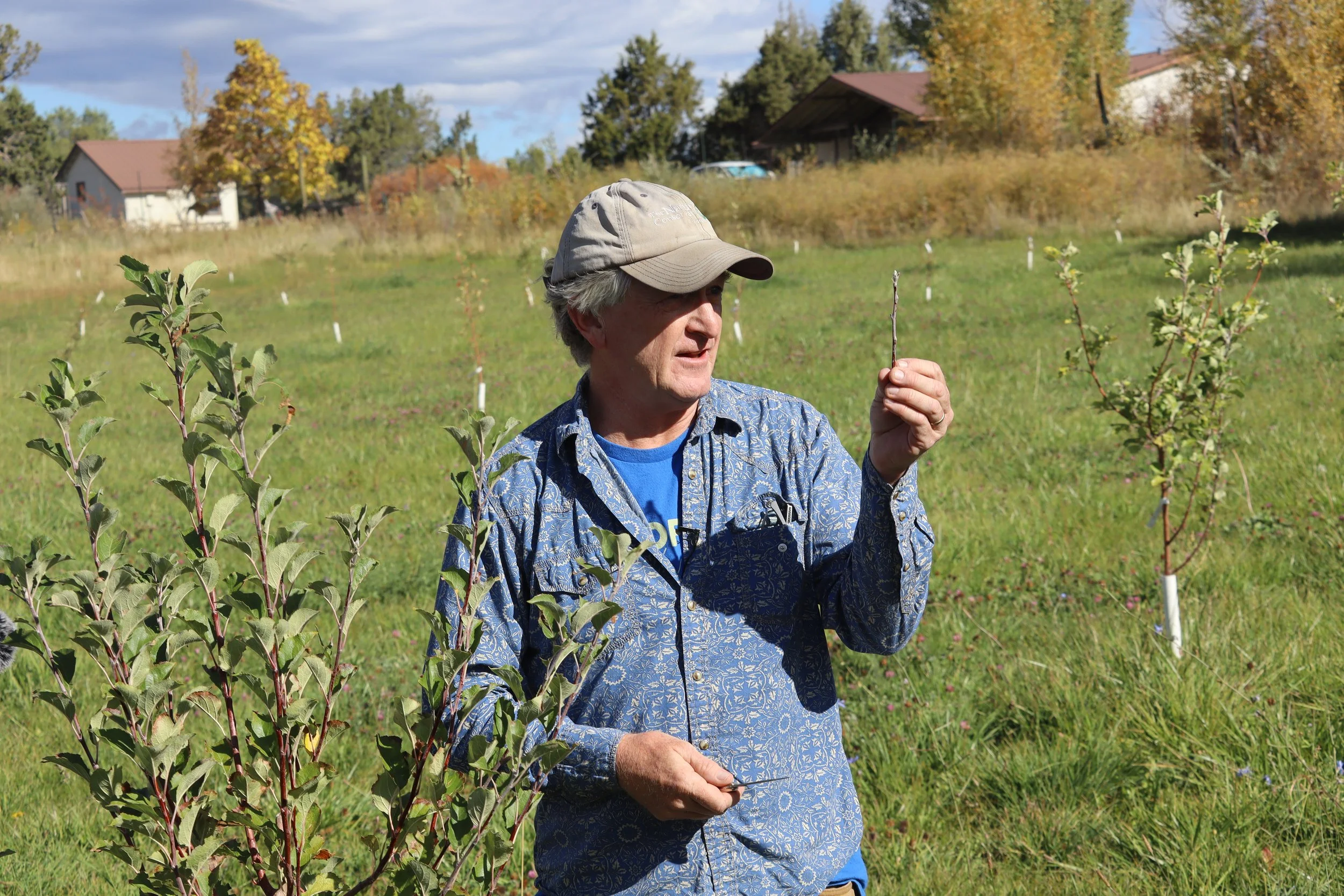
Jude Schuenemeyer, of Montezuma Orchard Restoration Project, practices this philosophy through apple horticulture. Jude and his wife, Addie, have spent the past 24 years collecting, growing, and identifying rare and near-extinct apple cultivars. His work is rooted in remembrance of the past for the sake of the future. Of the 20,000 historic apple varieties America once had, only 6,000 remain today. Jude explains that this loss occurred because cultivars can only be sustained through human interaction, by grafting a branch onto a rootstock. As agriculture in America has become further streamlined with increased efficiency and shelf-life, cultivars have become devalued, forgotten, and lost. 

Jude, however, values this knowledge. He believes that we, humans, are symbiotic with the trees, in which their sustained life and ours are mutual. Preservation of any history is this way: if we do not view something as valuable or worth preserving, it’s forgotten and lost. Joe, for example, has recorded rock art that is now gone due to rising water levels created by dam construction. Although the original is gone, its existence lives on, through ancestral memory, and thanks to Joe, painted on the walls of the Edge of the Cedar Museum. If history or knowledge can be owned, preserving it should not grant ownership. Joe and Jude are two people dedicated to this mission, stewarding for its continued remembrance and dissemination. 

Preservation is incredibly nuanced. For Joe, it means recording and sharing so Indigenous knowledge and history are remembered in the future. For Jude, it means growing the past for the sake of its future existence. Both Joe and Jude preserve what they deem as valuable, whether it be physical evidence of evolution, identity, and culture-making, or historical ecological diversity. Maybe the Puebloan and Basketmaker people thought similarly, wanting to sustain a future and preserve their culture through art. These choices shape what exists and what is known in the future, culture, and life itself. Jude says, about his work, “You don’t need to see the future to impact it.” Perhaps this is the way we should treat the world and all it has to offer. I am not trying to preach keeping everything on Earth the same; that’s unrealistic and ignores the dynamism of life itself. Instead, I hope to recognize the actors that influence what knowledge we preserve. If I were to trample all over the crypto soil, there may be none to come back to, only the carbon released and the plants dry, devoid of nutrients. Why not instead, I jump around, led by my values and morals, to let history live and create itself. 

Hollis Wilson: The Return of Wolves to Landscapes Allocated for Cows

The last lone auroch died in Poland in 1627, with no others of her kind by her side. For nearly 2 million years, the species had been a strong ecological force across Asia, Europe, and parts of Africa. Then domestication began, transforming aurochs into the modern cow. While domestication paved the way for agriculture, and therefore civilization, it was ultimately the downfall of the aurochs. As livestock numbers expanded, they lost habitat and were exposed to diseases carried by their domesticated counterparts. Overhunting restricted their populations further, until the last individuals survived only in royal hunting reserves within Poland’s forests.

Just four years after the last auroch disappeared from the world, cows were introduced to the East Coast of North America, beginning a spread westward that would eventually make them a cornerstone of American culture. In the Pacific Northwest, cattle became widespread about 200 years ago, when the Gold Rush drew settlers to the region and created permanent communities. Cows quickly became a staple food source and have remained so ever since.

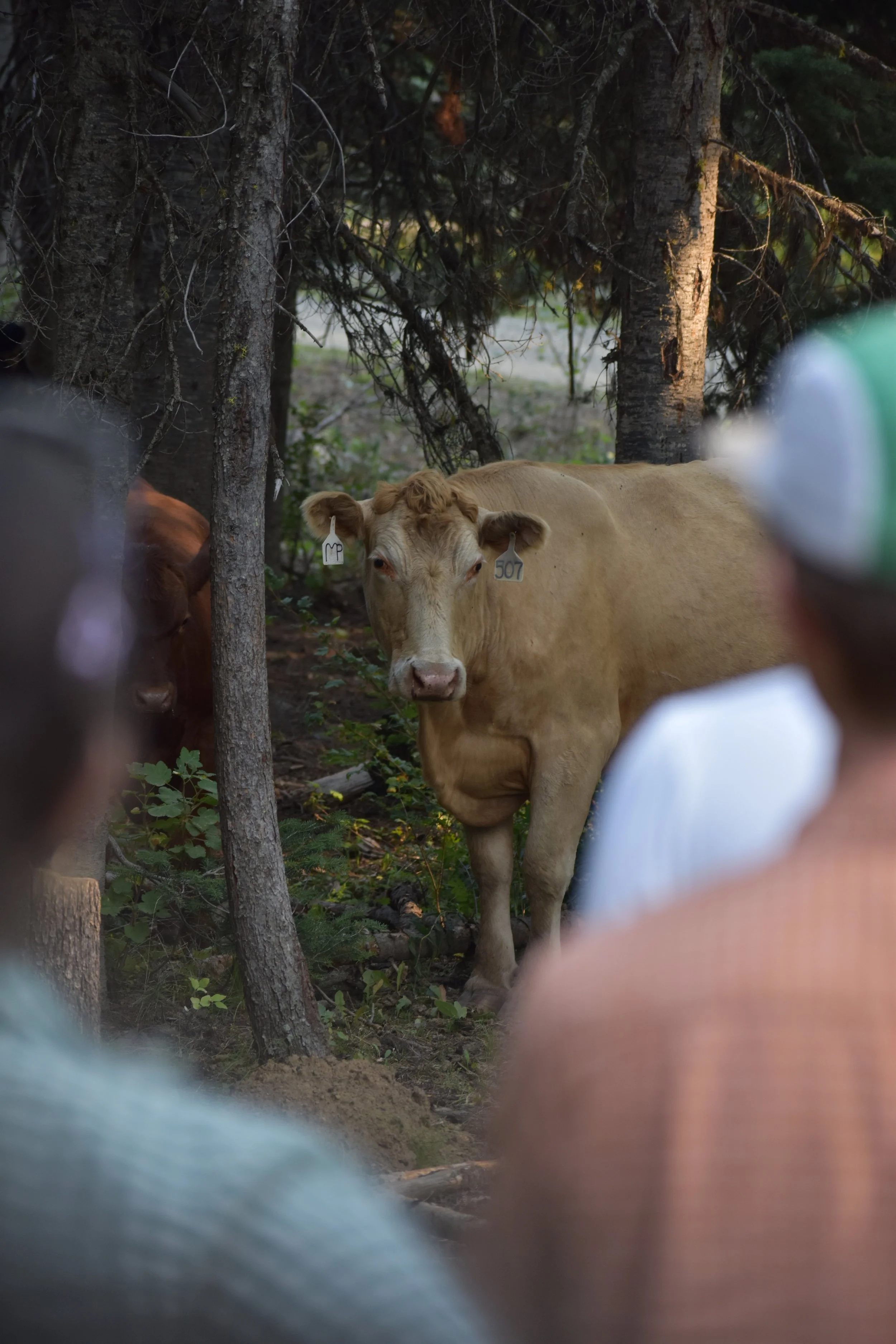
Though cows are not native to this region, they do not feel out of place on the rolling hills of the Methow Valley in central Washington. Deed Fink, a lifelong third-generation rancher, leases grazing rights on those hills for his herd. The cows move easily across the landscape, unaware that their presence is part of a much larger ecological story shaped entirely by human choices. They fit into these spaces because we altered the land to make room for them. As a result, landscapes have become overgrazed, and with fewer plants and root systems, soils are more prone to erosion, increasing sediment content in rivers. Overall, the shift from past native grazers to cows has left these systems strained, and as agencies attempt to restore healthier conditions, new conflicts emerge. For Deed, one of those conflicts is wolves.

Wolves, unlike cows, carry the opposite history in this region. Once abundant across North America, they were hunted and exterminated to allow the livestock era to boom. Their disappearance contributed to ecological imbalance throughout the West, especially as deer and elk populations expanded without predation. But restoring wolves is complicated, not only ecologically but culturally, economically, and emotionally.

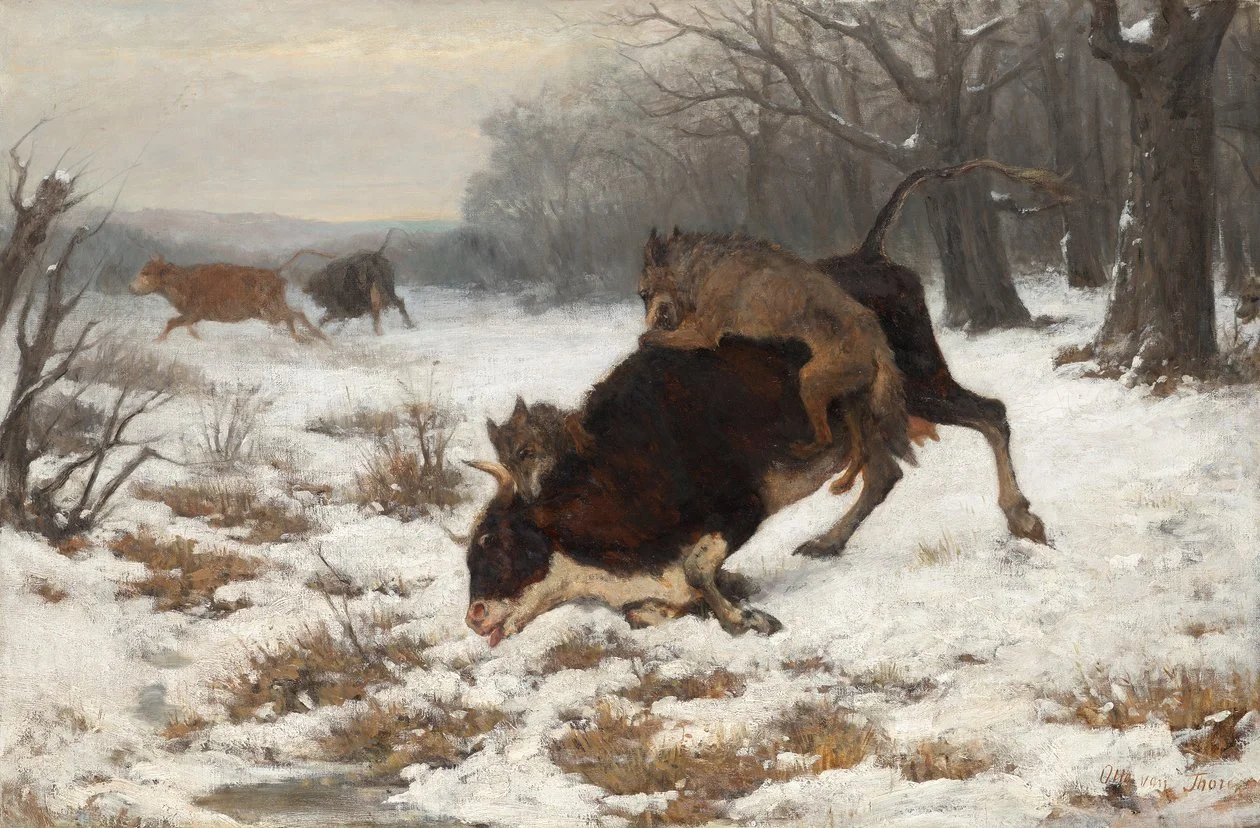
Washington’s wolves returned naturally from reintroduction programs in neighboring states, but Deed sees it differently. For him, the reappearance of wolves is a decision agencies such as the Washington Department of Fish and Wildlife (WDFW) made with little thought for the small ranchers it would affect. Wolves do not care that cows are non-native; to a wolf, a calf is simply prey. Deed described the scence, “It's a fight and it's an ugly fight, because you get four or five wolves after a cow or a calf, and they're fighting for their lives.” The first time Deed lost a cow, “There was carnage everywhere… And so, yes, it is sickening.”

There is an added devastation in knowing that little will come from this loss. The WDFW Wolf Resolution Program, created to compensate ranchers for cattle killed by wolves, rarely functions as intended. Deed explains that it has been nearly impossible to get someone from WDFW to confirm the kill, and even harder to receive compensation. Regardless of the action he takes, he has yet to see positive results, making the time and emotional energy required a cost few ranchers can afford.

But while Deed’s pain is real, cows exist here because humans shaped entire landscapes to accommodate them. Wolves existed in the West long before settlers ever stepped foot on these soils. And while we tend to view cows as harmless or even natural because they have become an integral part of our society, they are a human-created force, far removed from the aurochs that once shaped landscapes through movement and coevolution with predators.

The tension between cows and wolves is not about the animals themselves but about the effects their dynamic has on humans who created a world where domesticated cattle replaced wild grazers, predators were erased, and landscapes were managed for production instead of balance. Now wolves are returning to systems shaped around the cow, not the other way around, and the friction is unavoidable.

Standing in the Methow Valley, watching cows drift across the hills and hearing their low calls blend with Deed’s fears for the future of the West, it becomes clear how out of balance these ecosystems have become compared to the lands aurochs once helped manage. Aurochs moved in ways that kept everything else in check through their grazing, creating diverse landscapes that cows, a indroduced grazer, don’t fully replicate. Today, cows and wolves meet in spaces that carry only faint echoes of stable ecological relationships where predators and grazers worked in tandem. If we cannot find a way to cultivate healthier, more resilient ecosystems, ones with more room for predators and less pressure from grazers, then there will be more soil erosion, and polluted rivers. These systems will continue toward imbalance, until they eventually vanish just as the aurochs did.

Ashley Hagen: Life of a Log

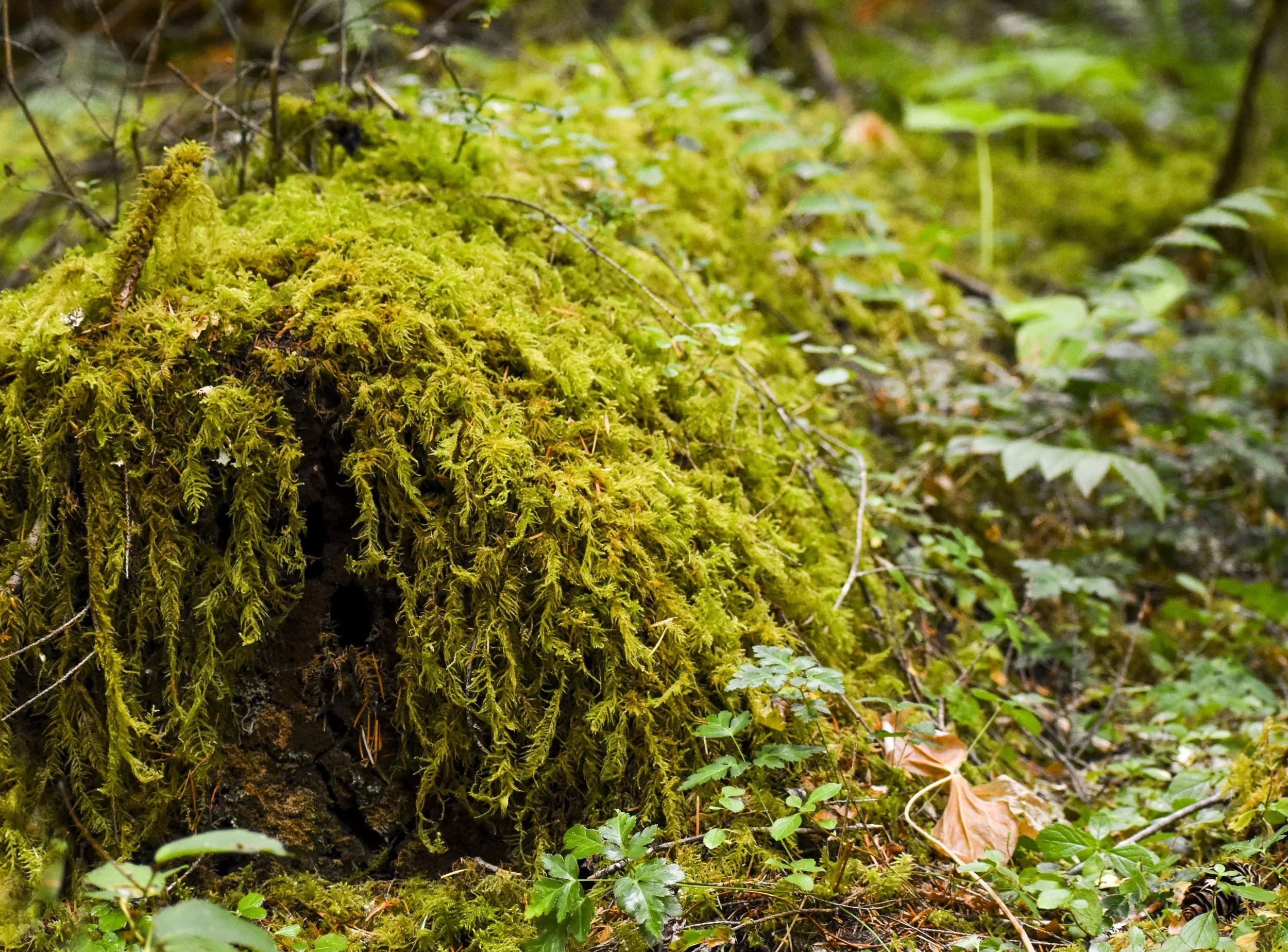
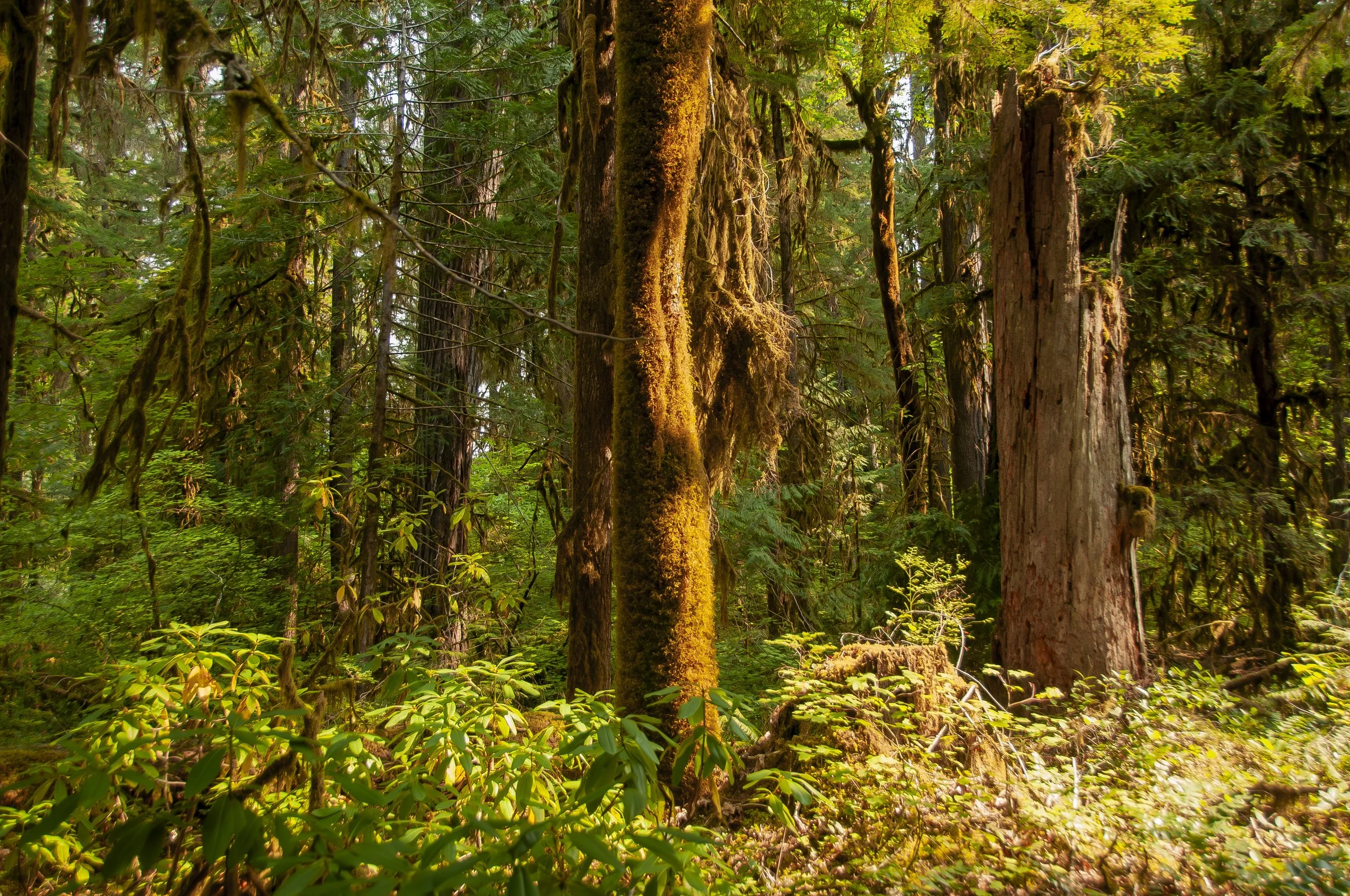
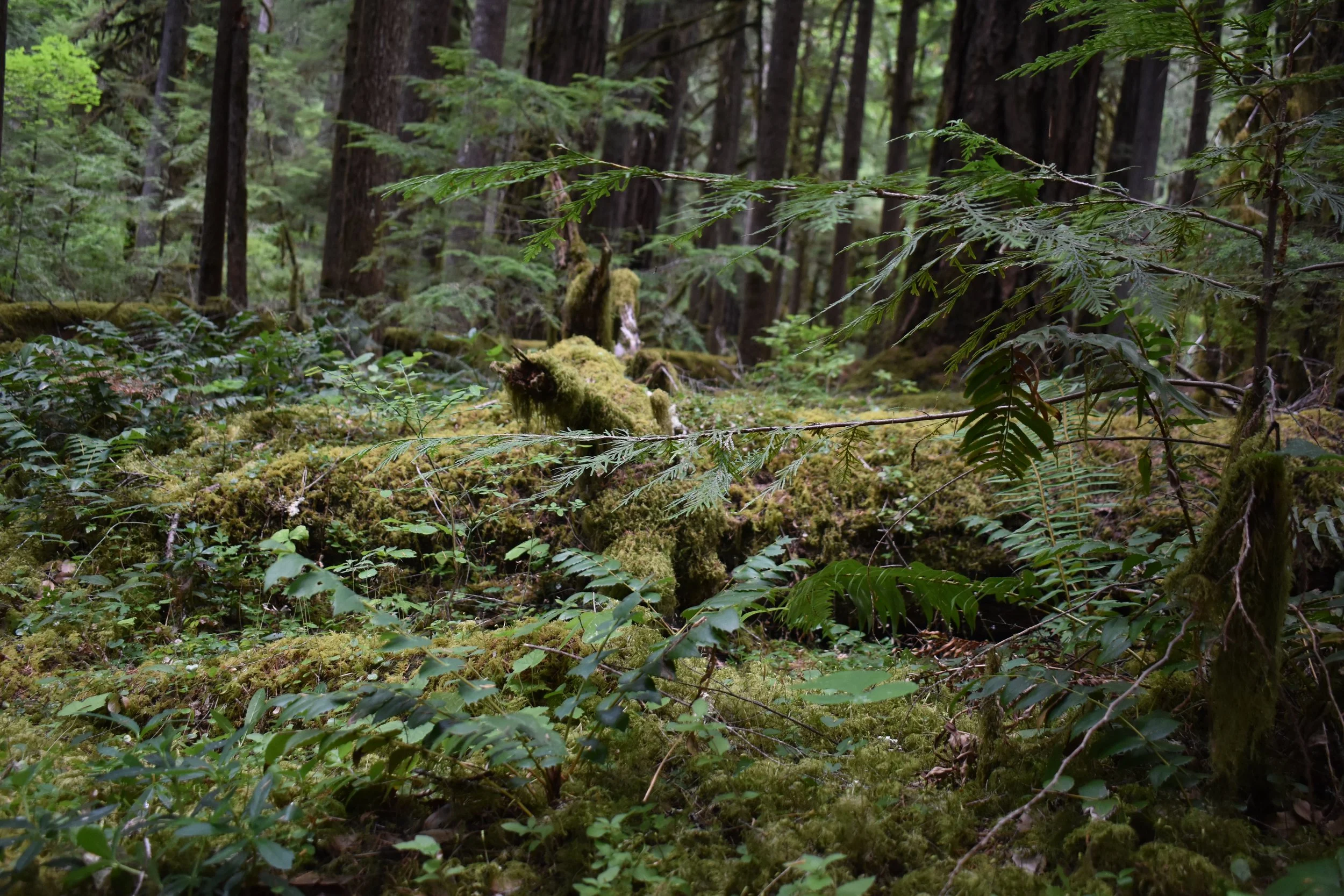
Sun beams burst through small holes in the hanging mat of moss, causing the yew to lean towards the forest floor. A few light beams point towards a mysterious mossy lump on the ground. Along this lump, ants file in a line, moving quickly in an early morning rush. A spider weaves its web along a small tree sprout popping out of the lump. Mushrooms are scattered, each of them holding droplets of water. A beetle meanders through lichen that is taller than its antennas. Within seconds, it’s gone as if entering a secret door. I tilt my head and it becomes clear that beneath the lump of moss is a log. 

Birds chirping, leaves rustling, mosquitoes buzzing: this forest offers what feels like a peaceful silence to a human visitor. On the outside, it does just that, acting as a safe haven for many to recharge. This was exactly what I was reminded of when I was tasked with sitting silently in an old growth forest for one hour. My only purpose was to observe. I noticed the birds, spiders, and flies instantly, but it took time for me to notice the log, yet when I did, it sparked curiosity about what life it helped foster. Within my hour of observation, I watched how everything interacted with that log. I was so intrigued that when my timer went off, I stopped it and continued watching the ants file by. 

With massive trees towering over me, it is easy to miss the entire world of life that exists on the forest floor. Old growth forests like the one at the HJ Andrews Experimental Forest fosters a highly diverse ecosystem. Our group met with Mark Schulze, the director of the Andrews Forest. Dressed in well loved brown pants and a dark red button up, he greeted us with a warm smile. As we followed him along the winding paths of the forest, he asked us to observe. When we regrouped, we shared our observations—and just like Mark had predicted, no one mentioned logs, the forgotten characters of the forest. 

For many years, researchers and foresters saw logs as disruptive, therefore referring to them as deadwood— something to be disregarded and ignored. Mark explained that in the mid 1900s, forest managers thought logs clogged rivers, preventing aquatic life from continuing upstream. Even today, the single biggest change to North American rivers was the removal of logs as a way to develop river transportation. For nearly 70 years, rivers in the Pacific Northwest have been unnaturally without logs. Only now, forest managers are starting to see their benefit for sediment retention thus, choosing to revalue their presence. 


Similar to their removal from rivers, logs were taken from forests until research proved their importance. Mark explained to us that in forests, nurse logs create moist habitats for animals by providing a source of water, shade, and nutrients while protecting them from soil borne diseases. Even after timber harvesting, small mammals can survive in logs until the forest starts to regrow. Logs play a huge role in sequestering carbon and foster fungal life that create nutrient rich soils, ultimately helping create a healthy forest. It is highly important to protect these old growth forests where so many natural processes are working to help combat the impact humans have made on the natural world. 

However, due to funding cuts, the existence of places like the Andrews Forest are at risk of disappearing. Not only does this affect their forests, but also forests around the country that rely on research from people like Mark. It helps shape how loggers choose to remove or keep logs from harvested areas, which in turn, determines the health of their soil. There is a need for research from places like the Andrews Forest, as it will help direct the future of forestry. 

As I stand from my place of observation, my head swivels, connecting the dots of this forest. I see the log surrounded by ferns that brush the moss on the leaning yew. Every part of this forest, whether touching or not, is deeply connected. I feel myself below the enormous Douglas firs. I feel so small. I begin to understand that I am only one part of the growing world and only a guest in this forest. I realize how important every part of this ecosystem is to sustaining a healthy forest and planet. This ecosystem is built to survive on its own. Each piece, even a simple log, adds to the diverse web of life.

Noah Pody: Blowing Down This Old Dusty Road

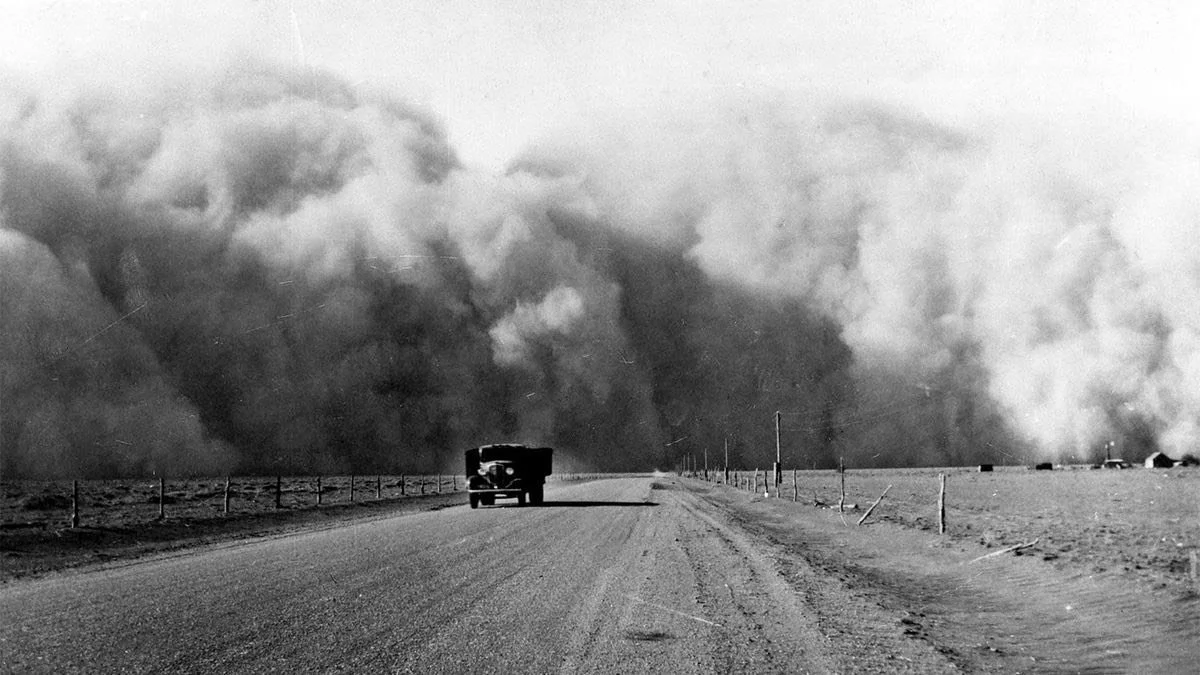
As temperatures are shifting, populations are increasing, and the West is running out of water. Countless areas are experiencing historical levels of drought and we need to think more carefully than ever about how we use water. People's opinions on how this should be managed vary widely across the west, but one thing is for sure; We can’t keep operating in the ways that we have been. As we’ve moved across the West, the question has been asked countless times: “what exactly happens if we do run out of water?”, and the answer seems to be, well, we're not exactly sure but we’re probably looking at another dustbowl. 

Countless times as we’ve moved across the West we  heard word of the notorious event known as the dust bowl. Whether it be Don Worster's warnings of a mass exodus of the western United States, ala the okies in the early 30s, or Methow valley cattle rancher Deed Fink’s ominous words: “I just don’t want to leave you folks in a dust bowl”, the image of a calamitous second dust bowl swallowing up the west as we know it seems to be trailing us like cobwebs.

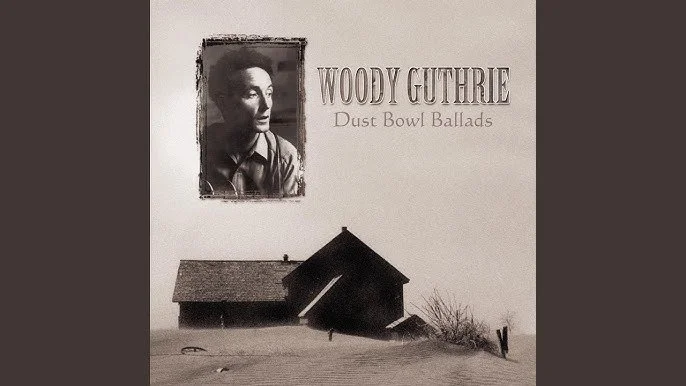
But what even is dust? Farmers tell us that when the soils they plant on aren't properly cared for, dust is what's left behind. Ranchers say dust is what's left behind when native plants are outcompeted or overgrazed. An air pollution specialist in Keeler (a town near Owens lake) told us that dust is fine particulate matter found in the air, and that it blows off the dry, toxic, saline, lakebed.  Ryan Garret says standing at the shore of Mono lake, that in order for the lake to be considered healthy, the water level must rise to the height of the pole he holds in his hand (roughly ten feet above where the water is now.), and if the water level were to continue to drop, dust storms (an event already common on the eastern banks) would become more frequent, more devastating, and closer into the nearby town of lee vining. And Woody Gutheiry would say it’s taking his home. It paints quite a bleak picture doesn’t it?

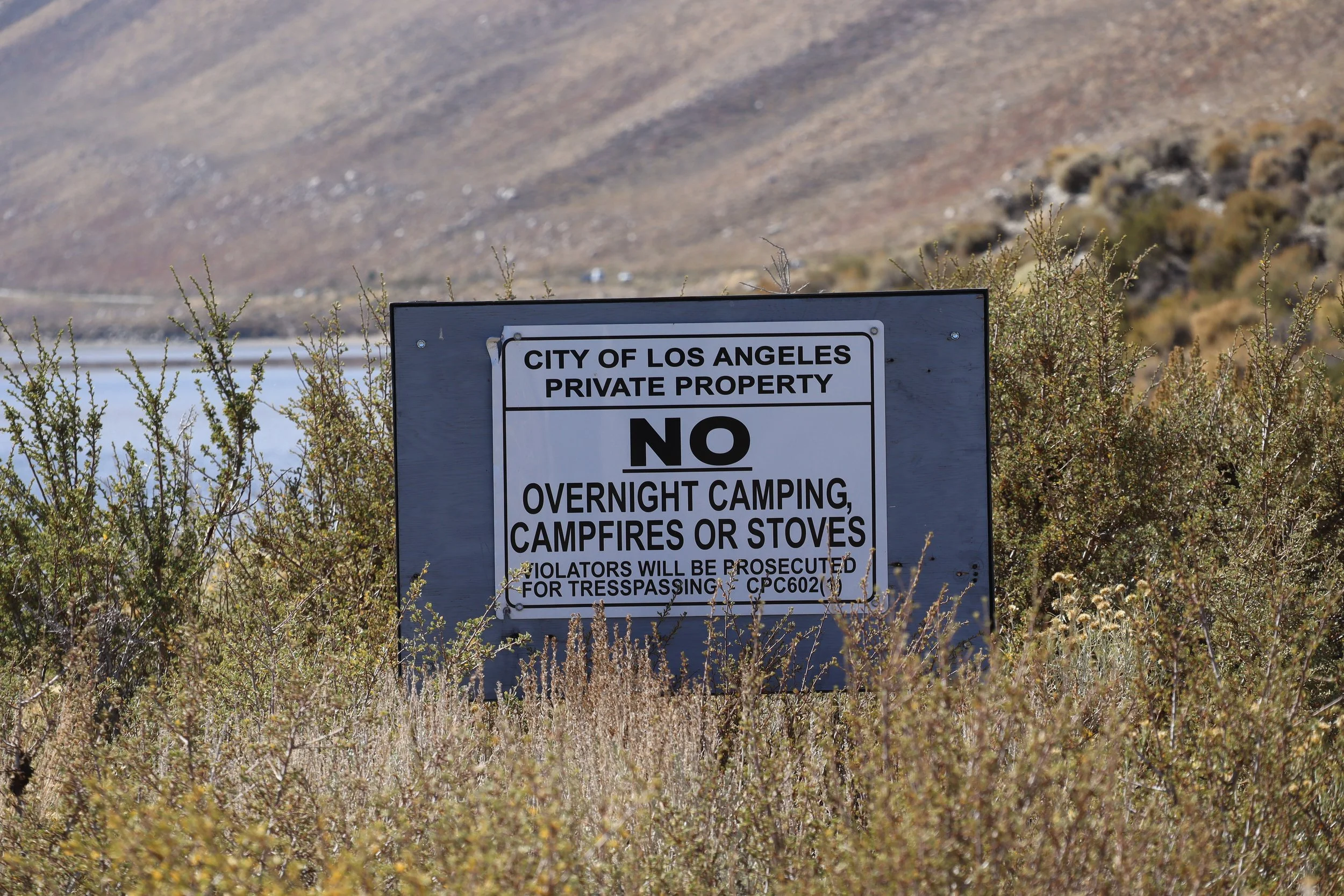
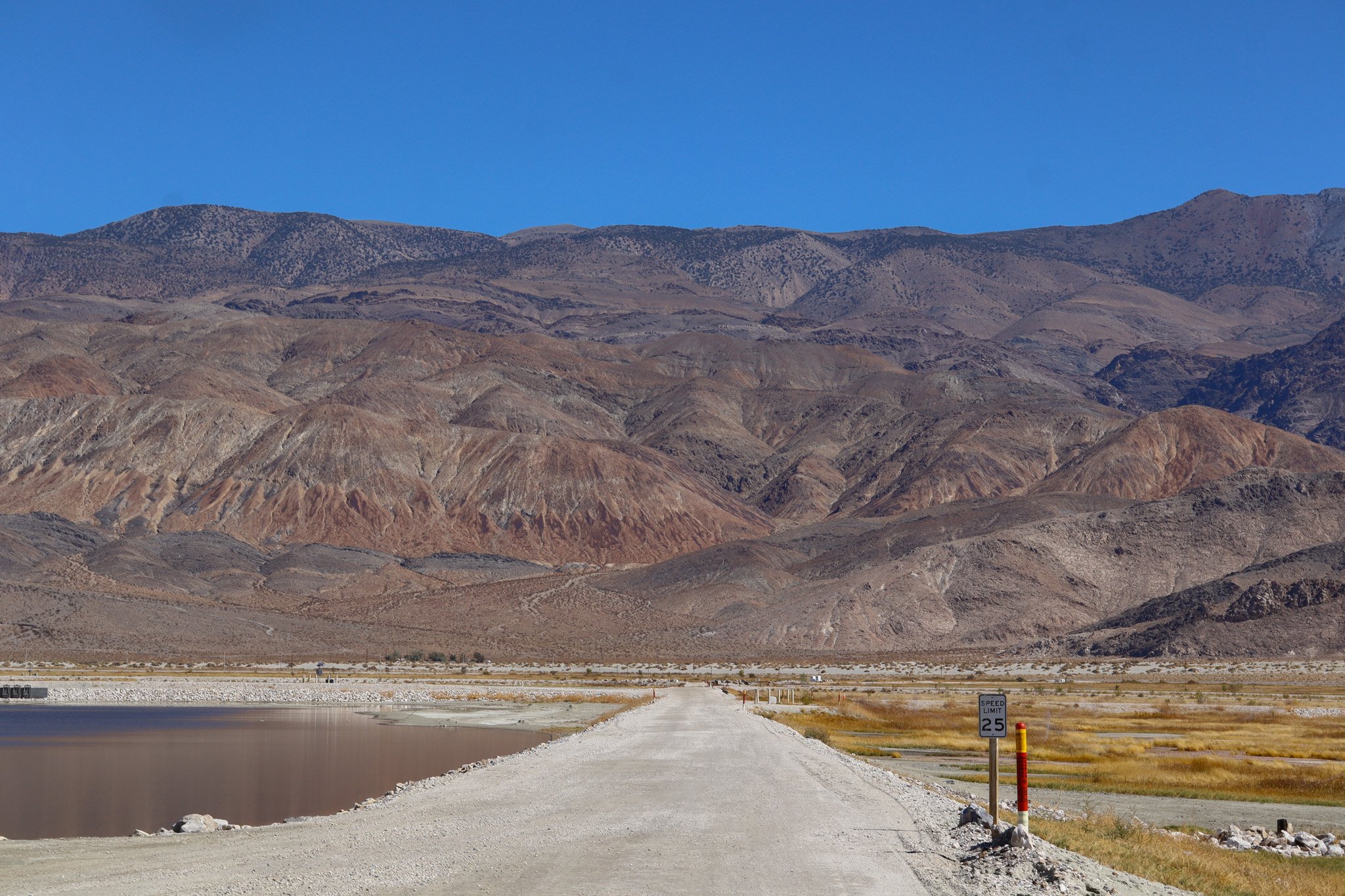
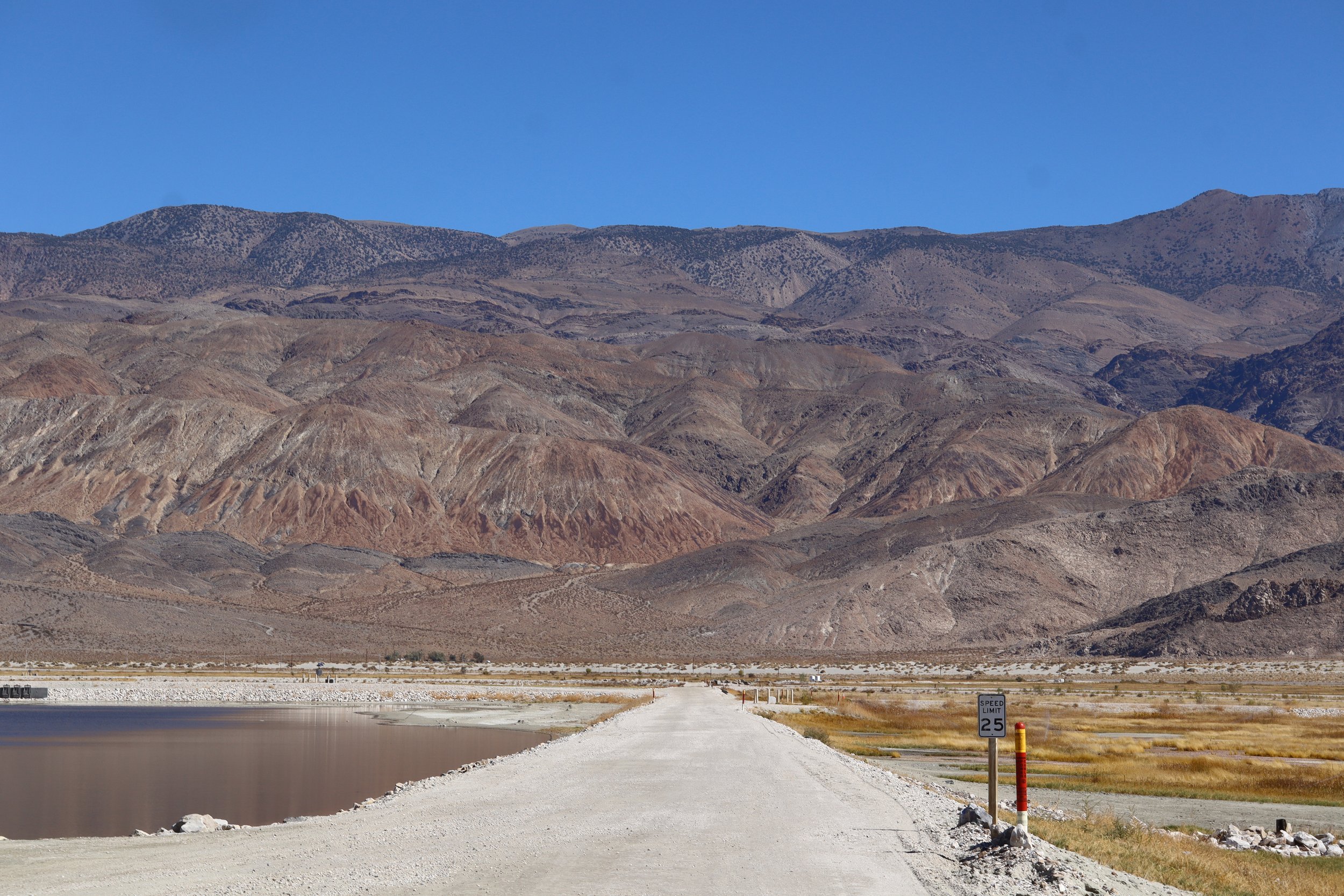
Owens lake looks like it’s already there. From far away it appears to be a patch of tannish white, splotched on the otherwise brown and green of the land around, and from up close patches of mud, sand, and dust are gridded by LA Department of Water and Power (LADWP) roads used to implement dust mitigation measures. This is accomplished by growing saline resistant native plants on the dry plains, shallow flooding (the use of sprinklers spraying the dry lake bed), and laying gravel over the salt beds. When these methods prove unsuccessful, the result is large clouds of toxic dust blowing off the dry saline lakebed and polluting the air. As much as The LADWP assured us that their management of this ecosystem is the best in the field, and a stunning global example of how to manage toxic saline dust storms, they also told us quite confidently that they fully expect to be in active management of the area “forever”. They aren't even willing to front the faintest hope that in some far abstract future, Owens lake could be free of LADWP. And while it is important to acknowledge that the waters diverted from Owens Lake tributaries are doing so to provide water to the growing city of LA, it is still a hopelessly desolate sight. 

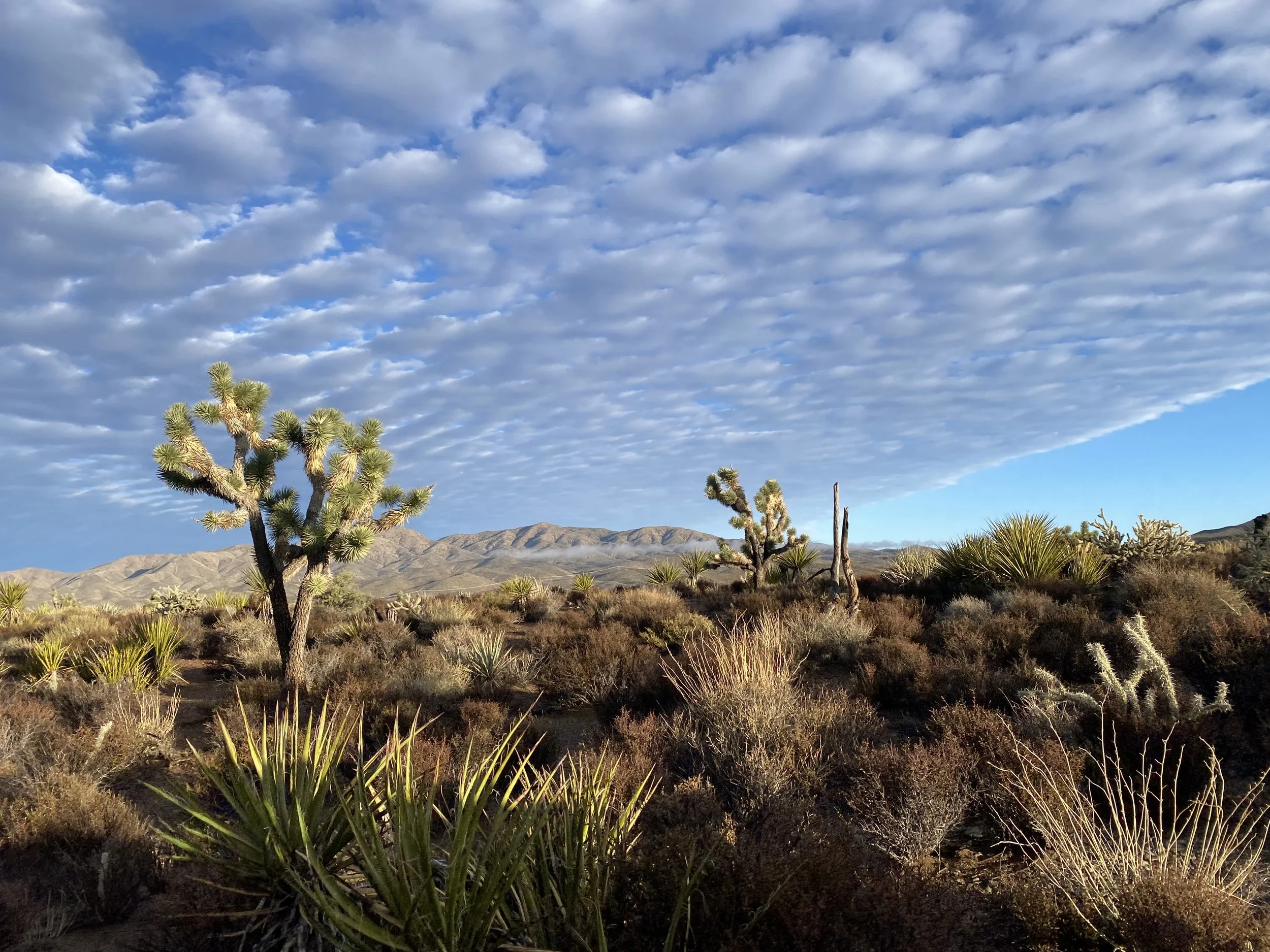
As we sat perched on an outcropping of bedrock, after spending the day trekking through jeep trails and old mining roads led by co-director of SITW (our professor) Lyman Persico. He highlighted the vegetation surrounding us, and  as the sun started to dip, he made one thing clear. In the Mojave, dust means life. About 175  miles southeast of Owens Lake, the  Mojave desert could be on a whole new planet. The area is almost martian in terrain, red dirts, joshua trees, and yucca fill the canyons and flatlands near Nipton. These aren't the only things growing here too, creosote, and cholla, as well as a plethora of wild grasses. All of them growing from dusty, nutrient rich soils blown in, and accumulated on north facing hillsides. Without it, little would grow here. 

This writing is ultimately coming from a place of eco-anxiety that has built up for me over the last couple months. It is quite easy to ruminate on the feeling that we’ve screwed the world up past repair, as I am slowly convinced that we are quickly heading into another dustbowl with no real hope of avoidance. At the same time there is something oddly comforting in this dust found throughout. While sometimes physically representing ecological failures in terms of human involvement, outside of a human context, it can be the crux for life in a beautifully harsh environment.

Zandra Bakken: Tourism Economy and Gentrification in the Rural American West 

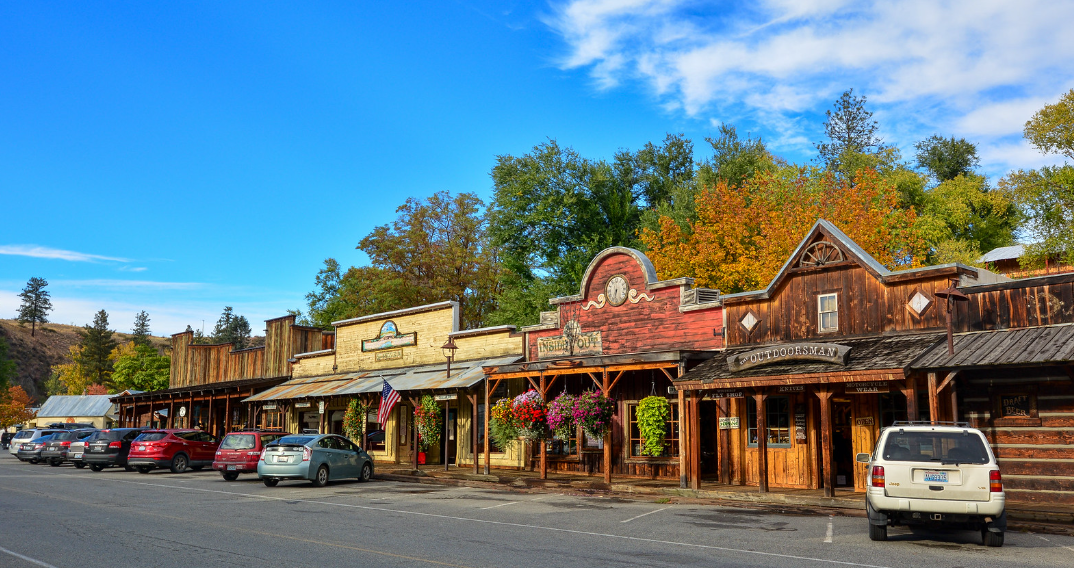
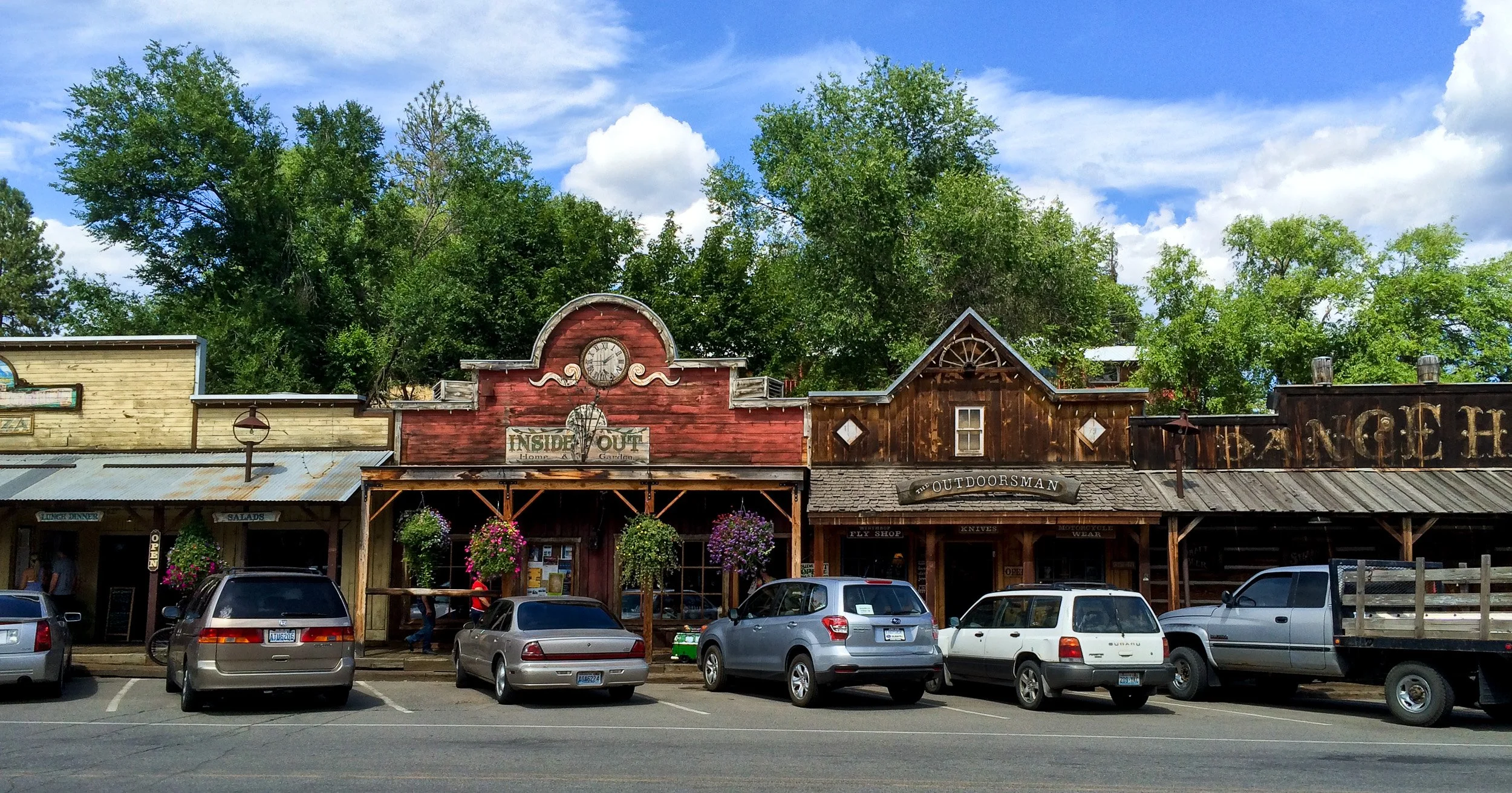
I stroll down the sidewalk of Winthrop, Washington, enjoying ice cream with fellow Westies after a long day and a quick swim. There’s many other people enjoying the rustic western themed storefronts: families taking photos, couples visiting shops, kids running around. However, over the next few days as we talk with others in the community, their struggles become more apparent. In the last two decades, the Methow Valley has increased from around 8,000 to 12,000 people, with about 40 percent of the total population being part-time residents. This has created a demographic that gives the area a tourism feel that many, including ourselves, are enjoying.  

Historically a logging and ranching community, the Methow Valley has shifted to a tourism economy.    Keeping up with the utopian western town look, it now supports nearly 500,000 visitors annually. With loss of the logging industry, an increase in tourism might sound like a positive because it provides another income opportunity. However, where logging once eliminated trees from the land, tourism economy and gentrification now deprives the valley of its community identity and affordability. Most of those experiencing these spaces are not invested in or rely on them full time, decreasing community building efforts and changing the lifestyle of small communities.  

Deed Fink is a third generation rancher who lives in Twisp, within the Methow Valley. We meet with him in the town's grange, as Deed recounts when the area was an agriculture focused space with 350 residents. Things changed in 1972 when the Washington Pass scenic highway opened through the valley. This encouraged foot traffic and increased settlements by subdividing private agricultural land. With gentrification of agriculture property, Deed shares with us that public lands became the only available option for grazing - half of which is managed by Fish and Wildlife who don't sanction grazing, and the other half becoming less obtainable due to big cattle industry’s ability to outbid small ranchers like Deed for the land (Fink, 2025, 40:45). 

By pushing out small agriculturists, economic shifts have altered the identity of western rural communities, creating retail and recreational work that relies on the irony of landscapes being beautiful and “untouched”, but then depending on value brought by people touching it. This tourism economy creates seasonal work with job shortages in the off season and unreliable income. Additionally, the industry creates incentive for the younger population who don't see a future working in store fronts to relocate to bigger urban locations where there's more opportunities. It shows multiple layers of instability while being the current economic driver of the area.

In Wallowa County Oregon, we met with Nils Christofersson, the executive director of Wallowa Resources. Hiking through the local Community Forest encountering cattle, horseback riding, and wildlife along the way, we learned that this space, similar to the Methow, has experienced the collapse of the local timber industry and an influx of tourism. In response, Wallowa Resources formed in 1996 to build a coalition between residents, Nez Perce people, and environmental organizations who were all concerned with this shift. Community driven goals to have salmon return to local waterways, increase public knowledge about the land's history and importance, and protect small businesses in the area initiated the effort to organize collaborative solutions. This helped them work towards their mission “to create strong economies and healthy landscapes through land stewardship, education, and job creation”. Working landscapes; lasting relationships in the community; education and economic development programs and more help demonstrate how ecosystem and economic stability are tied together. While tourism still plays a big role in Wallowa, through what Nils calls a stewardship economy the community aims to create structures that seek reciprocal care with people and the land. 

Can places be vested to a point of no return from reliance on tourism? Is there a way to shift economic opportunities as in Wallowa County to utilize reciprocity and build community? The double standard of tourism can be difficult to navigate. However, it's not going away. People are going to vacation or become part-time residents in order to extract certain experiences from places like Winthrop. Even so, it can’t be the economic focus in these rural areas because relying on the disposable income of outsiders doesn’t provide long term stability. Stronger collaboration that empowers communities to protect their region’s wellbeing and fosters opportunities for the people who inhabit the area is vital to stabilizing the longevity of ecosystems and building resilient communities.

Linh Che: Queer Nature

In the Methow Valley, we went animal tracking with So, Pinar and Nick. Bending over the faint footprints in the gravel, we trace our way back to what happened a week earlier. Did a wolf, or a coyote, step on this trail? Did they eat the last juneberries of the season? Wolves tend to travel together, and some of us asked how many are there in a pack? So said in late summer when the wolves have left, scientists go to the wolves’ old dens and count the beddings. Why do the wolves leave their old home anyway, the bedding that once retained their warmth, where they raise their children, who were too young to follow them on the hunt? 

This summer on a late July day I was laying in the park in Budapest looking at my friends’ painting of humans dancing. Their hips were full, the legs were disproportionately larger than the rest of the body. They asked me if I ever thought about becoming something else, like if my hand could be elongated to reach over to the canopy above us. Or an octopus for example, then I would have eight hands to touch to hold and glide away. It’s an interesting thought. Sometimes an image of myself flashed back to me, like when we were on a car ride and I would catch myself in the mirror. A strange feeling ran through as I realized how far I have carried my body moving through the world. Now I imagine myself a wolf pup curling up with my family on a winter day. 

Science rarely approaches nature somatically, the body perceived from within. It is the word “nature” that has historically been used to classify what is socially acceptable. To exist in a world where we are detached from “nature”,Nick said to us: “That’s why queer people are not taught to reflect the image of ourselves outside. That the natural world is also queer”. Nick is passionate about lichen, a symbiotic relationship between at least one fungus and one alga species. As a plural form of existing, lichen defies the scientific definition of a species as a being that exists on its own. It invites humans into the act of imagination to expand our own skin and think about new possibilities of being and relating. Being queer then does not only relate to gender expressions or sexual orientations, but also means our relationships to things around us are different than the dominant culture. Relationships we thought we had lost and which seems impossible to have in this modern world where the market dictates how we ought to live. 

In the Methow Valley, we met with Paul, a Methow descendent of the Nez Perce. He wore a T-shirt and jeans like the rest of us. He talked of the cultural trauma tracing back to the 1877 War and the relocation of Chief Joseph’s band to Colville Reservation. Paul was lucky to grow up with his grandparents in the reservation to know certain aspects of the culture, but as he moved outside, he saw Indigenous people whose lives are disconnected from the past. Many elders like his grandmother grew up with the legacy of the war, and were taught not to show any signs of being Nez Perce for their safety. Paul shared that an elder was adamant about disclosing sacred places, even with Indigenous people. One time, people from University of Washington dug up a burial ground for their study and never returned the remains. 

“Joy, beauty, and meaning-making are possible, even in conditions of collapse, of fragmentation, of scarcity” - as So and Pinar wrote. Paul showed us that even when we cannot undo the trauma, what happened in the past that has left those marks behind had already happened; we can continue to leave our marks with good intentions. Together with other tribal members, he learns to practice the culture through gathering and cooking moss, which were forbidden after the genocide and thus not a part of everyday life for them anymore. Cooking together could be seen as a somatic practice that does not only remember the memory of the past, but also actively enact and make it a part of their collective existence, albeit differently. 

I thought about when I was a middle-school student coming to English classes with my friends. A long time had passed since then, and now there’s none of that feeling when it’s kind of strange and exciting to use another language rather than my mother tongue to speak. In the ongoing rhythm it might seem irrelevant to remember the old times, to take into account the certain flashbacks that occur to us every now and then. But they are the footsteps that we have left on our way here, and mine have stretched a thousand miles from where I came from. Sometimes it’s worth it to crawl down and look closely at one, and everything around it, and try to remember what took us here and where we belong.

Penelope Doulis: Lessons from the Resurrection Plant

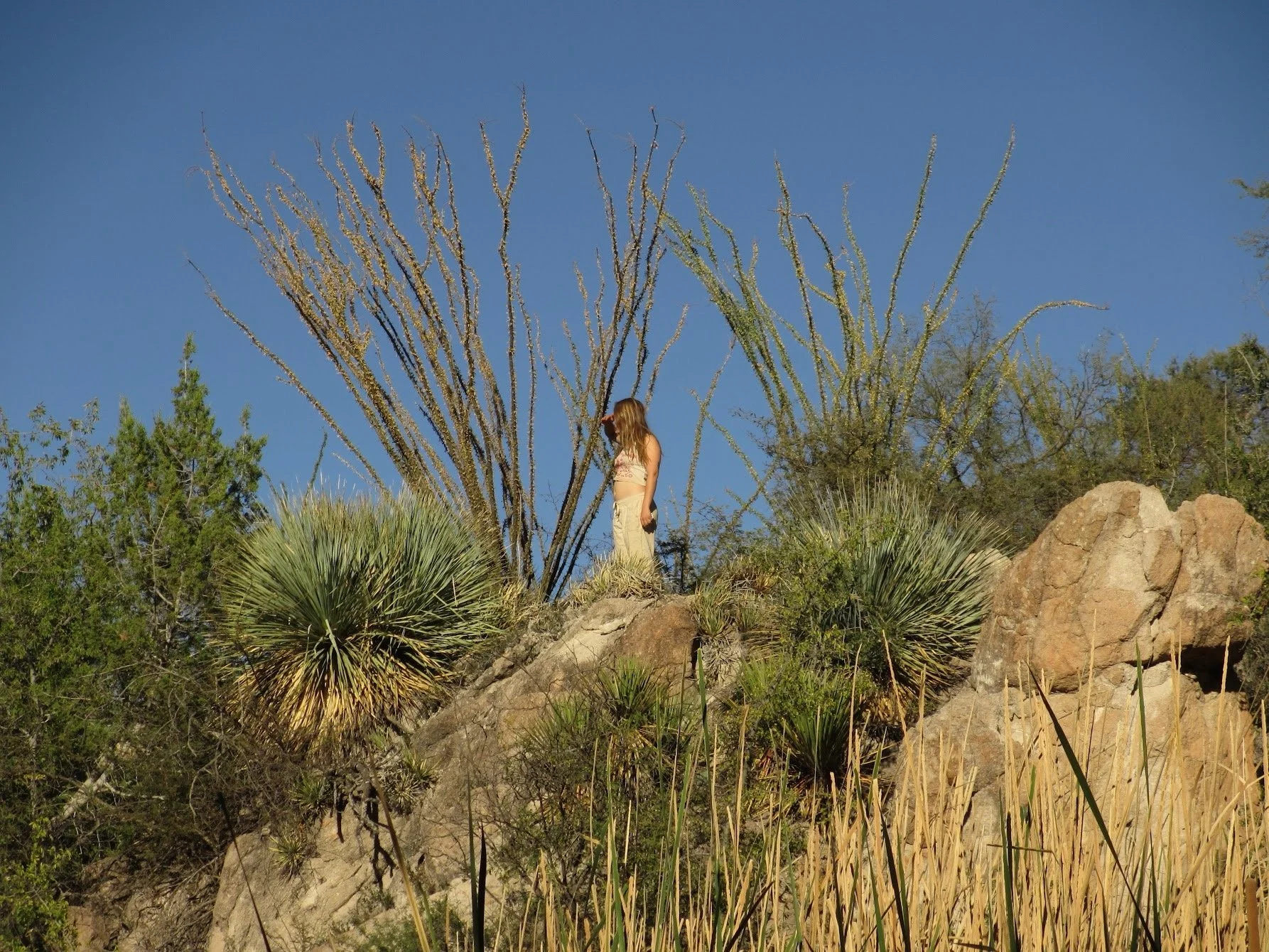
I scramble up a steep rocky hillside seeking out a peak of the Organ Mountains. Grabbing onto a small notch in the tan rock I pull myself over into an eroded wash, where masses of bright green plants flourish. Desert Columbine, Hairy Lipfern, and Cane Beardgrass fill this place, savoring the occasional rains that run through, and the precious patches of shade that the ravine provides from the blazing New Mexico sun. One plant, growing fully exposed on the rockier face seems not to have survived the harsh dry landscape, its leaves have dried, curling in on themselves to form a tight ball. Looking closer however, I can make out lingering signs of life, the plant has retained a bit of green deep in the curled inner leaves. The Resurrection Plant, False Rose of Jericho, or Selaginella Lepidophylla, is a plant native to the Chihuahuan Desert. This remarkable plant has adapted to the desert environment in fascinating ways. In times of drought the Resurrection Plant will dry and curl inward, losing up to 95% of its mass without sustaining damage. If need be, the roots will detach, allowing the plant to blow in the wind until it finds a new water source. When water returns, the Resurrection Plant’s leaves will unfurl, regain their green color, and within a few hours the plant can restart its metabolic activity. There are many plants in this region that, like the Resurrection Plant, have adapted to live in this dry environment. The Ocotillo Plant which in times of drought can shed all its leaves and photosynthesise through its waxy green stalks, then regrow its leaves within a few days, the Creosote Bush with its deep tap roots that allow the plant to access underground water reserves and small waxy leaves that prevent it from losing water, or the Joshua tree that can store water in their trunk and branches spongy tissue. 

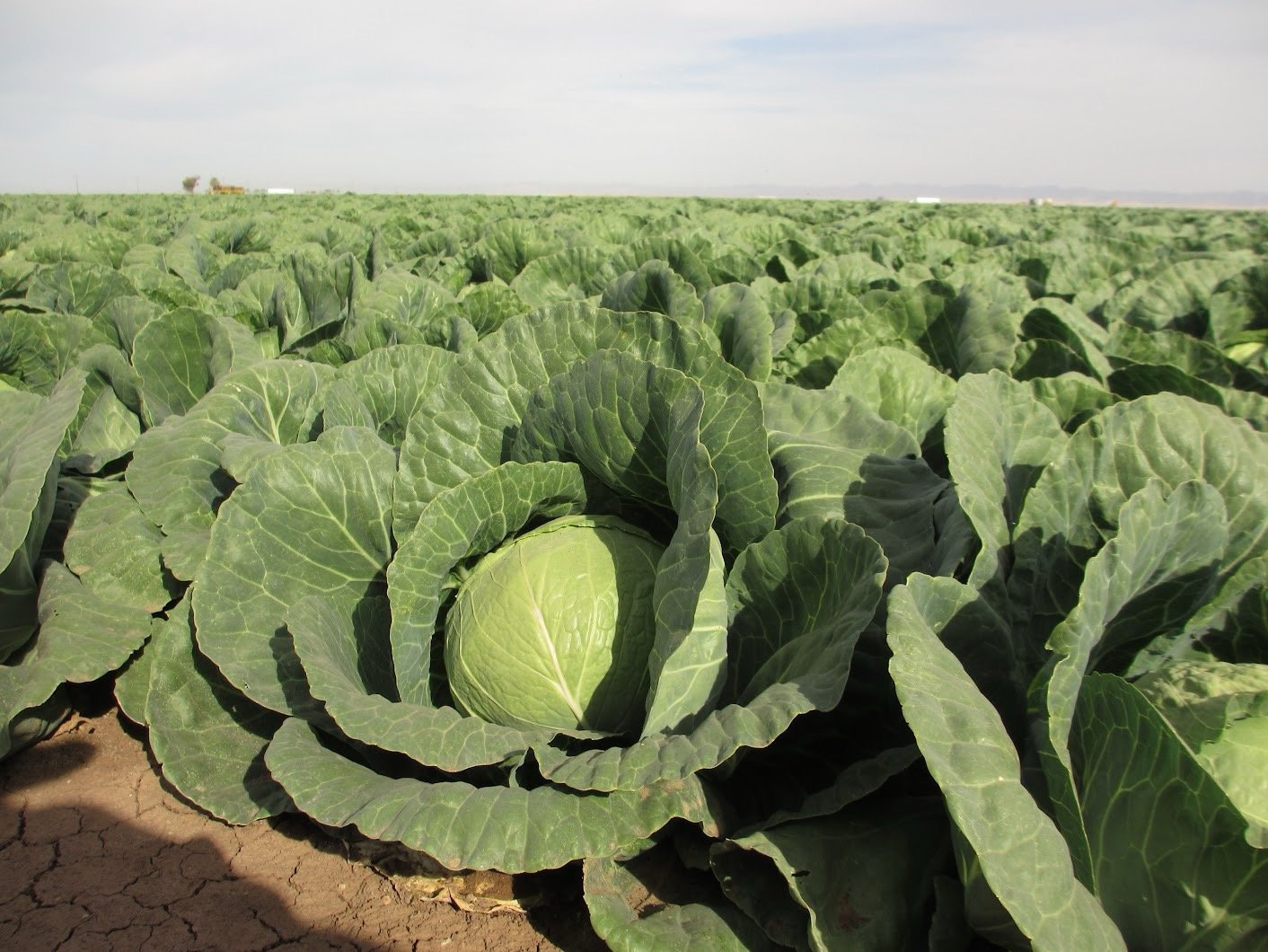
The plants of the Desert Southwest, like all native plants, know their land. They know the land like they know their own bodies, they have evolved specifically to live right here. The dry sandy soil, scorching sun and rare water, are all familiar friends that they have grown side by side with. These plants have learned to live within the confines of locally available resources because life for them is possible only in this way. When settler societies came to the desert regions of the American West however, we formed no such adaptations. Our adaptations were not ones of careful and comprehensive understanding of the landscape, but rather of extraction and domination. We planted cabbages in the desert of the Imperial Valley and brought water to them through vast highly regulated networks of irrigation canals and dams. Our nation now relies on these crops for two thirds of our winter vegetables and vast amounts of animal feed. This phenomenon however is not limited to this region. We have built an empire on this unadapted model, on the illusion that continued expansion, development and domination would be enough to protect us from our own devastation of the land. Yet in a rapidly changing climate and a rapidly drying American West these systems are being pushed to the brink of collapse. 

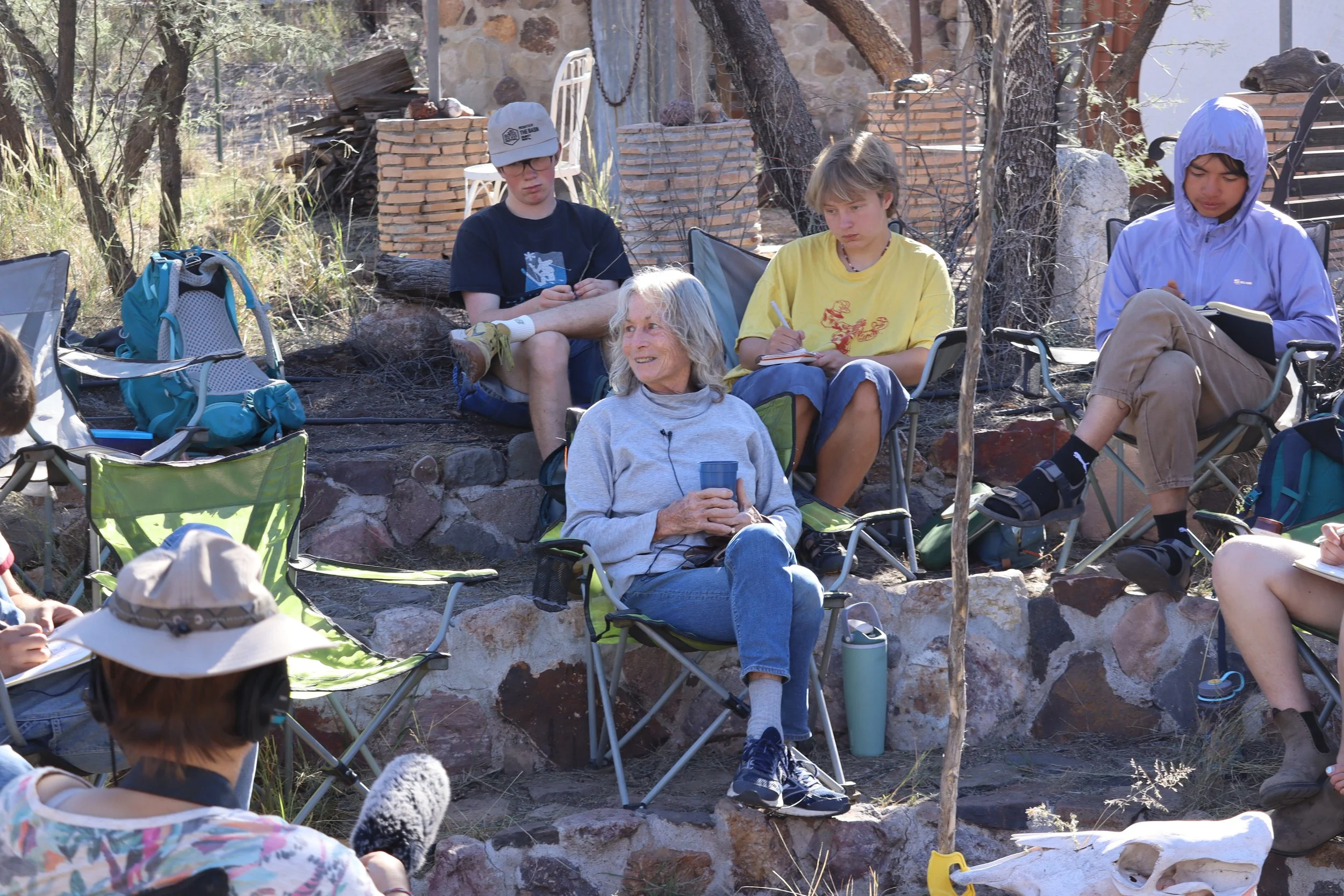
Just outside the small desert town of Patagonia, Arizona, as the sun beams down over our heads and mesquite trees shiver their leaves in the breeze we meet Kate Tirion, a local environmentalist and co-founder of the Borderlands Restoration Network. Kate tells us about a way of living that sets itself up in fundamental opposition to the conventional ways around which we’ve structured our agricultural and industrial systems. She explains that the guiding principle of this methodology is “long and thoughtful observation in lieu of mindless labor”.

Everything she does, any impact she makes on the land is in alignment with this principle. She tells us that when she decided to put a road through her land, she spent months walking it. She learnt to understand the soil, the plants, the slope of the hillsides and the way water and animals moved across the land so that when the road was built it would have as minimal an impact as possible. Like the plants of the Desert Southwest, Kate has adapted to her landscape. While her precise model may not work in every context, adaptation of our human societies in this mindful and purposeful way is possible and rapidly becoming a necessity. We need to learn to hear our landscape, halt our unsustainable expansion and extraction, and think critically about what it is we really need to live. Kate urges us to slow down, to learn the land, to take time to form community, to share knowledge and resources, to laugh often, to “french kiss more and eat less processed foods”. It is the haste of our day to day lives that has prevented us from learning to adapt to the confines of our environment. It is this rush that holds us back from imagining the possibility of something new.

Jackson Garrison: What Remains: Portraits of Resiliency 

When Fred Swanson looked up through a dark haze and saw charred fir needles whirling in the dry wind of his backyard, He said goodbye to the forest he loved. It was August 2023, and a lightning strike had set H.J. Andrews Experimental Forest ablaze. He remembers driving into the woods after the fire had burnt its fill; looking out upon devastated houses buckled and contorted from flame. However, upon entering the woods, he found a sort of dark majesty; there was beauty to this scorched forest. I imagine him walking over the parched earth, moving past standing giants. As he describes this moment to me, his words resemble religious practice — reverence in mourning.  

Fred is tall, with a trimmed white beard, a plaid shirt, and worn work pants that must have once been clean. In a gentle cadence, he describes a moment at the beginning of his career in H.J Andrews, when he found himself standing on a 10-foot-wide tree stump. The rings were red and orange and slightly uneven; all that was left of a more than 500-year-old tree. Fred saw the stump he was standing on as an opportunity to look into the past, to learn from the history of the forest. In his research, he found that nearly 500 years earlier, a fire of unimaginable size and power had leveled much of what we now know as central Oregon, including what predated H.J. Andrews Experimental Forest —- Its scarring was left written into the trees. 

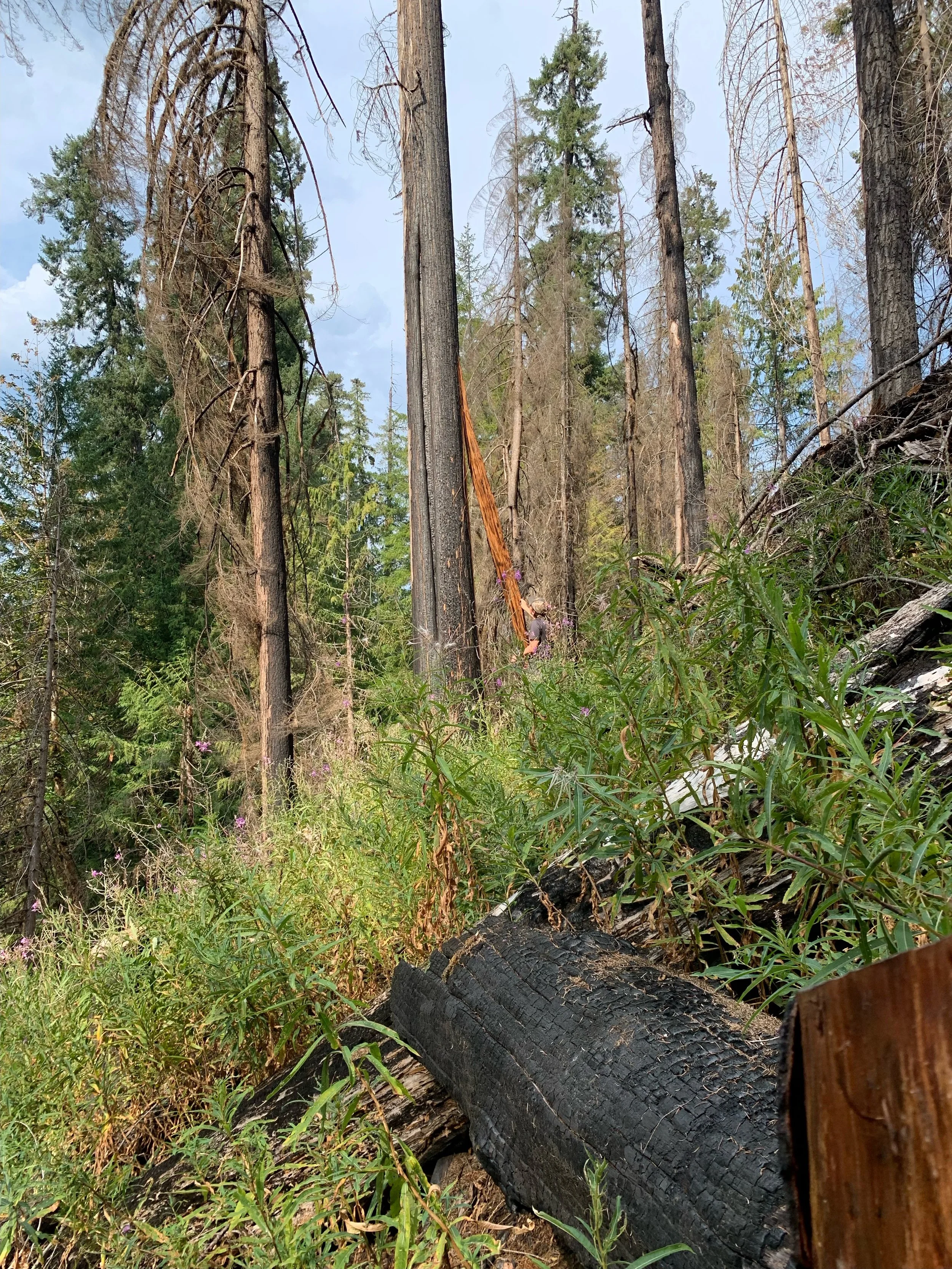
Fred drove with me up to the edge of a three-year-old burn area. To my left, old-growth trees covered in moss towered into the sky. On my right, Fireweed, unsteady soil, and blackened trees defined the landscape. It is astonishing to imagine that H.J Andrews was born from something like this. As Fred stood amidst burnt husks, he explained how he found hope in this cycle of death and rebirth, telling me, “The forest has one rule: start over, making use of what remains.” Fred has borne witness to this rule— both in expanding orange tree rings and the aftermath of fire. His work shows us how to trust in natural cycles and find hope in forest regeneration. Resilience is a sort of wisdom—strength, built in disruption. Whether by a lightning bolt in a dry forest, or the emotion that emerges through loss and upheaval — histories display strength in what is deemed damaged. 

In Seattle, Washington, Yesenia Hunter sunk her hands into the upturned dirt of her backyard garden. Feeling the soil on her palms, she immediately recoiled in revulsion. As a child, Yesenia had labored over this same practice, planting seeds and harvesting the products. She recalls the swish of her knife as she cut asparagus stalks and the thunk as they landed in a crate. Later in the season, apples falling into their bins made the same sound. For years, she practiced these movements, working before and after school under a blazing sun. 

Yesenia’s attempt at gardening acted as an exigence for the unresolved and compiled trauma she experienced as a laborer. She recalls this moment to me, explaining how exploitation as a worker in the fields of the Yakama Valley had separated her from her hands, leaving her traumatized and disconnected from her heritage. Earlier that year, Yesenia’s daughter had told her that they, a Mexican family, were Japanese. Startled, Yasenia realized that her own cultural disconnect, informed by the trauma of farmwork, had separated her family from their Mexican heritage. Yesenia made the decision to become a generational changemaker, proudly bringing her culture into her life by teaching colonial histories, and practicing traditional Mexican music and art. 

As we sit with her and her family in the dusk light of the Yakima Valley, Yesenia stomps her feet and dances as she sings a Bamba, a celebratory Afro-Cuban tune. Her hand moves with mesmerizing speed up and down on the eight colorful strings of a Charango. By celebrating traditions like these, Yesenia finds reconnection with herself and her heritage.

Similarly to Yesenia, Fred has looked into histories to find resilience. Four times a season, he tramps into the burn of H.J. Andrews in search of beauty. He and an artist are mapping out the regrowth of the forest, represented in black and white photographs of twisted blackened trees, and unfurling understory. Through this process, Fred is able to maintain his relationship with the forest he loves, while sharing a visual representation of the persistence that it represents. 

Histories, whether cultural or ecological, hold stories of resilience, which Yesenia and Fred have accessed to heal in the present and move forward with hope.

Marina Roberts: Water with Wings: The Wilson’s Phalarope

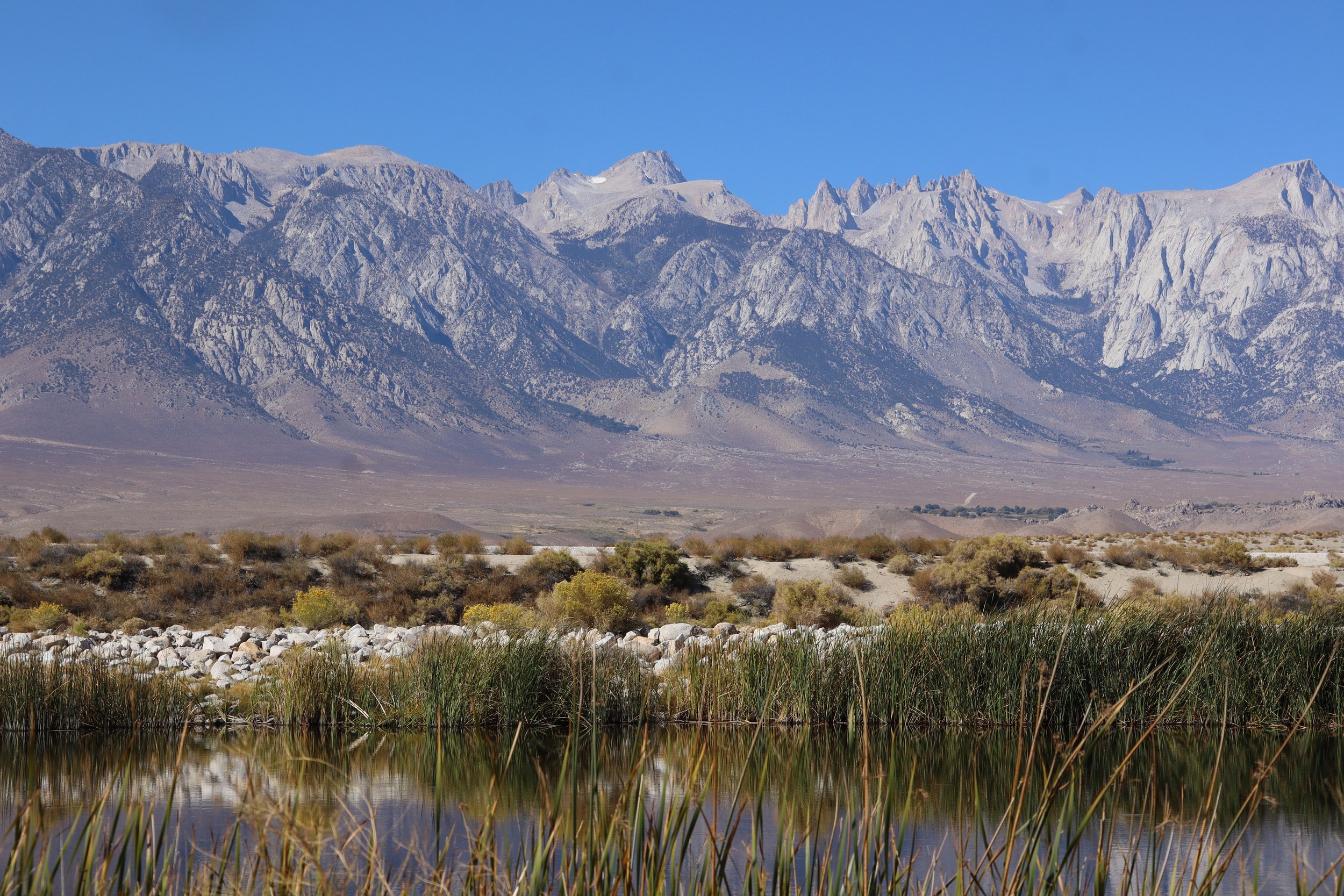
Mono Lake, situated just north of Lee Vining, California, was crudely belittled by Mark Twain as a “solemn, silent, and sailless sea,” nothing but a sedentary, salty divot in the landscape, written off as lifeless and lonely. Nestled in a closed basin encased and surrounded on all sides by mountains, it is easy to view as water in complete isolation. Mountain snowpack percolates into the landscape through a series of creeks, and is then confined to the borders of the lakebed where it accumulates in a concentrating chemistry of freshwater, salt, and a variety of chlorides, carbonates, and sulfates– its only escape evaporation. Fueled by rhetoric which mirrors the prose of Twain, Mono Lake water– deemed useless and disconnected where it naturally lies– has been  extracted in mass by the Los Angeles Department of Water and Power. Beginning in 1941, diversions from the creeks which sustain Mono have continued to feed the LA aqueduct– a 419 mile system of pipelines, tunnels, and canals which displaces water from the lake all the way to the heart of the city. The foremost section of the pipeline cuts straight through the base of the Mono Craters, manufacturing a network of connection which violently carves through the landscape. In turn, the lake level at Mono has continued to drop for the sake of watering an arid city hundreds of miles away. In ways such as this, humans view connection as an extractive monopolization of resources, one which strips lake ecosystems of their sovereignties.
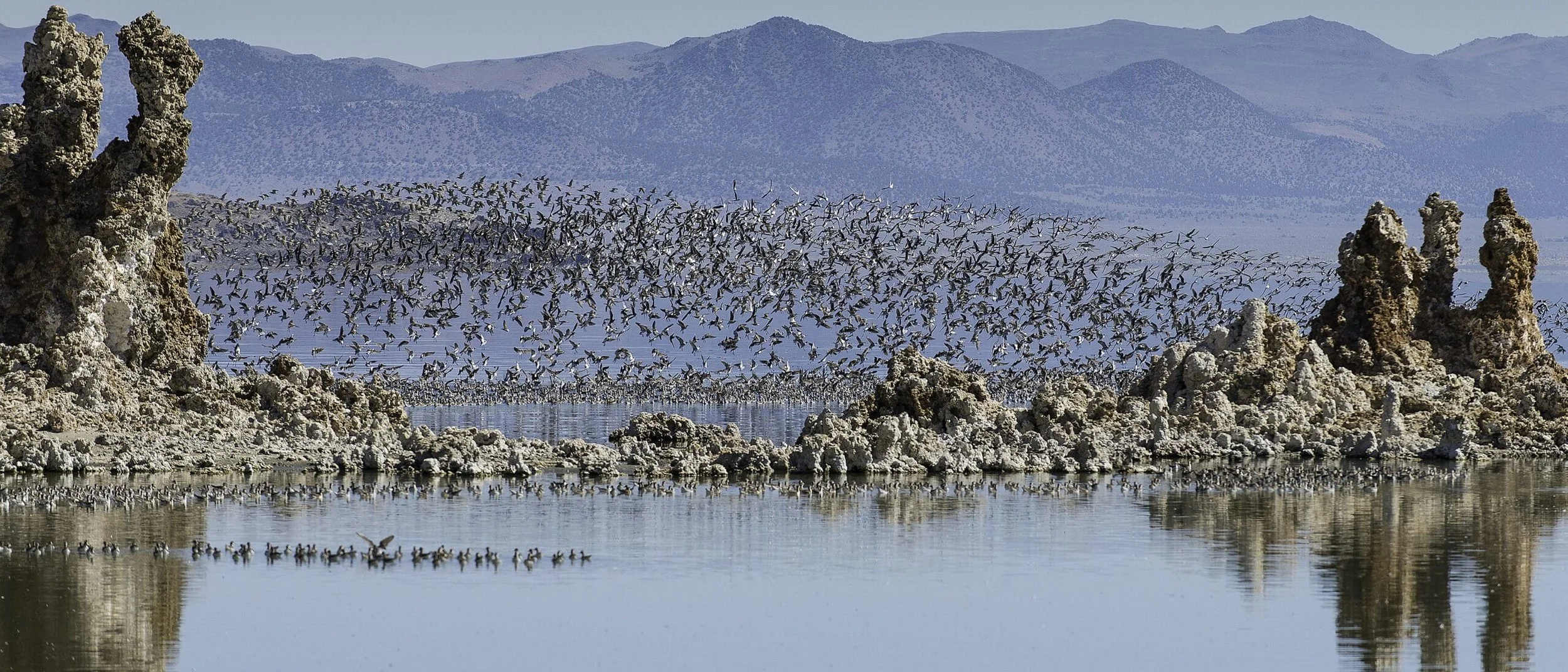
I am positive that Twain, and the policymakers which echo his ignorant sentiments, did not see the birds. My assuredness is founded in part due to the misalignment of the date of his visit with documented Wilson’s Phalarope migratory patterns to Mono. If you are lucky enough to find yourself audience to a murmuration of these shorebirds– a synchronized dance in which the flock ebbs and flows, tracing waves in the air– you will know without a doubt that the Phalaropes are water with wings. The salinity of Mono does not reduce it to an aquatic graveyard, but rather infuses it with the ability to host life adapted to its unique conditions, like the Wilson’s Phalarope. These shorebirds sit atop spindly black legs, sporting a slender bill and a muddled array of black, grey, russet, and white plumage which mirror the granitic faces of the looming Sierra Nevadas defining the western edge of the Mono Basin. The lake is a kind of “gas station” for the phalaropes along their migration from Canada to Argentina, a rest stop where the birds double their fat reserves via feasts on the alkali flies and brine shrimp which populate the water. Witness a phalarope hunt and you’ll see the lake come alive, as they circle shallow waters in rapid spirals, animating the surface with little whirlpools from which they pluck their prey with ease. Because the Wilson’s Phalaropes are so entrenched in the cultural ecology of Mono Lake– as well as other alkaline lakes across North America– the species acts as important indicators of alkaline lake health. As they are so highly specialized to inhabit these fragile environments, the rising salt concentrations as a result of diversion pose an undeniably dire threat to their habitat, food sources, and continued existence.

Phalaropes are also physical conduits for alkaline water to forge connections from their separate localities of origins, their migratory paths weaving threads through ecosystems and tying water together across vast distances of time and space. Humans fail to value such connections which migratory birds so beautifully encapsulate. In attempting to confine and consolidate water, as with the LA aqueduct, we overlook and disrupt these ways in which the landscape bonds itself. In reality, the waters of these lakes, including Mono, are far from lonesome. They are intricately intertwined through imaginary aerial riverways, traced by the feet of migratory birds. The sediments wedged and peppered within the folds of their feathers, the larvae digesting in their bellies, and the salt-ridden water droplets coursing through their bodies– these birds tie water together in a manner which can’t be easily conceptualized by the human. This fluvial network manifests not with pipelined and pumped water diversions, but with the bodies of birds. In this way, Wilson’s Phalaropes delicately thread symbiosis across time and space.

My mind wanders. A flock of Phalaropes materializes before me, gliding in fluid, sinuous unison just above the surface of Mono. I picture this river of birds flowing from one alkaline lake to the next, from Canada to central Argentina. The LA aqueduct suddenly seems an embarrassing attempt at mimicry. How can nature’s model, embodied in the Wilson’s Phalarope– of deep connection across distances without mass, physical displacement– be more at the forefront of our approach to coexistence with water in the west? I am not naively endeavoring to solve these issues of water management with some concrete, ill-conceived solution. Instead, my hope is that, as a collective, our mindset in interacting with water may be transformed. The veins of waterways which weave through our landscapes in these intricacies, far out of the scope of our anthropological understandings, ought to be recognized as what they are: life-giving and immovable. And we can start with respecting the bodies and agency of migratory birds which, physically and metaphorically, carry this water upon their wings. 

Griffin Arnett: Migrants and Millionaires: Searching for a More Equitable West

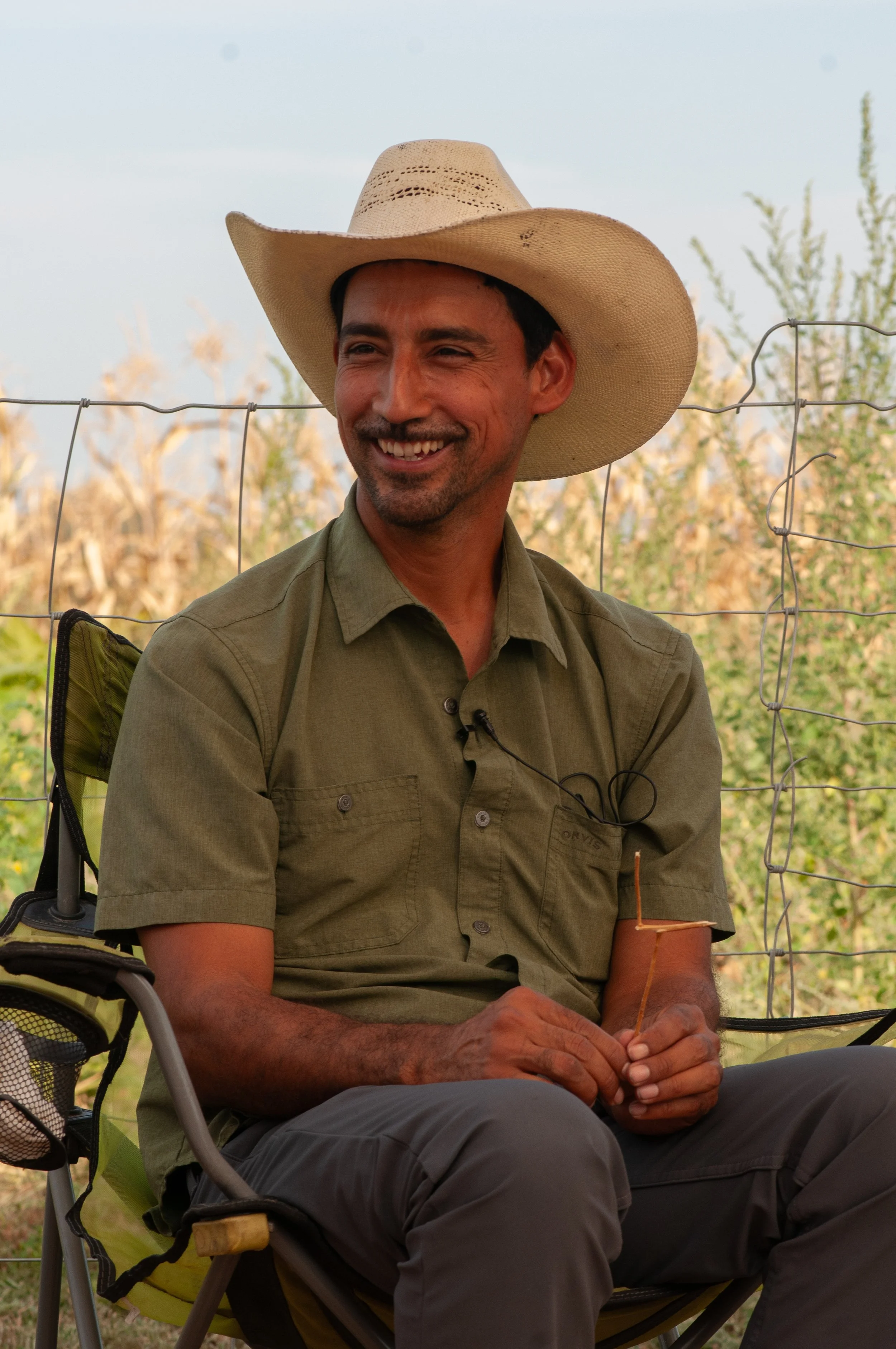
On a warm Tuesday evening, twenty-one students hailing from a private liberal arts college occupy an oval of chairs on David Lemus’s small homestead in the Yakima Valley. David, a Mexican immigrant, is a diesel technician by trade, although he grew up working in agricultural operations across the Yakima Valley with his father, who is also a Mexican immigrant. He wears a cowboy hat, a green button up shirt, and simple gray pants. A coy smile begins to creep across his face; he has just been asked how he can still have such a deep love for the land even after his family endured such hardships here. “There is something about the quiet that I do love,” he explains in his kind, soft voice.

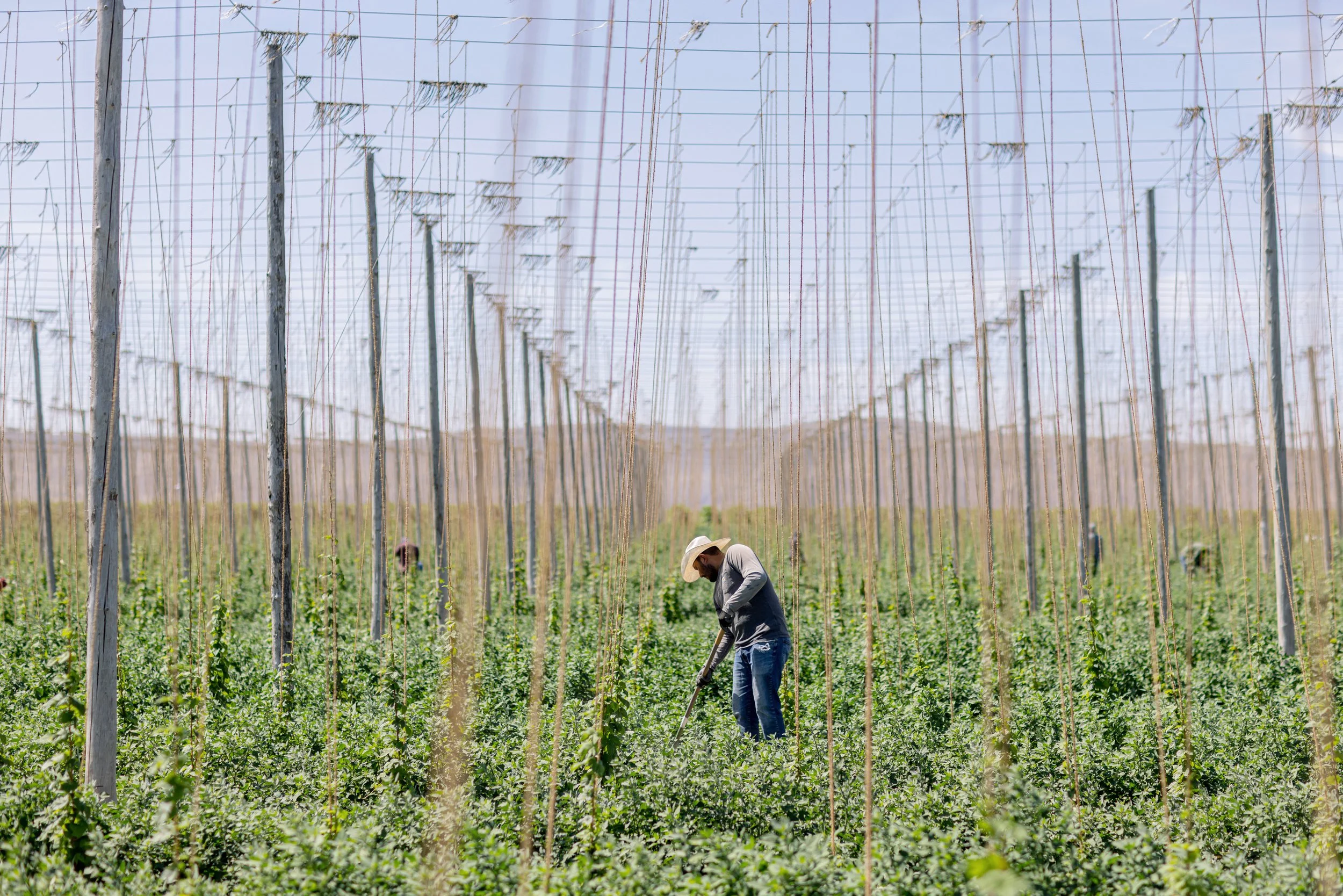
David has had a close relationship with this land from a young age. While his classmates went to school dances, David labored in this western frontier with his father and two brothers along with countless other latinos and latinas harvesting asparagus, apples, and mint leaves. Born into what he put as “deep poverty,” David’s parents did not expect or ask much of him and his siblings. His father, having spent decades in this flawed industry, simply had one request: don’t stay in the fields. 

David’s place of residence, White Swan in the Yakima Valley, echoes a story very similar to his. Speckled with trailer homes and dilapidated houses, the only thing more obvious than the poverty in the area is the agricultural industry that perpetuates it. As we drive along the highway, endless corridors of hop vines flank our three SUVs. The brief glimpses between the rows only reveal more crops, flashing by us like a giant flipbook.

A couple hundred miles north lies a different valley: the Methow. Rolling hills peppered with pine trees enclose the sagebrush steppe. Snow-capped mountains watch solemnly from the distance. A few days prior to meeting David, my classmates and I found ourselves strolling the streets of Winthrop, a small town in the upper Methow Valley. As we wandered through the beautifully paved downtown areas we saw a predominantly white gentrified shell of a western town. False front stores were made to look as though they had existed since the days of the Wild West, when they truly arrived a century later. Inside these stores, you will not find horse tack or farming equipment, but instead organic food, outdoor goods, restaurants, and art galleries. And no, you cannot afford any of them. Acting as sentinels of their western oasis, million-dollar mansions dot the hills surrounding Winthrop, warding away those of lower incomes.

This is a stark contrast to David’s western reality. With a sobering tone, he says, “I enslaved myself to a system that takes as much as it needs to take, and then gives you the crumbs and expects you to do that over and over and over for the rest of your life.” David wasn’t the first to fall prey to this system, and he won’t be the last. Since the inception of our country, our government has worked hand in hand with large industries to continuously and systematically exploit the labor of several vulnerable ethnic groups. The continuation of this exploitation is especially highlighted in today’s agricultural industry, where migrant laborers are told to work in hazardous conditions, often with no protective equipment. If they get injured, the company will simply fire them - it is cheaper for them to hire another immigrant desperate to put food on the table than to help a worker through an injury. They are left wounded, without work, in poverty, and with no way forward. 

Meanwhile, the fruits of their labor are enjoyed by a young couple along the sunlight rocks of the Methow river amidst a carefree afternoon. Juice from their Yakima apple runs down their chin as they stroll through the Western wonderland that is Winthrop’s downtown. They can’t taste the calloused hands of the migrant worker that picked it and was laid off a day later. They only see the sticker that says “locally grown” and “organic.” Engrossed in the ambiance of Winthrop, they bask in their admiration for this quaint “western” town, failing to understand that the reality of the west for millions of migrant workers is not apples and false-front stores, but chemical burns and 16 hour shifts.

Their ignorance is not their fault, David explains to us. He says that pointing fingers is not the answer and that we need to instead “point to history, and how history allows for this to happen in government and institutions set up for its own benefit…for the benefit of the very few.” He details how many forces in this country continue to sow seeds of division through careful rhetoric. By dehumanizing workers through a variety of means, benefactors of the agricultural industry manifest a more lucrative business.

Injuries, deaths, families torn apart, and dreams of a better life crushed, all in the name of profit and efficiency. Despite its classic portrayal as a land of equal opportunity and freedom, the reality of the modern American West has strayed far from this idyllic vision. However, this dream has not been snuffed out completely. Back on his small homestead, David grows something special alongside his corn, carrots and potatoes; he grows hope. David is living proof that there is a way out of the cycle of unjust migrant labor, and that perhaps one day a more equitable west may exist.
Wilson Finlay: Narratives of Water: Sustained Wisdom on the Colorado Plateau

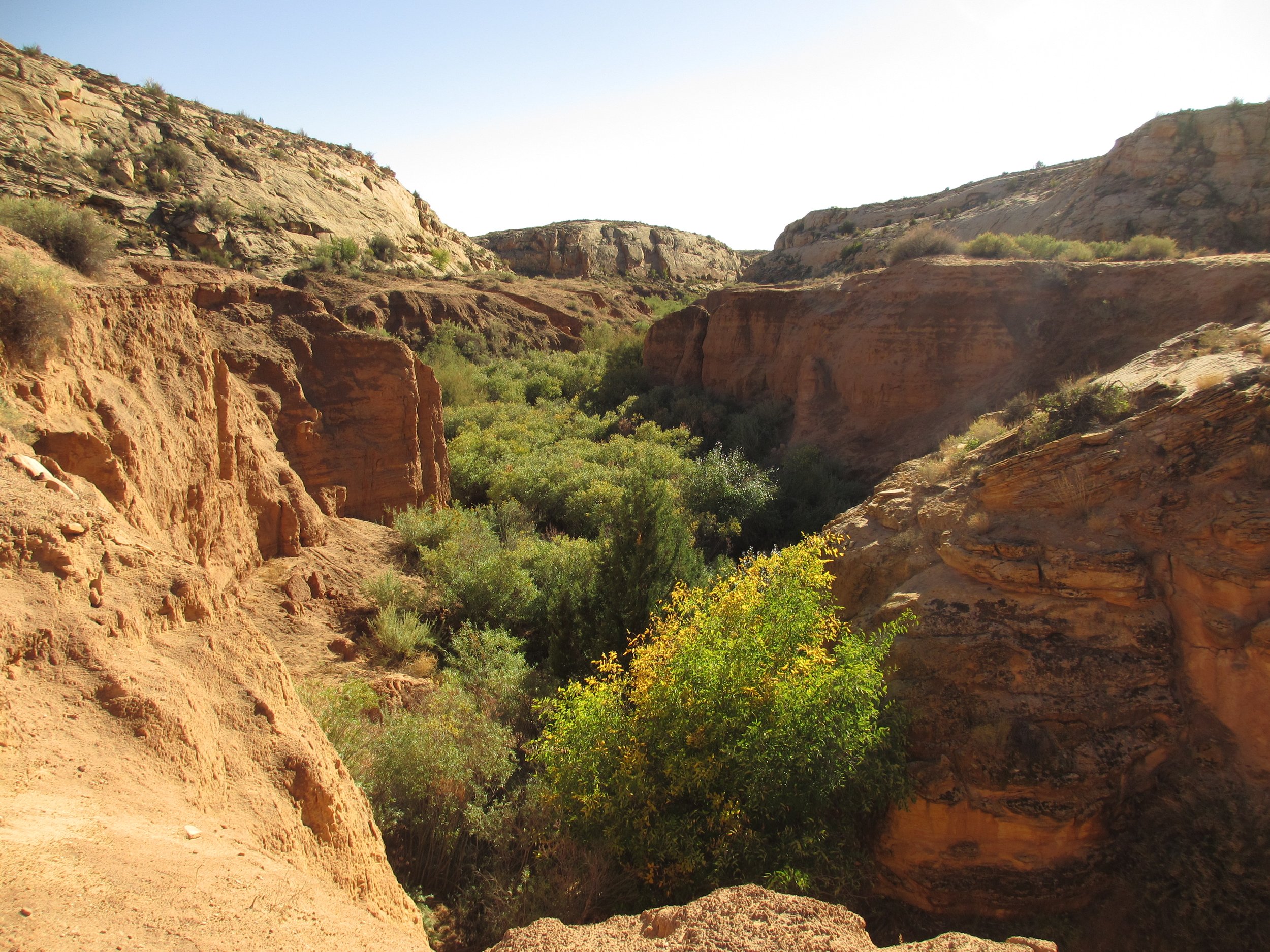
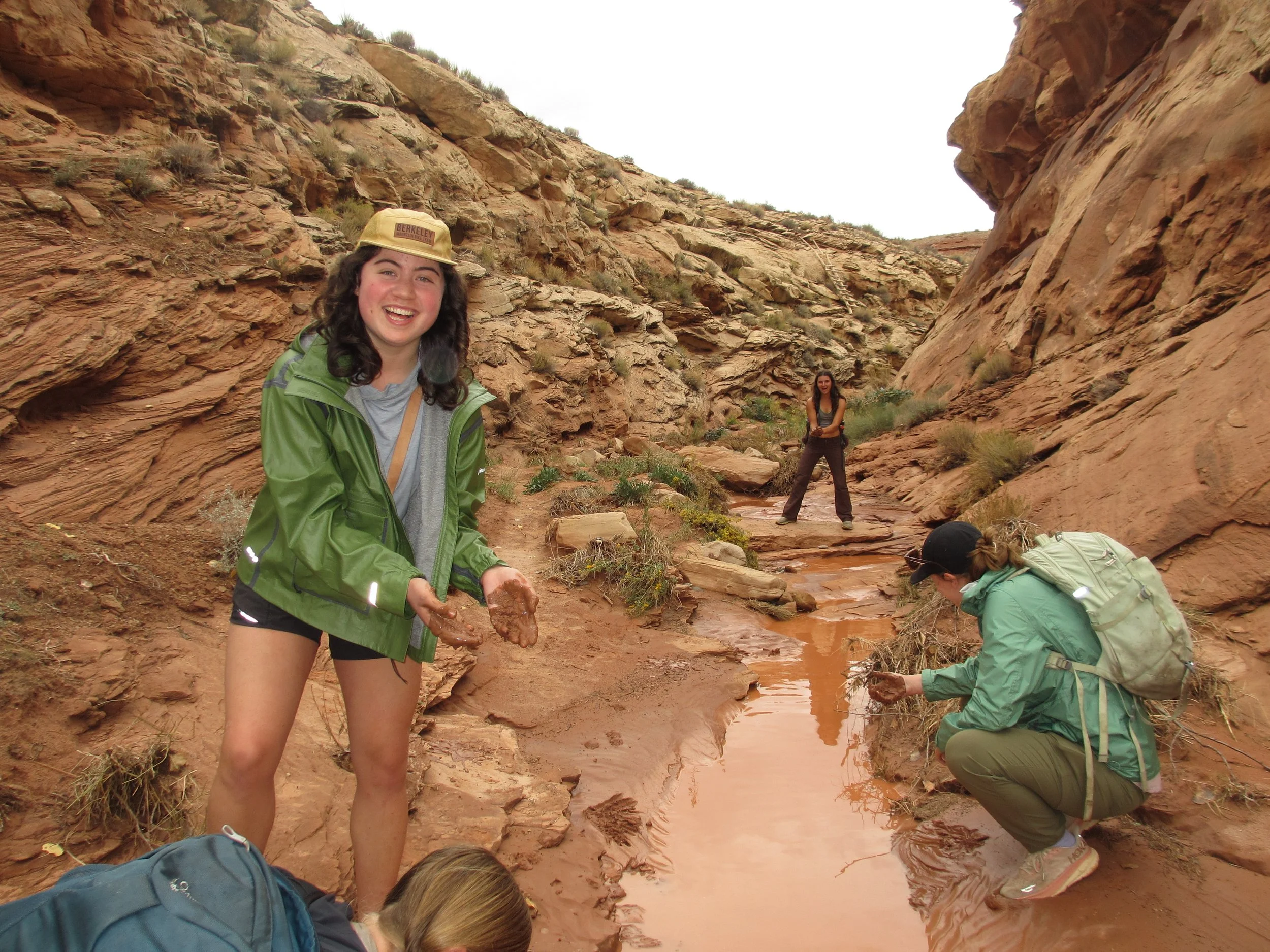
Crouching in red water, my naked body completely disappears an inch below where it touches my chest. Me and my group of adventurers have decided this murky puddle will serve as a fine place to wash off days’ worth of sweat and grime. We emerge from the small sandstone basin giggling and shouting, feeling content, although no more clean. But our spot wasn’t picked for its pristine water; tucked away against a cliffside, we perch on the higher level of one of many tributaries feeding into a ravine. Water from my campsite miles away has likely found its way into the river below us, taking souvenirs of dirt and debris as it slides along, rejected by the impermeable sandstone. Most of the year, these bowls in the ground are empty due to severe drought. But in our campsite on Comb Ridge of the Colorado Plateau, every slight depression has been filled from days of rare and spectacular rain. Peering into the ravine, I only guessed at the river’s size by a green mass of willows, carved out through dry sage country like an open wound. I knew this river, known as Butler Wash, was the place where runoff forgoes individual life, joining the collective on its journey to the San Juan. 

Across the ravine, something catches my attention. Among streaks of brown patina, over a dozen preserved Ancestral Pueblo drawings are etched into the sandstone. The panel depicts large figures of human and animal resemblance. Two smaller comb-like shapes I recognize as baskets, dating them to the earliest basketmakers of the region. These drawings could be more than 2,000 years old. Eyes wandering, I spotted a shaded overhang on the next shelf over from our swimming spot. Approaching the overhang, I could make out a brick dwelling tucked into the alcove. The path leading up to the dwelling had entirely fallen away, stranding the structure. 

The rock art and the cliffside dwelling were confirmation of the life-giving nature of this place. Thousands of years ago, people made their way down into this ravine. Running water at the bottom made it sustainable to live within, so they constructed shelters. Carving rock art was crucial to their survival. Rock art serves as a form of communication and a navigational tool using astronomical alignment to indicate direction. Especially important to the Basketmakers were carvings that cast shadows to indicate seasons. In a culture that relied on agriculture, these artworks were important to know when to plant crops and when rain was likely to arrive. Water too holds symbolic meaning for the Pueblo People, denoting the passage of time and life.


In my search through the Pueblo homelands, the common thread I trace is water. In the desert southwest where water is scarce, it defines how a culture moves through a landscape.  This is evident as we approach the San Juan River, where signs of past civilizations are more abundant than anywhere else in the region. For millennia, various Ute, Puebloan, and Navajo civilizations have used the River Valley as a convergence point for a vast exchange of goods and ideas, ancestral Puebloans using the river for irrigation and constructing houses along the bank. 1,300 years ago, a severe drought struck the region, and the receding of the San Juan was so much that many people migrated from their homes, never returning. Today, in the nearby town of Bluff, Utah, a similar drought is driving people from their homes. As the climate warms, the Southwest is becoming increasingly arid. The drought occurring in the Colorado Plateau puts Bluff and surrounding towns at risk of becoming another story of the past.


The dawn of this reality is being realized after years of taking water's finite availability for granted in the West. Unreliable and increasingly radical climate cycles dictate the carrying capacity for life within the Plateau. For the irrigators of the Ancestral Pueblo to the farmers that occupy Bluff today, water is the bringer of life and sustainability. Re-connecting to water is part of the process of healing our relationship to the land. 
Lying in the murky basin, thousands of years of relief echo in the canyon through the sound of water rushing below me. On the opposite cliff face, the artworks and homes, the marks of people here before me, have remained for thousands of years, telling stories of sustaining life in the same rivers and ravines, through similar floods and droughts. Although myself and many others who occupy the West have no ancestral connection to the land or the art, I think this is what makes immersion with the land’s history so important. While navigating  a changing climate, we must cherish the stories of the people and the natural systems that existed through these waters and let them pass their knowledge onto us. 

Rose Peterson: Preventing Human Erosion

It's hour five of our six hour drive day, and we have all reached peak hysteria. My stomach hurts, my eyes are watering, and everything Everett is saying is the funniest thing I've ever heard. We have left Patagonia, Arizona, having learned about an environmentally damaging mine soon to start production in the area, and are headed to the Salton Sea, America’s worst ecological disaster nobody has heard of. This has been the nature of our program, meeting with speakers, learning we are cooked, getting in the car, then off to the next we go. We’ve experienced record weather events, witnessed examples of irreversible ecological damage, and have been acutely aware of the environmental dominos of every scale falling in the west. As a natural human response to tragedies, I have found myself craving stories of hope. Searching the patterns throughout nature and tuning into the ways the land recovers, I aim to take a page from the book of the west that lies before me.

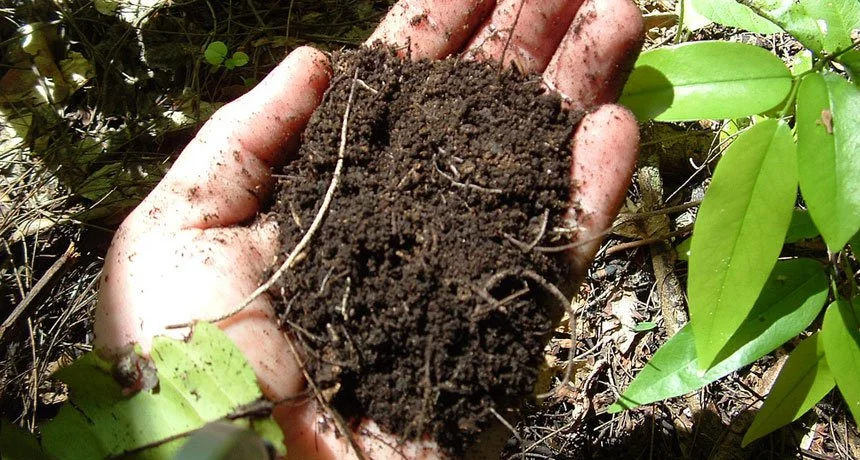
So when Kate Tirion, a founder of the Borderlands Restoration Network in Patagonia Arizona, a woman whose voice and vibrance hooked us all, mentioned the miracles of soil, I was completely struck. Soil connects every inch of the west, and is the reason we eat and live—a large organism made up of billions of smaller ones, working together to nurture our plants, our foods, and our bodies. Its steady base holds us up, tends to us, and shows an example of strength, connection, and resilience that we search to find amidst all the tragic truths every voice we hear seems to echo. We have laid on it, walked on it, peed on it, brought it with us in our clothes, our bags and our food. In it, we’ve made ourselves completely at home. If I'm to take a page from a book of the west, what chapter could possibly have more wisdom to offer?

Just like mycorrhizal networks, underground paths of roots and fungi that connect plants and spread across the whole earth, we people are completely intertwined and reliant on each other. While plants share nutrients, water, and wisdom, we share stories, advice, joy, and experiences. We were lucky enough to get a brief and impactful morning with Kate. She showed us her home, shared vulnerable stories, and gently led each of us to dive head first into this beautiful, sunlit life she has created. At the end of a house and garden tour that showed a clear picture of resilience, preparation, and blissful joy, we asked her to leave us with one piece of advice. “Wake up and softly smile,” she said, then embraced each and every one of us. “Fill in your mosaic piece and do it with someone who motivates you and makes you LAUGH.” While the connections throughout the soil are based on water, carbon, nitrogen, and organic matter, human connection is built so heavily on laughter. 

The soil in the west is drying up, losing its ability to hold moisture, struggling to support plants, and being forced to recover after devastating events, while we humans are experiencing the same in our own ways. Our microbes are being killed, and we are being sprayed, artificially fertilized, and tilled and tilled and tilled, no longer able to regrow with our same vibrance. In our search to find ANY reason to believe we will have lives resembling Kate’s garden in spite of these dire times, we often asked speakers what brings them hope. 99% of the time, they said, with a sweet smile and pensive expression, “You guys. You guys give me hope.” I honestly groan each time because how on earth are little old us going to fix the mess that is the west. But when Kate expressed the same sentiment, it started to click for me. If she could hear us laughing all the way across her property, and if she is right, that laughing is a vessel toward resilience, then maybe we are in fact the hope. Maybe with each moment of car ride hysteria between speakers, with each song and debrief, or moments at cook crew “getting deep” and dancing around, we are fostering our own mycorrhizal networks. With each laugh, nutrients are spreading throughout our fungal pathways, and we are becoming less erodible, more water soluble, and thus increasingly disaster resilient. 

I've learned an immense amount of things this semester. I've experienced the good and the bad, the hopeful and the hopeless, had my eyes opened to so much, and yet what I will remember most is this group of people; my fellow fungi. With each day, with each change of plans, with each rainstorm and trash spill, we have built up our resilience. We have absorbed every inch of the limited precipitation in the arid west, and created the most nutrient rich soil that's ever sifted through my fingers. We are so capable of growing the most beautiful garden, and not only do I believe we already have, but I know we will continue to do so wherever we go. So if you find yourself falling victim to hopelessness, I'll pass on some wise advice that I've heard. “Wake up every morning with a small smile, and continue forward with those who inspire you, and most importantly, make you laugh. For YOU, you are the future, and you are what brings me hope.” 

Everett Calhoun: How do we save Rural America?

I stand below an ancient apple tree, twisted and gnarled by time. This tree is just one in a row of apple and pear trees, long since deserted by their former owners, overlooking a remote area of Joseph Canyon in Northeastern Oregon. As I reach up and grab an apple from one of the tree’s low-hanging branches, I imagine who planted it. There was likely a homestead here, with years of neglect rotting all the buildings away to nothing. Now, the only trace of this past human inhabitation is the orchard. This story of rural abandonment is a common one in the west. The prosperity of our country was created, in part, by extractive industries which rural communities stimulated. They are a defining aspect of our nation's culture, history, and society. However, for various reasons, our country turned on many of these towns, leaving them without a future.

We have seen many examples of economically depressed towns during our travels, but one still bearing the scars of being left behind is Joseph, Oregon. As we walk up an old lateral moraine, once the side of a pleistocene glacier, and look down into the picturesque Wallowa Lake, Nils Christoffersen, the director of Wallowa Resources, gives us a mischievous, yet iconic, smile. For decades, Joseph was at the center of a lumber industry which felled trees from nearby national forests and processed them in one of the town’s three mills. However, a variety of federal actions which created wilderness areas and further protected salmon completely destroyed the local lumber industry. Nils explains that, because of the collapse of their economy, the county government was no longer able to fund five days of school, cutting Friday from the schedule. Essentially, the federal government decided to protect Joseph’s environment without also creating some alternative economy for the town. To Nils, Joseph’s economic decline is only reversible if we, “quit raising money purely for protecting things.” Nils argues that the future of Joseph lies in a stewardship economy; one based on creating family-paying jobs which support ecosystems through actions like fire management, selective harvesting, and alternative grazing methods.

Preservation without consideration for its economic consequences is not the only way our society has sacrificed rural communities. Driving along the eastern side of the Sierra Nevada in California, the sheer slopes of the mountains, recently colored by a fine coating of early fall snow, extend for hundreds of miles across the skyline. This snowpack will ultimately drop massive amounts of water thousands of feet into the bottoms of arid valleys. Owens Lake, one of the many saline lakes formed at the base of these mountains, harbored a diverse ecosystem and several small towns. However, in 1913, the Los Angeles Department of Water and Power (LADWP) began diverting the rivers in the valley southward to facilitate the growth of LA, causing the lake to totally dry up. Walking along the exposed lakebed is similar to wandering an alien landscape. The endless scene of white, salt-filled dust is only punctuated by signs of humanity’s efforts to deal with this environmental catastrophe. When windy, dust would kick up from the lakebed, spreading like poison across the valley and creating the single greatest source of particulate air pollution in North America. This dust caused wheezing, coughing, asthma, sore throats, and long-term carcinogenic effects to the residents of nearby towns like Lone Pine. In 2000, a lawsuit forced Los Angeles to deal with the air pollution they had inadvertently caused through a variety of different strategies, including covering the lakebed in gravel, planting and managing saltwater crops, and flooding periodically. This mitigation has been able to reduce regional air pollution, preventing the ghost of the lake from continuing to haunt Lone Pine. 

Rural towns have the right to exist. Furthermore, they have the right to access adequate education, quality health services, and reliable infrastructure. When we as a nation decided to eliminate rural job opportunities for the sake of environmental protection or cause substantial health issues within rural communities for the sake of a city’s water supply, we eliminated those rights. Our society has sent a message to communities like Lone Pine and Joseph that they are not worth saving, that they do not deserve to endure. We need to protect endangered species, and Los Angeles needs water, but with our help that doesn’t have to mean the destruction of these towns. Reflecting on my hour next to those long-forgotten apple trees on the ridge along Joseph Canyon, my curiosity about their origin turns to alarm. We as a nation have to begin considering rural communities; we have to start thinking about solutions for the problems they face like Nils Christofferson does, and we have to enact those solutions like in Owens Lake. If not, all of rural America will end up like that orchard—abandoned settlements hinting at a past long since forgotten.

Trevor Maziek: A Fake and Important Line

In New Mexico’s Bootheel–one of the most remote regions of the southwest– endless swaths of creosote, mesquite, and other typical plants of the Chihuahuan Desert are interrupted by stark metal structures, booths, floodlights, and US Border Patrol Agents. On a dark desert highway in Santa Cruz County, Arizona, trucks are positioned seemingly every mile, breaking the darkness. Is this standard procedure? Is there a wanted fugitive on the run? We may never know. What we do know is that the omnipresence of the Border Patrol is common throughout the desert Southwest. Even in the region's sparsely populated areas, the Border Patrol’s presence surpasses that of all other groups, a sobering reminder of an artificial creation: the US-Mexico Border.

Growing up in San Diego, California, the border has always been a constant presence in my life. The organized chaos of border crossings, the stark contrast of the fields of Otay Mesa on the US side to the bustling vibrance of Tijuana on the Mexican side, constant law enforcement presence, and, more recently, ICE deportation raids. All of these are grave reminders of this invention of our modern colonial mindset, a typical example of a simplistic “solution” to a complex issue. 

In Nogales, a border city, a 30-foot-tall Ozymandian fence with barbed wire lining the top, splits the city in two. On one side, the United States features a heavy law enforcement presence, shops selling cheap goods, relatively few pedestrians, and pandemonium at the border crossing. On the other side, tienditas, lots of traffic, and a vibrant, yet visibly poorer city exist. This community was here before the wall was built, before the militarization, when this added complexity was not here. Mike Wilson, a Tohono O’odham writer and activist, confirms that this wasn’t always the case. His people have lived in the Borderlands for millennia, before the relatively recent creations of the United States and Mexico, and the border split his community in two. Mike tells us that until the 1990s, the border was not militarized. He mentions that 1993 was a turning point, the ratification of the North American Free Trade Agreement (NAFTA). This is when popular crossing sites like San Diego-Tijuana and El Paso-Juarez were essentially closed to migrants who could not navigate the intentionally convoluted immigration system. Additionally, NAFTA left many Latin American farmers in economic ruin, forcing them to migrate to the United States, while also ramping up border security and militarization. Through this militarization and economic destitution, as well as political violence–often funded or supported by the United States–millions of migrants were forced to travel through the remote corners of the desert southwest, hoping to reach larger cities like Phoenix and Tucson, where they would move to all regions of the country. 

Mike shows us a map. It’s a map of Southern Arizona that features standard political boundaries, highways, cities, and federal land. But across the map, there are many red dots. Each red dot, Mike tells us, represents one migrant death. An area where human remains were discovered and identified. 4345 of them in total from 1981-2024, according to Humane Borders. Mike tells us this is due to the arid, remote nature of the region and extreme dehydration. Human smugglers, often affiliated with drug cartels, exploit and lie to migrants, telling them they are only “4 hours” from Phoenix, despite being hundreds of miles away, leaving them to bake in the desert sun. This inspired Mike to place several 55-gallon barrels of water across the Tohono Reservation, which shares 71 miles of border with Mexico and contains at least half of the migrant deaths. When asked why he did this, Mike says, “Because it’s the moral and humane thing to do.” Yet, through immigration hysteria, intimidation, and coercion, Mike was forced to remove the barrels out of fear of banishment from his tribe, fear of possibly being labeled a “terrorist”, and the stigma associated with challenging tribal and federal authorities.

There is one thing that the border militarization cannot keep out, nature. In the Sky Islands region of Arizona, six distinct ecozones converge to form one of the world's most biodiverse areas. Two bird migration corridors intersect here, along with migration routes of bats, bees, insects, plants, and mammals. Jaguars and Ocelots live here, and this is the only part of the United States where they are found and are an integral part of local culture. There is incredible plant biodiversity here; over 7,000 plant species reside in the region, attracting birds, bats, and other migratory animals. These animals and plants have no regard for the artificial barrier; they’ve been crossing it forever and will continue to do so, lest the border wall be built 100 feet taller. 

Back in Nogales, a horn blares in the distance, and something remarkable happens. The wall opens, and a Ferromex/Union Pacific freight train emerges from it. This happens four times a day, a railroad employee tells our group, a reminder that this border is closed to many people, but not international commerce. Animals, plants, and even human infrastructure crossings prove that the border and its militarization are arbitrary. Yet this forces us to consider why we have made this anthropogenic imaginary our reality.

Allee Garver: Water: A Dam Good Resource.

Several feet down in the channel, water swirls and eddies, running against gravity. White, bubbly suds coat the top of the water, floating down the current, revealing the true force and speed of this once ephemeral wash now turned year-round river. While this water appears to have always run down these corridors, it is entirely composed of treated wastewater and urban runoff from the nearby city of Las Vegas where it then drains all the way to Lake Mead. Standing next to these murky waters of the Las Vegas Wash, I am reminded of the swift, yet shallow Rio Grande River in Albuquerque, over five-hundred miles away, loaded with sediment and agricultural runoff. I can’t help but feel as though water has lost all freedom in the West at the expense of societies built and grown around their subjugation and manipulation. 

In desert ecosystems where water is a limited resource, every drop matters and how that water is used is critical. In Albuquerque, people have relied on the Rio Grande for time immemorial and have been diverting its water for just as long under an acequia, or canal, irrigation system. In establishing an entire city around the river, people had a reliable source of water, but this also came with inherent risks associated with unpredictable flows. In 1941, that risk became reality when the entire city of Albuquerque flooded resulting in massive destruction. To ensure the stability and survival of this city and to allow growth, Cochiti dam was constructed North of the city to reduce flooding. Additionally, the river was channelized, disrupting the historic wetlands ecosystem that once stretched across this land. While hailed as progress, this only solidified the continual need for intervention as new challenges inevitably rose. The same holds true for Las Vegas.


With three million people and growing, thousands of buildings, and hundreds of industries sprawling across the Las Vegas Valley, there is no water in sight. Once a small, quaint town with a readily available supply of water pouring straight out of the ground, Las Vegas’s reliance on groundwater could only support this population for so long and provided minimal room for growth. Luckily for Las Vegas, they also had three-hundred thousand acre-feet of Colorado River water waiting for them in Lake Mead behind the dominating, smooth gray wall of the Hoover Dam. They just needed a way to get that water to the people. Pumps and intake pipes were built to connect the three miles between Las Vegas and Lake Mead, without which this city would surely have become a relic of the past, another ghost town of the desert. And instead, while Albuquerque always had water running through her heart, we’ve now found ways to run her dry.

Altering the Rio Grande River allowed for the expansion of the city and established a more consistent water supply for farmers, but simultaneously led to the lowering of the water table and the groundwater. Like Las Vegas, as the population of Albuquerque grew, the strain on the aquifer did too and couldn’t support the growing population. Luckily for Albuquerque, they also had Colorado River water, the very same water Las Vegas depends on, that they could divert and pump into the ground all the way from the San Juan mountains, thirty-eight miles away. In manipulating their own river, they were forced to the extreme of taking water from a completely different water basin, one that forty million people rely on. At what point does the water run out? At what point do these cities stop growing? Albuquerque and Las Vegas are already acknowledging that growth can only be sustained for so long, for there is only so much water.

Today, Las Vegas is finding innovative ways to conserve and maximize their access to water, one of them being a credit return agreement with the state. For every acre foot of treated wastewater returned to Lake Mead via the Las Vegas Wash, the city gets back one acre foot for municipal use. This expands Southern Nevada’s total water supply to support an ever-growing population and developing community. For Albuquerque, water is scarce and only getting scarcer, but irrigators share in the struggle by distributing their water as evenly as possible. Sometimes that means everyone gets a little less and crops struggle. How long these communities can sustain growth is something they’re coming to confront, but there are people fighting every day for their communities to maintain access to this liquid life. Admitting defeat is not something we can afford to think about until there is truly no water left. Until then, these desert societies continue to survive, living with less, despite all odds.

Lucy Brown: What Is Restoration?

The narrative of the American West is that nature has been ruined by settlers, by their agricultural practices and unsustainable usage of resources. Well, let's imagine that all the people in the West decided to pack up and go, today. Could nature restore itself to a self-sustaining state?

The idea that everyone would clear out for the sake of healing nature is unrealistic, and isn’t the only solution. Restoration is situation-dependent; it can wear many hats. In the HJ Andrews Experimental Forest, an old growth forest in western Oregon, nature is given the space to heal itself after a disturbance without human intervention.

In 2023, the Lookout Fire ripped through 70% of the forest; a single lightning bolt took down centuries of growth. Fast-forward to 2025, and we are standing at one of the affected areas, observing signs of a disturbance. A landscape of charred logs and snags atop ashy soil stand in stark contrast to a bright green and purple blanket of fireweed, reworking the previously burned understory. Staying true to its name, fireweed commonly grows after a burn, loving the unique soil composition and abundance of light. Where a fire had caused so much death, there was so much new life. In a forest, fire is a natural part of its cycle, allowing for the growth of new trees and other plants that couldn’t compete for resources otherwise. Although the fire was devastating for so much plant life, the forest knows how to heal itself.


Restoration looks a little different in Owens Valley, California. In this valley lives Owens Lake, a lake without water, stretching out for miles in a grand expanse of flat, white land. We toured the dry lake bed, known as a playa, with Jeff Norton, from the Los Angeles Department of Water and Power (LADWP). The tour began at Owens River, a small stream bordered by wetland grasses. Before the LADWP began diverting water from the Owens River, it was the tributary of Owens Lake, bringing in spring runoff from the Eastern Sierras. Beginning in 1913, the Los Angeles Aqueduct was constructed to divert Owens River water 233 miles south to the city of Los Angeles and away from Owens Lake. As a result, the Owens River “was essentially dried out.” Today, the LADWP is temporarily managing the river, rewatering the lower section in an effort to remediate the ecosystem until it is able to restore itself. The river is not yet self-sustaining, but with human intervention it is repairing after undergoing a disturbance.

We left behind the green wetland ecosystem, entering a dull, dry landscape of checkerboarding dust control sites with gravel access roads dividing each square. This is Owens Lake. I was snapped out of romanticising the beautiful western landscapes SITW is known for. The LADWP isn’t getting any aesthetic points, but their presence is crucial to Owens Valley. The dusty playa poses a threat to air quality and human health. Toxic particulate matter easily becomes airborne, picked up in the dust by wind. In the past, severe dust storms made Owens Valley a human health hazard, with the highest concentration of airborne particulate matter in the United States.


Today, the LADWP uses three dust mitigation practices to maintain a healthy air quality. The first of these is laying down gravel, which weighs down the dust. They also use shallow flooding, wetting the dust so that it sticks. Their third practice is called managed vegetation, securing the dust with native plant roots. The effectiveness of dust mitigation is proven by consistent good air quality. When asked whether these practices would guide Owens Lake to be capable of self-restoration, Jeff responded that to control the dust, the LADWP must manage Owens Lake, forever. As long as Los Angeles relies on water diversions from the Owens River, Owens Lake will not heal itself.

The LADWP’s perspective on managing Owens Lake made us face the reality that the people that live in the American West need water and other resources, no matter how extractive it is to accrue them from nature. The natural regrowth occurring in the HJ Andrews Experimental Forest doesn’t function as the only restoration model. So I’ll say it again: restoration wears many hats. It can look like the natural cycle of an old growth forest, but it can also be a human effort to bring water and life back to a river that ran dry. Restoration can even be a playa with dust controls that protect life from toxic air. There will always be this tension between allowing for natural restoration versus human involvement, especially when disturbances are human-made. Ultimately, human intertwinement with the more-than-human is a complicated relationship thatbends our definition of restoration.